

Farm to Cup Texas Coffee Guide for True Enthusiasts
Most Texas coffee lovers can name a favorite roaster but have never thought seriously about where their beans actually come from. This farm to cup Texas coffee guide changes that. The Texas specialty coffee scene has grown from a regional curiosity into a legitimate force, with local coffee farms Texas and artisanal roasters pushing quality standards that rival any coffee-producing country. Understanding the full journey from seed to your morning cup makes you a smarter buyer, a better brewer, and a genuine supporter of something worth protecting.
Table of Contents
- Key takeaways
- Your farm to cup Texas coffee guide starts at the source
- From harvest to roast: how Texas roasters shape your cup
- Setting up your Texas home brewing experience
- Common brewing mistakes and how to fix them
- Why buying Texas farm-to-cup coffee matters
- My honest take on where Texas coffee is headed
- Where to find great Texas farm-to-cup coffee
- FAQ
Key takeaways
| Point | Details |
|---|---|
| Texas has real coffee farms | Local producers grow and process specialty beans, making true farm-to-cup sourcing possible within state lines. |
| Processing method shapes flavor | Washed, honey, and natural processing each produce distinct taste profiles you should know before buying. |
| Freshness is non-negotiable | Local roasting and direct shipping preserve peak flavor far better than beans sitting in a broad distribution chain. |
| Brewing precision matters | Grind size, water temperature, and coffee-to-water ratio are the three variables most home brewers get wrong. |
| Buying local builds sustainability | Supporting Texas coffee producers strengthens local economies and reduces the environmental cost of long supply chains. |
Your farm to cup Texas coffee guide starts at the source
Texas is not the first state that comes to mind when people think about coffee farming, and that is exactly what makes its producers worth paying attention to. The Hill Country, parts of East Texas, and pockets of South Texas offer microclimates that can support coffee cultivation, though growing conditions are demanding. The real story in Texas is not volume. It is the intensity of care that goes into every crop.
Coffee is a hand-picked fruit requiring exceptional care in farming, processing, and transportation to preserve quality. That fact alone separates serious Texas coffee producers from anyone treating it as a novelty crop. When you buy from a local farm or a roaster with direct farm relationships, you are paying for that labor and that knowledge.
Here is what to look for when identifying genuinely ethical, local Texas coffee sources:
- Traceability documentation: The farm or roaster should tell you exactly where the beans came from, including the farm name, region, and harvest date.
- Processing transparency: Washed, honey, or natural? Any reputable producer will tell you how the cherry was processed and why.
- Direct trade relationships: Look for roasters who visit farms in person or have multi-season contracts with growers rather than buying from anonymous brokers.
- Seasonal availability: Real farm-to-cup coffee is not available year-round in unlimited quantities. Scarcity signals authenticity.
- Certifications or stated practices: Organic, Rainforest Alliance, or simply a detailed written commitment to soil health and fair wages all count.
The market is validating this quality focus fast. Some specialty beans in North Texas have reached auction prices of $141 per pound, a number that reflects genuine consumer demand for traceable, premium coffee. That is not a marketing stunt. That is the market telling you these beans are worth it.
Pro Tip: When shopping at a local Texas roaster, ask directly whether they have visited the farm their beans come from. The answer tells you everything about their sourcing standards.
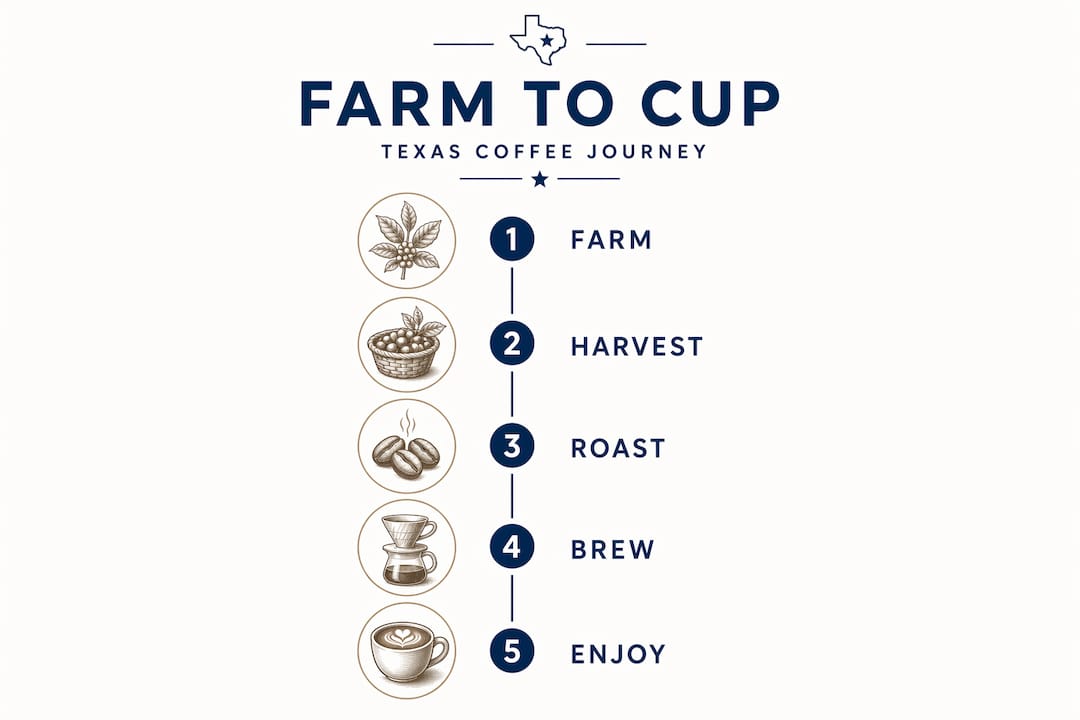
From harvest to roast: how Texas roasters shape your cup
Once coffee cherries are harvested, the decisions made in the next 72 hours determine much of what ends up in your cup. Processing is where flavor is either protected or destroyed, and Texas roasters who understand this treat it as seriously as the roast itself.
The three main processing methods each produce dramatically different results. Processing methods like washed, honey, and natural significantly impact flavor and quality in ways that no amount of skilled roasting can fully correct after the fact. Washed coffees tend to be clean and bright, with the bean’s origin characteristics front and center. Honey-processed beans retain some of the fruit mucilage during drying, which adds body and sweetness. Natural-processed coffees dry with the full cherry intact, producing the most fruit-forward, wine-like profiles.
Here is how the farm-to-roaster journey works when it is done right in Texas:
- Direct sourcing: The roaster establishes a relationship with a specific farm or cooperative, often paying above commodity price to secure preferred lots.
- Green bean evaluation: Samples arrive and are cupped (tasted) before full orders are placed. This is where roasters identify defects and confirm flavor potential.
- Roast profiling: Each origin gets a custom roast curve. A delicate washed Ethiopian needs a different approach than a dense, natural-processed Brazilian.
- Quality control cupping: After roasting, the batch is tasted again to confirm the profile matches expectations before it ships to customers.
- Fresh delivery: Local roasting and direct shipping preserve freshness far better than beans cycling through a national distribution warehouse.
The benefit of direct farm-to-roaster relationships extends beyond flavor. When a Texas roaster knows the farmer personally, they can communicate what their customers want, which creates feedback loops that improve crop quality over time. Long-term producer relationships focused on sustainability and equity are what define modern specialty coffee at its best.
Pro Tip: Ask your roaster for the roast date, not the “best by” date. For most whole-bean coffee, the sweet spot for brewing is between 7 and 21 days after roasting.
Setting up your Texas home brewing experience
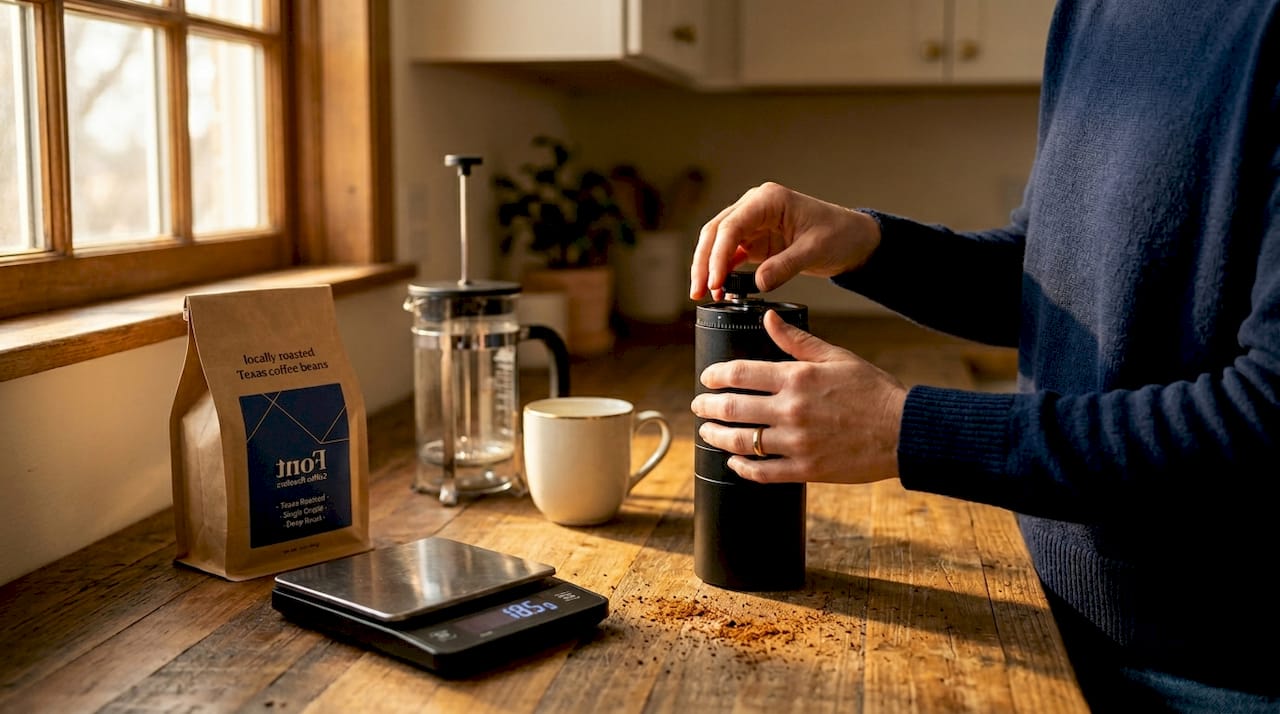
Great beans can only do so much if your brewing setup works against them. The good news is that you do not need expensive equipment to brew excellent coffee at home. You need the right equipment used correctly.
Choosing your brewing method
Different Texas coffee bean origins respond better to certain brewing methods. A bright, washed coffee from a Central American farm shines in a pour-over like a Hario V60 or Chemex, where clarity and acidity are highlighted. A fuller-bodied natural-processed bean from a South American farm often works better in a French press or AeroPress, where immersion brewing amplifies its richness.
| Brewing method | Best for | Grind size | Brew time |
|---|---|---|---|
| Pour-over (V60, Chemex) | Bright, clean, single-origin beans | Medium-fine | 3 to 4 minutes |
| French press | Full-bodied, natural-processed beans | Coarse | 4 minutes |
| AeroPress | Versatile; works across most origins | Medium to fine | 1 to 2 minutes |
| Espresso | Blends and dark roasts | Fine | 25 to 30 seconds |
| Cold brew | Chocolatey, low-acid profiles | Extra coarse | 12 to 24 hours |
The equipment that actually matters
You do not need a $500 grinder to start. But you do need a burr grinder. Blade grinders chop beans unevenly, which produces an inconsistent extraction and a muddy, bitter cup. A basic burr grinder in the $50 to $80 range is a genuine upgrade.
Beyond the grinder, home setups emphasizing simple, clean equipment and water quality deliver the best results. Here is the short list of what matters:
- Burr grinder: Non-negotiable for consistency.
- Kitchen scale: Measuring by weight instead of scoops removes the biggest variable in home brewing.
- Filtered water: Tap water in many Texas cities is heavily chlorinated. A basic Brita filter changes your cup noticeably.
- Thermometer or temperature-controlled kettle: Water between 195°F and 205°F is the target range for most methods.
Proper brewing parameters including grind size, water temperature, and coffee-to-water ratio are the three variables that Texas A&M and AgriLife experts identify as most critical for extracting optimal flavor. Get those three right and the rest is refinement.
Common brewing mistakes and how to fix them
Even experienced home brewers fall into habits that quietly ruin a good cup. Here is what to watch for.
Using beans past their prime is the most common and most preventable mistake. Coffee is not fine wine. It does not improve with age. Once roasted, whole beans start losing volatile aromatics within weeks. Buy in smaller quantities more frequently, and store beans in an airtight container away from light and heat. Never freeze beans you plan to use within the next two weeks.
Grinding too fine or too coarse for your method throws off extraction. Too fine in a French press and you get over-extracted bitterness with sludge in your cup. Too coarse in a pour-over and the water runs through too fast, leaving you with a weak, sour brew. Adjust grind size first when troubleshooting flavor problems before changing anything else.
Water temperature extremes matter more than most people realize. Boiling water (212°F) scorches delicate light roasts and produces harsh, astringent flavors. Water that is too cool under 190°F under-extracts the coffee, leaving it flat and sour. Let your kettle rest for 30 seconds off the boil if you do not have temperature control.
“The single biggest improvement most home brewers can make is switching from a blade grinder to a burr grinder. Everything else is secondary.” — Font-mag
Ignoring the coffee-to-water ratio is the final common error. The Specialty Coffee Association recommends a starting ratio of 1:15 to 1:17 (coffee to water by weight). For a 12-ounce cup, that means roughly 20 to 22 grams of coffee. Adjust from there based on your taste, but start with a measured baseline.
Why buying Texas farm-to-cup coffee matters
Choosing local is not just a lifestyle preference. It has measurable consequences for the environment, for farmers, and for the long-term health of the coffee industry.
- Shorter supply chains reduce emissions. Every leg of transportation adds carbon to the equation. When you buy from a Texas roaster with direct farm relationships, you cut out multiple shipping stages that would otherwise move beans through brokers, importers, and national distribution centers.
- Farmers earn more. Eliminating predatory middlemen improves farm profitability and community outcomes directly. Direct trade pricing often means farmers receive two to three times the commodity market rate.
- Sustainability becomes a competitive advantage. When Texas consumers reward sustainable practices with their purchasing dollars, producers have a financial reason to maintain those practices rather than cutting corners.
- You protect the future of specialty coffee. Climate change threatens coffee farming in traditional growing regions through rising temperatures, new pests, and shifting harvest cycles. Supporting producers who invest in climate adaptation keeps the specialty supply chain viable.
Sustainability and equity are essential to rebuilding coffee supply chains for the long term. That is not an abstract principle. It is a practical reality that shows up in whether your favorite single-origin coffee is still available five years from now.
My honest take on where Texas coffee is headed
I have spent years watching the Texas coffee scene shift from a novelty into something genuinely serious. What I find most encouraging is not the premium prices or the award-winning roasters. It is the conversations happening between farmers and roasters that would not have existed a decade ago.
What I have learned from watching this market closely is that the enthusiasts who go deepest into farm-to-cup sourcing are the ones who end up most satisfied with their coffee. Not because they spend more, but because they understand what they are drinking. That context changes the experience in ways that are hard to explain until you have felt it yourself.
The challenge I see ahead is education. Too many Texas coffee drinkers still treat origin and processing as marketing language rather than meaningful information. The roasters doing the best work are the ones investing in that education alongside the product.
My honest belief is that Texas has the consumer base and the roasting talent to become one of the most respected specialty coffee markets in the country. What it needs is more buyers who ask better questions. If this guide gives you three better questions to ask your roaster next time, it has done its job.
— Rosario
Where to find great Texas farm-to-cup coffee
Finding truly traceable, freshly roasted coffee in Texas does not require a specialty shop in your neighborhood. Font-mag, rooted in four generations of Texas roasting expertise, makes small-batch coffee with the kind of sourcing transparency this guide has been describing.
Whether you are looking for a wholesale 5lb bag to keep your household stocked with freshly roasted beans, or you want to explore a single-origin decaf like the Marécage dark roast from Brazil, Font-mag has options built around freshness and traceability. Orders over $35 ship free, which makes it easy to try something new without a big commitment. If you are ready to drink coffee that tells you exactly where it came from and why it tastes the way it does, this is where to start.
FAQ
What does farm to cup mean in Texas coffee?
Farm to cup means the coffee is traceable from its origin farm through processing, roasting, and delivery to your home. In Texas, this typically involves roasters who source directly from specific farms and roast in small batches to preserve freshness.
Are there actual coffee farms in Texas?
Yes. Texas has a small but growing number of farms cultivating coffee, particularly in the Hill Country and parts of South Texas. Most Texas coffee producers focus on quality over volume, making their beans rare and highly sought after.
What brewing method works best for Texas-sourced beans?
It depends on the processing method. Washed beans from bright origins shine in a pour-over, while natural-processed, fuller-bodied beans work well in a French press or AeroPress. Starting with a 1:15 coffee-to-water ratio by weight gives you a reliable baseline for any method.
Why are some Texas specialty coffees so expensive?
Premium traceability, direct trade pricing, and small-batch roasting all add cost. Some exclusive North Texas specialty lots have reached $141 per pound at auction, reflecting genuine consumer demand for the best traceable beans available.
How should I store Texas coffee beans at home?
Store whole beans in an airtight container at room temperature, away from direct light and heat. Buy in quantities you will use within two to three weeks of the roast date for the best flavor. Avoid refrigerating beans you plan to brew soon.