
Supporting Local Roasters Checklist for Coffee Lovers
You want to support local roasters, but the moment you start looking, the options blur together. Is that café actually roasting on-site, or just reselling beans from a regional distributor? Is that bag you bought last month even fresh? A solid supporting local roasters checklist cuts through the confusion and gives you a repeatable system for finding, evaluating, and consistently buying from the real thing. This guide walks you through every step, from spotting authentic operations to building relationships that make your morning cup genuinely matter to your community.
Table of Contents
- Key takeaways
- 1. Verify you are dealing with a real local roaster
- 2. Use verified directories, not social media, to find roasters near you
- 3. Score quality systematically before you commit to a favorite
- 4. Evaluate roast freshness as a non-negotiable standard
- 5. Ask about sourcing and ethical practices directly
- 6. Build relationships through repeat visits and community engagement
- 7. Understand the broader impact of your choices
- My honest take on what actually changes your buying habits
- Explore small-batch coffee from Font Coffee Roasters
- FAQ
Key takeaways
| Point | Details |
|---|---|
| Verify on-site roasting | Look for physical roasting equipment and transparent production areas, not just a café selling coffee. |
| Check roast dates first | Beans roasted within the last two weeks deliver peak freshness and flavor. |
| Score before you commit | Visit 3 to 5 roasters and rate espresso balance, filter clarity, and freshness before settling on a favorite. |
| Use curated directories | Reliable local coffee sourcing checklists beat social media browsing for finding trustworthy roasters. |
| Repeat visits build trust | One visit is a data point. Three visits reveal consistency, which is what actually matters. |
1. Verify you are dealing with a real local roaster
Most enthusiasts assume that any café with good coffee is a local roaster. That assumption is usually wrong. Many cafés serve excellent coffee sourced from a regional partner roaster, which is fine, but it is not the same as supporting someone who roasts locally.
Here is what to look for when you want to confirm you have found an authentic operation:
- On-site roasting equipment. A drum roaster, a chaff collector, and green bean storage are hard to fake. Ask if you can see the production area.
- A local address tied to roasting, not just retail. Some roasters operate out of a warehouse or shared production space separate from their café.
- Published roasting schedules. Legitimate small-batch roasters often post roast days on their website or bags because freshness is part of their pitch.
- Direct trade or sourcing transparency. Roasters who buy green beans directly from farms or cooperatives usually talk about it openly. Ask where the beans come from.
Pro Tip: Call ahead and ask one simple question: “Do you roast on-site?” The answer, and how confidently they give it, tells you a lot before you ever walk in the door.
2. Use verified directories, not social media, to find roasters near you
Social media is a mood board, not a local coffee roasters guide. A roaster with beautiful Instagram content might have inconsistent hours, no retail bags available, or no public access to their space at all. Verified discovery methods reduce disappointment and help you spend your time at places worth visiting.
- Neighborhood-based maps and guides. Cities with strong coffee cultures often publish roaster directories organized by area. Portland, Oregon, for example, has 48 independent roasters spread across distinct neighborhoods, each with its own character.
- Specialty coffee apps and forums. Communities like r/coffee or apps built around café discovery often include user-verified roaster listings with current hours and offerings.
- Ask at your local café. Baristas know the roasting community. A good barista will tell you exactly who is roasting locally and where to find them.
- Check for public tours and tastings before you visit. Local roasters often host tastings that give you far more insight than buying a bag blind.
Pro Tip: Before visiting any roaster, confirm three things: current hours, whether retail bags are available on-site, and whether walk-ins are welcome. One email or phone call saves you a wasted trip.
3. Score quality systematically before you commit to a favorite
Buying based on branding alone is how you end up with an overpriced bag that sits half-finished in your cabinet. A systematic scoring approach visiting three to five roasters and rating their coffee on consistent criteria gives you something branding cannot: actual data.
Here is a simple scoring framework to use on each visit:
- Espresso balance (1 to 5). Does it taste sweet and round, or is it sharp and thin? A well-pulled shot should have clarity without bitterness dominating.
- Filter coffee clarity (1 to 5). Pour-over or drip coffee reveals roast quality more honestly than espresso. Look for clean, distinct flavors.
- Roast freshness (1 to 5). Beans roasted within the last two weeks are at peak quality. Check the bag date before you buy.
- Staff knowledge (1 to 5). Can they tell you the origin, the roast profile, and a brewing recommendation without hesitating? Knowledgeable staff signal a serious operation.
- Availability of variety (1 to 5). Do they carry seasonal single-origins, decaf options, and something for non-dairy drinkers? Range reflects investment in the craft.
| Criteria | What to look for | Red flag |
|---|---|---|
| Roast date | Within 14 days of purchase | No date printed on bag |
| Espresso taste | Sweet, balanced, low bitterness | Flat, sour, or burnt flavor |
| Staff knowledge | Origin, profile, brew method | Vague or dismissive answers |
| Sourcing info | Direct trade or named farm | Generic “premium beans” language |
| Product range | Single-origins, decaf, seasonal | Only one or two SKUs available |
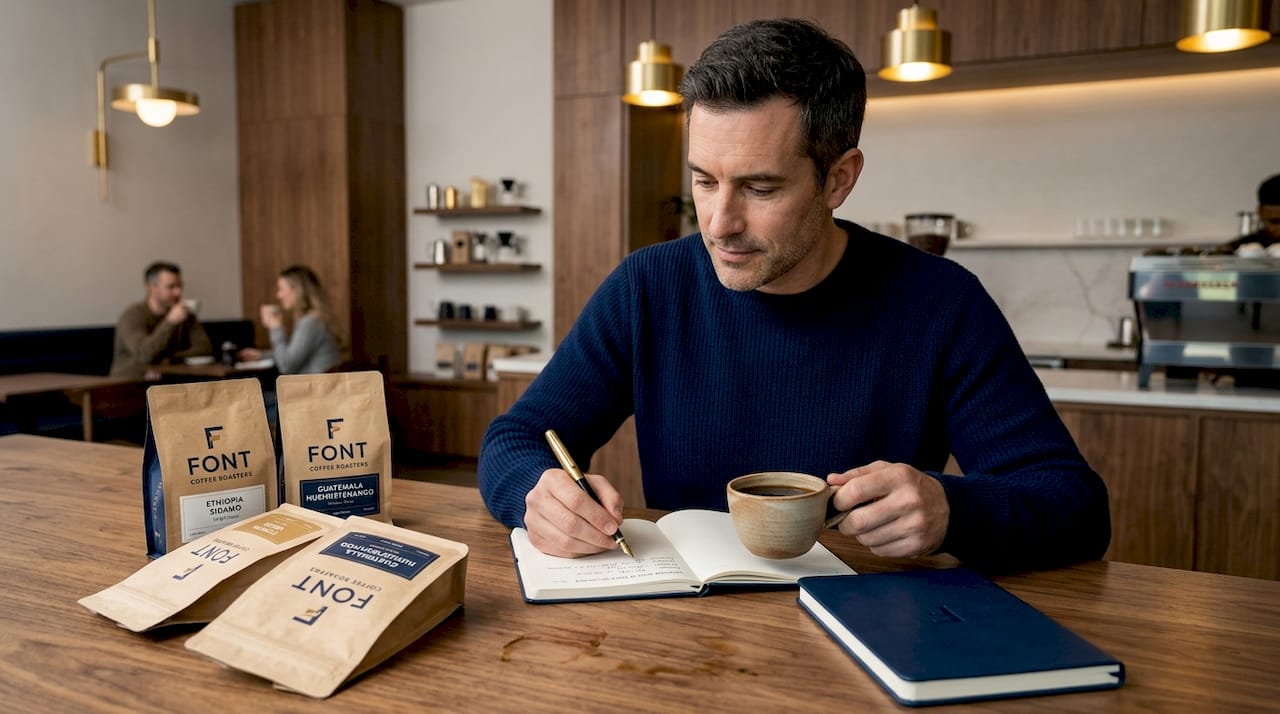
Pro Tip: Bring a small notebook or use your phone’s notes app to record tasting impressions immediately after each visit. Memory is unreliable. Written scores let you compare roasters honestly weeks later.
4. Evaluate roast freshness as a non-negotiable standard
Freshness is the single most underrated quality indicator in the checklist for buying local coffee. A bag from a local roaster that sat on a shelf for six weeks is not better than a well-timed order from a quality regional operation. The local part only matters if the coffee is actually fresh.
The optimal window for most brewing methods falls roughly two to ten days post-roast, though espresso often benefits from resting a few extra days to let CO2 dissipate. When you pick up a bag, look for the roast date, not the “best by” date. Best-by dates are often set twelve months out and tell you almost nothing useful.
If a roaster cannot tell you when a specific batch was roasted, that is worth noting in your score. Transparency about roast dates is a sign that the roaster takes freshness seriously and understands why it matters to you.
5. Ask about sourcing and ethical practices directly
One of the real benefits of local coffee roasters is the opportunity to ask questions that a grocery store bag will never answer. Where did these beans come from? Did the roaster pay above commodity price for them? Is there a direct relationship with the farm?
You do not need to interrogate anyone. A simple “Can you tell me about where this coffee is sourced?” opens the conversation. Roasters who care about ethical sourcing will light up at that question. Those who do not will give you a vague answer and change the subject.
Direct trade relationships, where a roaster buys green beans directly from a farm or cooperative rather than through an importer, generally mean better pay for farmers and more control over quality for the roaster. It is not the only model worth supporting, but it is worth understanding who you are buying from and what their purchasing philosophy looks like.
6. Build relationships through repeat visits and community engagement
One visit is a data point. It tells you what the coffee tasted like on one day, with one barista, on one roast batch. Repeat visits reveal consistency, and consistency is what separates a genuinely good local roaster from one that had a good day when you happened to stop by.
Plan to visit your top two or three candidates at least three times before deciding where to direct your regular spending. Try different brew methods. Buy a retail bag and brew it at home. Attend a tasting or cupping event if they offer one. Public engagement events are where you learn the most about a roaster’s philosophy and the people behind it.
Following a roaster on social media after you have visited in person is a completely different experience than discovering them there. At that point, you know what the coffee actually tastes like, so the content means something real.
7. Understand the broader impact of your choices
Supporting local roasters is not just about getting better coffee. Your spending has a measurable effect on your neighborhood’s economy, culture, and environmental footprint. Here is what that actually looks like in practice:
- Local economic impact. Money spent at a local roaster circulates within the community at a higher rate than money spent at a national chain. Staff, suppliers, and landlords are often local too.
- Sustainable sourcing incentives. When local roasters thrive, they have more leverage to pay fair prices to farmers and invest in better sourcing relationships. Your purchase supports that chain.
- Neighborhood identity. Neighborhood character shapes roaster style, and roasters shape neighborhood character in return. A thriving local coffee scene makes a place more interesting to live in.
- Reduced environmental footprint. Locally roasted coffee travels fewer miles from roaster to cup. That is a small but real reduction in emissions compared to coffee roasted in a distant facility and shipped across the country.
“The most powerful thing a coffee drinker can do for their community is spend intentionally. Every bag you buy from a local roaster is a vote for the kind of neighborhood you want to live in.”
My honest take on what actually changes your buying habits
I have visited a lot of roasters over the years, and the single shift that changed how I spend money on coffee was switching from browsing to scoring. Before I started keeping notes and rating espresso balance, filter clarity, and freshness on a consistent scale, I was buying based on packaging and vibes. That sounds embarrassing, but it is honest, and I suspect most people do the same thing.
What I learned from the scoring process is that roast date transparency is the clearest signal of a roaster’s integrity. Roasters who print the exact roast date on every bag are telling you something about how they think about their product. Roasters who do not are, at best, indifferent to freshness and, at worst, hoping you do not notice.
I also learned that the roasters who shaped my neighborhood most meaningfully were not always the ones with the best branding. Some of the most interesting coffees I have had came from operations with hand-stamped bags and a single espresso machine. The sourcing was direct, the roasting was careful, and the people behind the counter could tell me exactly what I was drinking and why.
My advice: resist the pull of aesthetics. Score the coffee. Check the date. Ask about the farm. The answers will tell you everything.
— Rosario
Explore small-batch coffee from Font Coffee Roasters
If you are ready to put your supporting local roasters checklist into practice, Font Coffee Roasters offers a genuine starting point. Rooted in four generations of Texas roasting expertise, Font-mag specializes in small-batch production that captures the distinct character of each origin rather than blending it into uniformity. For those buying in volume, the wholesale coffee 5lb bag delivers consistent, freshly roasted coffee at a scale that makes sense for regular drinkers and independent shops alike. Decaf drinkers are not an afterthought here either. The wholesale decaf option brings the same sourcing standards to a category that local roasters often underserve. Free shipping on orders over $35 makes it easy to try without overthinking it.
FAQ
How do I know if a roaster is truly local?
Look for on-site roasting equipment, a local production address, and printed roast dates on their bags. Physical roasting presence is the most reliable confirmation of an authentic local operation.
What roast date should I look for when buying local coffee?
Beans roasted within the last two weeks are at peak freshness for most brewing methods. The optimal window is roughly two to ten days post-roast, depending on whether you are brewing espresso or filter coffee.
How many roasters should I visit before choosing a favorite?
Visit at least three to five roasters and score each one on espresso balance, filter clarity, freshness, staff knowledge, and product variety. A systematic approach prevents decisions driven by branding rather than actual quality.
Why does supporting local roasters matter beyond the coffee itself?
Local roasters contribute to neighborhood identity, support ethical sourcing relationships with farmers, and keep spending circulating within the local economy at higher rates than national chains.
What questions should I ask a local roaster to evaluate their sourcing?
Ask where the beans come from, whether the roaster has a direct relationship with the farm or cooperative, and what they paid relative to commodity prices. Roasters who care about sourcing will answer confidently and in detail.