

Texas Roast Coffee Brewing Guide for Enthusiasts
You bought a beautiful small-batch Texas-roasted coffee, brewed it the same way you always do, and it tasted flat. Maybe bitter. Definitely not what you expected. This texas roast coffee brewing guide exists to fix exactly that. Texas roasts have distinct characteristics shaped by local craft traditions, specific origin selections, and small-batch timing that most generic brewing advice ignores. Get the variables right and these coffees open up with complexity and balance that makes every cup worth the effort.
Table of Contents
- Key takeaways
- Your Texas roast coffee brewing guide starts here
- How to brew Texas roast coffee step by step
- Freshness and degassing for Texas roast coffee
- Troubleshooting common Texas roast brewing problems
- Enjoying the results of well-brewed Texas coffee
- My honest take on brewing Texas coffee at home
- Brew better with Font Coffee Roasters
- FAQ
Key takeaways
| Point | Details |
|---|---|
| Match grind to method | Use fine for espresso, medium-fine for pour-over, and coarse for French press to avoid extraction problems. |
| Rest before you brew | Dark roasts need 3 to 5 days after roasting, medium roasts 5 to 7 days, and light roasts up to 14 days. |
| Water quality matters | Use filtered water at 195 to 205°F and avoid distilled water, which lacks the minerals needed for balanced extraction. |
| Start with a 1:16 ratio | Measuring 1 gram of coffee per 16 grams of water gives you a reliable baseline for any brewing method. |
| Clean your equipment | Residue buildup introduces bitterness that no amount of technique adjustment will fix. |
Your Texas roast coffee brewing guide starts here
Before you touch a kettle or grinder, the equipment you use will either support or sabotage the Texas coffee flavor profile you are chasing. The two most important tools in your setup are a burr grinder and a quality brewer. Blade grinders produce uneven particle sizes that cause simultaneous over and under extraction in the same cup. A burr grinder gives you consistent particle size and actual control over your results.
For brewers, three methods work especially well with Texas roasts:
- Chemex produces a clean, bright cup that highlights floral and fruity notes common in lighter Texas roasts from African origins
- AeroPress offers pressure-assisted extraction and fast brew times, making it forgiving for medium roasts with nutty or chocolatey profiles
- French press amplifies body and oils, which suits the deeper, earthier notes of darker Texas roasts beautifully
Your filter choice changes the cup character more than most people realize. Paper filters remove oils and produce clarity. Metal filters let oils through and create a heavier, richer mouthfeel. For a Texas medium roast like Font Coffee Roasters’ Broken Arrow Reserve, paper is often the better choice to let nuanced flavors read clearly.
Filtered or bottled water consistently improves flavor by removing impurities, and distilled water actually works against you because it lacks the dissolved minerals that help pull flavor compounds from the coffee. Water temperature should stay between 195 and 205°F. Anything below that range under-extracts the coffee and you end up with a weak, sour cup.
Pro Tip: Preheating your brewer and cup with hot water before brewing prevents temperature drop during extraction and stops flavor from falling flat on contact.
Always check the roast date on your beans and grind just before brewing to preserve the aromatic oils that make fresh Texas roasts worth seeking out in the first place.
How to brew Texas roast coffee step by step
This is where most home brewers lose their way. They follow a recipe built for generic grocery store coffee and wonder why their carefully sourced Texas roast does not shine. The brewing process needs to match the specific method you are using.
Here is a pour-over method that works well as your primary Texas coffee brewing framework:
- Weigh your coffee and water. A 1:16 coffee to water ratio is your starting point. For a 250ml cup, use about 15.5 grams of coffee.
- Grind to medium-fine. Think of the texture of coarse sand. Too fine and you over-extract; too coarse and water rushes through without picking up flavor.
- Rinse your paper filter. This removes the papery taste and brings the brewer to temperature simultaneously.
- Bloom the coffee. Pour twice the weight of your coffee in water (about 30ml for 15g of grounds) and let it sit for 30 to 45 seconds. The bloom releases trapped CO2 so water can saturate the grounds evenly.
- Pour in slow, steady circles. Complete your remaining water volume over 2 to 3 minutes total brew time, pouring in stages rather than all at once.
- Let the drawdown finish before drinking. The last drips from a pour-over contain the most concentrated flavor. Let them complete.
For other brewing methods, the key variable that shifts is grind size by method. Fine for espresso, medium-fine for pour-over and drip, coarse for French press and cold brew. Getting this right is not optional if you want to brew Texas roast coffee at its best.
Pro Tip: For AeroPress, try the inverted method with a medium roast Texas coffee. Use water at 200°F, steep for 90 seconds, and press slowly over 30 seconds. The result is a dense, syrupy concentrate you can drink straight or dilute.
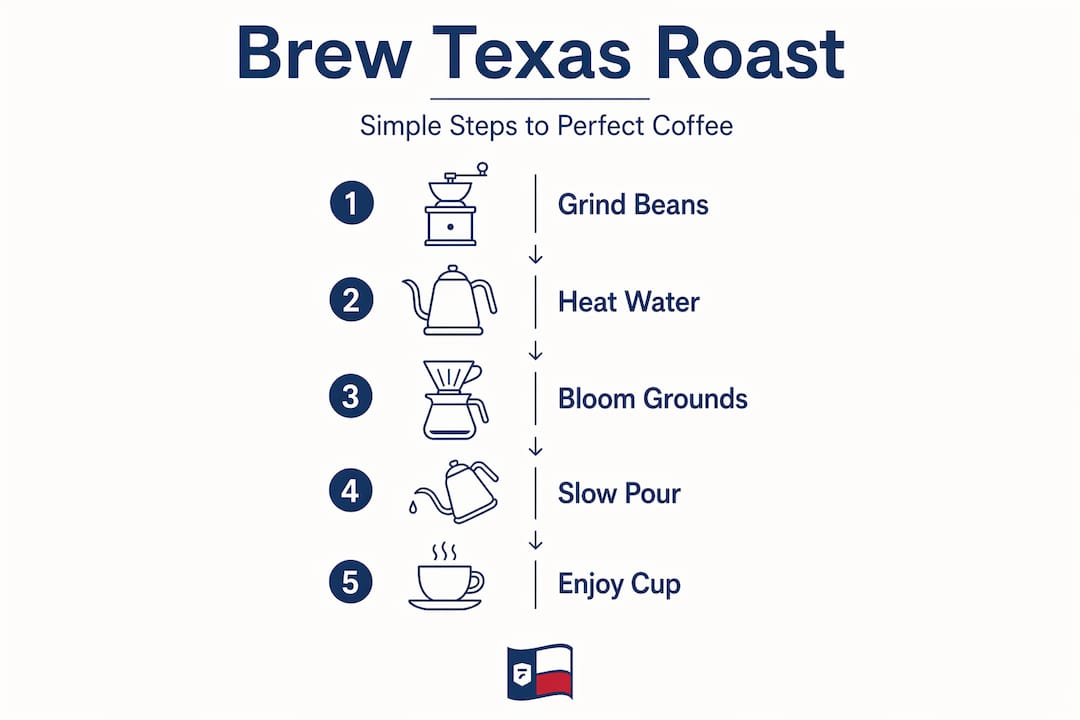
Water temperature also shifts by roast level. Lighter roasts benefit from the higher end of the range (around 205°F) because they need more energy to extract. Darker roasts extract more easily, so pulling back to 195°F reduces the risk of bitterness.
Freshness and degassing for Texas roast coffee
This is the single most misunderstood aspect of home brewing Texas roasts. Most enthusiasts know to buy fresh coffee. Fewer understand that freshly roasted does not mean immediately brewable.
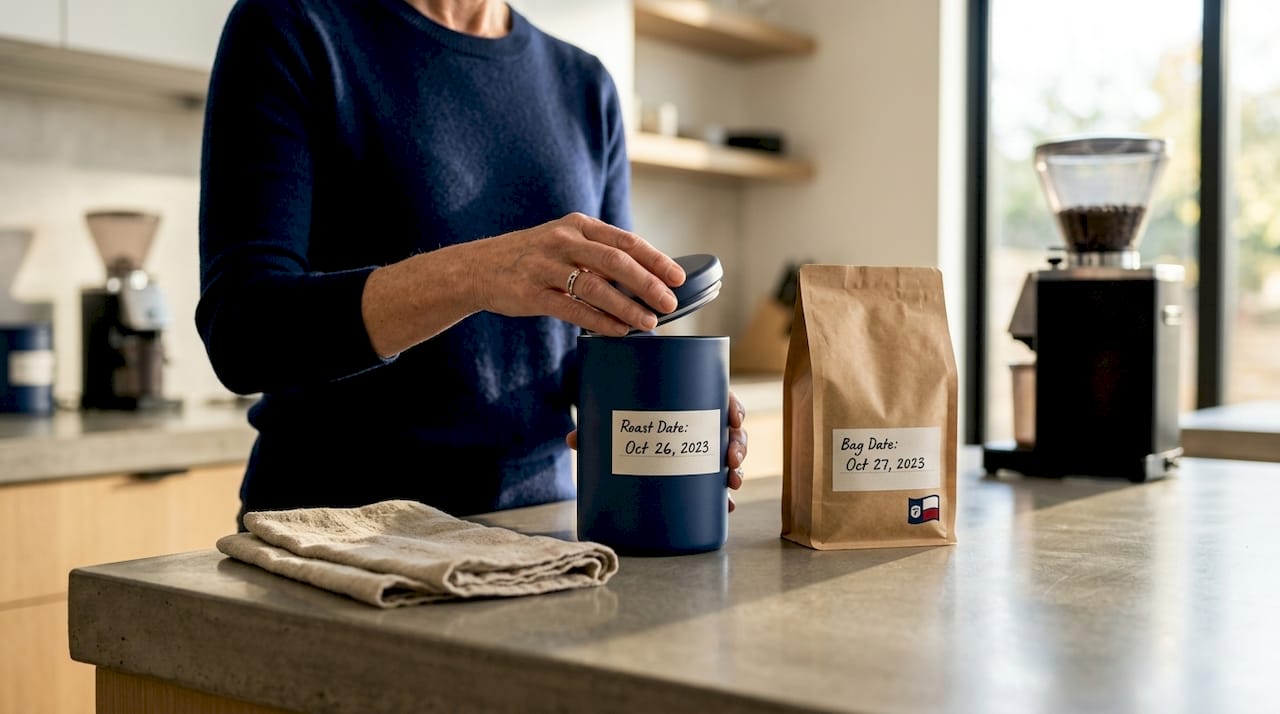
After roasting, coffee releases significant amounts of CO2 through a process called degassing. If you brew too soon, that trapped gas creates carbonic acid on contact with water and the result is a metallic or sour taste that no brewing adjustment will fix. Roast degassing timing varies by level: dark roasts peak in flavor 3 to 5 days after roasting, medium roasts 5 to 7 days, and light roasts often need 10 to 14 days before they are truly ready.
| Roast Level | Resting Period | What Happens If You Brew Too Early |
|---|---|---|
| Dark roast | 3 to 5 days | Sour or gassy flavor, uneven extraction |
| Medium roast | 5 to 7 days | Metallic notes, weak body |
| Light roast | 10 to 14 days | Flat, underdeveloped, acidic |
The blooming phase in pour-over actually serves double duty here. It lets residual CO2 escape before full extraction begins, which is especially important if your beans are on the fresher end of the acceptable window.
For home roasters, smaller batch roasting times run around 10 minutes while larger batches take up to 16 minutes. This timing affects how aggressively the beans off-gas, so smaller home roasts generally need slightly less resting time than commercial batches of the same profile.
Storage matters just as much as the resting period. Keep your beans in an opaque, airtight container at room temperature away from heat and direct light. The refrigerator introduces moisture and odors that damage flavor. Room temperature with proper sealing is all you need.
Pro Tip: Write the roast date on your container when you open a new bag of Texas-roasted coffee. You will never second-guess whether the beans are ready or past their peak.
Troubleshooting common Texas roast brewing problems
Even with the right gear and fresh beans, flavor problems happen. The good news is that most issues trace back to one of four variables: grind size, water temperature, brew time, or equipment cleanliness.
- Bitter cup: Most likely cause is over-extraction from too fine a grind, water that is too hot, or a brew time that ran too long. Try coarsening your grind first, since it produces the most immediate improvement.
- Sour or sharp cup: Under-extraction is the culprit. Your grind may be too coarse, your water too cool, or your brew time too short. Raise your water temperature and let the extraction run a little longer.
- Weak or watery cup: Check your ratio first. If you are already at 1:16, try grinding finer or extending brew time slightly.
- Grounds in the cup: Common with French press if your grind is too fine or if you pour immediately after pressing. Let the press sit for 30 seconds after plunging before you pour.
- Flat, lifeless flavor: Often a temperature problem. Cold equipment pulls heat from your brew water. Preheating your gear takes 60 seconds and makes a real difference.
The overlooked fix that most Texas coffee brewing tips skip entirely is equipment cleaning. Residue buildup inside brewing equipment reduces clarity and complexity in the cup by introducing rancid oils into fresh brews. Rinse your brewer after every use, descale your kettle monthly, and purge your grinder with fresh beans weekly.
Pro Tip: Run a small amount of freshly ground coffee through your grinder before your actual brew. This purges stale residue from the grinding chamber and seasons the burrs with fresh oils.
Enjoying the results of well-brewed Texas coffee
When you get it right, the Texas coffee flavor profile in a well-brewed cup is unmistakable. Depending on origin, roast level, and method, you might notice caramel sweetness in a medium roast, dark chocolate weight in a darker blend, or citrus brightness in a light roast from East Africa.
Here are the sensory markers of a well-extracted cup:
- Aroma fills the room as you brew. A flat-smelling brew before you even taste it signals a problem.
- Balance means no single note dominates. Acidity, sweetness, and bitterness coexist without one overwhelming the others.
- Body describes the weight of the liquid on your palate. Good Texas roasts feel substantial, not thin.
- Finish is what lingers after you swallow. A long, pleasant finish is the hallmark of quality small-batch coffee brewed correctly.
Once you have a baseline you love, start experimenting. Change one variable at a time: adjust your ratio by one gram, try a slightly coarser grind, or drop your water temperature by five degrees. Keep notes. The brewers who develop real personal style do it through deliberate, documented iteration rather than random changes.
My honest take on brewing Texas coffee at home
I have made every mistake in this guide personally. The one that cost me the most enjoyment was brewing beans too fresh. I bought a beautiful small-batch Texas medium roast, tore open the bag the same day it arrived, and brewed it immediately because I was excited. It tasted strange, almost sour and metallic, and I initially blamed the roaster. The beans were perfect. My impatience was the problem.
What I have learned is that most home brewing failures come from skipping the fundamentals, not from lacking advanced technique. People chase complex brewing gadgets or exotic methods when the real improvement is in their grind consistency, their water temperature discipline, and their patience with freshness windows. I have had transcendent cups from a basic AeroPress and mediocre cups from expensive gear used carelessly.
The Texas specialty coffee scene has matured remarkably. Roasters across Austin, Houston, San Antonio, and Dallas are doing origin-specific work that competes with anyone nationally. These beans deserve better than a thoughtless scoop into a drip machine. When you match the brewing approach to the roast profile, as this guide walks you through, you are respecting both the craft of the roaster and your own investment as a coffee drinker.
My practical suggestion: start with a medium roast, a pour-over, and a kitchen scale. Master that combination before adding complexity. The techniques transfer directly to every other method once you understand what extraction actually feels like through variables you can control.
— Rosario
Brew better with Font Coffee Roasters
Font Coffee Roasters brings four generations of Texas roasting expertise to every small batch they craft. If you are ready to put this guide into practice with coffee that rewards proper technique, their lineup gives you the right starting point.
For enthusiasts who want to stock up without compromising freshness, the wholesale 5lb option is one of the most cost-effective ways to keep quality Texas-roasted coffee on hand for consistent daily brewing. If you prefer a lower-caffeine option without sacrificing flavor complexity, the Downshift Decaf is a medium-roast Colombia that responds beautifully to the pour-over method outlined in this guide. Font offers free shipping on orders over $35, making it easy to keep your brew station stocked with fresh, roast-dated beans ready to go.
FAQ
What is the ideal water temperature for Texas roast coffee?
Water should stay between 195 and 205°F for best extraction. Use the higher end of that range for light roasts and the lower end for darker roasts to reduce bitterness risk.
How long should I wait before brewing freshly roasted Texas coffee?
Dark roasts are ready 3 to 5 days after roasting, medium roasts 5 to 7 days, and light roasts up to 14 days. Brewing before these windows expire typically produces sour or metallic flavors from excess CO2.
What coffee-to-water ratio works best for Texas roast coffee?
A 1:16 ratio by weight is the standard starting point. That means 1 gram of coffee for every 16 grams of water, which produces a balanced cup you can adjust from once you understand your specific beans.
Why does my Texas roast coffee taste bitter?
Bitterness usually signals over-extraction caused by too fine a grind, water that is too hot, or a brew time that ran too long. Coarsening your grind is the fastest fix, followed by dropping your water temperature slightly.
How should I store Texas-roasted coffee beans at home?
Keep beans in an opaque, airtight container at room temperature, away from heat, light, and moisture. Avoid the refrigerator, which introduces condensation and odors that damage flavor.