

Why Small Batch Roasters Thrive in Texas
Most people assume small batch coffee is just a premium marketing label slapped on bags to justify higher prices. That assumption misses something real. Understanding why small batch roasters thrive in Texas means looking at a convergence of culture, geography, sourcing relationships, and a consumer base that genuinely knows the difference between fresh and stale. Texas is not just another state with a growing coffee scene. It is a place where the conditions for artisan coffee success are baked into the identity of its cities, its people, and its land.
Table of Contents
- Key takeaways
- Why small batch roasters thrive in Texas culture
- Sourcing advantages Texas roasters hold
- The roasting process itself: why small batches win
- Market conditions that help Texas roasters grow
- Challenges Texas roasters face and how they adapt
- My honest take on Texas coffee culture
- Font Coffee Roasters: built for this moment
- FAQ
Key takeaways
| Point | Details |
|---|---|
| Culture drives demand | Texas’ diverse population creates appetite for distinct, origin-specific coffee flavors that small batch roasters deliver best. |
| Sourcing proximity matters | Access to high-quality Mexican and regional beans gives Texas roasters a freshness and traceability advantage. |
| Small batch means better flavor | Precise roast control produces complexity and freshness that mass-market roasting simply cannot replicate. |
| Community loyalty sustains growth | Direct relationships with customers and local identity keep small roasters competitive against large brands. |
| Challenges are real but manageable | Texas roasters overcome scale and supply chain limits through grower partnerships and diversified product lines. |
Why small batch roasters thrive in Texas culture
Texas is not a monolith. Walk through Houston on any given weekend and you encounter Vietnamese coffee traditions, Mexican café de olla, Ethiopian brewing ceremonies, and third-generation Texan ranch culture all within a few miles of each other. That cultural density is not incidental to the coffee scene. It is the engine behind it.
Small batch coffee success in Texas is partly a story about flavor expectations. When a community has deep roots in specific coffee traditions, generic blends feel like a compromise. Consumers who grew up with nuanced, origin-specific brews are not satisfied by mass-produced uniformity. Texas roasters have responded by crafting coffees that speak to those specific palates. Austin has become a showcase for this, with local coffee roasters leading the third-wave movement with a focus on sustainability and genuine craft.
The community-driven support for local businesses in Texas also runs deeper than trend-following. Texans have a documented preference for buying local, and that cultural pride extends to coffee. When a roaster is part of the neighborhood, when the owner knows your name and can tell you exactly where the beans came from, that relationship creates loyalty that no national brand can manufacture.
Here is what that looks like in practice across Texas cities:
- Austin: A hub for specialty coffee experimentation, with roasters pushing single-origin offerings and transparent sourcing stories
- Houston: The most ethnically diverse city in America, where community ties to specific coffee-growing regions in Mexico, Central America, and Southeast Asia directly shape what roasters stock and how they roast
- Dallas: An emerging scene where roasters like Native Coffee Co. are bringing world-class expertise and origin-focused sourcing to a market hungry for quality
Pro Tip: If you want to understand a Texas city’s coffee culture, skip the chain cafes and find the roaster who sources from a single farm. That conversation will tell you more about the neighborhood than any travel guide.
Sourcing advantages Texas roasters hold
Geography is an underrated factor in the small batch coffee story. Texas sits closer to some of the world’s most exciting coffee-growing regions than any other major American market. That proximity is not just logistical. It shapes the entire sourcing relationship.
Mexican coffee is a prime example. Approximately 95% of Mexican coffee farms are small plots that produce a significant portion of the country’s crop, often sold through cooperatives. These farms produce coffees with a balanced body and unique regional character that Texas roasters have been quick to recognize. As Mexican coffee grows in popularity in Texas, roasters who built relationships with those cooperatives early now have access to beans that larger commercial roasters simply cannot source at the same quality level.
Direct trade models amplify this advantage. When a Texas roaster travels to a farm in Veracruz or Oaxaca, tastes the coffee at origin, and negotiates directly with the grower, two things happen. Quality control tightens because the roaster understands exactly what they are buying. And the grower receives more equitable compensation because the middlemen are removed. Roasting closer to origin improves both quality outcomes and producer welfare, which is a model Texas artisan roasters have embraced more aggressively than roasters in most other states.
Here is how direct trade compares to conventional sourcing for small batch roasters:
| Factor | Direct trade model | Conventional sourcing |
|---|---|---|
| Bean freshness | Higher, with shorter supply chain | Variable, often older inventory |
| Flavor traceability | Full farm-to-cup transparency | Blended origins, limited detail |
| Grower compensation | Equitable, above market rate | Standard commodity pricing |
| Roaster quality control | Hands-on at origin | Reliant on broker grading |
| Relationship depth | Long-term, collaborative | Transactional |
Pro Tip: When buying from a Texas small batch roaster, ask if they have visited the farm. Roasters who have made that trip will describe the coffee differently. That specificity is a reliable indicator of quality.
The roasting process itself: why small batches win
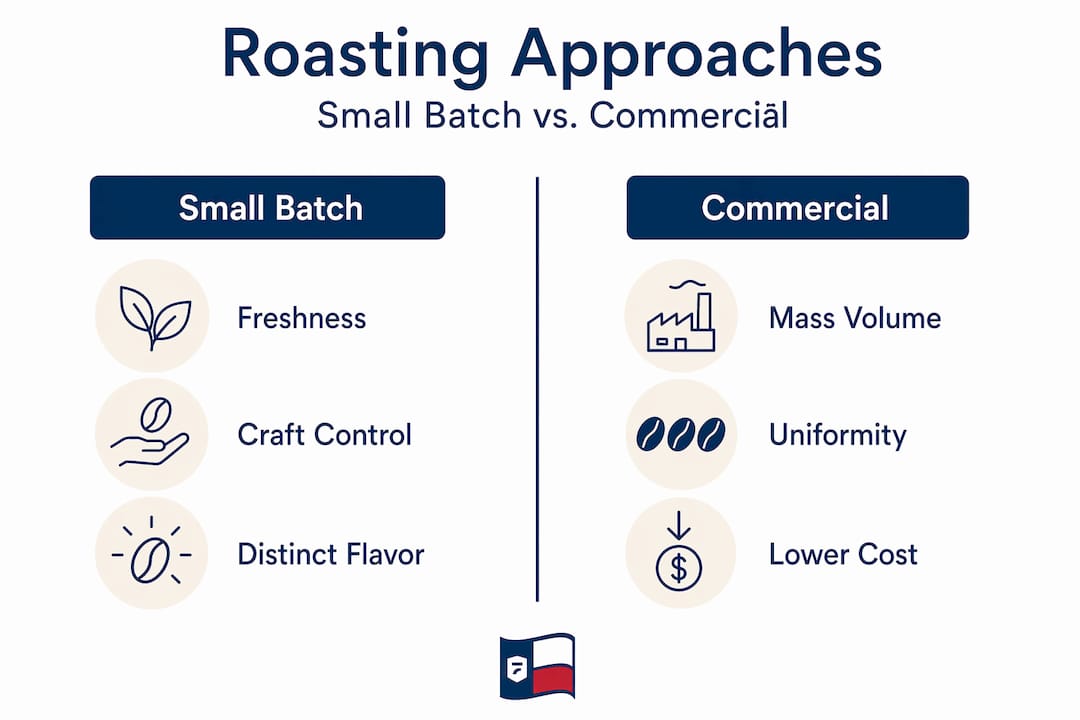
The benefits of small batch roasting are technical, but they are not complicated to understand. When you roast fewer beans at once, you have more control over what happens to each of them. Temperature curves, airflow, and development time can be adjusted with precision that a 500-pound commercial drum simply does not allow.
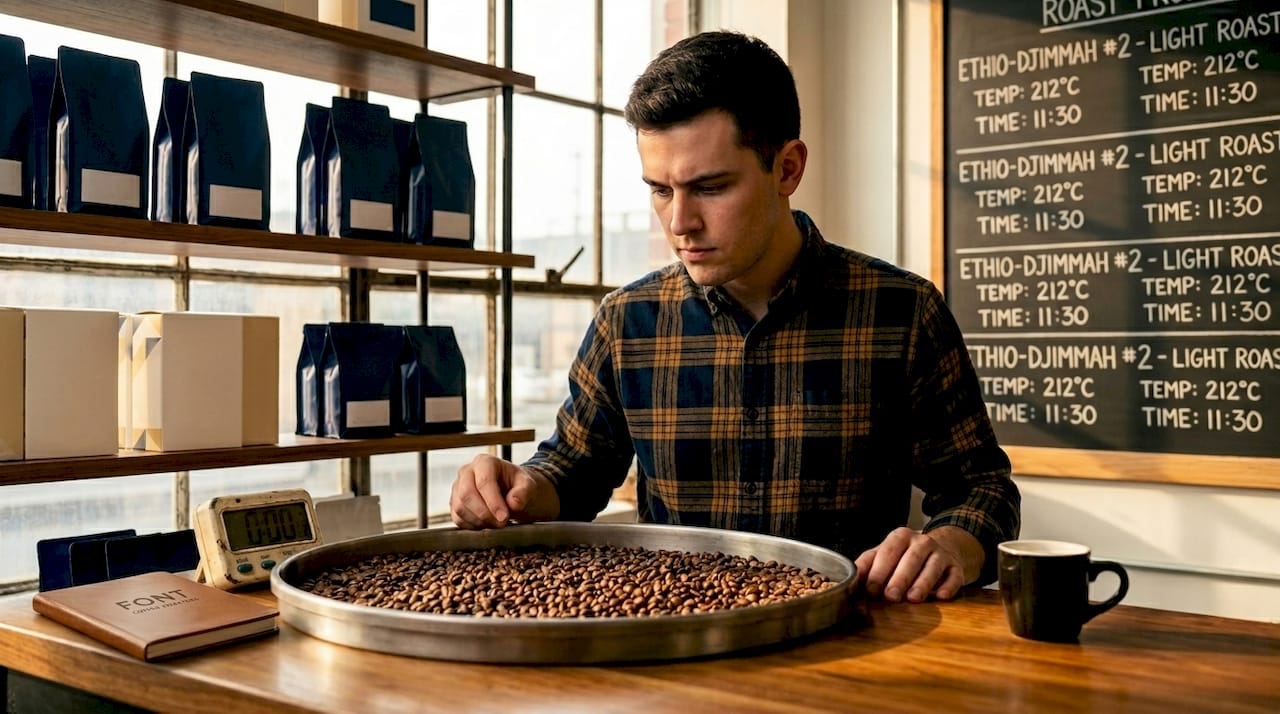
Meticulous control of the roast means each bean’s development is closely monitored, which produces consistency and quality that larger operations cannot match at scale. This matters because coffee is an agricultural product with natural variation. A small batch roaster can compensate for differences between lots. A commercial roaster has to homogenize those differences away, which is exactly where flavor complexity gets lost.
Texas consumers have noticed. Freshness and unique flavor profiles are the primary drivers of why third-wave coffee drinkers in Texas choose artisan roasters over grocery store brands. The difference between coffee roasted three days ago and coffee roasted three months ago is not subtle. It is the difference between tasting the actual fruit and floral notes of the bean versus tasting a flat, oxidized version of what those notes used to be.
What small batch roasting delivers that mass production cannot:
- Flavor complexity: Natural fruit, floral, and terroir notes are preserved rather than roasted into uniformity
- Freshness: Smaller production runs mean faster turnover and coffee that reaches the consumer closer to roast date
- Adaptability: Roasters can adjust profiles between lots based on how a specific harvest behaves in the drum
- Transparency: When you roast 20 pounds at a time, you know exactly what went into every bag
The consumer preference for freshness in Texas is not just a passing phase. It reflects a broader shift in how Texans think about food and drink quality, and small batch roasters are positioned perfectly to meet that expectation.
Market conditions that help Texas roasters grow
The business environment in Texas is genuinely favorable for small roasters, and not just because of low taxes or light regulation. The third-wave coffee movement has matured in Texas cities in a way that rewards quality over volume. Customers in Austin, Houston, and Dallas are willing to pay more for coffee they understand and trust.
Here is how successful Texas small batch roasters build and sustain that trust:
- Build a direct consumer relationship first. The most resilient Texas roasters sell directly through their own channels before pursuing wholesale. That direct line to the customer creates feedback loops that improve the product and builds loyalty that survives market fluctuations.
- Use social media as a sourcing story platform. Word of mouth combined with online presence helps artisan roasters compete in crowded markets. Texas roasters who share harvest photos, farm visit videos, and roast-day content build audiences that feel invested in the product before they ever taste it.
- Anchor local identity to the brand. Roasters who connect their brand to a specific Texas city or neighborhood benefit from the community pride that Texans already feel. A roaster in San Antonio that sources from Mexican cooperatives and tells that story clearly is not just selling coffee. It is selling a regional identity.
- Diversify beyond coffee. The most successful Texas artisan coffee businesses have expanded into complementary products like matcha, loose-leaf teas, and specialty syrups. This keeps the customer relationship active between coffee purchases and increases average order value without diluting the core brand.
Pro Tip: Follow a Texas small batch roaster on social media for two weeks before buying. If they post about their sourcing relationships, roast dates, and brewing tips consistently, that transparency usually carries through to the cup.
Challenges Texas roasters face and how they adapt
Small batch coffee success is not without friction. The same qualities that make artisan roasting special also create real operational constraints. Production scale is the most obvious. A roaster working with a 15-kilogram drum can only produce so much coffee per day, which limits wholesale capacity and makes it difficult to fulfill large orders consistently.
Supply chain consistency is a second challenge. When you source from small farms through direct relationships, you are dependent on a single harvest from a single plot. A bad growing season, a logistics delay, or a shift in the cooperative’s priorities can disrupt supply in ways that a commercial roaster buying from a commodity broker would never experience.
Competition from large brands with massive marketing budgets is a third reality that Texas artisan roasters navigate every day.
“The roasters who last in Texas are the ones who treat their community like a co-owner of the business. When customers feel that invested, they do not switch to whatever is on sale at the grocery store.”
Texas roasters have developed specific strategies to address these pressures:
- Partner with multiple farms across different growing regions to reduce single-origin supply risk without sacrificing quality
- Build community through events like public cuppings, roastery tours, and coffee education classes that deepen customer relationships beyond the transaction
- Diversify product lines with decaf options, seasonal limited releases, and complementary beverages to maintain revenue during off-peak periods
- Leverage grower partnerships to co-develop exclusive lots that no competitor can replicate, turning sourcing relationships into a genuine competitive advantage
Texas roasters partner with growers and diversify their offerings specifically to remain sustainable when the inevitable supply or demand disruptions hit. The ones who survive long-term treat resilience as a core business strategy, not an afterthought.
My honest take on Texas coffee culture
I have spent time in roasteries across Texas, and what strikes me most is not the equipment or the sourcing credentials. It is the conviction these roasters carry. They are not hedging. They are not producing artisan coffee as a side project while waiting for a bigger opportunity. They have decided this is the work, and that decision shows in the cup.
What I find most interesting is how the Texas identity actually protects small batch roasters from the pressure to scale. In most markets, growth is assumed to be the goal. In Texas coffee culture, there is genuine respect for staying small and staying excellent. The roasters I have talked to who have turned down wholesale accounts because they could not maintain quality at that volume are not seen as failures. They are seen as principled.
My honest advice: stop treating local coffee as a premium option you indulge in occasionally. Make it your default. The artisan coffee in Texas scene is producing some of the most interesting cups available anywhere in the country, and most of it is priced fairly for what it delivers. You do not need to be a coffee expert to appreciate the difference. You just need to try it once with attention.
— Rosario
Font Coffee Roasters: built for this moment
Font Coffee Roasters is exactly the kind of Texas operation this article describes. Built on four generations of roasting expertise, Font roasts in small batches specifically to preserve the nuanced flavor of every origin it works with. The Downshift Decaf Medium Roast is a strong example of that commitment. It is sourced from Colombia, roasted with the same precision Font applies to its full-caffeine offerings, and delivers the kind of clean, complex flavor that decaf drinkers rarely expect but always appreciate. For those looking to stock up or share great coffee, the wholesale coffee option makes it easy to support local Texas roasting at scale. Free shipping on orders over $35 makes the decision even easier.
FAQ
Why do small batch roasters succeed in Texas specifically?
Texas combines cultural diversity, proximity to quality coffee-growing regions, and a strong local-first consumer mindset that creates ideal conditions for artisan roasters. Cities like Austin and Houston lead third-wave coffee culture with a focus on freshness, sustainability, and community connection.
What makes small batch roasting better than commercial roasting?
Small batch roasting allows precise control over temperature and timing, which preserves the natural flavor complexity of each bean. Coffee roasted in smaller quantities also reaches consumers fresher, which directly improves taste.
How does Texas’ location benefit local coffee roasters?
Texas’ proximity to Mexican and Central American coffee-growing regions makes direct trade relationships more practical and cost-effective. This access gives Texas roasters earlier access to high-quality harvests and stronger relationships with growers.
How do small batch roasters in Texas compete with large brands?
Texas artisan roasters compete through direct consumer relationships, transparent sourcing stories, social media presence, and community events that build loyalty no national brand can replicate at the local level.
Is supporting small batch coffee in Texas worth the higher price?
Yes. The price difference reflects fresher beans, more equitable grower compensation, and a flavor profile that mass-market roasting cannot produce. Texas consumers who make the switch consistently report that they cannot go back to commercial coffee.