

Why Texas Coffee Culture Is Growing Fast
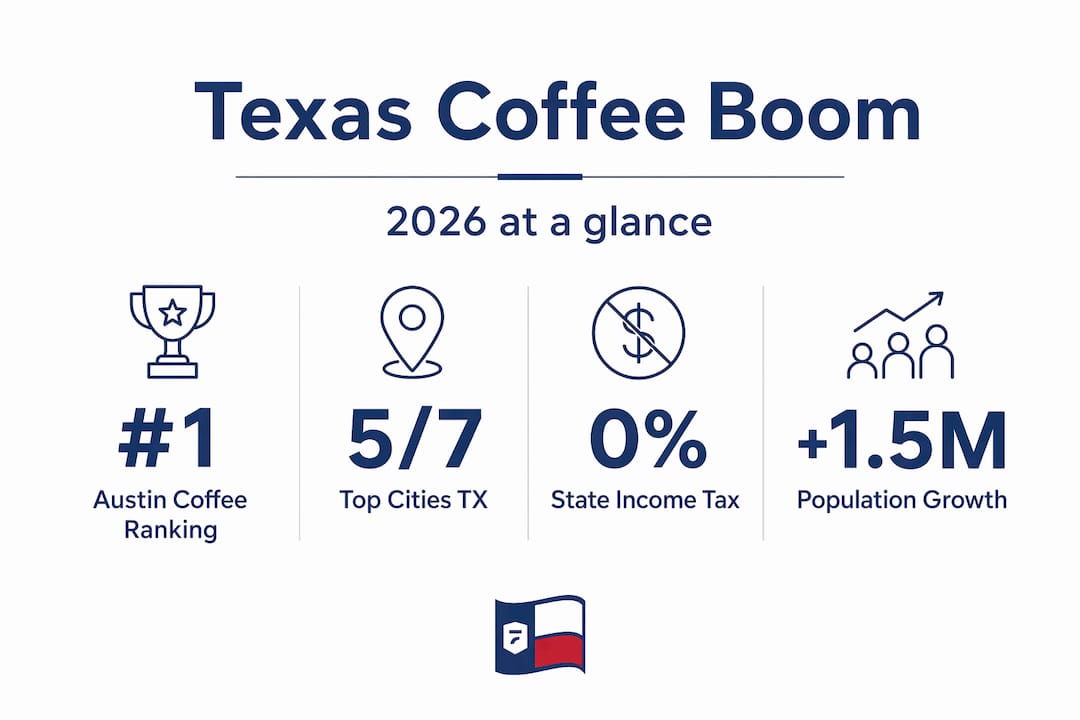
Austin just claimed the title of No. 1 best U.S. coffee city in 2026, beating out Seattle and New York City. If that surprises you, you are not paying attention to Texas. The reason why Texas coffee culture is growing comes down to a rare collision of economic advantage, demographic diversity, and a genuine local obsession with quality. This is not a trend borrowed from the coasts. It is something Texas built from its own roots, and it is accelerating fast.
Table of Contents
- Key Takeaways
- Why Texas coffee culture is growing
- Heritage and global influences behind Texas coffee
- Economic drivers behind Texas coffee market growth
- Third-wave specialty coffee and innovation
- Community and culture as the engine
- My take on what makes Texas coffee different
- Bring Texas coffee quality into your home
- FAQ
Key Takeaways
| Point | Details |
|---|---|
| Austin leads U.S. coffee in 2026 | Austin ranked No. 1 best coffee city nationally, surpassing Seattle and New York City. |
| Texas economics fuel shop growth | No state income tax and below-average acquisition costs make Texas the top market for opening coffee shops. |
| Cultural fusion shapes the menu | Mexican café de olla and Vietnamese phin coffee traditions actively shape Texas specialty coffee offerings. |
| Tech drives flavor precision | Local roasters use computer-monitored roast curves to achieve complex, fruit-forward flavor profiles. |
| Community is the core product | Texas coffee shops function as cultural hubs, blending creativity, diversity, and neighborhood identity. |
Why Texas coffee culture is growing
Texas was never supposed to be a coffee powerhouse. The state does not grow coffee. It has no historic café tradition rooted in European intellectualism or Pacific Northwest counterculture. What it does have is a massive, fast-moving population hungry for experiences, a business environment that rewards entrepreneurs, and a cultural identity that absorbs outside influences and makes them its own. That combination is exactly why the growing coffee scene in Texas caught the industry off guard.
Consider the context. Texas coffee culture development did not follow the same path as Portland or San Francisco. It was not driven by a single neighborhood or a founding roaster. It spread across cities simultaneously, fed by immigration, urban migration, and a demographic mix unlike anywhere else in the country. Houston has 18 local roasters across 8 neighborhoods. Austin has 75 specialty coffee shops spread across 9 neighborhoods. Those are not numbers you associate with a state better known for barbecue and boots.
The cultural explanation is straightforward once you see it. Texas coffee culture explained at its simplest is this: a state with no coffee history had to borrow, blend, and build from scratch. That process produced something original.
Heritage and global influences behind Texas coffee
Understanding Texas coffee culture requires going back to the traditions that already existed here before specialty coffee arrived. Two of the most significant are Mexican café de olla and Vietnamese phin coffee.
Café de olla, brewed with cinnamon and piloncillo in a clay pot, has been part of South Texas and border communities for generations. Vietnamese phin coffee, a slow-drip style often served with sweetened condensed milk, became a staple in Houston’s large Vietnamese American community. When the third-wave specialty movement arrived in Texas, it did not erase these traditions. It absorbed them.
The result is a cultural fusion unique to Texas, where a specialty café might offer a single-origin Ethiopian pour-over alongside a house-made café de olla latte. That kind of menu diversity is not an accident. It reflects the demographic reality of Texas cities.
Here is what that heritage layer actually looks like in practice:
- Café de olla influence: Cinnamon, brown sugar, and spiced profiles are common additions to Texas specialty lattes, a direct inheritance from Mexican border coffee culture.
- Vietnamese phin impact: Cold brew and slow-drip methods gained early traction in Houston because the Vietnamese community had already normalized patient, manual brewing.
- Tex-Mex crossover drinks: Local roasters frequently collaborate with food vendors to create coffee drinks that reference regional cuisine, treating the cup as a reflection of place.
- Community anchoring: Both traditions treat coffee as a social ritual, not a grab-and-go transaction. That philosophy shaped how Texas coffee shops think about their spaces.
This heritage context matters because it explains why Texans love coffee in ways that feel distinct from other American coffee cities. The drink already had cultural roots here. The specialty movement gave it a new vocabulary.
Economic drivers behind Texas coffee market growth
The business case for coffee in Texas is hard to ignore. Five of the top seven best U.S. cities for buying or opening a coffee shop are in Texas, and the economics explain why. No state personal income tax means both entrepreneurs and employees keep more of what they earn. Acquisition costs for existing coffee shops in Texas average around $225,000, compared to $325,000 in Florida or Washington state. That price difference is the gap between feasible and risky for most small business owners.
| City | Median acquisition cost | State income tax |
|---|---|---|
| Austin, TX | ~$225,000 | None |
| Houston, TX | ~$225,000 | None |
| Seattle, WA | ~$325,000 | None (but high property/sales taxes) |
| Miami, FL | ~$325,000 | None |
| New York, NY | ~$350,000+ | Up to 10.9% |
Then there is the population factor. Texas’s rapid population growth keeps adding new coffee consumers to the market at a pace most states cannot match. The Sun Belt migration is not slowing down. Each new resident is a potential regular at a local café, and the demographic diversity they bring expands the range of coffee preferences that local shops have to serve.
Pro Tip: If you are exploring the Texas coffee market as a business opportunity, prioritize neighborhoods in mid-sized Texas cities like San Antonio and Fort Worth. These markets have lower competition than Austin or Houston while benefiting from the same economic advantages.
The competitive landscape is also worth noting. Specialty coffee and value chains coexist in Texas without one cannibalizing the other. A customer who gets a $2 coffee at a drive-through in the morning might spend $8 on a specialty pour-over on the weekend. Texas consumers are not locked into one category. That behavioral flexibility supports a diverse coffee market with room for multiple business models.
Third-wave specialty coffee and innovation
Texas roasters are not copying what San Francisco or Portland built. They are building something parallel and, in some ways, more technically adventurous.
The clearest example is precision roasting. Specialty Texas roasters use computer-connected software to monitor roasting curves in real time, making micro-adjustments that would be impossible to detect or reproduce manually. The outcome is a Brazilian medium roast that delivers natural fruit and citrus notes instead of the burnt bitterness most people associate with dark Texas-style coffee. That is a direct technical achievement, not a marketing claim.
“The goal is to let the bean speak. If the process is right, you should not need to mask anything with darkness or sugar.” This philosophy, shared by Houston-based artisan roasters, captures how Texas’s third-wave scene thinks about its craft.
The innovation extends beyond roasting into beverage development. Here is what sets Texas specialty coffee apart technically and creatively:
- Single-origin sourcing: Texas roasters increasingly work directly with farms in Ethiopia, Colombia, and Guatemala to control quality from the start, not just from the roast.
- Direct-trade relationships: Some Texas roasters bypass importers entirely, negotiating directly with producers to get both better prices for farmers and more expressive raw material.
- Seasonal menus: Shops rotate offerings based on harvest cycles, training customers to expect and appreciate seasonal flavor shifts just like a good restaurant.
- Hybrid brewing methods: Texas cafés blend traditional cultural brewing methods with specialty equipment, producing drinks that feel regionally grounded and technically precise.
Pro Tip: When visiting a Texas specialty café, ask about the roast date on any bag you are considering buying. Freshness matters more than the origin story. A great bean roasted three weeks ago will outperform a mediocre bean roasted yesterday.
The Houston coffee innovation scene is particularly strong in consumer education. Shops regularly host cuppings and brew workshops, which does two things at once: it builds loyalty and it raises the average customer’s palate. A more educated customer base keeps quality high because they can taste the difference.
Community and culture as the engine
The social dimension of the Texas coffee scene is what separates a growing market from a true culture. Coffee in Texas has become a creative and cultural expression, not just a daily routine. Walk into a specialty café in Austin and you are likely to find a local artist’s work on the walls, a latte art throwdown on the calendar, and a barista who can trace the processing method on every coffee on the menu.
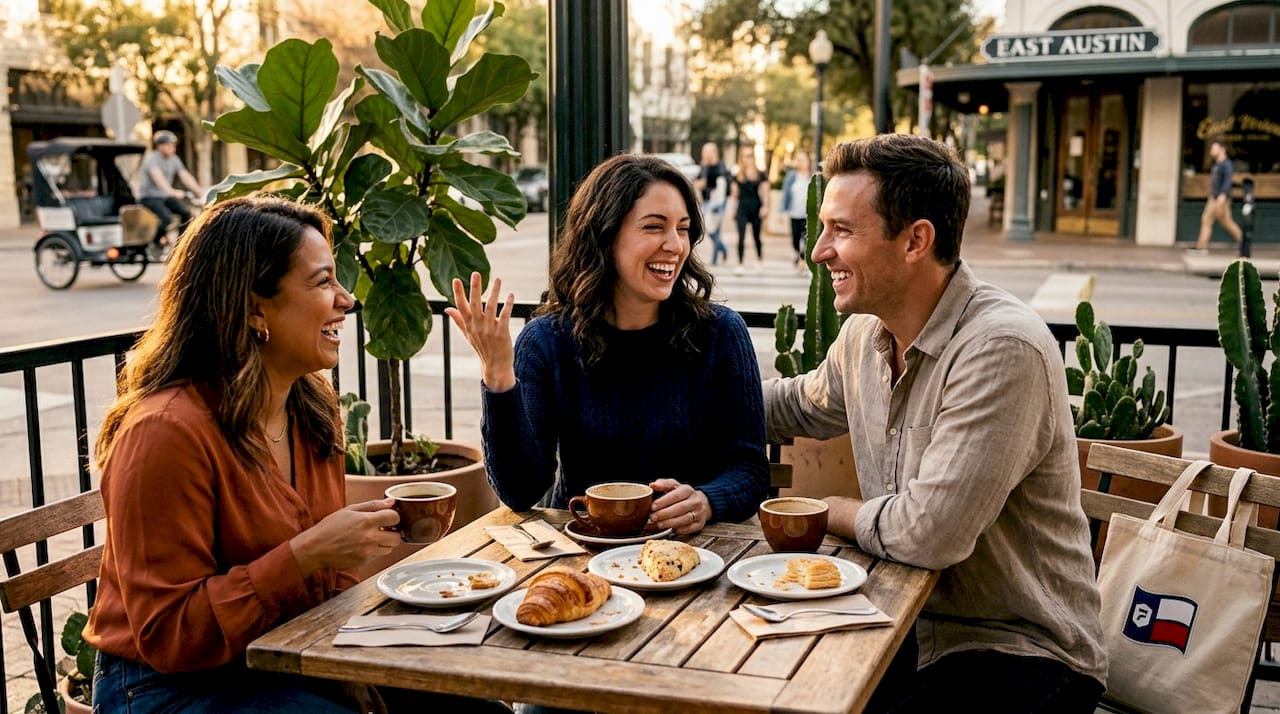
That blend of community and creativity is intentional. Austin’s “keep it weird” identity has always rewarded shops that operate as cultural venues rather than simple beverage outlets. The coffee shop becomes a third place, somewhere between home and work where genuine community happens.
What drives that communal energy in practice:
- Neighborhood density: With 75 specialty shops across Austin and 18 roasters in Houston neighborhoods, residents do not travel far for quality. The local café is genuinely local.
- Cultural programming: Events like latte art competitions, single-origin tastings, and pour-over workshops give regulars a reason to engage beyond their daily cup.
- Demographic crossover: Texas coffee shops routinely serve customers across age, income, and cultural lines in a single space, reflecting the state’s diversity rather than catering to a narrow demographic.
- Collaborative spirit: Texas roasters are notably willing to collaborate with each other, doing guest roasts and co-branded offerings rather than treating every competitor as a threat.
The combination of accessible pricing, rich cultural programming, and genuine neighborhood identity is precisely what makes Texas coffee culture development feel sustainable rather than trend-driven. This is not a moment. It is a shift.
You can also see this cultural depth reflected in how Texas cafés approach their food menus, where pastries and morning café pairings have become part of the total coffee experience, not an afterthought.
My take on what makes Texas coffee different
I have spent years watching coffee culture develop in cities across the country, and what strikes me most about Texas is how unselfconscious the whole thing feels. Other coffee cities carry their identity as a badge. Seattle knows it is a coffee town. Portland reminds you constantly. Texas seems almost surprised by its own prominence, and that surprise keeps the scene hungry.
What I think most people miss about the Texas coffee boom is the role of cultural humility. Texas roasters were not trying to build the next Blue Bottle or Stumptown. They were trying to serve their communities. When those communities included Vietnamese grandmothers who preferred phin-brewed coffee and Mexican American families who grew up with café de olla, the shops adapted. That adaptation produced something that could not have been designed from the outside.
In my experience, the most interesting coffee scenes grow from the ground up, not from the top down. Texas built its scene from neighborhood needs and cultural realities rather than from a branding playbook. The fact that Austin now ranks above Seattle for coffee is not an upset. It is the natural outcome of genuine community investment over years. The cities that are watching their own café scenes stagnate would do well to study what Texas actually did, rather than what it looks like now.
— Rosario
Bring Texas coffee quality into your home
If reading about Texas coffee culture has you wanting the real thing without a road trip, Font Coffee Roasters is the place to start. Built on four generations of Texas roasting expertise, Font’s small-batch approach captures exactly the kind of precision and flavor complexity you read about above. Whether you are stocking a home bar or sourcing for a café, the wholesale blend coffee delivers the nuanced, origin-forward profiles that define what Texas specialty coffee does best. For enthusiasts who prefer decaf without compromise, the Downshift Decaf offers a Colombia medium roast that holds up to any single-origin in the lineup. Font ships free on orders over $35, so getting started costs less than a week of café visits.
FAQ
Why is Austin ranked the top U.S. coffee city in 2026?
Austin earned the No. 1 ranking from Food & Wine’s Global Tastemakers Awards in 2026 by combining density of specialty shops, quality of local roasters, and a culture of coffee innovation that surpassed Seattle and New York City.
What cultural traditions influence Texas coffee?
Texas coffee draws heavily from Mexican café de olla and Vietnamese phin coffee traditions, both of which have shaped local specialty shop menus and brewing practices across Houston, Austin, and San Antonio.
Why are Texas cities ideal for opening coffee shops?
Five of the top seven best cities for coffee shop acquisition are in Texas, primarily because there is no state income tax and median acquisition costs average $100,000 less than comparable markets in Florida or Washington.
What is third-wave coffee, and how does Texas practice it?
Third-wave coffee treats the bean as a craft ingredient, focusing on single-origin sourcing, precise roasting, and skilled brewing. Texas roasters practice this through computer-monitored roasting curves and direct-trade sourcing, producing complex flavor profiles far removed from traditional dark roasts.
Is Texas coffee culture just a trend?
No. The growth is driven by structural factors: rapid population growth, economic incentives for entrepreneurs, and deep cultural roots in Mexican and Vietnamese coffee traditions. These are conditions that sustain a market over time, not a temporary spike in consumer interest.