

How to Wrap Premium Coffee Beans Nicely for Gifts
When you want to wrap premium coffee beans nicely, the presentation is never just about looks. The best coffee gift packaging does two things at once: it protects the beans’ freshness and tells a story that makes the recipient feel genuinely seen. Most guides skip the technical side entirely or treat it as an afterthought, but a beautiful bag that lets beans go stale is a failed gift. This guide covers both sides, giving you the preparation, execution, and finishing touches to make your coffee gift genuinely impressive.
Table of Contents
- Key takeaways
- How to wrap premium coffee beans nicely: preparation first
- Step-by-step guide to creative gift wrapping
- Common mistakes when wrapping coffee as a gift
- Verifying quality before your gift is presented
- My honest take on coffee gift packaging
- Font-mag has everything your coffee gift needs
- FAQ
Key takeaways
| Point | Details |
|---|---|
| Freshness comes first | Choose bags with degassing valves and high-barrier materials before worrying about decoration. |
| Sensory storytelling matters | Place tasting notes and flavor descriptors front and center for maximum perceived value. |
| Personalization amplifies impact | Tags, ribbons, and brewing tip cards dramatically increase emotional connection for the recipient. |
| Avoid vacuum sealing for gifts | Resealable pouches and rigid boxes outperform vacuum bags for both presentation and freshness. |
| Eco-friendly packaging pays off | Sustainable formats signal quality and align with modern gifting expectations. |
How to wrap premium coffee beans nicely: preparation first
Before you touch a single ribbon, you need the right beans and the right materials. This is where most gift buyers go wrong. They buy beautiful wrapping paper and then fill it with coffee that was already two weeks past peak freshness.
Choosing beans worth gifting
Fresh-roasted, specialty-grade beans are the foundation. Look for a roast date on the bag, not just a “best by” date. Single-origin coffees make for particularly meaningful gifts because they carry a traceable story: a specific farm, region, and flavor profile the recipient can read about and appreciate. Font-mag’s single-origin selections are sourced with exactly this kind of traceability in mind, including small-batch roasts like the Broken Arrow Reserve that give a gift real personality.
If the recipient is newer to specialty coffee, a flavored coffee variety offers familiar entry points without sacrificing quality.
Understanding your packaging materials
This is where the industry term “modified atmosphere packaging” becomes relevant. It refers to controlling the gas environment inside a sealed bag to preserve freshness, and it is what separates good coffee packaging from great coffee packaging.
Here is a practical breakdown of the most common materials:
| Material | Freshness protection | Eco-friendliness | Best for |
|---|---|---|---|
| Multi-layer PE/EVOH foil | Excellent | Recyclable in some forms | Premium gifting, long shelf life |
| Kraft paper with liner | Good | High | Rustic or artisan aesthetic |
| Mono-PP film | Very good | 100% recyclable | Modern minimalist presentation |
| Rigid gift box with inner bag | Good | Moderate | Luxury presentation |
Multi-layer PE/EVOH bags are the current industry standard for specialty coffee, and with good reason. They block oxygen, moisture, and light far better than single-layer options.
The single most important feature to look for is a one-way degassing valve. Freshly roasted beans off-gas CO2 for days after roasting, and without a valve to release that gas, bags bulge and burst, ruining both the coffee and the presentation. Never gift beans in packaging that lacks this feature.
Pro Tip: If your chosen gift bag does not have a degassing valve, transfer the beans to one that does at least 24 hours before wrapping. This gives the bag time to vent without distorting its shape.
Sustainable materials are also worth considering. Specialty consumers pay roughly 9.7% more for eco-friendly packaging, and choosing recyclable formats signals that your gift is thoughtful on multiple levels.
Step-by-step guide to creative gift wrapping
With the right inner packaging sorted, it is time to build the presentation. Think of this in two layers: the functional inner container and the decorative outer experience.
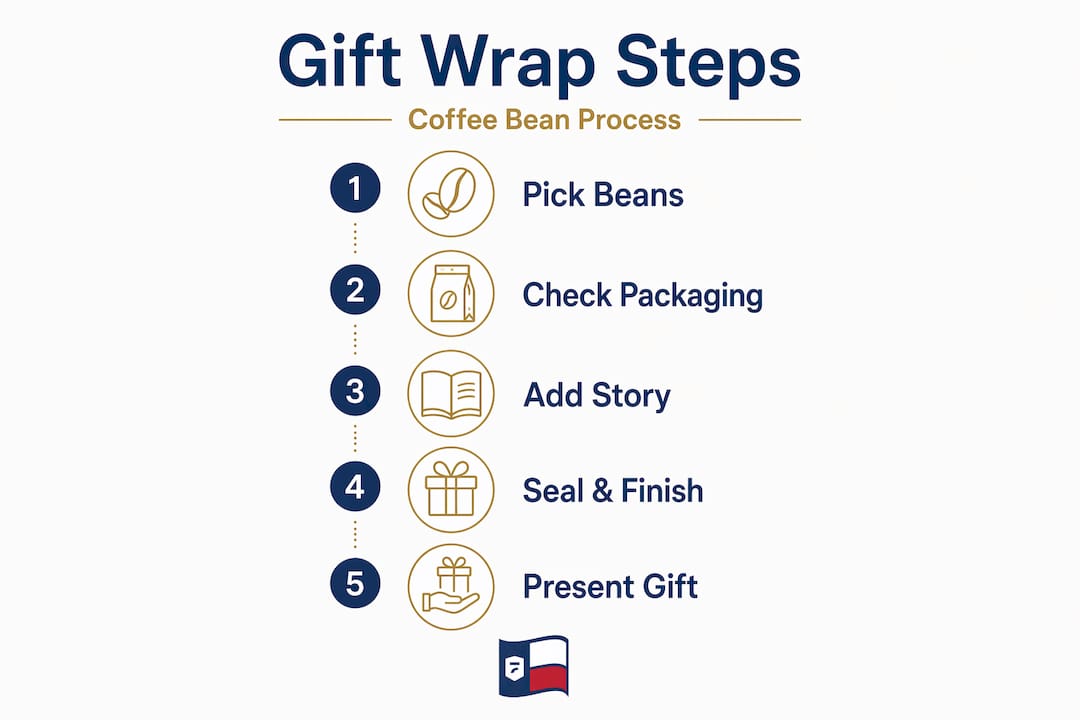
Step 1: Prepare the inner container
Start with your core coffee bag or rigid box. If you are using a pre-packaged bag of specialty beans, inspect the seal and valve before doing anything else. If you are transferring beans yourself, use a resealable stand-up pouch with a degassing valve and fill it no more than three-quarters full to allow room for gas expansion. Vacuum sealing can actually backfire with fresh coffee, causing excessive expansion and bag distortion.
For a luxury feel, place the sealed coffee bag inside a rigid kraft paper box lined with tissue paper. The added structure protects the bag during transit and creates a proper unboxing moment.
Step 2: Build the outer wrap
- Lay a sheet of premium wrapping paper or a large piece of fabric flat on your work surface.
- Center the box or bag in the middle of the sheet.
- Wrap firmly but not tightly. You want the paper to sit smooth, not press against the bag hard enough to distort it.
- Secure with a natural twine or grosgrain ribbon rather than synthetic plastic ribbon. It reads as more intentional and aligns with premium positioning.
- For a fabric wrap (called “furoshiki” in the Japanese tradition), use linen or cotton and knot it on top for a reusable gift wrapping the recipient can keep.
Step 3: Add the story
This step is what separates a nice gift from a memorable one. Packaging with centrally placed sensory descriptors and cupping scores strongly correlates with perceived quality. If your inner bag already has tasting notes printed on it, make sure they face outward when wrapped so they are the first thing the recipient sees on opening.
Create a small card or tag that includes:
- The coffee’s origin and roast level
- Two or three flavor notes written in plain, vivid language (think “dark chocolate and dried cherry” rather than “complex and bold”)
- A simple brewing suggestion matched to what the recipient owns at home
- A personal note from you
Small personal touches like these create shareable moments and meaningfully increase the emotional value of the gift.
Pro Tip: Print tasting note cards in a clean, readable font at around 14pt size. Attach them with a clip or twine rather than tape so the recipient can keep the card separately as a reference.
Step 4: Seal and finish
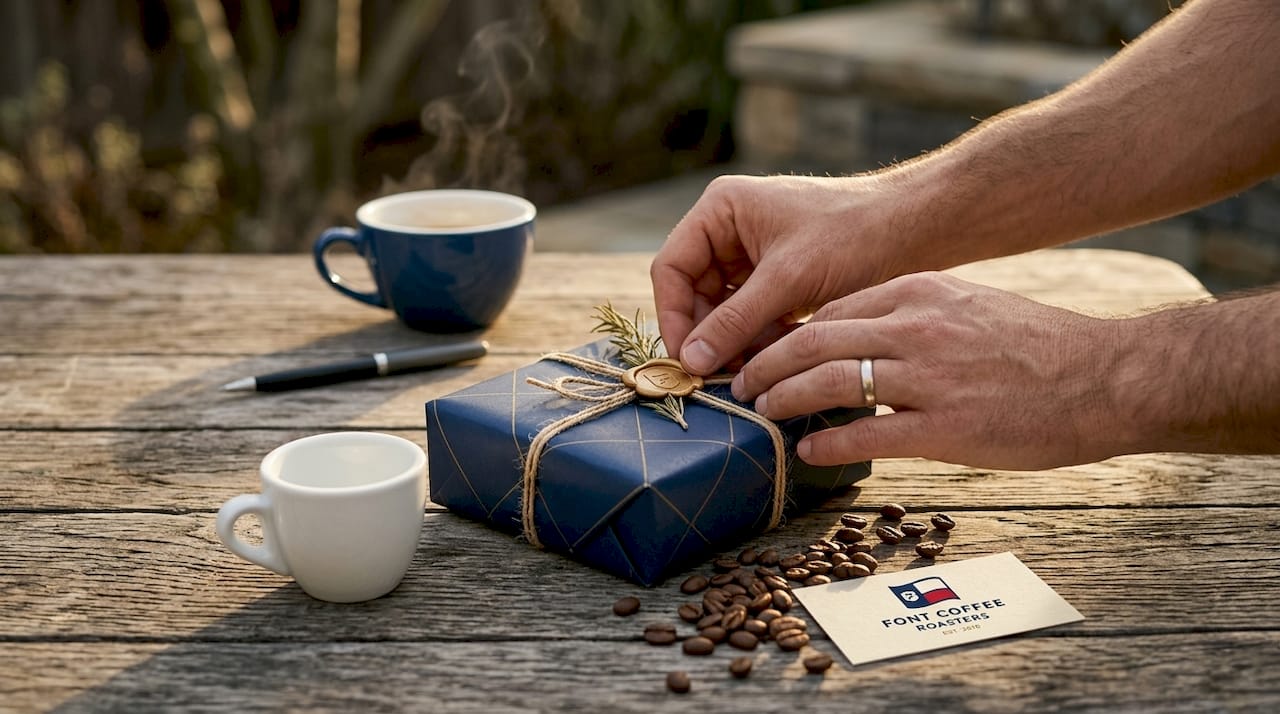
Check every fold and seam one final time. Tuck loose edges cleanly. Add a wax seal or a small sprig of dried herbs like rosemary for a finishing detail that feels curated. Place the wrapped gift in a gift bag or box if shipping, with enough cushioning to prevent the inner bag from shifting.
Common mistakes when wrapping coffee as a gift
Even well-intentioned packaging choices can undermine the gift. Here are the most frequent problems and how to fix them.
- Using unlined or thin paper alone. Plain paper offers no barrier against moisture or oxygen. If you are using paper as your primary container, it must have a multi-layer inner lining. Otherwise, the beans will stale within days.
- Skipping the degassing valve. Experts consistently emphasize that blocking oxygen, moisture, and light is non-negotiable for quality. A bag without a valve will look bulged and damaged within 48 hours of fresh roasting.
- Vacuum sealing fresh beans. It seems counterintuitive, but vacuum sealing coffee immediately after roasting squeezes out CO2 that has not finished releasing. The bag will puff up, sometimes to the point of popping. Resealable pouches handle this far better.
- Overloading the packaging with text. Eye-tracking research shows consumers ignore peripheral information like weight measurements and contact details. Cluttered packaging actively reduces perceived quality.
- Choosing plastic-heavy wrapping. Excessive plastic reads as cheap to modern recipients. Mono-material or paper-based formats align with rising consumer demand for sustainable gifting.
The fix for most problems is the same: build from the inside out. Prioritize the bag’s protective function first, then add decorative layers that reflect the care you put into the selection. A gift that smells stale on opening cannot be saved by beautiful ribbon.
Verifying quality before your gift is presented
You have wrapped the gift beautifully. Now verify it will hold up until the moment it matters.
Before gifting, run through this quick checklist:
- Press gently on the bag. You should feel a slight resistance from the degassing valve releasing pressure. If the bag feels rock-hard and does not give, the valve may be blocked.
- Check all seals visually. Any gap, bubble, or lifted edge is a failure point that oxygen can enter through.
- Smell the outside of the package. Fresh coffee aromatics should not penetrate the outer wrap. If you can smell coffee strongly through the packaging, the inner barrier has likely been compromised.
- Store the finished gift away from direct light and heat until you deliver it. A drawer or a closed shelf is far better than a kitchen counter near a window.
When you hand the gift over, let the recipient know to store opened beans in the original resealable bag, away from light and humidity, and to use them within two to three weeks of opening for peak flavor. A small printed card tucked inside the wrap covering these storage tips adds another layer of thoughtfulness.
For a truly complete gift, consider pairing the coffee with a complementary item. Font-mag carries matcha from our MAG Tea line and a wide range of Sweetbird syrups, which pair beautifully with espresso-forward beans. A coffee subscription gift is another option for the recipient who wants to explore new roasts over time.
My honest take on coffee gift packaging
I have seen a lot of coffee gifts over the years, and the ones that land are almost never the most expensive. They are the most considered. The giver took five minutes to write a flavor note, chose a bag that would keep the beans fresh for two weeks, and wrapped it in something the recipient actually wanted to keep.
What I have found is that most people overthink the decoration and underthink the freshness. They spend forty minutes on ribbon placement and buy beans that were roasted three months ago. That is backwards. The packaging is a vehicle for the coffee, not the other way around.
My other observation: visual storytelling on the package itself carries enormous weight. Packaging functions as a silent salesperson, and when you place tasting notes front and center, you give the recipient something to anticipate before they even open the bag. That anticipation is part of the gift experience.
Keep it personal, keep the beans fresh, and let the story of where the coffee came from do some of the work for you. That combination never fails.
— Rosario
Font-mag has everything your coffee gift needs
At Font-mag, we make it easy to start with the right beans. Our origin coffee collection features single-origin roasts with full flavor profiles already printed on each bag, giving your gift built-in storytelling before you add a single ribbon. For something with broader appeal, our retail coffee selection offers beautifully packaged formats ready for gifting out of the box. We ship fast, offer free delivery on orders over $35, and every bag is built to preserve peak freshness with proper valve and barrier packaging. Browse our full specialty offerings to find the roast that fits the person you are gifting this season.
FAQ
What is the best inner packaging for gifting coffee beans?
Multi-layer bags with one-way degassing valves are the industry standard for a reason. They block oxygen, moisture, and light while allowing CO2 to escape after roasting, which keeps beans fresh and the bag shape intact.
Can I vacuum seal coffee beans as a gift?
Vacuum sealing fresh coffee is not recommended. Freshly roasted beans continue releasing CO2 for days, which causes vacuum-sealed bags to expand and sometimes burst. Resealable pouches or rigid boxes with an inner barrier bag are better choices for gifts.
What information should I include on a coffee gift tag?
Focus on origin, roast level, and two or three plain-language flavor notes. Add a simple brewing tip matched to what the recipient uses at home. Keep it short and skip technical jargon.
How long will gift-wrapped coffee beans stay fresh?
Properly sealed beans in a high-barrier bag with a degassing valve stay fresh for three to four weeks at room temperature if stored away from light and humidity. Once opened, they are best used within two to three weeks.
Does the wrapping paper affect coffee freshness?
Decorative outer wrapping does not directly affect freshness as long as the inner bag maintains its seal. The outer layer is purely aesthetic. Never use outer paper as your only container, since it provides no barrier protection at all.