

Iced Coffee vs Iced Tea: Which Is Healthier for You?
Pick iced tea if your goal is lower caffeine, a calmer energy curve, and maximum antioxidant variety with almost no calories. Pick iced coffee, especially cold brew coffee, if you need a serious caffeine lift or prefer a bolder, roasted flavor. Both beverages can support weight management and deliver meaningful antioxidants, but the health outcome depends almost entirely on what you add to the glass, according to Healthline’s comparison of coffee and tea.
Quick rules of thumb:
- Choose iced coffee when you need pre-workout alertness, a higher caffeine dose, or you enjoy the ritual of espresso-based drinks.
- Choose iced tea when you want a gentler afternoon pick-me-up, lower acidity, or you’re sensitive to caffeine’s anxious edge. Green and black teas carry EGCG and theaflavins, two polyphenol families with strong observational links to cardiometabolic health.
- The one-line swap: whichever you prefer, drink it unsweetened. A plain iced black tea has roughly 2 calories per 8 oz. A sweetened bottled tea or a vanilla iced latte can push past 200 calories before you’ve eaten a bite.
- L-theanine in tea moderates caffeine’s effects, producing focused energy with less agitation than coffee’s faster spike.
Table of Contents
- How much caffeine is actually in your iced drink?
- What are the real health benefits and risks of each?
- Do iced coffee or iced tea actually help with weight loss?
- What do iced coffee and iced tea actually taste like?
- How does brewing method change caffeine, acidity, and antioxidants?
- How do you pick the right drink for your specific goal?
- What does the science actually support here?
- Key Takeaways
- The drink in your glass matters more than the category
- Font-mag has the iced drinks your goals actually call for
- Selected sources and further reading
How much caffeine is actually in your iced drink?
The caffeine gap between iced coffee and iced tea is real, but serving size and preparation method can close or widen it dramatically. An 8-oz brewed coffee averages around 95 mg of caffeine, while an 8-oz black tea sits near 47 mg. That 2:1 ratio shifts fast once you factor in cold brew concentrates, double espresso shots, or a long-steeped green tea.
| Drink | Typical serving | Caffeine range |
|---|---|---|
| Brewed iced coffee (hot-brew, chilled) | 8 oz | 95 mg |
| Cold brew (ready-to-drink, diluted) | 12 oz | high caffeine content |
| Iced espresso (single shot) | 1 oz shot + ice | 60–75 mg |
| Iced latte (double shot, 12 oz) | 12 oz | 100–200 mg |
| Nitro cold brew | 12 oz | high caffeine content |
| Black iced tea | 8 oz | 47 mg |
| Green iced tea | 8 oz | 25–45 mg |
| Matcha latte (iced, 12 oz) | 12 oz | — |
| Herbal iced tea | 8 oz | zero caffeine |
Caffeine reality check: The FDA’s recommended daily ceiling for healthy adults is 400 mg. A single 12-oz nitro cold brew can account for more than half that in one cup.
Cold brew concentrate sold in stores is a particular trap. Many bottles are labeled as two servings, but people routinely drink the whole thing, which can deliver a very high caffeine dose before noon. Iced espresso drinks, by contrast, are more predictable because the shot volume is standardized.
Tea’s caffeine range is narrower but still variable. A 3-minute steep of black tea at 200°F pulls significantly more caffeine than a 1-minute steep at 175°F. Herbal teas, made from flowers, roots, and dried fruit rather than the Camellia sinensis plant, contain zero caffeine regardless of how long you steep them.
Pro Tip: If you’re trying to stay under 200 mg of caffeine for the day, a 12-oz diluted cold brew (not concentrate) or two cups of black iced tea both land in a manageable range. Track your serving size, not just your drink count.
What are the real health benefits and risks of each?
Antioxidants and polyphenols
Coffee’s primary polyphenols are chlorogenic acids, which are associated with reduced inflammation and improved glucose metabolism in observational research. Green tea’s standout compound is EGCG (epigallocatechin gallate), a catechin linked to fat oxidation and cardiovascular markers in PMC-indexed meta-analyses. Black tea delivers theaflavins and thearubigins, which form during oxidation and carry their own cardiometabolic associations.
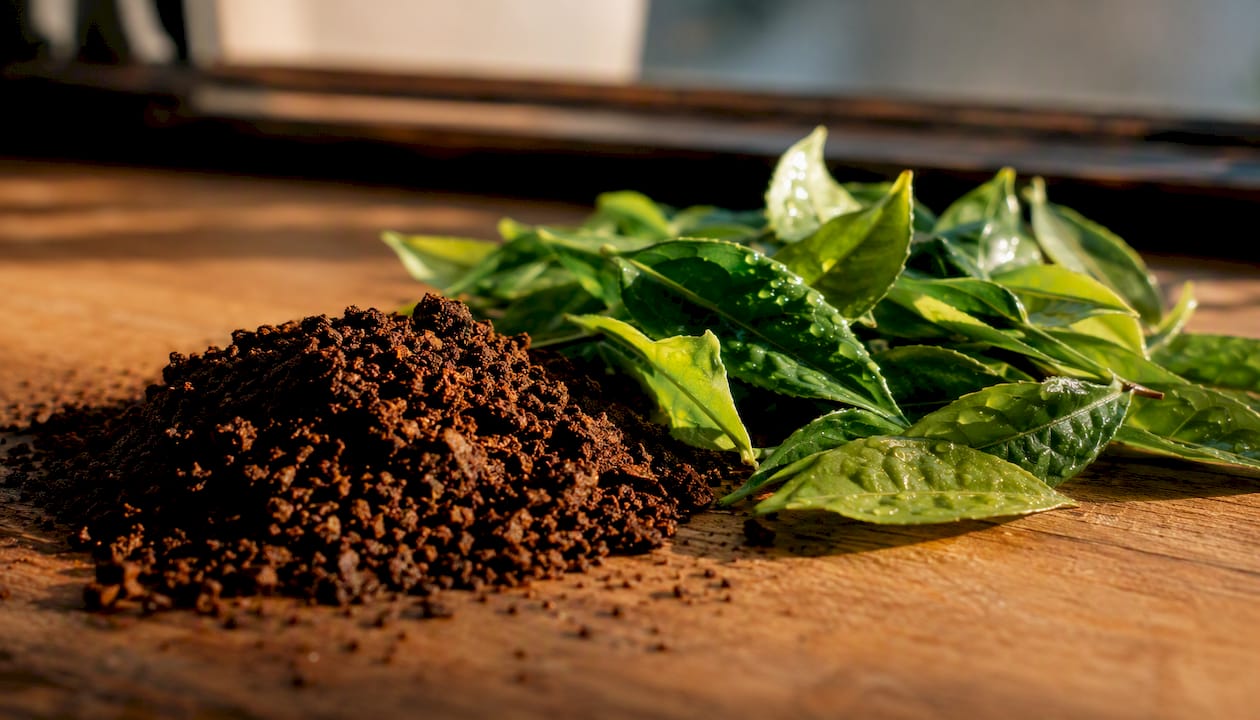
Neither beverage has a monopoly on antioxidant benefit. The type of polyphenol differs, not the presence of one.
Cardiometabolic associations
Observational research consistently links regular coffee and tea consumption to lower risks of type 2 diabetes and certain heart outcomes. The key word is observational. These studies track large populations over time and find associations, but they cannot prove that coffee or tea caused the benefit. People who drink tea regularly may also sleep better, exercise more, or eat differently. The clinical and observational literature reviewed on PubMed reinforces this caution: associations are consistent, but causal claims remain limited.
Do iced coffee or iced tea actually help with weight loss?
Both can support weight management when consumed without added sugars or heavy cream. The mechanisms differ slightly. Caffeine raises metabolic rate by stimulating the central nervous system, an effect documented across multiple studies though the magnitude is modest. Tea catechins, particularly EGCG, may enhance fat oxidation, especially when combined with caffeine, though the effect size in human trials is small and inconsistent.
The bigger variable is what’s in the glass.
| Preparation | Approximate calories |
|---|---|
| Unsweetened black iced tea (12 oz) | ~5 kcal |
| Unsweetened iced green tea (12 oz) | ~5 kcal |
| Black iced coffee, no additions (12 oz) | ~5 kcal |
| Iced latte, 2% milk, no syrup (12 oz) | 100–150 calories |
| Sweet tea, homemade (12 oz) | significant calories |
| Iced coffee with flavored syrup and cream (12 oz) | high calorie content |
| Bottled sweetened iced tea (16 oz) | high calorie content |
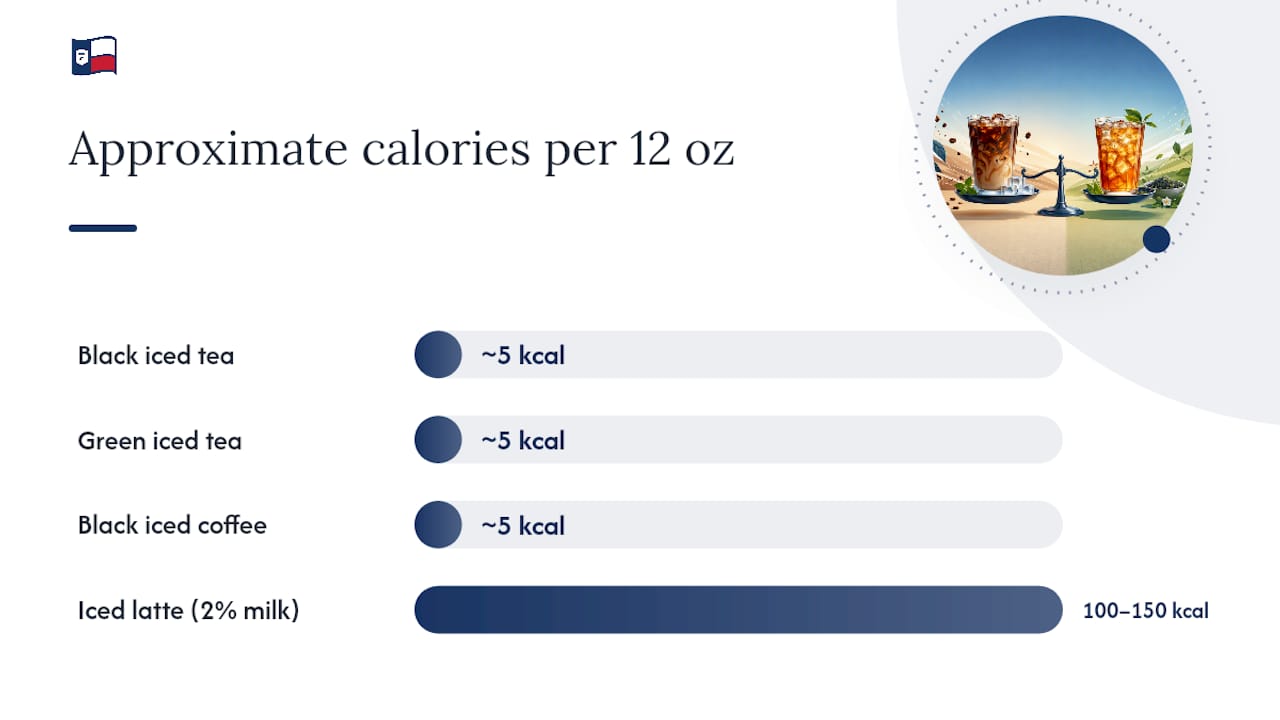
A daily flavored iced latte adds a substantial number of calories per week before you account for food. That’s a meaningful number for anyone tracking intake. Bottled sweet teas are often marketed as a “healthier” alternative to soda, but many carry as much sugar per ounce. Understanding what makes a beverage an empty-calorie trap helps you spot the difference between a genuinely low-calorie iced drink and one dressed up in health-adjacent packaging.
Pro Tip: To keep iced drinks weight-loss friendly, use unsweetened specialty coffee flavorings or a small pour of a lower-calorie syrup rather than standard simple syrup. A half-pump of syrup instead of two cuts added sugar by 75% with minimal flavor loss.
What do iced coffee and iced tea actually taste like?
Iced coffee varieties
Cold brew is the smoothest entry point for coffee skeptics. Because it never touches hot water, it skips the extraction of many bitter, heat-soluble compounds and lands with a naturally sweet, chocolatey profile. Most people find they need less sugar in cold brew than in hot-brew-then-chilled coffee.
Hot-brew iced coffee (brewed hot, poured over ice) is brighter and more acidic, with the full flavor complexity of the roast. It can taste slightly watery if the ice-to-coffee ratio isn’t adjusted.
Iced lattes add milk or a milk alternative, softening bitterness and adding body. The calorie count climbs with whole milk or oat milk, but the satiety factor rises too.
Nitro cold brew is cold brew infused with nitrogen gas, giving it a creamy, Guinness-like texture with no added dairy. It’s one of the few iced coffee formats that feels genuinely filling without extra calories.
For readers who want to explore flavored iced coffee options beyond the basics, the range of natural and specialty flavorings is wider than most grocery shelves suggest.
Iced tea varieties
- Black iced tea: — Bold, slightly tannic, and malty. The base for Southern sweet tea and most bottled teas. Works well with lemon or mint.
- Green iced tea: — Lighter, grassy, and more delicate. Lower caffeine than black tea. Pairs naturally with cucumber, ginger, or citrus.
Common add-ins and their calorie impact: a tablespoon of honey adds about 60 calories, a pump of standard flavored syrup adds 20–25 calories, and a splash of half-and-half adds 40 calories per 2 tablespoons. These numbers stack fast across a large cup.
How does brewing method change caffeine, acidity, and antioxidants?
Cold brew vs. hot-brew-then-chill for coffee
Cold brew steeps coarse grounds in cool or room-temperature water for 12–24 hours, a process that extracts caffeine and flavor compounds while leaving behind many of the heat-soluble acids responsible for bitterness and stomach irritation. The result is a concentrate that’s typically diluted 1:1 or 1:2 before serving. Undiluted, it can be extremely high in caffeine. Diluted properly, it’s smoother and less acidic than any hot-brew method.
Hot-brew iced coffee extracts more quickly and at higher temperatures, pulling a wider range of compounds including the chlorogenic acids that give coffee its characteristic brightness. It’s not worse, just different: more complex flavor, more acidity, and a faster caffeine hit.
Steep time and temperature for tea
Water temperature and steep time are the two levers that control caffeine and tannin extraction in tea. Higher temperature and longer steep time both increase caffeine and astringency. A 3-minute steep of black tea at 212°F pulls significantly more caffeine than a 1-minute steep at 175°F. For iced green tea, a short steep (1–2 minutes) at 170°F produces a cleaner, less bitter cup with lower caffeine, which is ideal for an afternoon drink.
Quick home methods:
- Cold-brew iced coffee: Combine coarse-ground coffee with cold filtered water (roughly 1:4 ratio), refrigerate 12–18 hours, strain, and dilute before serving. This is the lowest-acid method and requires no special equipment beyond a mason jar and a fine-mesh strainer.
- Quick-steep iced green tea: Steep one tea bag or a teaspoon of loose-leaf green tea in 8 oz of 170°F water for 90 seconds. Remove the tea, add ice immediately to halt extraction, and chill. The result is bright, clean, and noticeably less astringent than a full 3-minute steep.
For low-sugar morning prep, cold-brewing a batch of either coffee or tea the night before is the most practical approach. Both keep well in the refrigerator for up to four days.
How do you pick the right drink for your specific goal?
-
Pre-workout alertness: Choose iced coffee, specifically cold brew or an iced double espresso. Aim for 100–200 mg of caffeine consumed 30–60 minutes before exercise. Avoid heavy milk additions that can cause GI discomfort during activity.
-
Afternoon calm without crashing: Switch to iced green tea or a matcha latte. The L-theanine in tea moderates caffeine’s effects, producing sustained focus without the spike-and-drop pattern common with coffee. A 12-oz iced green tea at 2 PM gives you 25–45 mg of caffeine, well below the threshold that disrupts sleep for most people.
-
Weight-loss friendly: Either drink works, unsweetened. Black iced coffee and unsweetened iced black tea both clock in under 10 calories per 12 oz. The deciding factor is which one you’ll actually drink without adding sugar. If you need flavor, a squeeze of lemon in iced tea or a small amount of cinnamon in cold brew adds essentially zero calories.
-
Digestive sensitivity or acid reflux: Cold brew coffee is your best coffee option, as its lower acidity is gentler on the esophagus. Herbal iced teas (chamomile, ginger, peppermint) are the gentlest option overall. Avoid strong-steeped black tea on an empty stomach if you’re prone to reflux.
-
Sleep-friendly evening drink: Herbal iced tea only. Caffeine’s half-life means even a moderate afternoon coffee can still be active in your system at bedtime. If you want the coffee experience without the caffeine, a quality decaf cold brew brewed overnight delivers the flavor with minimal sleep disruption.
-
Hydration: Both count toward daily fluid intake. The mild diuretic effect of caffeine at typical beverage doses is offset by the water content of the drink itself, so neither iced coffee nor iced tea dehydrates you at normal consumption levels.
Timing rule: Most sleep researchers suggest cutting caffeine at least 6 hours before your target bedtime. For a 10 PM bedtime, that means your last caffeinated drink should be around 4 PM.
What does the science actually support here?
The honest answer is: associations, not proof. Most of what we know about coffee, tea, and health comes from large observational studies that track what people drink over years and correlate it with health outcomes. These studies are valuable, but they cannot rule out confounding variables. People who drink green tea regularly may also exercise more, eat more vegetables, or live in regions with different baseline disease rates.
Dietitian Amy Goodson puts it plainly: neither drink is universally better. The right choice depends on individual caffeine sensitivity, sleep quality, and personal health goals. That’s not a hedge; it’s the accurate summary of the evidence.
Where the evidence is stronger: the association between moderate coffee and tea consumption and reduced risk of type 2 diabetes is one of the most replicated findings in nutritional epidemiology, appearing across dozens of large cohort studies. The association between green tea consumption and cardiovascular markers is similarly consistent in Asian population studies, though effect sizes in Western populations are smaller.
Where it’s weaker: direct weight-loss claims for either beverage are thin. Caffeine does raise metabolic rate modestly, and EGCG does appear to enhance fat oxidation in some trials, but the real-world effect on body weight is small enough that it won’t compensate for a high-calorie diet. Treating either drink as a weight-loss intervention rather than a low-calorie beverage choice overstates what the research actually shows.
Key Takeaways
Both iced coffee and iced tea support health goals when consumed unsweetened, but caffeine content, acidity, and add-ins determine which drink actually fits your day.
| Point | Details |
|---|---|
| Caffeine gap is real but variable | Brewed coffee averages ~95 mg per 8 oz vs ~47 mg for black tea; cold brew can exceed 200 mg per 12 oz. |
| Unsweetened is non-negotiable | Sweet tea and flavored iced lattes can add 130–300 calories per serving, erasing any metabolic benefit. |
| Tea’s L-theanine changes the energy feel | Green and black teas deliver caffeine alongside L-theanine, producing calmer, more sustained alertness than coffee alone. |
| Evidence is observational, not causal | Health associations for both beverages are consistent across large studies but do not prove that coffee or tea caused the outcome. |
| Font-mag covers both sides | Font-mag’s iced tea collection and decaf and specialty coffee range let you match your drink to your goal without compromise. |
The drink in your glass matters more than the category
Most beverage comparisons end up arguing for a winner. After reading the research carefully, the more useful frame is this: the gap between a well-made unsweetened iced tea and a well-made cold brew is smaller than the gap between either of those and a 16-oz sweetened bottled version of the same drink.
The category debate, iced coffee vs iced tea, is less important than the preparation decision. A nitro cold brew with no additions is a genuinely low-calorie, high-antioxidant drink. So is a properly brewed iced green tea. A sweet tea from a gas station and a caramel iced latte from a chain are both desserts wearing a beverage label.
What I’d push back on is the idea that tea is automatically the “health drink” and coffee is the indulgence. Cold brew made from quality beans, consumed black, is as clean a beverage as you’ll find. And a matcha latte loaded with sweetened oat milk and vanilla syrup is not the wellness ritual it’s marketed as.
The practical swap that makes the biggest difference: choose whole-leaf teas and quality single-origin beans, use syrups sparingly (or choose lower-calorie options), and let the natural flavor of the drink do the work. When the base ingredient is good, you need less added to it.
Font-mag has the iced drinks your goals actually call for
If this comparison made you want to rethink what’s in your glass, Font-mag is the place to start. The MAG Tea iced tea collection covers everything from tropical black tea to clean, unsweetened green tea options, all selected for flavor and quality rather than shelf life. For coffee drinkers who want the cold brew experience without the caffeine overload, the decaf collection includes options built for overnight cold brewing.
Font-mag also stocks the Sweetbird syrup range for readers who want flavor control without defaulting to simple syrup, plus loose-leaf teas for anyone ready to move past grocery-store tea bags. Free shipping on orders over $35 makes it easy to try a few options at once. Browse the full range at font-mag.com and build your iced drink lineup around what your body actually needs.
Selected sources and further reading
-
Coffee vs. Tea: Is One Healthier Than the Other? — Healthline: Covers how both beverages support weight management and antioxidant intake, with the key caveat that add-ins determine the health outcome.
-
Caffeine in Tea vs. Coffee: How Do They Compare? — Healthline: Primary source for the caffeine ranges used in the comparison table (95 mg brewed coffee vs. 47 mg black tea per 8 oz).
-
Which Is Healthier: Coffee or Tea? — Harvard Health: Summarizes observational evidence linking regular consumption to lower chronic disease risk; emphasizes that associations are not causal.
-
Caffeine — PubChem: Chemical profile and pharmacology supporting the 400 mg daily limit and half-life discussion.
-
PMC meta-analytic review on polyphenols and cardiometabolic outcomes: Higher-trust evidence summary for antioxidant and chronic disease association claims
-
Cold-Brew Iced Coffee — Serious Eats: Explains the 12–24 hour cool-water extraction process and why cold brew is smoother and less acidic.
-
Tea vs. Coffee: Which Is Better for You? — USA Today: Dietitian Amy Goodson’s expert commentary on matching beverage choice to individual tolerance and goals.
-
Tea vs Coffee: Which Is Better for Your Health? — BBC Food: Covers L-theanine’s role in moderating caffeine effects and producing sustained alertness with less agitation.