

Coffee vs Tea Caffeine Comparison: What You Need to Know
Coffee delivers roughly twice the caffeine per standard serving compared to tea, making it the stronger stimulant for most drinkers. A typical 8-ounce cup of brewed coffee contains 80–100 mg of caffeine, while the same size cup of black tea lands between 40–70 mg. That gap matters, but it is not the whole story. Brewing method, serving size, tea variety, and roast level all shift the numbers significantly. This guide covers the full coffee vs tea caffeine comparison, including how preparation changes everything, what caffeine actually does to your body, and how to choose the drink that fits your lifestyle.
How much caffeine is in coffee compared to tea?
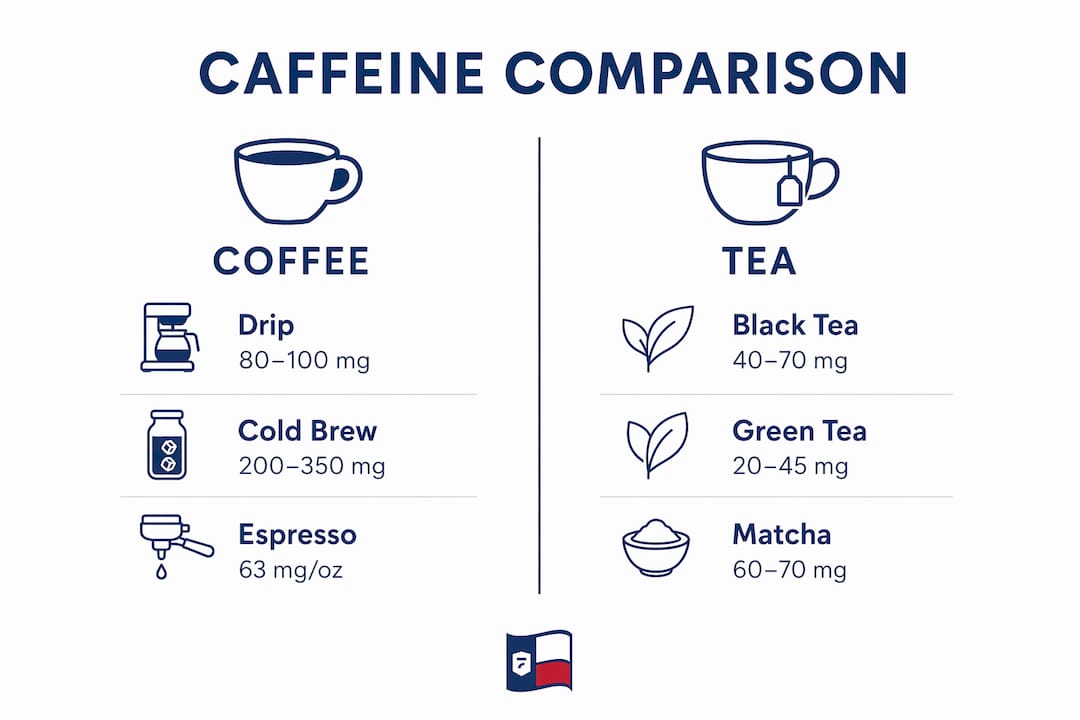
The caffeine gap between coffee and tea is real, but it narrows or widens depending on what you are drinking. Standard drip coffee sits at 80–100 mg per 8-ounce cup. Black tea delivers 40–70 mg in the same volume. Green tea drops further, typically ranging from 20–45 mg per cup. Herbal teas like chamomile or peppermint contain zero caffeine, since they are not derived from the Camellia sinensis plant.
Espresso looks intimidating at roughly 63 mg per ounce, but a standard single shot is only 1 ounce. That means a double espresso totals about 126 mg, comparable to a large drip coffee. Serving size versus concentration is the key variable most people overlook. A 16-ounce commercial latte built on two espresso shots contains more caffeine than a home-brewed 8-ounce cup, even though espresso is more concentrated per ounce.
| Beverage | Serving Size | Caffeine (mg) |
|---|---|---|
| Drip Coffee | 8 oz | 80–100 |
| Cold Brew Coffee | 16 oz | 200–350 |
| Espresso | 1 oz | ~63 |
| Black Tea | 8 oz | 40–70 |
| Green Tea | 8 oz | 20–45 |
| Matcha (prepared) | 8 oz | 50–70 |
| Herbal Tea | 8 oz | 0 |
Matcha deserves a special mention here. Because you consume the whole ground leaf rather than steeped water, matcha delivers more caffeine than most brewed green teas. Font-mag carries Rishi Tea Bulk Barista Matcha for anyone who wants to explore that middle ground between coffee and tea caffeine levels.
Pro Tip: Always check the serving size on commercial drinks before assuming caffeine content. A 20-ounce cold brew from a café can contain more caffeine than three standard cups of black tea.
How do brewing methods affect caffeine in coffee and tea?
Brewing method is the single biggest variable in caffeine content, more than roast level or tea grade. For coffee, cold brew can reach 200–350 mg per 16-ounce serving, far exceeding a standard drip cup. That happens because cold brew uses a high coffee-to-water ratio and steeps for 12–24 hours, extracting more caffeine over time even at low temperatures.
For tea, steeping time and water temperature are the primary levers. Black tea steeped for 5 minutes in boiling water extracts significantly more caffeine than the same tea steeped for 2 minutes at 175°F. Green teas brewed at lower temperatures, as recommended by most specialty producers, yield less caffeine and less bitterness. This is why the same loose-leaf tea can feel energizing or gentle depending entirely on how you prepare it.
| Brewing Method | Beverage | Caffeine Per Serving |
|---|---|---|
| Drip (8 oz) | Coffee | 80–100 mg |
| Cold Brew (16 oz) | Coffee | 200–350 mg |
| Espresso (1 oz) | Coffee | ~63 mg |
| Steeped 2 min (8 oz) | Black Tea | ~30–40 mg |
| Steeped 5 min (8 oz) | Black Tea | 50–70 mg |
| Whisked (8 oz) | Matcha | 50–70 mg |
One counterintuitive fact worth knowing: light roast coffee has slightly more caffeine by weight than dark roast. Roasting reduces bean mass, so dark roast beans are lighter and less dense. When you measure by volume (scoops), dark roast can appear stronger, but measured by weight, light roast edges ahead. Understanding coffee roast levels helps you make smarter choices about both flavor and caffeine output.
Pro Tip: To reduce caffeine without switching beverages, shorten your steep time for tea or switch from cold brew to a standard drip. Small adjustments in preparation can cut caffeine by 30–40% without changing what you drink.
What are the health effects of caffeine from coffee vs. tea?
Caffeine from coffee and tea affects the body through the same core mechanism: it blocks adenosine receptors in the brain, reducing the sensation of tiredness and increasing alertness. The difference is in the speed and texture of that effect. According to dietitian Lauren Manaker, coffee’s fast caffeine effect suits immediate mental sharpness and reaction time, while tea provides a gradual, sustained lift with less anxiety.
That smoother tea experience comes from L-theanine, an amino acid found naturally in Camellia sinensis leaves. L-theanine works alongside caffeine to produce what researchers describe as calm alertness, a focused but relaxed state that avoids the jittery edge coffee can create. This synergy also reduces the likelihood of a caffeine crash after the stimulant effect wears off.
Beyond caffeine, both beverages carry meaningful health benefits:
- Antioxidants: Both coffee and tea are rich in polyphenols that may reduce the risk of chronic diseases including type 2 diabetes and heart disease.
- Sleep disruption: Consuming caffeine late in the day can reduce deep sleep phases, leaving you less rested the next morning. Sleep scientist Matt Walker recommends switching to tea or decaf in the afternoon to protect sleep quality.
- Iron absorption: Strong tea with meals can slightly impair iron absorption, which matters for people managing iron levels through diet.
- Daily limits: The FDA recommends no more than 400 mg of caffeine per day for healthy adults. That equals roughly four 8-ounce cups of drip coffee or eight cups of black tea.
“Coffee delivers a quick, strong caffeine boost ideal for immediate mental energy, whereas tea offers a smoother, sustained energy lift beneficial for those sensitive to caffeine.” — Lauren Manaker, Registered Dietitian
The 400 mg daily limit is a ceiling, not a target. Many people feel best at 200 mg or less, particularly those who are caffeine-sensitive or prone to anxiety.
How to choose between coffee and tea for your caffeine needs
Choosing between coffee and tea is not just about caffeine content. It is about matching the right energy profile to your day, your body, and your preferences. Follow these steps to find your fit:
-
Assess your caffeine sensitivity. If you feel anxious, jittery, or have trouble sleeping after one cup of coffee, you are likely sensitive to caffeine. Tea, with its lower caffeine content and L-theanine buffer, is a better daily driver for you.
-
Match the energy type to the task. Coffee’s fast, intense spike works well before a workout, a presentation, or a demanding morning. Tea’s gradual lift suits long work sessions, creative thinking, or afternoons when you need focus without overstimulation.
-
Consider timing. Caffeine has a half-life of roughly 5–6 hours in most adults. A 3 p.m. coffee can still affect sleep at 11 p.m. Switching to a lower-caffeine tea or a quality decaf after noon is a practical way to protect your sleep without giving up the ritual.
-
Explore the middle ground. Matcha sits between coffee and black tea in caffeine content and delivers L-theanine in higher concentrations than steeped green tea. It is worth trying if you want the calm alertness effect with more caffeine than a standard green tea.
-
Try decaf when the ritual matters more than the stimulant. Decaf coffee retains most of the flavor complexity of regular coffee with only 2–15 mg of caffeine per cup. It is a legitimate option for evening enjoyment or for those cutting back on stimulants.
Pro Tip: If you drink coffee in the morning and want to extend your energy into the afternoon without a second coffee, try a cup of black or oolong tea around 1 p.m. You get a moderate caffeine top-up with L-theanine to smooth out the ride.
Understanding coffee extraction also helps you control caffeine output at home. A shorter extraction time pulls less caffeine from the grounds, giving you a lighter cup without switching to decaf.
Key takeaways
Coffee contains roughly twice the caffeine of tea per standard serving, but brewing method, serving size, and tea variety can close or widen that gap significantly.
| Point | Details |
|---|---|
| Coffee outpaces tea on caffeine | Drip coffee delivers 80–100 mg per 8 oz versus 40–70 mg for black tea. |
| Cold brew is the highest-caffeine option | A 16-oz cold brew can contain 200–350 mg, more than any standard tea serving. |
| L-theanine changes the tea experience | Tea’s calm alertness effect comes from L-theanine working alongside caffeine, not caffeine alone. |
| Brewing method matters as much as beverage type | Steep time, water temperature, and concentration shift caffeine levels dramatically in both drinks. |
| The FDA daily limit is 400 mg | That equals roughly four cups of drip coffee or eight cups of black tea for healthy adults. |
Why i think most people are asking the wrong question
By Rosario
After years of working with specialty beverages, I have noticed that most people frame the coffee vs tea caffeine comparison as a competition. They want to know which one wins. The more useful question is which one fits the moment.
I have watched café owners default to coffee for every energy need, then wonder why their afternoon customers feel wired and restless. The answer is almost always that they needed tea’s L-theanine effect, not more caffeine. The compound changes the entire experience of stimulation. It is not just a weaker version of coffee. It is a different kind of energy.
The other thing I would push back on is the assumption that more caffeine equals better performance. Cold brew at 300 mg is not three times more productive than a cup of black tea. Past a certain threshold, caffeine increases anxiety and reduces focus. The sweet spot for most people is somewhere between 100–200 mg, which is exactly where a well-brewed black tea or a single quality espresso lands.
My honest recommendation: stop picking a side and start building a caffeine strategy. Coffee in the morning for the fast spike. Tea in the afternoon for the sustained focus. Decaf or herbal in the evening for the ritual without the cost to your sleep. That rotation is more effective than any single beverage choice.
— Rosario
Explore coffee and tea at Font-mag
Whether you are dialing back caffeine or chasing the perfect morning boost, Font-mag has the full range to match your preference.

Font-mag’s curated selection covers every point on the caffeine spectrum. Browse the decaf coffee collection for low-caffeine options that do not sacrifice flavor, including the Downshift Decaf sourced from Colombia. For tea drinkers, the loose tea selection includes premium MAG Tea varieties and specialty options like the Ancient Dynas-tea Pu-erh, a fermented tea with a distinct caffeine profile worth exploring. Font-mag ships fast, with free shipping on all orders over $35.
FAQ
How much caffeine is in an 8-oz cup of coffee vs. tea?
An 8-ounce cup of brewed coffee contains 80–100 mg of caffeine, while the same size cup of black tea delivers 40–70 mg. Green tea ranges from 20–45 mg per cup.
Does cold brew have more caffeine than espresso?
Yes, by total serving. A 16-ounce cold brew contains 200–350 mg of caffeine, while a single 1-ounce espresso shot contains roughly 63 mg. Espresso is more concentrated per ounce, but cold brew wins on total caffeine per serving.
What is l-theanine and why does it matter for tea drinkers?
L-theanine is an amino acid in tea that works with caffeine to produce calm alertness, reducing the jitteriness and crash that coffee can cause. This is why tea often feels smoother despite containing real caffeine.
How much caffeine is safe to consume per day?
The FDA recommends a maximum of 400 mg of caffeine per day for healthy adults. That is roughly four 8-ounce cups of drip coffee or eight cups of black tea.
Is tea healthier than coffee overall?
Both beverages contain polyphenols with antioxidant properties that may reduce the risk of chronic diseases like diabetes and heart disease. Neither is universally healthier. The better choice depends on your caffeine sensitivity, sleep habits, and daily routine.
Recommended
- Coffee Roast Levels Explained: A Flavor Guide for Enthusiasts – Font Coffee Roasters
- Why Freshness Matters in Coffee: Flavor Science Explained – Font Coffee Roasters
- What Is Coffee Extraction and How It Shapes Flavor – Font Coffee Roasters
- Coffee Processing Methods Explained for Every Brewer – Font Coffee Roasters