

Specialty Coffee Flavorings: Top 10 for Enthusiasts
Specialty coffee flavorings are gourmet syrups and concentrated flavor oils designed to complement and deepen the natural taste of your brew. Unlike generic flavored coffee products, these additions work with a bean’s existing character rather than masking it. Brands like Sweetbird, Monin, and Coffee Flavor Oils have built entire product lines around this philosophy. Whether you pull espresso at home or dial in cold brew for a crowd, the right flavoring transforms a good cup into something genuinely memorable.
1. What are the top specialty coffee flavorings to try?
The best specialty coffee flavorings fall into two categories: gourmet syrups and post-roast flavor oils. Each delivers a distinct experience, and knowing which to reach for makes all the difference.
Here are ten worth keeping in your rotation:
- Madagascar vanilla syrup. Vanilla made with real Madagascar bourbon vanilla beans delivers a warm, creamy sweetness that rounds out espresso without flattening it. This is the most versatile flavoring in any coffee bar.
- Raw hazelnut syrup. Artisanal hazelnut syrups made from raw hazelnuts carry a toasty, slightly earthy depth that pairs beautifully with medium roasts. The flavor is richer and less synthetic than mass-market versions.
- Caramel syrup. A well-made caramel syrup adds buttery sweetness and a hint of bitterness that mirrors the roast. Sweetbird’s sugar-free caramel option delivers the same depth without the sugar load.
- Lavender syrup. French lavender syrup brings a floral, slightly herbal note that works especially well in iced lattes and cold brew. It pairs naturally with light roasts from Ethiopia or Kenya.
- Cardamom syrup. Cardamom adds a spiced, citrusy warmth that echoes the traditional preparation of Arabic coffee. It works in both hot and iced drinks and pairs well with naturally sweet, low-acid beans.
- Caramel coffee bean flavor oil. Post-roast flavor oils are highly concentrated and applied directly to roasted beans, creating consistent flavor delivery in every grind. The caramel version adds a smooth, toffee-like sweetness without any added liquid.
- Bananas Foster flavor oil. This concentrated oil delivers caramelized banana notes with buttery brown sugar and a subtle rum warmth. It is a dessert-inspired profile that works especially well in dark roasts.
- Algerian Baklava syrup. A lesser-known gem, this syrup blends honey, pistachio, and rose water notes for a rich, layered sweetness. It is the kind of flavoring that makes guests ask what you put in their cup.
- Persian Pistachio syrup. Nutty, slightly sweet, and faintly floral, Persian Pistachio syrup adds a sophisticated complexity to flat whites and cortados.
- Indian Gulab Jamun syrup. Inspired by the South Asian dessert, this syrup carries notes of rose, cardamom, and warm milk solids. It is one of the most distinctive artisanal coffee flavors available today.
Pro Tip: Start with 1–2 tablespoons per 8–12 oz serving and adjust from there. Too much syrup overwhelms the coffee’s natural character; too little gets lost.
2. How do flavored syrups compare to coffee bean flavor oils?
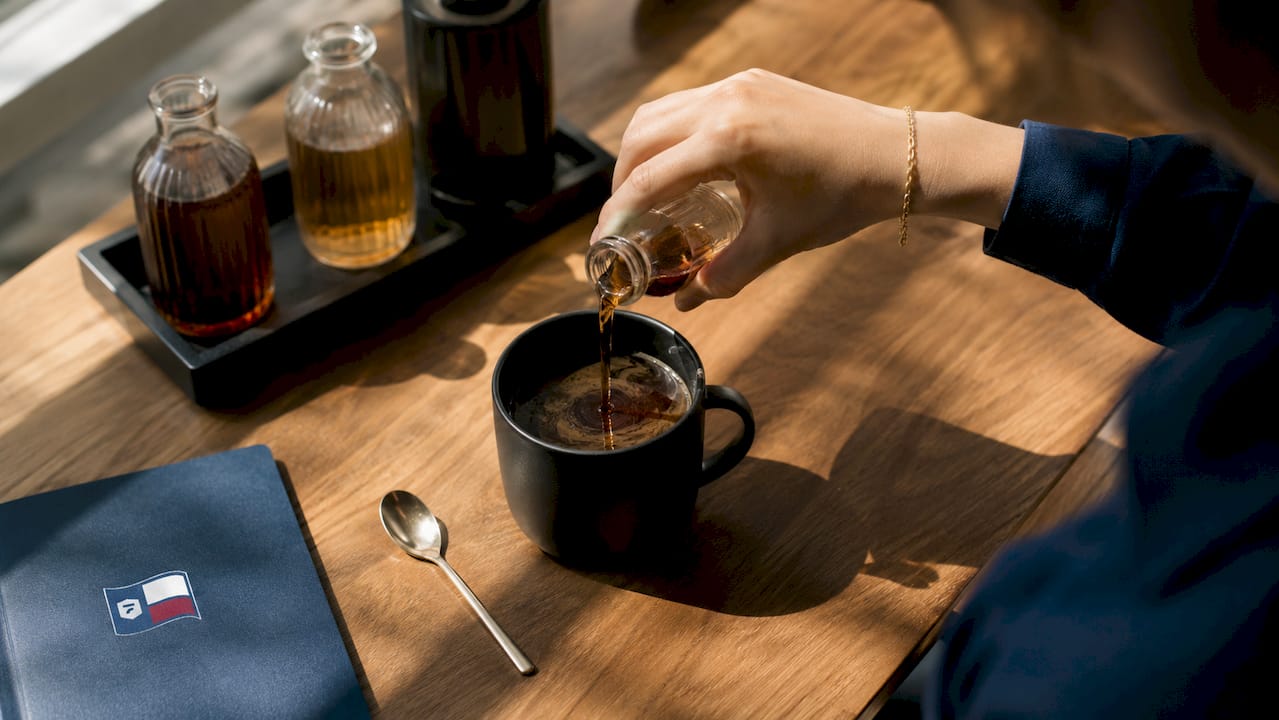
Syrups and flavor oils solve different problems. Understanding which one fits your setup saves you from buying the wrong product.
| Feature | Gourmet coffee syrups | Coffee bean flavor oils |
|---|---|---|
| Application point | Added at consumption | Applied post-roast to beans |
| Flavor consistency | Varies by pour amount | Uniform across every grind |
| Texture impact | Adds liquid volume and sweetness | No added liquid |
| Best use case | Lattes, cold brew, iced coffee | Pre-flavored whole bean or ground coffee |
| Concentration level | Moderate | Very high |
| Home vs. professional | Both | More common in roasting or retail |
Syrups give you control at the moment of brewing. You decide how sweet or how flavored each drink gets, which makes them ideal for home use and café service. Flavor oils work differently. Post-roast oils are applied sparingly to preserve the bean’s natural character, and the flavor integrates uniformly across every cup brewed from that batch.
The practical difference matters most for consistency. A syrup-based drink depends on the barista or home brewer measuring accurately. A flavor-oiled bean delivers the same profile every time, which is why many specialty roasters use them for flavored retail bags.
Pro Tip: If you want to experiment with flavor oils at home, buy pre-oiled beans from a specialty roaster rather than applying oils yourself. Uneven application can create hot spots in flavor and affect grind consistency.
3. What are some unique artisanal coffee flavorings beyond classic syrups?
The most interesting territory in artisanal coffee flavors sits well outside the vanilla-hazelnut-caramel triangle. These options reward curiosity.
Floral and botanical syrups are the fastest-growing category in specialty coffee. French lavender, jasmine, and elderflower syrups bring a lightness that complements the fruity and floral notes found in washed Ethiopian and Kenyan coffees. These pairings feel intentional rather than accidental.
Cultural and international syrups draw from dessert traditions around the world. Algerian Baklava, Indian Gulab Jamun, and Persian Pistachio each carry flavor complexity that generic syrups cannot replicate. They work best in milk-based drinks where the creaminess softens the more assertive notes.
Homemade syrups give you full control over ingredients and intensity. A basic simple syrup ratio of one part sugar to one part water works as the base. From there, you steep whole spices, fresh herbs, or vanilla beans directly in the warm syrup for 20–30 minutes. Straining the syrup thoroughly after steeping is critical for clean texture and consistent flavor. A fine-mesh strainer or cheesecloth removes any particles that would otherwise cloud the drink or leave grit at the bottom.
Pairing these flavors with specific coffee origins amplifies the effect. Floral syrups belong with light-roast Ethiopian beans. Nutty syrups like hazelnut or pistachio match the natural sweetness of Brazilian and Colombian medium roasts. Spiced syrups like cardamom or Gulab Jamun work best with darker roasts where the bold base can hold its own.
4. How can understanding coffee flavor profiles improve your flavoring choices?
Coffee flavor profiles are the natural taste attributes present in a bean before any flavoring is added. Knowing them makes you a far better judge of which syrups or oils will complement rather than compete.
The 2016 WCR Sensory Lexicon catalogs 110 specific flavor attributes used globally for professional sensory evaluation. That number reflects just how much variety exists across origins, processing methods, and roast levels. The Coffee Flavor Wheel organizes these descriptors visually, grouping them from broad categories like fruity or nutty down to specific notes like dried cherry or walnut.
You do not need to memorize 110 attributes to use this knowledge practically. The key is learning to recognize the broad categories in your cup: fruity, nutty, sweet, floral, or earthy. Once you identify the dominant note, selecting a complementary flavoring becomes straightforward.
One technique that sharpens this skill quickly: smell the coffee before you taste it. Delicate fruity and floral aromatics are often easier to detect through smell than taste. Bringing the cup to your nose first primes your palate and helps you catch notes that would otherwise disappear into the background.
Here is a practical pairing guide based on origin profiles:
| Coffee origin | Dominant natural notes | Best complementary flavorings |
|---|---|---|
| Ethiopia (washed) | Blueberry, jasmine, bergamot | Lavender, elderflower, light honey |
| Brazil | Chocolate, walnut, brown sugar | Hazelnut, caramel, vanilla |
| Colombia | Red fruit, caramel, mild citrus | Vanilla, cardamom, peach |
| Sumatra | Earthy, cedar, dark chocolate | Spiced syrups, Baklava, cardamom |
| Kenya | Black currant, tomato, citrus | Floral syrups, berry-forward options |
Understanding your bean’s natural flavor science before adding any flavoring is the single most effective way to make better choices. It also helps you avoid the most common mistake: adding a sweet syrup to a coffee that already reads as sweet, which creates a cloying, one-dimensional result.
Pro Tip: Pull a shot or brew a cup black before adding any flavoring. Tasting the coffee on its own first gives you a baseline and tells you exactly what the flavoring needs to do.
Key takeaways
Specialty coffee flavorings work best when they complement the bean’s natural profile rather than replace it, and choosing between syrups and flavor oils depends entirely on how and when you want to apply the flavor.
| Point | Details |
|---|---|
| Syrups vs. flavor oils | Syrups add flavor at consumption; oils integrate into beans post-roast for uniform delivery. |
| Dosage matters | Use 1–2 tablespoons of syrup per 8–12 oz drink and adjust to taste. |
| Match flavoring to origin | Floral syrups suit Ethiopian beans; nutty syrups suit Brazilian and Colombian roasts. |
| Artisanal options go further | Cultural syrups like Gulab Jamun and Persian Pistachio offer complexity that classic flavors cannot match. |
| Taste black first | Sampling coffee before adding flavoring gives you a baseline and prevents over-sweetening. |
Why I think most people are using coffee flavorings backwards
Most coffee enthusiasts I talk to reach for a flavoring first and choose the coffee second. That is the wrong order. The flavoring should respond to the bean, not the other way around.
I learned this the hard way after pairing a lavender syrup with a heavy Sumatra dark roast. The lavender disappeared completely. The roast was too assertive, too earthy, and the floral note had no room to exist. Switching to a washed Ethiopian light roast with the same syrup produced something genuinely beautiful. Same syrup, completely different result.
The other thing I have come to believe: restraint is a skill. The best-flavored coffee drinks I have made use about half the syrup I initially thought was right. The goal is to enhance what is already there, not to build a new flavor from scratch. When you can still taste the coffee underneath the flavoring, you have done it correctly.
For anyone new to this, start with a quality roast level guide before buying any syrups. Knowing your roast preferences first makes every flavoring decision easier and more intentional.
— Rosario
Explore premium syrups and flavored coffee at Font-mag
Font-mag carries a carefully selected range of gourmet syrups and flavored coffees built for enthusiasts who take their cup seriously. The Sweetbird collection includes both classic and sugar-free options, from Sweetbird Caramel Syrup to seasonal and specialty flavors that rotate throughout the year.
For those who prefer the flavoring already in the bean, Font-mag’s flavored coffee collection offers small-batch options roasted and oiled to order. Free shipping applies to all orders over $35, and fulfillment is fast enough that you will not be waiting long to try your next pairing. Browse the full syrups collection to find the right match for your current favorite brew.
FAQ
What are specialty coffee flavorings?
Specialty coffee flavorings are gourmet syrups and concentrated flavor oils used to enhance or customize a coffee’s taste profile. They range from classic vanilla and caramel syrups to artisanal options like Persian Pistachio and post-roast bean oils.
How much syrup should I add to my coffee?
The standard recommendation is 1–2 tablespoons per 8–12 oz drink, adjusted based on your sweetness preference and the intensity of the syrup.
What is the difference between a syrup and a coffee flavor oil?
Syrups are added at the point of consumption to lattes, cold brew, or iced coffee. Flavor oils are applied directly to roasted beans post-roast, creating consistent flavor that carries through every cup brewed from that batch.
Which coffee origins pair best with floral syrups?
Washed Ethiopian and Kenyan coffees pair best with floral syrups like lavender or elderflower because their natural fruity and floral notes amplify rather than clash with the added flavoring.
Can I make my own specialty coffee syrups at home?
Yes. A simple syrup base of equal parts sugar and water works well. Steep your chosen ingredient, such as vanilla beans, cardamom pods, or fresh lavender, for 20–30 minutes, then strain thoroughly through a fine-mesh strainer for a clean, professional result.