

Match Your Routine: Loose Leaf vs Tea Bags, A Retailer's Take
For flavor and reusable value, pick loose leaf; for speed and portability, pick tea bags or pyramid sachets. The gap comes down to leaf size and room to expand, not magic. If you brew slow and savor it, go loose. If you need a cup between meetings, bag it.
TL;DR:
- Loose leaf tea offers richer flavors and multiple infusions thanks to larger, intact leaves, but requires more time and proper brewing techniques.
- Tea bags with tiny particles quickly extract flavor but often result in a flatter, less nuanced cup, especially with lower-grade or dust-filled teas.
- Re-steeping quality and cost per cup favor loose leaf tea, particularly high-grade varieties, which can provide two to three infusions from a single serving.
- Microplastic concerns from some tea bag materials suggest choosing unbleached, plastic-free bags or brewing loose leaf in metal or ceramic infusers if health is a priority.
- The right format depends on routine: bags suit quick, convenient brewing, while loose leaf fits slow, ceremonial moments or for cultivating full flavor experience.
Table of Contents
- Loose Leaf vs Tea Bags: Pros and Cons at a Glance
- Why Loose Leaf Often Tastes Better: Leaf Grade and Extraction
- When Tea Bags Win: Speed, Consistency, and the Right Recipes
- Cost and Value: What You’re Actually Paying Per Cup
- Health and Materials: What the Research Actually Shows
- How to Brew Loose Leaf and Bagged Tea So It Actually Tastes Good
- Storage and Freshness: Keep Your Tea From Going Stale
- Quick Picks by Habit: Which Format Fits Your Routine
- A Retailer’s Honest Take on the Loose Leaf vs Tea Bag Debate
- Try Font-mag’s Loose Leaf Collection Without Overhauling Your Routine
- Sources
Loose Leaf vs Tea Bags: Pros and Cons at a Glance
Choosing between loose leaf tea and tea bags isn’t really about which one wins. It’s about which trade-offs fit your morning.
Loose leaf tea benefits show up mostly in the cup itself:
- Fuller, more layered flavor because whole leaves unfurl and release oils gradually
- Multiple re-steeps from the same leaves, often two or three infusions with different notes
- Better freshness control since you can smell and inspect the leaf before brewing
- Lower packaging waste over time when you buy in bulk
Tea bags earn their keep in different ways:
- No steeping gear required. Just water and a mug.
- Fast cleanup and easy portability for desks, hotel rooms, or gym bags
- Predictable, consistent flavor cup after cup, batch after batch
- Cheap entry point with zero learning curve
Pyramid sachets split the difference. They hold whole or large-broken leaf inside a roomier bag, so you get some of the loose leaf tea benefits without buying an infuser.
Why Loose Leaf Often Tastes Better: Leaf Grade and Extraction
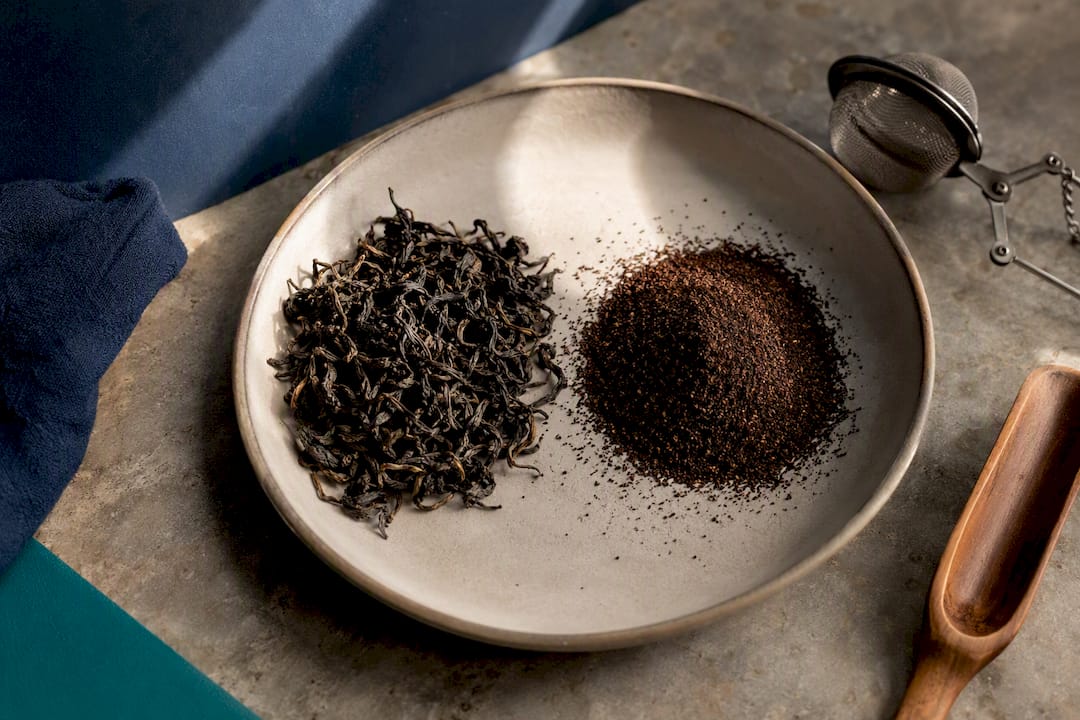
The flavor gap between loose leaf tea vs tea bags starts with particle size. Whole-leaf and large-broken-leaf grades have far less surface area exposed to water than fannings or “dust,” the smallest particles that fill most standard tea bags. Less surface area means slower, more even extraction of the flavor compounds locked in the leaf. A peer-reviewed paper on tea chemistry confirms particle size and processing directly affect how polyphenols extract and how stable they stay during brewing.
Packed into a small bag, leaf fragments also have nowhere to go. They can’t unfurl, which restricts how much aroma and volatile compound actually reaches your water.
Loose leaf’s edge is mostly mechanical, not mystical. Bigger leaf particles extract more slowly and evenly, giving you a rounder, less bitter cup, according to chemist Michelle M. Francl, PhD, whose tea chemistry breakdown explains why leaf integrity changes the final flavor.
The sensory gap widens most with high-grade green tea, oolong, and single-estate specialty teas, where subtle floral or vegetal notes get lost in a crushed-leaf bag.
Pro Tip: If you’re curious whether a tea is worth buying loose, check the leaf before brewing. Whole, intact leaves that still show some shape are a good sign; a bag full of dark powder usually means fast, flat flavor.
When Tea Bags Win: Speed, Consistency, and the Right Recipes
Tea bags aren’t a compromise. For certain drinking styles, they’re the smarter pick.
- Zero gear needed, which matters if you’re brewing at a desk or in a break room
- Portable enough to toss in a bag for travel or a hotel kettle
- Consistent blend from box to box, useful when you want the same cup every single day
Fannings actually suit some styles better. A classic milk-and-sugar breakfast tea depends on a fast, strong extraction that cuts through dairy, and fine particles deliver that punch quickly. Quick iced tea batches benefit the same way. Premium pyramid sachets and larger-format bags have also narrowed the quality gap, since many now hold whole or large-broken leaf instead of dust.
Cost and Value: What You’re Actually Paying Per Cup
Most tea bags hold a small, pre-measured amount of tea, roughly equivalent to a teaspoon of loose leaf. That’s your baseline for comparing prices fairly.
- Check the price per ounce or per 100 grams on the loose leaf package, then divide by how many 2 to 3 gram servings that yields.
- Compare that per-cup cost to the price per bag in a box of tea bags.
- Factor in re-steeps. A quality loose leaf oolong or green tea can often yield two or three infusions from one serving, cutting your effective per-cup cost by half or more.
- Add packaging waste into the math. Bulk loose leaf generates less trash per cup than individually wrapped bags over months of daily drinking.
A $12 pouch of loose leaf that yields 40 servings and re-steeps twice can easily beat a $6 box of 20 bags on real cost per cup, even before flavor enters the conversation.
Health and Materials: What the Research Actually Shows
Tea’s health upside comes mainly from the leaf itself, not the format it’s sold in. Harvard Health points to regular consumption, generally 2 to 4 cups daily, and the phytochemicals in the leaf as the drivers behind tea’s benefits, more than whether it came from a bag or an infuser.
What the research says: Limited studies summarized by Columbia’s Go Ask Alice found no clear antioxidant difference between bagged and loose-leaf green tea. The same research flagged a separate concern: certain tea bag materials can release microplastics when steeped in hot water.
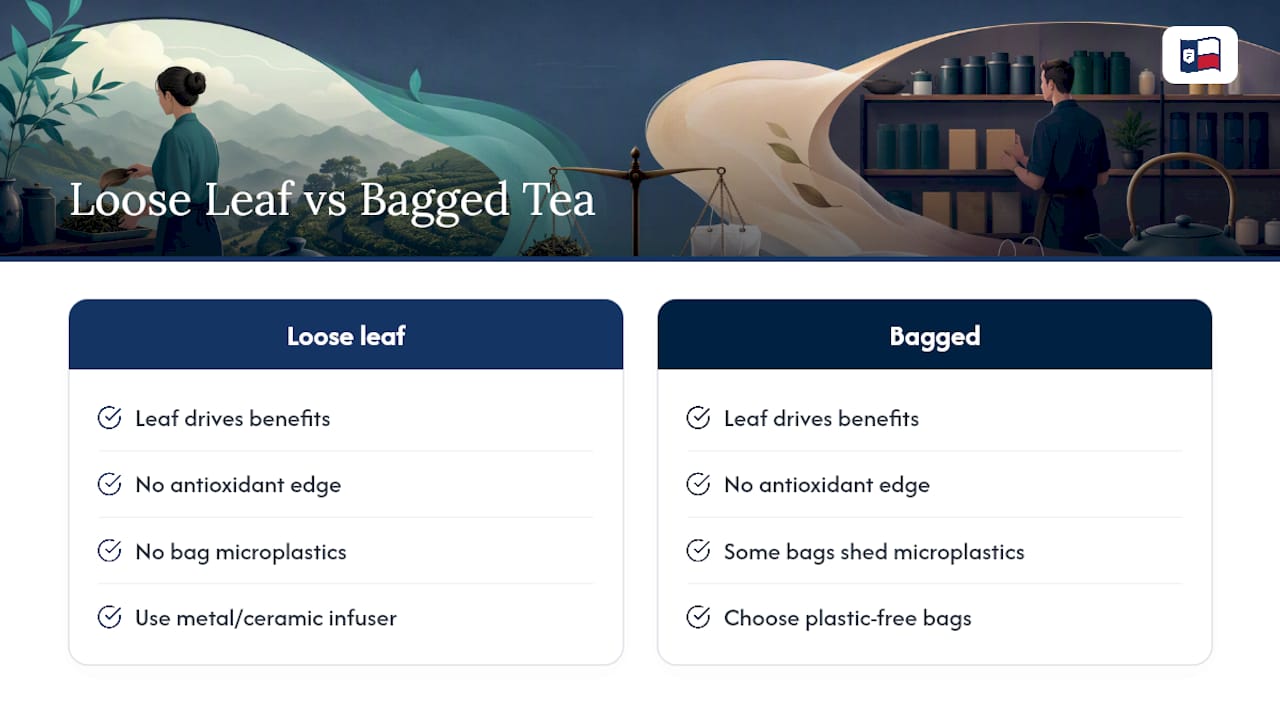
The practical takeaway is simple. If that worries you, choose loose leaf brewed in a metal or ceramic infuser, or look for unbleached, plastic-free bags. Either way, the tea you drink and how often you drink it matter more than the bag it came in.
How to Brew Loose Leaf and Bagged Tea So It Actually Tastes Good
Getting the temperature and timing right fixes most complaints about “boring” or bitter tea, no matter the format.
- Green tea: Use water around 175°F, about 2 to 3 minutes, roughly 1 teaspoon loose leaf per 8 ounces.
- Black tea: Use near-boiling water at 200 to 212°F, 3 to 5 minutes, same ratio.
- Oolong: Use 190 to 200°F water, 3 to 5 minutes, and expect two to three good re-steeps.
- Herbal blends: Use full boil, 212°F, 5 to 7 minutes since there’s no tannin risk to worry about.
Loose leaf tolerates a slightly longer steep because extraction happens more slowly and evenly, giving you a wider margin before bitterness sets in. Tea bags, packed with fine particles, extract fast and can turn tannic within a minute of oversteeping, so watch the clock closely.
Pro Tip: Give a tea bag room. Dunking it in a wide mug instead of a narrow one, and giving it an occasional stir, helps water circulate the way loose leaf naturally does in an infuser.
Storage and Freshness: Keep Your Tea From Going Stale
Heat, light, and moisture are tea’s three enemies. Keep it away from the stove, out of direct sunlight, and out of an open spice drawer where cooking steam can reach it.
- Store loose leaf and bags in airtight, opaque containers or resealable pouches
- Avoid clear glass jars on open shelves, however good they look
- Buy amounts you’ll actually finish in three to six months
Whole leaf generally stays fresher longer than fannings because less surface area is exposed to air, so oxidation happens more slowly. A well-sealed loose leaf pouch can hold decent flavor for six months to a year, while finely ground bagged tea starts fading sooner.
Quick Picks by Habit: Which Format Fits Your Routine
- Commuter or office worker: Tea bags or pyramid sachets. No cleanup, no gear.
- Ritual or ceremony drinker: Loose leaf. The slower brew is part of the appeal.
- Iced tea maker: Fannings or standard bags. Fast, strong extraction cools well over ice.
- Milk-and-sugar breakfast drinker: Standard black tea bags. Built for a fast, bold cup.
- Traveler or frequent packer: Pyramid sachets. Better flavor than flat bags, still no infuser needed.
A Retailer’s Honest Take on the Loose Leaf vs Tea Bag Debate
We’ve watched customers ask “is loose leaf tea better” as if there’s one right answer, and there isn’t. What actually matters is matching the format to the moment: a Saturday morning oolong deserves loose leaf and time, while a Tuesday commute deserves a bag that just works. Font-mag carries loose leaf selections from MAG Tea alongside quality bagged and sachet options precisely because good tea habits rarely look the same two days in a row. The goal isn’t converting everyone to one camp. It’s stocking both well enough that neither feels like a compromise.
— Rosario
Try Font-mag’s Loose Leaf Collection Without Overhauling Your Routine
You don’t need a tea ceremony setup to try loose leaf. A basic infuser and one good pouch is enough to taste the difference for yourself.
Font-mag’s loose tea collection features MAG Tea selections chosen for leaf quality, not just blend variety, so you’re getting whole and large-broken leaf rather than dust dressed up in nice packaging. If tea isn’t your only interest, the same cart can hold flavored coffee, syrups for building your own iced drinks at home, or matcha if you want a different kind of ritual altogether. Café owners restocking bar supplies can browse the same catalog for consistent, food-service-ready product and consider professional equipment like a Non-Digital Bubble Tea Sealer to enhance their beverage offerings. Orders over $35 ship free, and fulfillment moves fast enough that you’re not waiting around to taste the difference. Start with one pouch of loose leaf, brew it properly, and decide from there.
Sources
- PMC article referenced in research pool
- Is drinking tea without tea bags better for you? | Go Ask Alice!
- Does drinking tea really help health? | Harvard Health