

Why Coffee Origins Taste Different: A Flavor Science Guide
Coffee origin differences are defined by the combined effect of terroir, postharvest processing, and roasting chemistry acting on the bean’s unique chemical makeup. A Yirgacheffe from Ethiopia and a natural-processed coffee from Minas Gerais, Brazil, are both Coffea arabica, yet they taste nothing alike. That gap is not marketing. It is measurable chemistry. Understanding why coffee origins taste different means tracing flavor from soil and altitude through fermentation, drying, and finally the roast. This guide breaks down each stage with the science to back it up.
Why do coffee origins taste different?
The short answer is terroir. In wine, terroir describes how place shapes flavor. Coffee professionals use the same term, and the science supports it fully. Altitude and climate produce measurable changes in bean chemistry and sensory outcomes, detectable even by FTIR-ATR spectroscopy in Minas Gerais studies conducted at elevations up to 1,400 meters. That means origin is not a vague descriptor. It leaves a chemical fingerprint.
Three variables drive the terroir effect: altitude, soil composition, and climate. Higher altitudes slow bean development, which allows more time for complex sugars, amino acids, and chlorogenic acids to accumulate. Research from the Kafa Biosphere Reserve in Ethiopia confirms that altitude influences caffeine and trigonelline concentrations more strongly than genetics in some cases. Those compounds are not just stimulants. They are flavor precursors that determine bitterness, body, and the aromatic compounds produced during roasting.
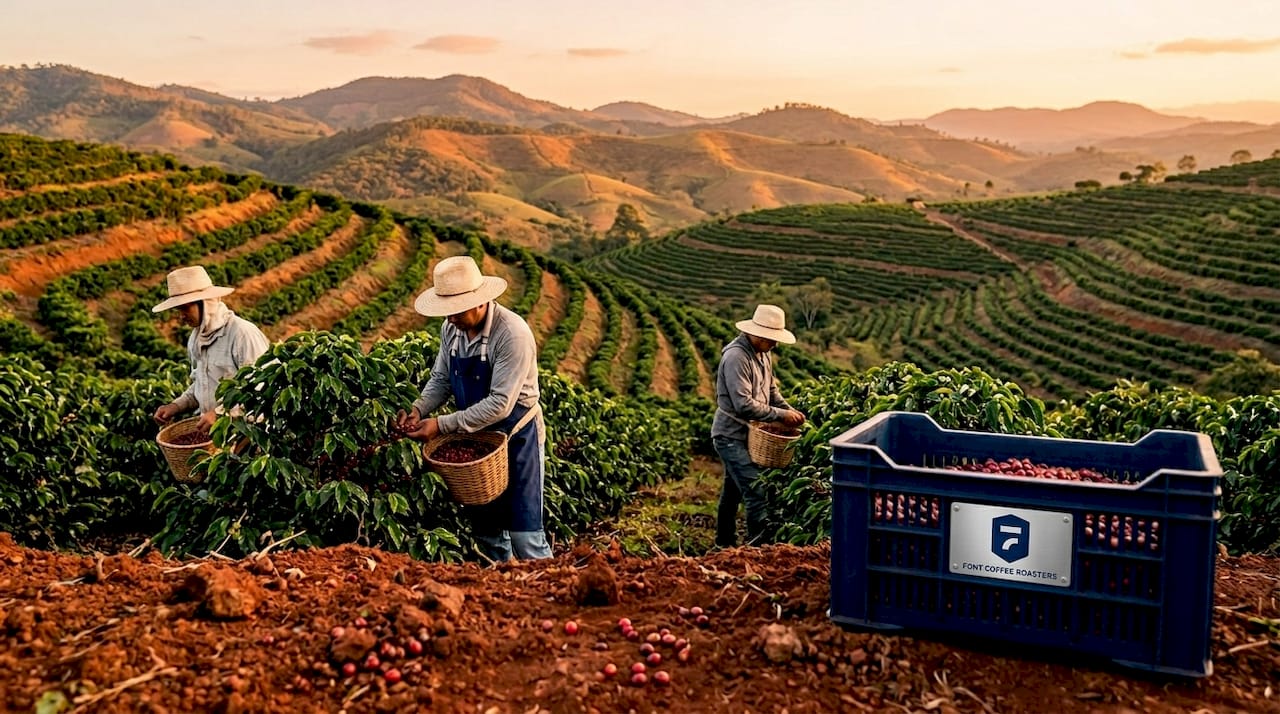
Soil mineral content shapes the availability of nitrogen and potassium, which feed directly into amino acid synthesis inside the bean. Climate controls moisture stress and temperature fluctuation during cherry development, both of which affect sugar concentration. Together, these factors create a precursor profile that is unique to each growing region. That profile is the raw material that processing and roasting will later transform into what you taste in the cup.
Pro Tip: When comparing coffees from different regions, choose beans from the same harvest year and roast date. Freshness variables can easily obscure origin character, especially in lighter roasts where the terroir signal is strongest.
A regional comparison of key terroir variables
| Region | Altitude range | Dominant flavor signals | Key chemical driver |
|---|---|---|---|
| Yirgacheffe, Ethiopia | 1,700 to 2,200 m | Floral, bergamot, stone fruit | High terpene and linalool content |
| Minas Gerais, Brazil | 900 to 1,400 m | Nutty, chocolate, caramel | Pyrazines from Maillard reaction |
| Coorg, India | 900 to 1,200 m | Spice, cedar, earthy | Phenolic compounds, low acidity |
| Huila, Colombia | 1,500 to 2,000 m | Red fruit, citrus, brown sugar | Balanced chlorogenic acid profile |
How postharvest processing shapes volatile flavor compounds
Once the cherry is picked, the clock starts on flavor development. Postharvest processing is where origin character either gets amplified or muddied, depending on how carefully it is managed. Microbial fermentation produces alcohols, organic acids, and esters during wet and natural processing. These compounds become aromatic precursors that survive into the green bean and transform during roasting.
Natural processing, where the whole cherry dries around the bean for weeks, allows extended microbial activity. The result is a denser, fruitier precursor profile. Washed processing removes the cherry pulp quickly, preserving the bean’s inherent terroir signal with less microbial interference. Honey processing sits between the two. Each method generates a different volatile fingerprint, which is why the same Ethiopian variety can taste like blueberry jam when naturally processed and like jasmine tea when washed.
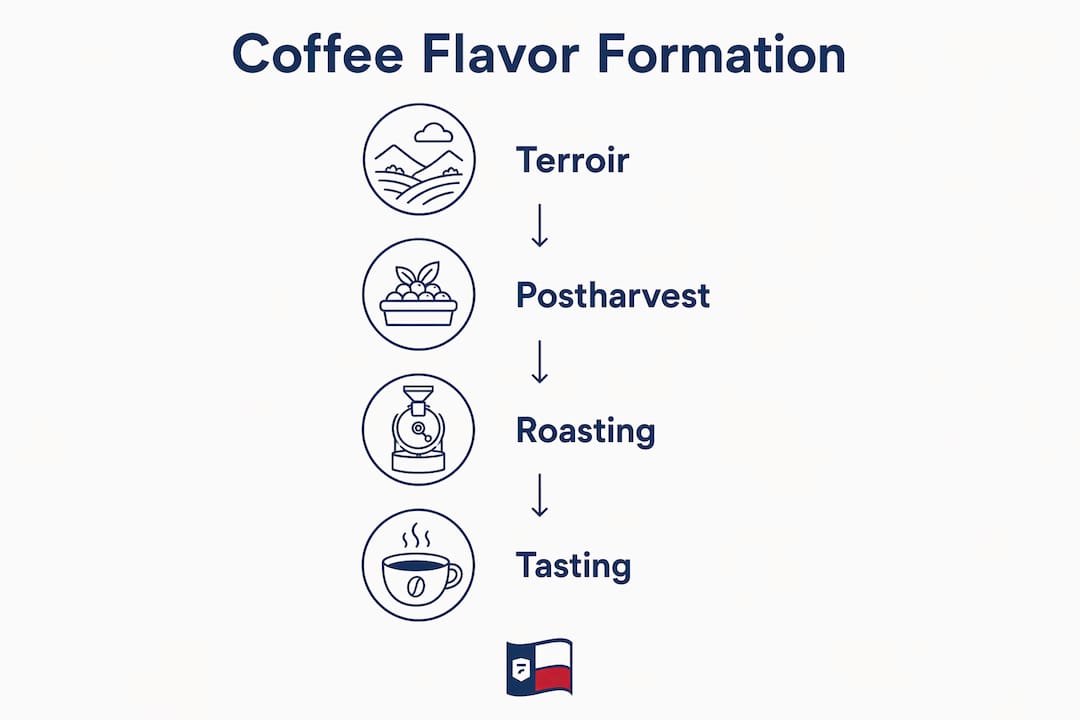
The science behind this is specific. Volatile aroma emerges from the synergistic interaction of hundreds of molecules shaped across harvest, fermentation, and drying. No single compound explains a coffee’s flavor. This matters because it means processing variability can mask or exaggerate origin differences. A study on autoclaved green coffee found that processing changes alter volatile organic compound profiles and sensory perception significantly, even when the origin is identical.
Key volatile families generated during postharvest stages include:
- Esters: Fruity, sweet notes like ethyl acetate and isoamyl acetate, common in natural-processed Ethiopian and Kenyan coffees
- Alcohols: Contribute fermented, wine-like character; elevated in extended fermentation lots from Central America
- Organic acids: Lactic and acetic acid from bacterial activity; shape perceived brightness and tartness in the cup
- Aldehydes: Grassy, green apple notes in under-fermented beans; a sign of incomplete precursor development
Pro Tip: If you want to isolate origin character from processing character, compare a washed and a natural version of the same cultivar from the same farm. Producers in Ethiopia and Colombia increasingly offer both. The contrast is dramatic and educational.
How roasting chemistry locks in origin flavor
Roasting is where precursor chemistry becomes flavor. The Maillard reaction, which begins around 150°C, drives the formation of pyrazines, furans, and phenols from the amino acids and sugars accumulated during bean development. The specific amino acid and sugar profile of each origin determines which Maillard products dominate. This is why origin-discriminating compounds belong to chemical families generated during roasting but depend entirely on precursor chemistry tied to terroir.
A 2026 MDPI study using explainable AI found that Brazilian coffees are rich in pyrazines while Ethiopian coffees are high in floral terpenes, connecting volatile chemistry directly to sensory traits. Pyrazines produce roasted, nutty, and chocolatey notes. Terpenes produce floral and citrus notes. These are not roaster decisions. They are origin decisions that roasting reveals or conceals.
Roast degree is the variable that either honors or overrides origin character:
- Light roast: Preserves the highest concentration of origin-specific volatile compounds. Acidity is pronounced, floral and fruit notes are accessible, and the terroir signal is clearest. Best for washed Ethiopian or Colombian coffees.
- Medium roast: Balances origin character with developed sweetness. Maillard products increase, adding caramel and brown sugar notes while retaining some origin-specific acids. Works well for Brazilian naturals and Guatemalan coffees.
- Dark roast: Strecker degradation accelerates, breaking down many origin-specific compounds. Light roasts preserve floral notes while dark roasts emphasize bitterness and smoky flavors, which can mask the origin signal almost entirely.
“Terroir’s primary effect is via modifications to amino acid and sugar precursors that drive Maillard reaction product formation during roasting, correlating with origin-characteristic aroma compounds.” — Explainable AI study on coffee volatile chemistry, MDPI 2026
Indian Monsooned Malabar is a useful case study here. The monsoon exposure process degrades many volatile precursors before roasting, producing a coffee with low acidity and heavy body regardless of roast degree. The origin character is real, but it is defined as much by processing as by geography. That is the complexity that makes coffee origin science genuinely interesting.
How to recognize and appreciate origin-driven flavor differences
Tasting for origin requires a structured approach. Without consistent variables, you are not comparing origins. You are comparing roast levels, brew ratios, or water temperatures.
- Fix your brew parameters first. Use the same grind size, water temperature (93°C), brew ratio (1:15 by weight), and brewer for every origin comparison. Changing one variable at a time is how you isolate the origin signal. Font-mag’s guide on coffee extraction and flavor explains how extraction variables interact with origin character in detail.
- Choose comparable roast levels. A light-roasted Ethiopian compared to a dark-roasted Brazilian tells you about roast, not origin. Match roast levels as closely as possible, ideally light to medium for origin-focused tasting.
- Taste blind when possible. Knowing the origin before tasting primes your brain to find what you expect. Blind tasting forces honest sensory evaluation and often produces surprising results.
- Use aroma as your primary guide. Volatile compounds responsible for origin character are most detectable in the aroma before the first sip. Smell the dry grounds, the bloom, and the brewed cup separately. Ethiopian terpenes are most obvious in the dry aroma. Brazilian pyrazines emerge most clearly in the brewed cup.
- Account for lot variability. Two bags labeled “Ethiopia Yirgacheffe” from different importers can taste dramatically different due to processing variation. Processing variability can mask or exaggerate origin differences, so sourcing from a roaster with transparent supply chain information matters.
Keeping a simple tasting log with notes on aroma, acidity, body, and finish builds your sensory vocabulary faster than any course. After ten origin comparisons, patterns emerge that make future identification intuitive.
Key takeaways
Coffee origin differences are chemically real, traceable from soil and altitude through fermentation and roasting to the volatile compounds that define what you taste in the cup.
| Point | Details |
|---|---|
| Terroir shapes precursor chemistry | Altitude, soil, and climate determine the amino acids and sugars that become flavor during roasting. |
| Processing amplifies or masks origin | Fermentation and drying generate volatile precursors that can override or reinforce terroir character. |
| Roasting reveals origin-specific compounds | Light roasts preserve floral and fruit volatiles; dark roasts replace them with bitterness and smoke. |
| Consistent brewing isolates origin | Fixed brew parameters are required to taste origin differences rather than extraction differences. |
| Origin signal is measurable | Explainable AI and spectroscopy confirm that chemical families discriminating origin correlate with sensory traits. |
The chemistry is real, and it changes how I shop
I spent years treating single-origin labels as marketing shorthand. A bag that said “floral and bergamot” from Ethiopia felt like a promise the roaster was making, not a fact about the bean. What shifted my thinking was reading the research on volatile biomarkers and realizing that the floral notes in a Yirgacheffe are not a suggestion. They are terpene compounds produced by specific microbial activity during fermentation at high altitude, then preserved by a light roast. The chemistry is traceable.
What I find underappreciated is how much processing obscures the origin conversation. Most enthusiasts debate Ethiopia versus Colombia as if geography is the whole story. It is not. A natural-processed Colombian can taste more like an Ethiopian natural than a washed Colombian from the same farm. The processing method is often the louder variable, especially at medium and dark roast levels. Isolating terroir requires washed coffees at light roast, and even then, lot-to-lot variation is real.
The part I am genuinely excited about is where AI and near-infrared spectroscopy are taking origin authentication. The 2026 MDPI explainable AI study is not just an academic exercise. It points toward a future where a roaster can verify origin character chemically before a bag ever reaches you. For enthusiasts who care about traceability, that is a meaningful shift from trust to verification.
My practical advice: start with washed single-origin coffees at light roast, keep your brew parameters locked, and use the aroma as your primary evaluation tool. The origin signal is there. You just need to stop changing variables long enough to hear it. Font-mag’s article on why coffee goes stale is worth reading alongside this one, because freshness is the variable most people underestimate when comparing origins.
— Rosario
Taste the difference with Font-mag’s origin collection

Font-mag sources single-origin coffees with the same rigor this article describes. Every coffee in the origin coffee collection is selected for transparent sourcing, consistent roast profiling, and genuine terroir character. Whether you are drawn to the pyrazine-rich depth of a Brazilian natural or the terpene-forward brightness of a washed Ethiopian, the range is built for enthusiasts who want to taste the science, not just read about it. Font-mag also carries MAG Tea premium loose-leaf selections and the full Sweetbird syrup range for café owners and home connoisseurs building a complete beverage program. Free shipping applies to all orders over $35. Browse the full retail coffee selection and find your next origin to explore.
FAQ
Why do coffees from different countries taste so different?
Geographic variables like altitude, soil, and climate shape the amino acid and sugar content of coffee beans, which become distinct flavor compounds during roasting. Processing methods then amplify or modify those origin-specific chemical profiles.
What is terroir in coffee?
Terroir is the bundle of environmental factors including altitude, climate, and soil composition that collectively modulate a coffee bean’s chemical and flavor outcomes. Research from Minas Gerais and the Kafa Biosphere Reserve confirms these effects are measurable, not just descriptive.
Does roast level affect origin flavor?
Yes, significantly. Light roasts preserve origin-specific volatile compounds like floral terpenes and fruit esters. Dark roasts accelerate Strecker degradation, which breaks down many of those compounds and replaces them with bitterness and smoky notes that mask origin character.
Can processing change how an origin tastes?
Processing can override terroir entirely in some cases. Natural processing extends microbial fermentation, adding fruity and wine-like volatile precursors. Washed processing removes the pulp quickly, preserving the bean’s inherent terroir signal with less microbial influence.
How can I taste origin differences at home?
Fix your brew parameters (grind, water temperature, brew ratio, and brewer) and compare washed single-origin coffees at the same roast level. Use aroma as your primary guide, since volatile origin compounds are most detectable before the first sip.