

What Is Bird Friendly Coffee? Benefits and Buying Guide
Bird Friendly coffee is defined as certified organic, shade-grown coffee produced under dense, multi-layered forest canopies that provide critical habitat for migratory and resident bird species. The Smithsonian Migratory Bird Center developed this certification to give farmers a clear, science-backed standard that balances bird conservation with viable coffee production. Every cup you buy with this label directly funds the preservation of forest ecosystems that hundreds of bird species depend on during migration. For coffee drinkers and bird enthusiasts alike, this certification connects your morning brew to real ecological outcomes.
What is bird friendly coffee certification, and what standards must farms meet?
Bird Friendly certification is the strictest shade-grown coffee standard in the world. The Smithsonian Migratory Bird Center created it specifically to incentivize farmers to maintain high-quality shade habitats while earning a living income. No other coffee label combines organic requirements with detailed habitat structure rules the way this one does.
To earn the certification, a farm must meet all of the following criteria:
- Shade cover: At least 40% shade cover at pruning, with vegetative buffer zones along waterways to protect riparian ecosystems.
- Canopy height: Trees must reach at least 12 meters high to accommodate the habitat needs of different bird species across multiple vertical niches.
- Tree diversity: A minimum of 10 tree and shrub species must be present to provide diverse food sources and structural complexity.
- Organic certification: The farm must hold a valid organic certification. Synthetic pesticides and herbicides are completely prohibited.
- Third-party audits: Inspections are conducted by independent auditors, often overlapping with organic certification inspections for efficiency and credibility.
- Supply chain integrity: Certified farms must process and store Bird Friendly coffee separately to guarantee that 100% of what reaches your cup comes from qualifying plantations.
The organic requirement is not optional or secondary. It is the foundation of the entire standard. A farm growing coffee under shade trees but still using synthetic chemicals cannot qualify. This is why Bird Friendly coffee is always organic, though not all organic coffee is Bird Friendly.
Pro Tip: When you see “shade-grown” on a bag without a Bird Friendly seal, the claim is unverified. Only the Smithsonian’s official logo guarantees the habitat structure and organic standards described above.
How does Bird Friendly coffee benefit birds, biodiversity, and the environment?
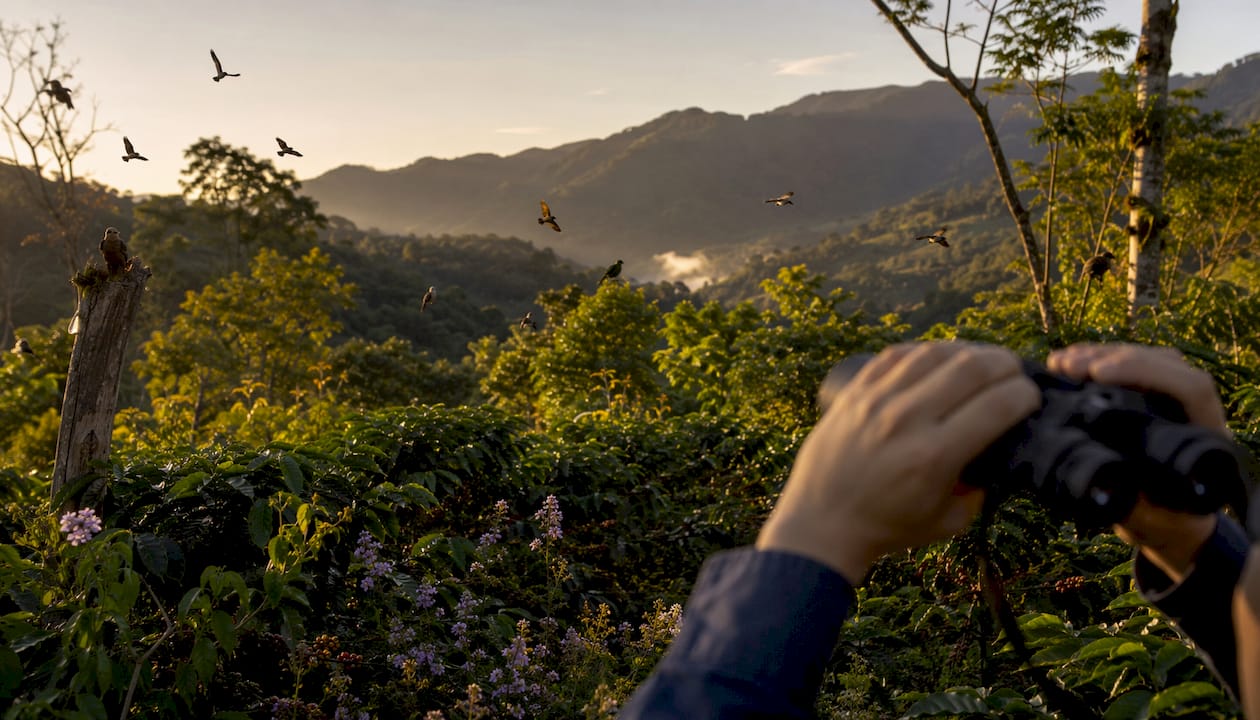
Bird Friendly farms function as working forests. They support migratory songbirds, resident species, insects, and mammals in ways that sun-grown monocultures simply cannot. The difference is structural. A conventional sun-grown coffee plantation is a single-layer crop with little canopy and almost no wildlife habitat. A certified Bird Friendly farm looks and functions like a forest.
The ecological benefits are well documented:
- Bird habitat: Multi-layered agroforestry systems provide habitats for birds and diverse wildlife, supporting species that require dense canopy cover for nesting and foraging.
- Natural pest control: Insectivorous birds reduce coffee berry borer infestations. Bird predation can reduce up to 50% of coffee berry borer beetle populations before they damage coffee berries.
- Water conservation: Shade-grown systems retain more water and recharge aquifers, while sun-grown coffee requires irrigation that depletes local streams.
- Soil health: Native tree root systems and leaf litter build organic matter, reducing erosion and improving long-term soil fertility without chemical inputs.
- Stormwater management: Healthy riparian zones and native tree roots buffer communities from stormwater runoff, a benefit that extends well beyond the farm boundary.
The contrast with conventional farming is stark. Sun-grown monocultures require heavy pesticide and fertilizer applications to compensate for the absence of natural ecosystem services. Bird Friendly farms generate those services organically, making the entire system more resilient over time.
Choosing sustainable agroforestry practices over monoculture is not just a conservation gesture. It is a vote for a farming model that produces food without degrading the land it depends on.
What economic value does Bird Friendly coffee offer farmers and consumers?
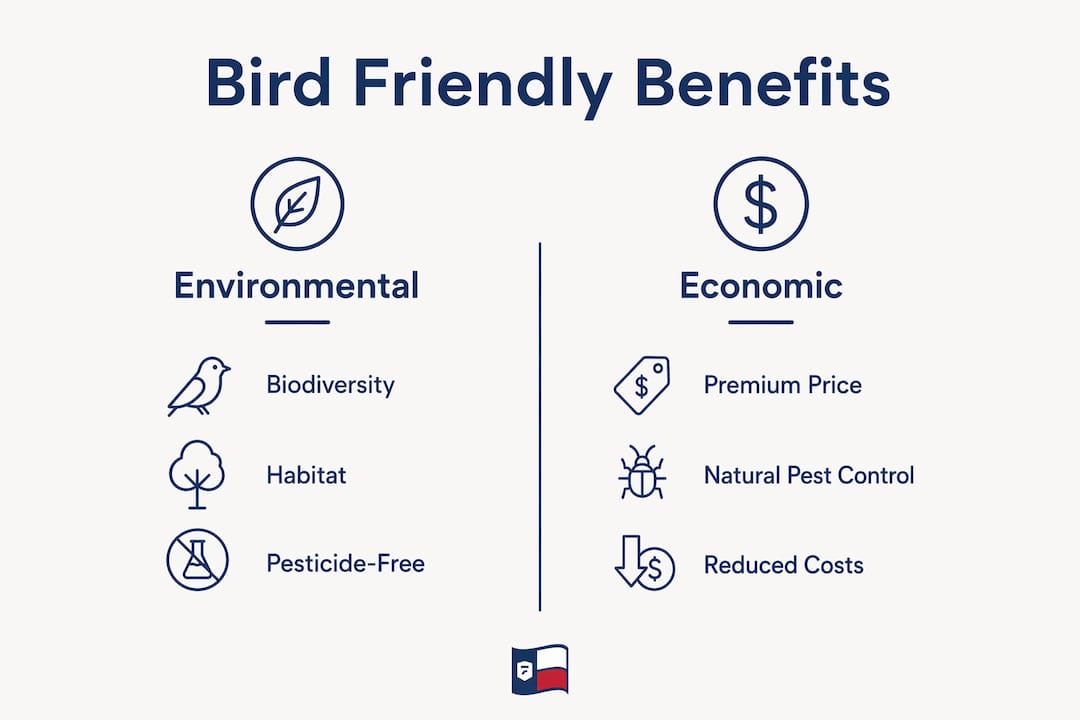
The financial case for Bird Friendly farming is stronger than most people realize. Natural pest control alone delivers measurable economic returns. Insectivorous birds provide pest control valued at an average of $195.68 USD per hectare per season, with the range running from $118.22 to $350.59 USD depending on forest cover. That is real money saved on pesticides and crop losses, not a theoretical benefit.
| Benefit | Economic impact |
|---|---|
| Natural pest control | $118.22–$350.59 USD per hectare per season |
| Reduced chemical inputs | Lower operating costs from zero synthetic pesticide use |
| Shade-grown flavor quality | Commands premium pricing in specialty markets |
| Ecosystem resilience | Reduced crop loss risk from soil degradation over time |
Bird Friendly yields may be slightly less per acre than sun-grown coffee, but reduced input costs and premium pricing offset that gap. Specialty roasters and conscious consumers pay more for certified coffee, which creates a direct financial incentive for farmers to preserve forest habitat rather than clear it.
The flavor benefit is real, too. Shade-grown coffee cherries ripen more slowly than those grown in full sun. Slower ripening concentrates sugars and acids, producing a more complex cup. This is why many specialty roasters specifically seek out shade-grown origins. The farm-to-cup sourcing process for high-quality coffee almost always traces back to farms with significant canopy cover.
Pro Tip: Ask your roaster for the farm or cooperative name on any coffee labeled shade-grown. Certified Bird Friendly farms are publicly listed by the Smithsonian, so you can verify the claim in seconds.
How can coffee drinkers identify and choose authentic Bird Friendly coffee?
The marketplace is full of green-sounding labels. Knowing which ones carry real accountability is the most practical skill a conscious coffee buyer can develop.
The Bird Friendly label is the only certification that guarantees 100% of the coffee comes from plantations meeting both organic and habitat standards. Other labels do not offer the same guarantee:
- Organic only: Confirms no synthetic pesticides, but says nothing about canopy cover or bird habitat.
- Fair Trade: Addresses farmer wages and cooperative structures, but does not require shade cover or organic production.
- Shade-grown (unverified): A marketing claim with no standardized definition or third-party audit requirement.
- Rainforest Alliance: Covers a broad range of sustainability criteria but uses a different and generally less stringent shade standard than Bird Friendly.
Sales of Bird Friendly coffee have doubled over the past five years, which means more retailers and specialty roasters now carry it. You can find it at select national chains and specialty coffee shops, though awareness is still growing. The Smithsonian’s website maintains a current list of licensed roasters and importers.
When buying online or in a store, look for the Smithsonian Migratory Bird Center’s official Bird Friendly seal. It is a small round logo featuring a bird silhouette. If you see only the words “bird friendly” without that seal, the claim is unverified. Traceability matters. Certified roasters keep Bird Friendly lots separate through the entire supply chain, from farm to bag, so the label reflects what is actually inside. Checking whether your roaster supports independent sourcing standards is a good starting point for finding trustworthy certified options.
Key Takeaways
Bird Friendly coffee is the only certification that combines mandatory organic standards with strict habitat requirements, making it the most credible label for coffee drinkers who want to support bird conservation.
| Point | Details |
|---|---|
| Certification origin | The Smithsonian Migratory Bird Center created and administers the Bird Friendly standard. |
| Habitat requirements | Farms must have at least 40% shade cover, 10+ tree species, and canopy reaching 12 meters. |
| Organic is mandatory | All Bird Friendly coffee is certified organic; synthetic pesticides are completely prohibited. |
| Economic value | Bird pest control saves farmers $118.22–$350.59 USD per hectare per season in crop protection. |
| Label verification | Only the official Smithsonian seal guarantees authentic Bird Friendly sourcing and supply chain integrity. |
Why I think Bird Friendly coffee deserves far more shelf space than it gets
I have spent time around both specialty coffee and serious birdwatching communities, and the overlap between them is larger than the market reflects. Bird enthusiasts are often deeply motivated consumers. They read labels carefully, they research sourcing, and they are willing to pay a premium for products that align with their values. The Bird Friendly certification speaks directly to that audience, yet it still occupies a fraction of the shelf space that Fair Trade or generic organic labels command.
The certification’s relative obscurity is not a quality problem. It is a visibility problem. Most coffee drinkers have never heard of the Smithsonian Migratory Bird Center’s role in coffee production. That gap represents a real opportunity for roasters and retailers who are willing to educate their customers. The farms that meet Bird Friendly standards are doing genuinely impressive work. Maintaining a 12-meter canopy with 10 or more tree species while producing commercially viable coffee is not easy. Those farmers deserve recognition and market reward.
The consumer awareness trend is moving in the right direction. Doubled sales over five years is meaningful growth. But the certification still needs more advocates at the retail level. If you care about where your coffee comes from, asking your local roaster or café about Bird Friendly sourcing is one of the most direct things you can do. Demand creates supply. The more coffee drinkers ask for it, the more roasters will seek it out.
— Rosario
Sustainably sourced coffee and beyond at Font-mag
Font-mag carries a thoughtfully curated range of specialty coffees for drinkers who care about what goes into their cup and where it comes from. Whether you are looking for your next everyday brew or something to pair with a quiet morning of birdwatching, the flavored coffee collection offers small-batch options roasted for quality and character. Font-mag also stocks a full range of complementary beverages for eco-conscious drinkers, including premium loose-leaf teas and specialty matcha from trusted producers. Free shipping applies to all orders over $35, so stocking up on your favorites is always worth it.
FAQ
What is bird friendly coffee in simple terms?
Bird Friendly coffee is certified organic, shade-grown coffee that meets strict habitat standards set by the Smithsonian Migratory Bird Center, ensuring the farm supports bird species and biodiversity.
Is bird friendly coffee always organic?
Yes. Organic certification is a mandatory requirement for the Bird Friendly label. Every bag carrying the Smithsonian’s seal comes from a farm that prohibits synthetic pesticides and herbicides.
How does bird friendly coffee differ from shade-grown coffee?
“Shade-grown” is an unverified marketing claim with no standard definition. Bird Friendly certification requires third-party audits, specific canopy height, minimum tree diversity, and full organic compliance.
Does bird friendly coffee taste different from regular coffee?
Shade-grown coffee cherries ripen more slowly, which concentrates sugars and produces a more complex flavor profile. Many specialty roasters prize this quality advantage over sun-grown varieties.
Where can I buy certified bird friendly coffee?
Licensed Bird Friendly roasters are listed on the Smithsonian Migratory Bird Center’s website. Specialty coffee shops, select national retailers, and online roasters increasingly carry certified options as consumer demand grows.