

3 Coffee Cup Sizes for Cafés and Home Baristas: 8, 12, 16 oz
Espresso runs 1 to 2 ounces, standard hot drinks fall into 8, 12, and 16 ounce cups, and iced drinks need 16 to 24 ounces to leave room for ice. Enthusiasts stocking a home bar can use the same logic. The chart and ordering checklist below fill in the rest.
TL;DR:
- A 12 oz cup holds less than 355 ml once foam and headroom are considered, making it a ceiling, not a target fill line.
- Iced drinks and cold brews need 16 to 24 oz cups because ice displaces 40 to 50 percent of the nominal volume.
- Lid diameter varies independently of volume, with some 12 oz cups using 80mm lids while others use 90mm, affecting compatibility.
- A core set of three sizes—8 oz, 12 oz, and 16 oz—covers most orders, minimizing inventory complexity and operational issues.
- Verifying lid diameter compatibility is more critical than volume when expanding or changing cup supplies to avoid leaks and customer complaints.
Table of Contents
- Coffee Cup Size Chart: Ounces to Milliliters
- Which Cup Size Fits Which Drink?
- Building Your Café’s Size Lineup Without Overcomplicating It
- How Cup Material and Shape Change the Drink
- Ordering Cups and Lids: Dimensions That Actually Matter
- A Font Coffee Perspective: Applying the Guide in Your Shop
- Why Most Cup-Size Advice Misses the Point
- Stock the Right Supplies Alongside Your Cup Sizes
- Reference Charts for Deeper Specs
- Sources
Coffee Cup Size Chart: Ounces to Milliliters
Nominal size and usable volume aren’t the same number, and that gap trips up a lot of first-time buyers. A cup labeled 12 oz doesn’t hold a full 355 ml of liquid once you account for foam, ice, or the headroom a lid needs to seal properly. Treat every size below as a ceiling, not a target fill line.
Here’s how the standard range breaks down:
- Espresso: a small 1 to 2 oz serving sized for a single or double shot — demitasse cups or shot glasses, sized for a single or double pull.
- 4 oz (≈ 120 ml) — cortados, macchiatos, and espresso samples.
- 6 to 8 oz (≈ 180 to 240 ml) — cappuccinos and short pours where foam texture matters more than volume.
- 12 oz (≈ 355 ml) — the workhorse size for drip coffee and lattes, and the one most café menus treat as “regular,” though that label shifts depending on what other sizes a shop stocks.
- 16 oz (≈ 473 ml) — large hot drinks and the standard starting point for iced coffee.
- 20 to 24 oz (≈ 591 to 710 ml) — jumbo iced drinks, cold brew, and frappe-style beverages.
Ceramic mugs cluster tighter than paper cups do. A standard ceramic mug typically holds 11 to 12 fl oz, while disposable takeaway cups span the full range from 4 to 24 oz because paper and foam scale more cheaply at the extremes. If you’re buying for dine-in service, ceramic rarely needs to go past 12 oz. If you’re buying for a to-go counter, the 16 and 20 oz sizes are where volume actually moves.
Which Cup Size Fits Which Drink?
Matching a drink to its vessel isn’t just about fitting the liquid. Shape and size protect crema, control milk ratio, and keep ice drinks from tasting watered down by the time a customer gets to the bottom.
- Macchiatos and cortados go in 2 to 4 oz cups. A narrow demitasse or tulip shape concentrates aroma and keeps the espresso-to-milk ratio visible and intentional.
- Cappuccinos and flat whites work best in 5 to 8 oz cups. A bowl-shaped cup gives foam room to hold its structure instead of collapsing against straight walls.
- Lattes and other milk-forward drinks usually land in 8 to 12 oz cups. Steamed milk needs the extra headroom that espresso alone doesn’t require.
- Drip coffee sits comfortably at 8 to 12 oz. Anything larger starts to cool before a customer finishes it, which is part of why diners rarely offer drip much past 12 oz.
- Iced drinks, cold brew, and frappes need 16 to 24 oz. Ice can displace 40 to 50% of a cup’s nominal volume, so a 16 oz iced coffee often delivers less actual liquid than a 12 oz hot one.
The ounce-to-ml conversions matter here for a practical reason: a customer who orders a “medium” expects roughly the same liquid volume whether it’s iced or hot, and getting that math wrong is a fast way to generate complaints about portion size.
Building Your Café’s Size Lineup Without Overcomplicating It
Three sizes cover almost every order a typical coffee shop takes: 8 oz for short hot drinks, 12 oz for the bulk of your drip and latte orders, and 16 oz for large hot drinks and entry-level iced. This 3-size core keeps your pricing tiers simple (small, medium, large) and your storage footprint manageable, which matters more than it sounds like once you’re juggling multiple lid types in a small back room.
Expand beyond the core only when a specific need justifies it. Espresso sample cups and a 20 oz iced size are the two most common additions, but each one adds its own lids, sleeves, and shelf space. Before adding a fourth or fifth size, run the numbers on how often you’d actually use it.
A short ordering checklist keeps things sane:
- It is best to order lids from the same supplier as the cups to ensure diameter compatibility.
- Double check your 12 oz cups specifically. Some run an 80mm top diameter and others run 90mm, so a lid that fit last order might not fit the next batch.
- Train staff on fill lines rather than “fill to the top.”
- Track which sizes actually move by drink type before reordering in bulk.
Pro Tip: Order a small sample pack any time you switch cup suppliers, even if the label says “12 oz” matches your old stock. Diameter, not volume, is what determines whether your existing lids still fit.
How Cup Material and Shape Change the Drink
Ceramic, glass, and double-wall paper each change how a drink feels before a single sip. Ceramic holds heat evenly and gives drinks a weight that reads as higher quality, which is part of why most cafés reserve it for dine-in service rather than takeaway. Glass shows off layered drinks like macchiatos but loses heat faster than ceramic does. Double-wall paper cups trade some of that hand-feel for insulation, keeping a drink hot without a separate sleeve.
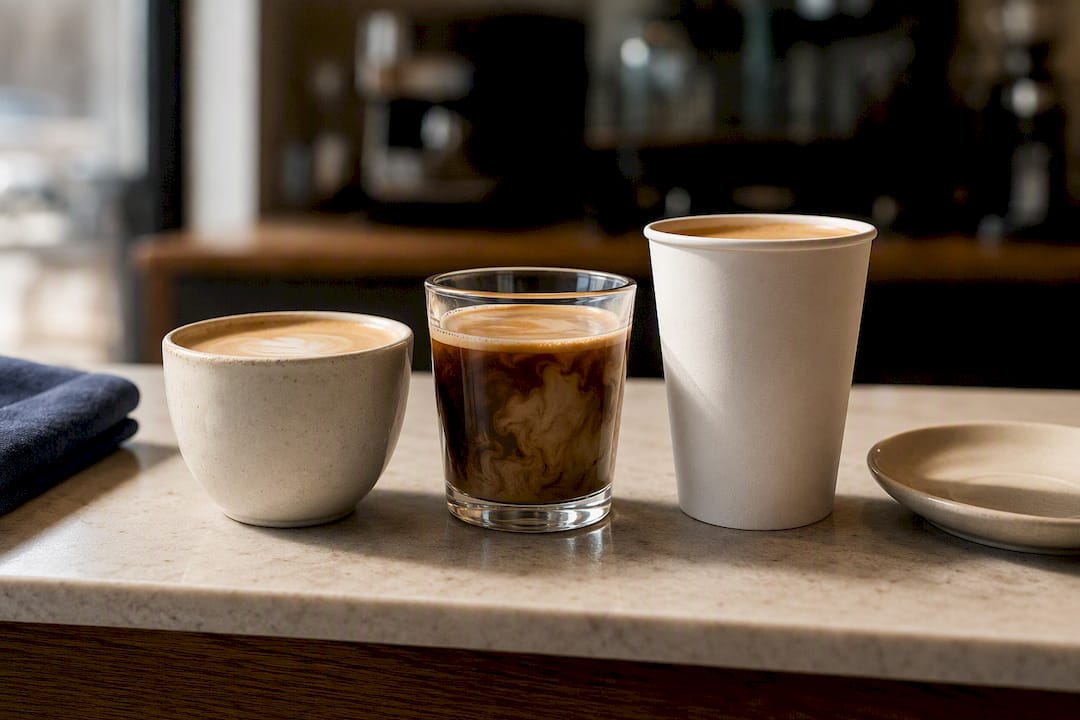
Shape matters as much as material for espresso-based drinks. Tulip and dome shapes concentrate aroma at the rim and help hold crema together, while straight-sided cups suit milk-forward drinks where volume, not aroma retention, is the priority.
The trade-offs come down to cost and consistency:
- Double-wall cups cost more per unit but can eliminate the need for separate sleeves, which sometimes evens out on total spend.
- Branded printed cups build recognition but usually require higher minimum order quantities than plain stock.
- Glassware needs a dish station and staff time that paper cups don’t.
Ordering Cups and Lids: Dimensions That Actually Matter
Top diameter is the spec that causes the most ordering headaches, not volume. Most disposable cups have top diameters around 80mm or 90mm, which are not interchangeable. The complication is that some 12 oz cup designs use 80mm while others use 90mm, so “12 oz” alone doesn’t guarantee a lid fit across suppliers.
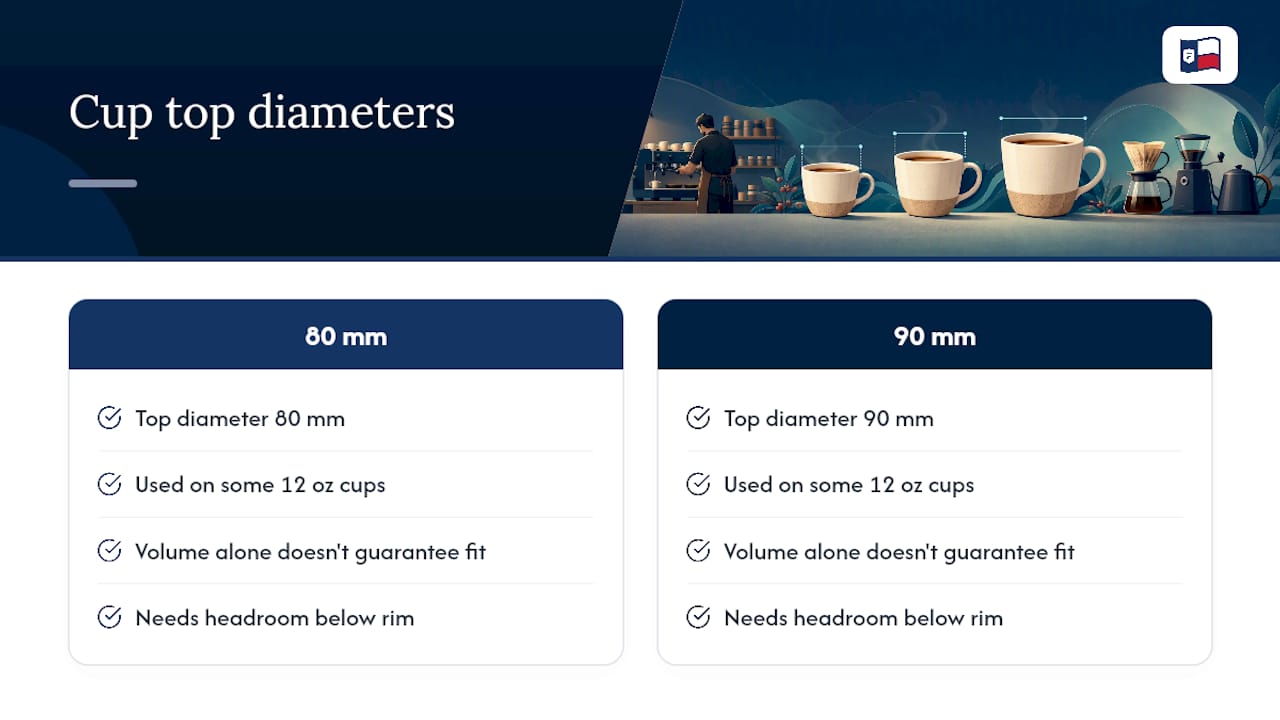
Leave headroom below the rim on every fill. That space accounts for foam, ice, and the seal your lid needs to snap down without leaking on the way out the door. Filling flush to the brim is the fastest way to turn a to-go order into a spill in someone’s car.
A Font Coffee Perspective: Applying the Guide in Your Shop
Coffee roasters build sizing instincts through trial, error, and customer feedback on what actually holds up behind a counter. Getting sizes right is half the battle. The other half is stocking the right consumables to back them up.
A practical starter list covers cups and lids sized to your core mix, a couple of syrup flavors for your latte lineup, and Cafiza espresso cleaner to keep your machine from tainting every drink that runs through it. If you’re dialing in milk-forward drinks, our latte syrup ratio guide walks through dosing by cup size, and the coffee-to-water ratio guide covers the brewing side once your vessels are sorted.
Why Most Cup-Size Advice Misses the Point
The industry treats cup size like a menu decision. It’s actually an operations decision first, and menu design second. A shop that picks its 8/12/16 core based on lid availability and storage space will run smoother than one that picks sizes to match a competitor’s menu and figures out the supply chain later.
The most overrated variable in this whole conversation is added size options. Every extra SKU past your core three multiplies your lid inventory, your storage headaches, and the odds a new hire hands someone the wrong lid on a busy Saturday. The most underrated variable is diameter consistency. Volume gets all the attention, but a 90mm lid on an 80mm cup ruins a shift faster than picking the “wrong” ounce size ever will.
If you take one thing from this guide, verify your lid diameter before you verify anything else. Everything downstream, pricing, menu naming, even how a drink tastes by the time it reaches a customer, depends on that fit holding.
— Rosario
Stock the Right Supplies Alongside Your Cup Sizes
Getting your cup sizes locked in is only useful if what’s going inside them holds up. Consumables that support a size chart include cups and lids sized to a core set, syrups for flavoring lattes and iced drinks, and cleaning supplies to maintain espresso equipment.
Beyond coffee, Font also carries vibrant Japanese matcha, premium loose-leaf teas, and the Sweetbird syrup lineup, so a single order can cover your entire beverage counter instead of three separate vendor accounts. Before you commit to a bulk cup order, grab a small sample case first to confirm lid fit and dimensions match your existing stock. Orders over $35 ship free, and browsing the retail coffee collection is a solid place to start matching beans to your new cup lineup.
Reference Charts for Deeper Specs
For quick lid-diameter checks, the Papacko paper cup chart is the fastest reference. For dimensional details on ceramic and travel mugs, see Measurement Stuff’s cup dimension guide.
Sources
- Paper Cup Sizes Chart: 4oz to 22oz, Lid Diameters & Uses | Papacko
- Coffee Cup Size Ounces Chart 2026 (SummerStirs)
- Coffee Cup & Mug Dimensions: Standard, Travel & Disposable Sizes | Measurement Stuff