

Home Barista Ingredients: Build Your Best Cup
Home barista ingredients are the carefully selected components — specialty beans, crafted water profiles, and artisanal syrups — that separate a forgettable cup from a genuinely great one. Most home brewers focus on equipment and overlook the raw materials. That is the wrong priority. The beans you buy, the water you use, and the flavorings you add determine 80% of what ends up in your cup. This guide covers every layer of the ingredient stack, from roast selection to water chemistry to professional syrups, so you can brew with the same precision as a trained barista.
What are the best home barista ingredients to start with?
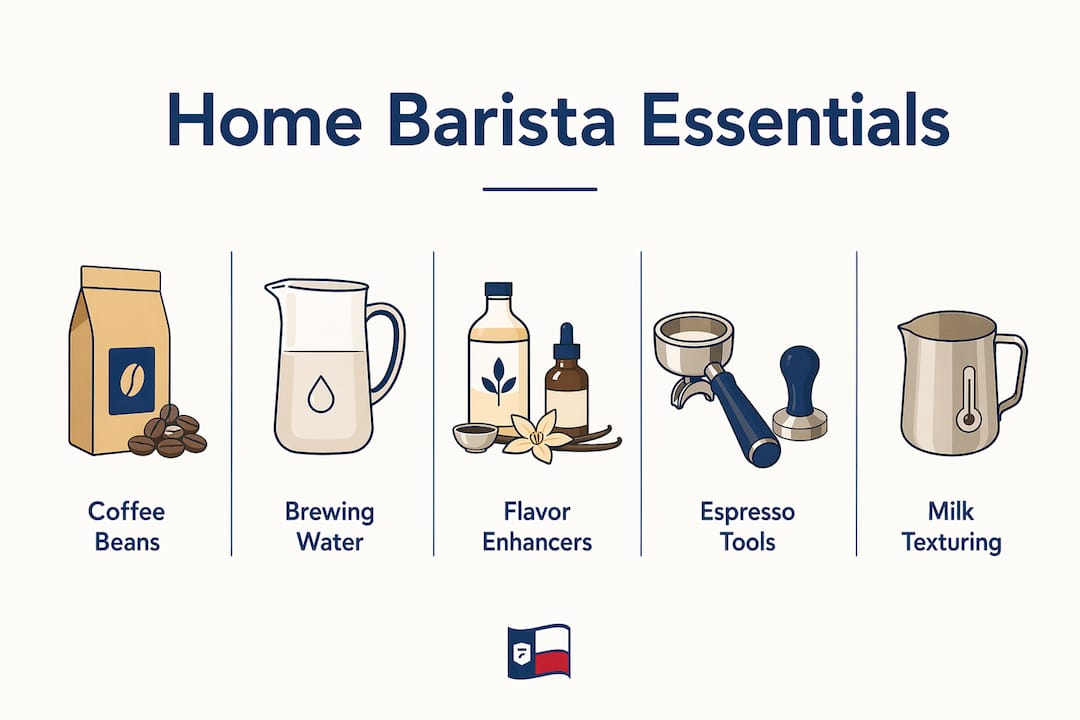
Home barista ingredients fall into four categories: coffee beans, brewing water, flavor enhancers, and supporting tools. Each category directly affects taste, and weakness in any one area limits your results regardless of how good the others are.
The foundation is always the bean. Specialty-grade beans priced around $15 for 12 ounces represent the quality threshold worth crossing. Below that price point, you are typically working with commodity-grade coffee that lacks the complexity espresso extraction demands. Peet’s Major Dickason’s Blend runs about $0.94 per ounce, and San Francisco Bay Fog Chaser comes in at roughly $0.97 per ounce for a 2-pound bag. Both are solid benchmarks for home use.
Water is the second ingredient most people ignore. Tap water varies wildly in mineral content, and that variability makes it nearly impossible to reproduce a great cup consistently. Flavor enhancers like vanilla bean paste, honey syrups, and professional-grade syrups from brands like Sweetbird round out the ingredient picture. Accessories like knock boxes, airtight canisters, and precision scales are the tools that let you use all of the above correctly.
What are the best coffee beans for home baristas?
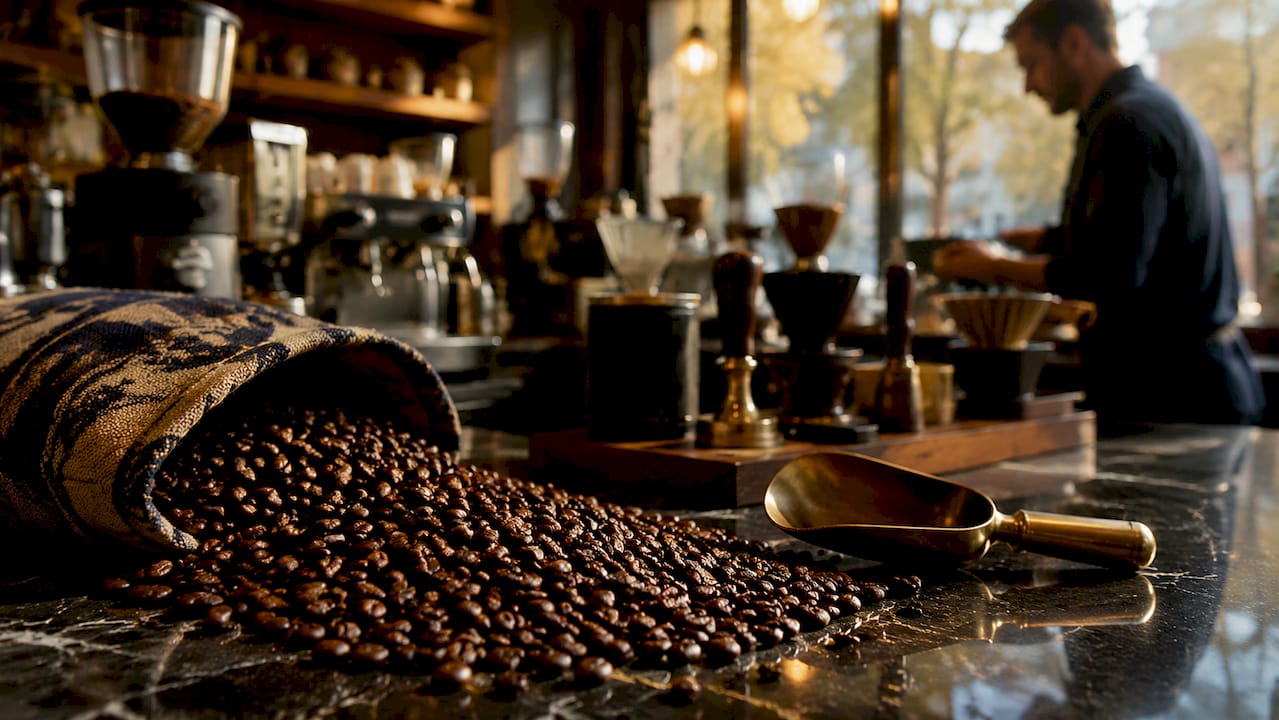
Roast level is the single biggest variable in bean selection. Light roasts preserve origin flavors: fruit, citrus, floral notes. Dark roasts trade those nuances for chocolate, caramel, and smoky body. Medium roasts sit in between and tend to be the most forgiving for home espresso setups.
Light to medium roasts deliver more complex fruit and citrus notes but require precise grinding and tighter extraction parameters. Dark roasts are more forgiving on grind consistency, which makes them a practical starting point for beginners. As your technique improves, moving toward lighter roasts unlocks significantly more flavor complexity.
Here is a quick comparison of roast levels for home espresso:
| Roast Level | Flavor Profile | Grind Sensitivity | Best For |
|---|---|---|---|
| Light | Fruity, floral, bright acidity | High | Experienced home baristas |
| Medium | Balanced, caramel, mild acidity | Moderate | Most home setups |
| Dark | Chocolate, smoky, low acidity | Low | Beginners, milk drinks |
Freshness matters more in espresso than in any other brew method. Espresso extraction amplifies every quality in the bean, including roast flaws and staleness. Fresh beans produce rich, syrupy crema. Stale beans produce thin, bitter shots regardless of your technique. Buy in quantities you can use within two to three weeks of the roast date.
- Buy from roasters who print the roast date, not just a “best by” date
- Store beans in an airtight container away from light and heat
- Avoid the freezer unless you are storing unopened bags for longer than a month
- Grind immediately before brewing, never in advance
Pro Tip: If you are new to lighter roasts, try a medium-light single origin from a local Texas roaster before committing to a full bag. The flavor difference from a dark roast will be immediately obvious, and you can decide if the added grind precision is worth it for your setup.
Local roasters give you access to fresh-roasted beans with known roast dates. Bulk online options like San Francisco Bay offer cost efficiency but require careful attention to packaging dates. For a deeper look at how roast level shapes flavor, the roast levels flavor guide at Font-mag breaks down each profile in detail.
How does water quality impact home coffee brewing?
Water is the ingredient that professional baristas obsess over and home brewers almost universally ignore. Distilled or zero TDS water is the correct base for brewing. It contains no competing minerals, which means you control exactly what goes into the extraction.
The Specialty Coffee Association recommends brewing water at roughly 150 mg/L total dissolved solids. You can hit that target at home by building your own mineral concentrate. Dissolve 5.0g magnesium sulfate and 4.0g sodium bicarbonate in 1 liter of distilled water to create a concentrate that reaches approximately 90 mg/L TDS when diluted correctly. Magnesium sulfate increases hardness and pulls out fruity, bright notes. Sodium bicarbonate adds alkalinity and rounds out body and creaminess.
Here is a simple process for preparing your brewing water at home:
- Purchase distilled water from any grocery store. Avoid spring water, which has unpredictable mineral content.
- Weigh 5.0g magnesium sulfate (Epsom salt) and 4.0g sodium bicarbonate (baking soda) on a 0.01g precision scale.
- Dissolve both into 1 liter of distilled water. Label this your hardness and buffer concentrate.
- Add 1.5ml of concentrate per 100ml of brewing water for a balanced extraction profile.
- Store the concentrate in a sealed glass bottle at room temperature for up to two weeks.
| Mineral | Role in Extraction | Target Level |
|---|---|---|
| Magnesium sulfate | Enhances fruitiness and brightness | 5.0g per liter concentrate |
| Sodium bicarbonate | Adds body and reduces harsh acidity | 4.0g per liter concentrate |
| Total TDS | Overall extraction efficiency | ~90–150 mg/L in brewing water |
Pro Tip: If building mineral water from scratch feels like too much work right now, at minimum run your tap water through a quality charcoal filter. Always soak charcoal filters for five minutes before installation to remove air bubbles. Skipping this step reduces filter efficiency and accelerates scale buildup inside your machine.
Understanding how water chemistry connects to extraction is worth the time. The Font-mag article on coffee extraction and flavor explains the relationship clearly if you want to go deeper.
Which syrups and flavorings elevate your coffee drinks?
Flavor enhancers are where home baristas can most quickly close the gap between their cup and a café’s. The difference is not just sweetness. It is texture, aroma, and depth.
Vanilla bean paste delivers intense vanilla flavor with visible bean flecks and a luxurious texture. It requires less sugar than traditional simple syrup to achieve the same flavor impact. That matters if you want a richer-tasting drink without the cloying sweetness that drowns out the coffee itself.
Here are the most useful flavoring options for home baristas:
- Vanilla bean paste: Stir 1/2 teaspoon into steamed milk before adding espresso. The result is noticeably more complex than vanilla syrup.
- Brown sugar syrup: Sweetbird’s brown sugar syrup adds a molasses depth that pairs particularly well with medium-roast espresso and oat milk.
- Honey syrup: Mix equal parts raw honey and warm water. Use it in place of simple syrup for floral notes that complement light roast pour-overs.
- Flavor extracts: A few drops of almond or hazelnut extract layer complexity without adding significant sweetness. Use them alongside, not instead of, a base syrup.
Pairing flavorings with milk type matters more than most people realize. Oat milk amplifies caramel and brown sugar notes. Whole dairy milk pairs best with vanilla and chocolate. Almond milk works well with hazelnut and spiced syrups. The Sweetbird collection, available through Font-mag’s syrups collection, covers the full range of professional-grade options used in specialty cafés.
Pro Tip: Make a small batch of vanilla bean honey syrup by warming 1/4 cup honey with 1/4 cup water and 1/2 teaspoon vanilla bean paste until fully combined. It keeps for two weeks in the fridge and works in lattes, iced coffee, and even matcha drinks.
What espresso accessories do home baristas actually need?
The right espresso making supplies do not need to be expensive. They need to be functional and precise. A few well-chosen tools make a measurable difference in shot consistency and machine longevity.
Core accessories for a home espresso setup include a knock box, an airtight vacuum canister, a WDT (Weiss Distribution Technique) tool, and a magnetic dosing funnel. The knock box keeps your workflow clean. The vacuum canister slows bean oxidation between uses. The WDT tool breaks up clumps in the portafilter before tamping, which directly improves extraction evenness.
Water maintenance tools are equally important. A charcoal water filter protects your machine from scale. Cleaning tablets and a group head brush keep the brew path free of coffee oil buildup, which turns rancid and ruins flavor over time.
For milk texturing, a steam wand is the gold standard, but a handheld frother produces surprisingly good results for lattes and cappuccinos. A precision scale with a 0.1g resolution handles both dosing and water measurement. It is the single most useful tool for a beginner because it removes guesswork from every variable at once.
How do you make coffeehouse-quality drinks at home?
Great home coffee drinks come from combining quality ingredients with consistent technique. You do not need an expensive machine to produce café-quality results. Strong coffee, properly textured milk, and balanced sweetness are the three pillars.
Here is a step-by-step process for a classic vanilla latte at home:
- Brew a double shot of espresso (18g coffee in, 36g liquid out, in 25–30 seconds) or a strong 6-ounce moka pot brew.
- Heat 6 ounces of milk to 140–150°F. Froth with a steam wand or handheld frother until you get a smooth, glossy texture with no large bubbles.
- Add 1/2 teaspoon vanilla bean paste or 1 tablespoon brown sugar syrup to the bottom of your cup.
- Pour the espresso over the syrup and stir briefly to combine.
- Pour the frothed milk slowly over the espresso, holding back foam with a spoon, then spoon the foam on top.
For a mocha, add 1 tablespoon of chocolate sauce to the cup before the espresso. For an iced version, pour everything over ice and skip the frothing step. The ingredient ratios stay the same.
Pro Tip: Texture is the variable most home baristas underestimate. Even with a handheld frother, you can achieve smooth microfoam by frothing in a small jar, sealing the lid, and shaking vigorously for 30 seconds before microwaving for 20 seconds. It is not perfect, but it is dramatically better than unfoamed cold milk.
Key takeaways
The quality of your home barista ingredients determines your results more than any single piece of equipment you own.
| Point | Details |
|---|---|
| Beans set the ceiling | Buy specialty-grade beans with a printed roast date and use them within two to three weeks. |
| Water is an ingredient | Build mineral water from distilled base plus magnesium sulfate and sodium bicarbonate for consistent extraction. |
| Syrups add depth, not just sweetness | Vanilla bean paste and brown sugar syrup deliver texture and complexity that simple syrups cannot match. |
| Tools support precision | A precision scale, WDT tool, and airtight canister improve consistency more than upgrading your machine. |
| Technique closes the gap | Proper milk texturing and correct syrup ratios replicate café drinks without professional equipment. |
What i have learned after years of brewing at home
The most common mistake I see from home baristas is treating water as neutral. It is not. I spent months chasing inconsistent shots before I realized my tap water was the variable I had never controlled. Once I switched to distilled water with a measured mineral concentrate, my extractions became reproducible for the first time. That single change was more impactful than any grinder upgrade I had made.
On syrups: most people reach for whatever is cheapest at the grocery store. The jump to a professional-grade product like a Sweetbird syrup or Nielsen-Massey vanilla bean paste is not about luxury. It is about flavor density. You use less, taste more, and add less sugar to the drink. That is a practical win, not a splurge.
My honest advice on tools is to buy fewer things and use them more precisely. A $20 precision scale used consistently beats a $200 accessory you do not understand yet. Learn your current setup completely before adding anything new. The home baristas who improve fastest are the ones who change one variable at a time and pay attention to what shifts.
If you have not experimented with matcha as part of your home beverage rotation, you are missing something genuinely different. A well-prepared matcha latte uses the same milk texturing skills as espresso drinks, and the flavor contrast keeps your palate sharp. It is worth adding to the mix.
— Rosario
Upgrade your home brewing with Font-mag
Font-mag carries the full range of ingredients serious home baristas need, from small-batch specialty coffees to professional-grade Sweetbird syrups and beyond. Whether you are building your first espresso setup or refining a routine you have had for years, the right ingredients make the process more rewarding and the results more consistent.
Browse Font-mag’s flavored coffee collection for beans that bring complexity to every brew, or explore the complete syrups and sauces range to find the Sweetbird flavors that match your style. Font-mag also stocks premium matcha and loose-leaf teas for days when you want something beyond coffee. Free shipping applies to all orders over $35, with fast fulfillment from Texas to your door.
FAQ
What coffee beans work best for home espresso?
Medium to medium-light roast specialty-grade beans priced around $15 for 12 ounces deliver the best balance of flavor complexity and extraction forgiveness for home espresso setups.
Why does my home espresso taste different from the café version?
Water chemistry is the most common cause. Tap water variability prevents consistent extraction. Using distilled water with measured mineral additions replicates the controlled water profiles professional cafés use.
Can i make good coffee drinks at home without a steam wand?
Yes. A handheld frother or a sealed jar shaken vigorously and microwaved for 20 seconds produces textured milk suitable for lattes and cappuccinos without a steam wand.
What is the best flavoring for home coffee drinks?
Vanilla bean paste outperforms standard syrups for milk-based drinks. It delivers intense flavor, visible bean flecks, and a richer texture while requiring less sugar than traditional simple syrup.
How do i store coffee beans to keep them fresh?
Store beans in an airtight container away from light, heat, and moisture. Use them within two to three weeks of the roast date for peak flavor, especially for espresso where freshness directly affects crema quality.