

Cortado vs Flat White: Milk, Size, Texture and Which to Order
A cortado is a double shot of espresso with about the same amount of lightly steamed milk, served in a small glass of roughly four ounces. A flat white uses the same espresso with about twice as much milk, steamed into a silky microfoam, in a slightly bigger cup. The cortado tastes sharper and more coffee-forward. The flat white tastes rounder and sweeter. Whichever you pick, the espresso underneath decides how good it is, and that is where a freshly roasted small-batch bean, like our Broken Arrow Reserve, earns its place on your counter.
TL;DR
- A cortado is about 1:1 espresso to milk, roughly 4 oz, with little or no foam.
- A flat white is about 1:2 espresso to milk, roughly 5 to 6 oz, with fine, velvety microfoam.
- Choose a cortado for strong coffee flavor. Choose a flat white for a smoother, creamier cup.
- Macchiatos are smaller and sharper, cappuccinos are foamier, and piccolos are lighter and sweeter.
- At home, the beans, the grind and the milk texture matter more than the name on the menu.
Table of Contents
- Cortado vs flat white at a glance
- What a cortado is
- What a flat white is
- Cortado vs macchiato
- Cortado vs cappuccino
- Cortado vs piccolo latte
- The cortado milk ratio, side by side
- Making a cortado or flat white at home
- Beyond espresso: syrups, tea and matcha
- Our view on the cortado and the flat white
- Stock the counter for either drink
- FAQ
- Sources
Cortado vs flat white at a glance
The two drinks share an espresso base, so the difference comes down to how much milk goes in and how it is steamed. Café recipes vary, so treat these as typical U.S. specialty-café patterns.
| Cortado | Flat white | |
|---|---|---|
| Espresso to milk | About 1:1 | About 1:2 |
| Typical size | 4 to 5 oz | 5 to 6 oz |
| Milk texture | Warm, lightly steamed, little foam | Silky microfoam blended through the milk |
| Taste | Coffee-forward, slightly sweet | Smooth, creamy, still coffee-forward |
| Typical vessel | Small glass | Small ceramic cup |
The ranges come from a U.S. specialty-café comparison, which stresses that recipes differ from shop to shop. If a drink goes well past one part espresso to two parts milk, you have moved from cortado territory into flat white or latte territory.
What a cortado is
“Cortado” comes from the Spanish word for “cut”: the milk cuts the espresso rather than burying it. Food & Wine defines it as a 1:1 ratio of espresso and steamed milk, a drink of roughly four ounces in which the coffee flavor shines through while the milk adds silkiness and a touch of sweetness. It is typically served in a Gibraltar glass, the sturdy little tumbler that gives the drink a second name in some West Coast cafés.
The math is simple. As Barista Magazine explains, a double shot is roughly 2 oz, so equal milk lands you at 4 oz. Add more milk to make it bigger and it stops being a cortado. The milk is steamed only to temperature, with minimal texture, so you taste warm milk rather than foam.
That balance is the appeal. Barista Magazine quotes Aaron Duckworth of Parisi Coffee in Kansas City on why espresso lovers like the format: the 1:1 ratio keeps the coffee’s own flavor notes, such as the fruit aromatics of an Ethiopian espresso, accentuated by the milk’s sweetness without being diluted by it.
What a flat white is
A flat white is also a small drink, but the milk is the point. Food & Wine describes gently steamed milk that forms a soft microfoam, tiny air bubbles suspended in the milk, with no foamy head on top, unlike a cappuccino’s airier foam. The Manual puts the build at two shots of espresso, steamed milk and a light foam layer, with two parts milk to one part espresso, which makes it slightly less creamy than a latte.
A useful way to remember it: foam amount versus foam quality. A flat white is not defined by a big mound of foam but by bubbles so fine they blend into the milk. That is why a well-made one pours smooth from the first sip to the last, and why a cortado, with its barely textured milk, tastes more direct.
Why they taste different
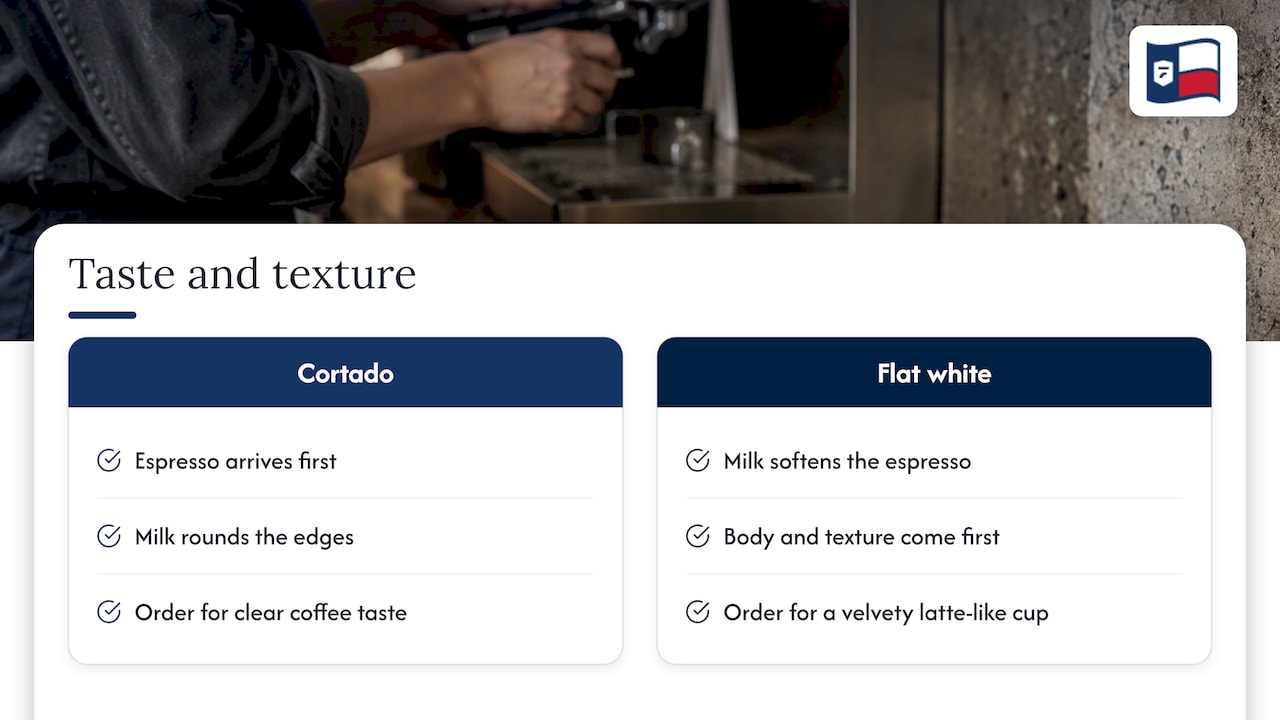
The extra milk in a flat white softens the espresso and adds sweetness, so you notice body and texture first and roast character second. In a cortado the espresso arrives first and the milk rounds the edges. If you like a cup that tastes clearly of coffee, start with the cortado. If you want something closer to a small, velvety latte, order the flat white.
Cortado vs macchiato
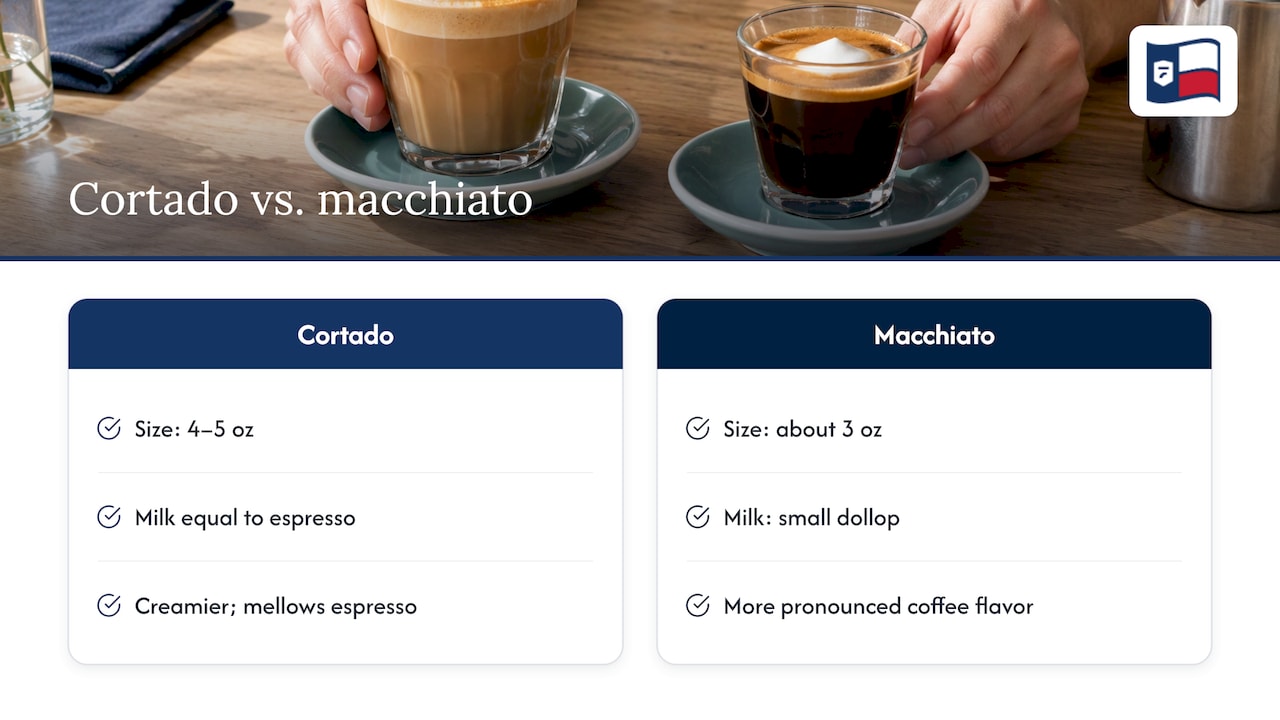
Both drinks can start with the same double shot, and the milk is what separates them. Tasting Table reports that a macchiato runs about 3 oz and a cortado 4 to 5 oz, with the size difference coming from milk: a small dollop on the macchiato, an equal amount to the espresso in the cortado.
The macchiato is less diluted, so its coffee flavor is much more pronounced. The cortado’s 1:1 ratio gives a slightly creamier texture that mellows the espresso. The same article warns that many flavored, shaken iced “cortados” and “macchiatos” on chain menus are really latte macchiatos with far more milk, so judge the drink by its size and ratio, not its name.
Cortado vs cappuccino
The cappuccino is where foam comes in. Food & Wine describes a traditional cappuccino as equal parts doppio espresso, steamed milk and microfoam in a six-ounce ceramic mug, with foam the consistency of velvet meringue. A cortado has no meaningful foam layer, which Brewing Coffees notes is the key contrast: a cappuccino is built around a thick foam cap.
In practice, a cappuccino feels lighter and airier in the mouth, while a cortado feels denser and warmer. If you want to dig into that other side of the menu, our guide to latte vs. cappuccino walks through milk, foam and what to order.
Cortado vs piccolo latte
The piccolo is the cortado’s smaller, milkier cousin. Tasting Table reports that a piccolo is most often served in a 3 to 4 oz glass versus the cortado’s 4 oz glass. It uses one part espresso to two parts steamed milk, built on a single ristretto (a shorter, more concentrated shot), while the cortado is equal parts. The result: the cortado tastes noticeably stronger, and the piccolo is lighter and sweeter.
Many U.S. cafés do not list a piccolo. Crazy Coffee Crave suggests describing it as a single ristretto with steamed milk in a small 3 to 4 oz glass.
The cortado milk ratio, side by side
Here are the ratios for the drinks above, as espresso to milk (and foam where it applies).
| Drink | Espresso | Milk | Typical size |
|---|---|---|---|
| Macchiato | Double or single shot | A dollop of foam | About 3 oz |
| Piccolo | Single ristretto | About 2 parts steamed milk | 3 to 4 oz |
| Cortado | Double shot, about 2 oz | About 2 oz, lightly steamed | 4 to 5 oz |
| Cappuccino | About 2 oz | Equal parts steamed milk and foam | About 6 oz |
| Flat white | Double shot | About 2 parts microfoamed milk | 5 to 6 oz |
Sources for those ranges are the articles linked above. Shot counts and cup sizes vary, so ask your barista how a shop builds its version.
Making a cortado or flat white at home
In small drinks, there is nowhere for the espresso to hide. A few things matter most.
- Pick the right beans. Steve Keating, quoted by Craft Coffee Guru, recommends medium and medium-dark espresso roasts with chocolate, caramel and nut notes for a cortado, because a small amount of milk rounds them out. Bright, fruity light roasts can read as sour in a small milk drink. Our walkthrough on dialing in espresso beans covers roast, grind and a 20 to 30 second shot window.
- Pull a double. Aim for about 2 oz of espresso, then match it with about 2 oz of milk for a cortado or about 4 oz for a flat white.
- Steam for the drink. For a cortado, warm the milk with minimal texture. For a flat white, keep the foam fine and glossy, with no stiff cap.
- Use the right vessel. A four-ounce glass makes a cortado look and feel right, and a slightly bigger cup suits a flat white.
If you serve these drinks in a café, our accessories collection carries cups, lids, carriers and stir sticks, so the service side is covered too.
Beyond espresso: syrups, tea and matcha
Not everyone who loves a cortado drinks only espresso. The same small, balanced format works as a template for the rest of the menu.
Syrups. A flat white’s creamy body carries flavor well. A light pump of vanilla or caramel turns it into a café-style treat, and the cortado is best kept lean, with just a touch if any. Pump sizes vary, so our latte syrup ratio guide gives exact doses by cup size. The same syrups, from the Sweetbird collection, also go into dirty sodas and mocktails.
Matcha and tea. If you want a small, milky cup without espresso, whisk Japanese matcha and add steamed milk, or brew a loose-leaf black tea from MAG Tea strong and top it with warm milk. Our teas and loose tea collections are the place to start.
Lighter evenings. If you want the ritual of a warm milky drink later in the day, healthy caffeine alternatives can keep the habit without the jolt, and our decaf coffee keeps the flavor of a cortado.
Our view on the cortado and the flat white
Four generations of roasting have taught us that a small milk drink is the honest test of an espresso. With so little milk in a cortado, the coffee has to be good, and that is why we roast in small batches and treat freshness as part of the recipe.
We also think the best drink menu is wider than espresso. A flat white at breakfast, a matcha latte in the afternoon, a loose-leaf tea in the evening and a syrup-lifted iced drink on a Texas summer day all deserve the same care. That is why our shelves hold coffee, MAG Tea, matcha and Sweetbird syrups side by side.
Pick the drink that fits your mood: cortado for clarity, flat white for comfort. Then give it beans worth tasting.
Rosario
Stock the counter for either drink
Whether you are pulling shots at home or running a café, we carry the pieces in one place: small-batch coffee including Broken Arrow Reserve, decaf, loose teas, Japanese matcha, Sweetbird syrups and sauces, café essentials and cleaners for beverage equipment. Subscription options are available for recurring coffee orders, and shipping is free on orders over $35.
Browse the full range on font-mag.com, or go straight to syrups and sauces and accessories.
FAQ
Does a cortado have less milk than a flat white?
Yes. A cortado is about equal parts espresso and milk, while a flat white is closer to one part espresso to two parts milk. That makes the cortado smaller and stronger-tasting, and the flat white creamier.
Is a cortado stronger than a flat white?
Both can be built on the same double shot, so the caffeine from the espresso can be the same. The cortado tastes stronger because less milk dilutes the coffee. Cafés vary in shot count, so ask how a shop makes each one.
What is the difference between a cortado and a Gibraltar?
Often nothing but the name. LAist, quoting a coffee consultant, describes the Gibraltar as a double shot with one to two ounces of steamed milk in a glass tumbler, which is the cortado, named for the glass it is served in.
Which is better for a beginner?
If you usually drink lattes, start with a flat white, since its extra milk and soft texture feel familiar. If you already enjoy the taste of espresso and want to taste the beans more clearly, try a cortado.
Can I add syrup to a cortado or flat white?
Yes. Use a small dose, because both drinks are small and the syrup can overpower the espresso quickly. A flat white handles a light pump better than a cortado, and our syrup ratio guide lists doses by cup size.
Sources
- Food & Wine: the difference between a flat white, cappuccino and more
- LAist: the difference between a flat white, a cortado and more
- The Manual: cortado vs. flat white
- Frenchy Coffee NYC: cortado vs flat white
- Barista Magazine: the cortado
- Tasting Table: cortado vs macchiato
- Tasting Table: piccolo vs cortado
- Brewing Coffees: cortado vs cappuccino
- Crazy Coffee Crave: what a piccolo latte is
- Craft Coffee Guru: what a cortado is
- Einstein Energy: healthy caffeine alternatives