

Dial In Espresso vs Coffee Beans, Home Baristas: Roast, Grind, 20–30s
Espresso beans are not a different species. “Espresso” usually describes a roast profile and a brewing intent, not a unique bean. For milk drinks, lean medium to dark for a forgiving, chocolatey shot; for straight shots, a lighter roast rewards patience if you can dial in grind and time. Two things decide your results more than the bag’s label: roast date and the rest window after roasting.
TL;DR:
- Espresso relies on pressure, rapid contact, and fine grind size rather than specific beans, making almost any coffee suitable if brewed correctly.
- Darker roasts are more forgiving and often preferred for milk-based drinks, while lighter roasts offer brighter flavors but require more precise control.
- Freshness affects crema and flavor balance, with most beans tasting optimal several days after roasting and stored in a cool, opaque container.
- Achieving consistent results depends heavily on grind uniformity, proper tamping, accurate dosing, and shot timing, rather than the bean’s origin or roast alone.
- Caffeine content per ounce is higher in espresso, but a full mug of drip coffee generally delivers more total caffeine due to larger serving size.
Table of Contents
- Espresso Beans vs Coffee Beans: What Makes the Brewing Method Different
- How Roast Level Shapes Espresso vs Filter Coffee
- What Grind Size and Dose Should You Use for Espresso?
- Espresso Bean Flavor Profile: Why the Same Bag Tastes So Different Two Ways
- Espresso vs Regular Coffee: Does Espresso Really Have More Caffeine?
- Can You Use Any Coffee Bean for Espresso?
- Freshness, Degassing, and Storage: What Roasters Actually Recommend
- A Simple Home-Brewer Routine Worth Copying
- Try Both Approaches with Font-mag’s Starter Pairings
- Sources
- FAQ
Espresso Beans vs Coffee Beans: What Makes the Brewing Method Different
The real difference between espresso and regular coffee lives in the machine, not the bag. Espresso is defined by pressure, roughly about nine bars of pressure, forcing hot water through finely ground, tightly packed coffee in about 20 to 30 seconds. That short, forceful contact produces a concentrated shot at close to a very concentrated liquid-to-dry coffee ratio. Drip and pour over coffee do the opposite: water drips or floods over coarser grounds for several minutes, typically landing somewhere around a 1:15 to 1:18 ratio, with a paper filter stripping out most of the oils.
That mechanical gap explains why the same beans taste so different brewed two ways.
- Pressure creates crema. Forcing water through packed grounds at speed emulsifies oils into micro droplets, something gravity brewing simply cannot do.
- Contact time changes extraction. Twenty seconds under pressure pulls flavor faster and more aggressively than four minutes of gentle drip.
- Filtration matters. Paper filters trap oils and fine particles that espresso’s metal filter basket lets through, which is part of why espresso feels heavier on the tongue.
None of this requires special beans. It requires a different machine, a finer grind, and a shorter clock.
How Roast Level Shapes Espresso vs Filter Coffee
Roast development, meaning how long a bean spends past first crack, changes its sugars, body, and surface oils long before it ever meets water. Longer development caramelizes more sugar, softens acidity, and pushes oils to the bean’s surface. That is why a bag labeled “espresso roast” is usually darker: dark roasts are more soluble and more forgiving when pulled fast under pressure, so small grind or dose mistakes are less likely to ruin the cup.
Specialty roasters increasingly push back on the dark-roast default. Light roasts can produce bright, fruit-forward espresso, but they demand tighter control of grind size, dose, and extraction time to avoid sour, thin shots. Medium to dark roasts stay the safer bet for anyone pulling shots into milk.
- Medium to dark roast: forgiving, chocolatey, built for lattes and cappuccinos.
- Light to medium roast: more origin character, but less room for error.
- If you drink your espresso black, roast lighter and expect a learning curve.
Pro Tip: If your shots taste flat no matter what you try, check the roast date before blaming your technique. A roast that’s too dark can mute origin flavor no matter how well you dial in.
Curious how roast development actually changes flavor? Font-mag’s roast level guide breaks down what happens to the bean at each stage.
What Grind Size and Dose Should You Use for Espresso?
Espresso needs a grind close to fine table salt, evenly sized so water meets equal resistance across the whole puck. Uneven particles create channeling, where water finds the path of least resistance and blasts through a section of the puck while leaving the rest under extracted. That is why a cheap blade grinder rarely produces a decent shot no matter how good the beans are.
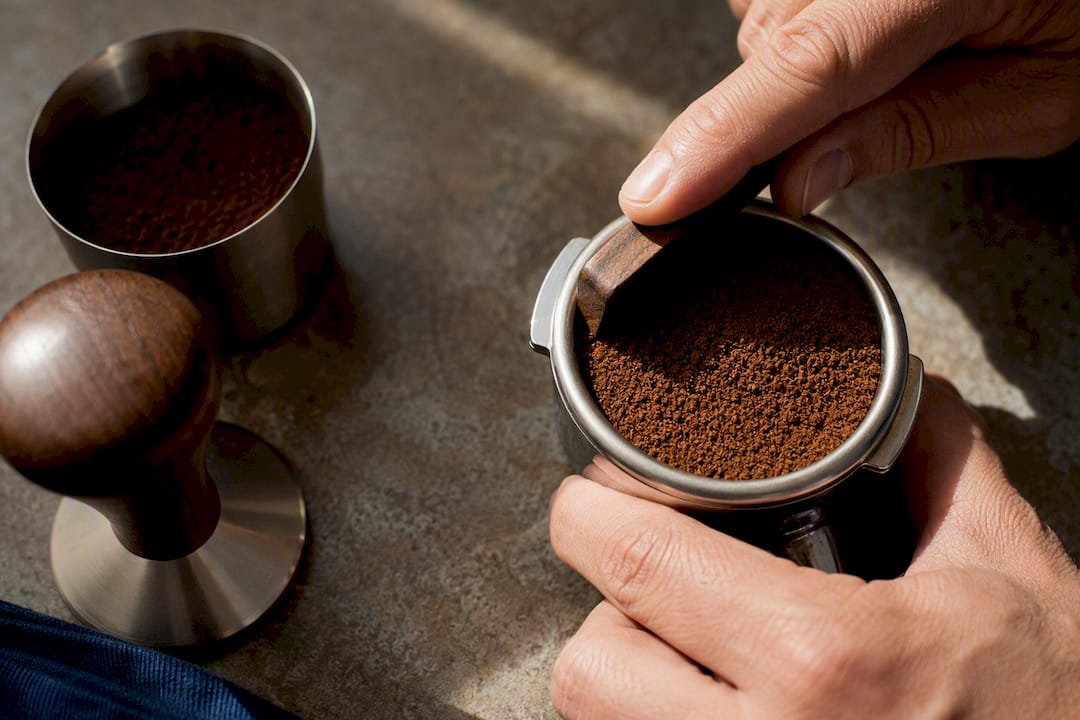
Dose and tamp matter just as much as grind. A level, even tamp keeps water traveling downward instead of sideways, and a scale beats eyeballing every time.
To translate a bag from drip to espresso:
- Weigh your dose, typically a moderate dose typical for home espresso.
- Grind fine, close to table salt, and check for clumping.
- Tamp level and firm, then lock the portafilter in immediately.
- Time the shot. Aim for a typical shot time and yield consistent with standard espresso pull.
- Taste, then adjust grind finer if it runs too fast and sour, or coarser if it runs slow and bitter.
If you’re moving beans between a moka pot and an espresso machine, grind size shifts too. Font-mag’s moka pot grind guide covers that middle ground.
Espresso Bean Flavor Profile: Why the Same Bag Tastes So Different Two Ways
Concentration changes everything. Pulling a shot crams roughly a cup’s worth of dissolved solids into two ounces of liquid, so sweetness, bitterness, and body all intensify. That same bean brewed as drip coffee spreads those solids across a much larger, more diluted cup which reads as lighter and cleaner instead of syrupy and heavy.
Crema, the tan foam sitting on top of a fresh shot, comes from CO2 and emulsified oils forced out under pressure. Fresher beans generally throw more crema, since they’re still releasing gas, but a mountain of crema does not automatically mean a better tasting shot. A shot pulled from beans rested a few days past roast often tastes more balanced even with slightly less foam on top.
- Body and mouthfeel come from emulsified oils, not from grind size alone.
- Crema signals freshness more than it signals quality.
- Milk mutes both acidity and bitterness, which is why darker, bolder roasts often work better in lattes.
Espresso vs Regular Coffee: Does Espresso Really Have More Caffeine?
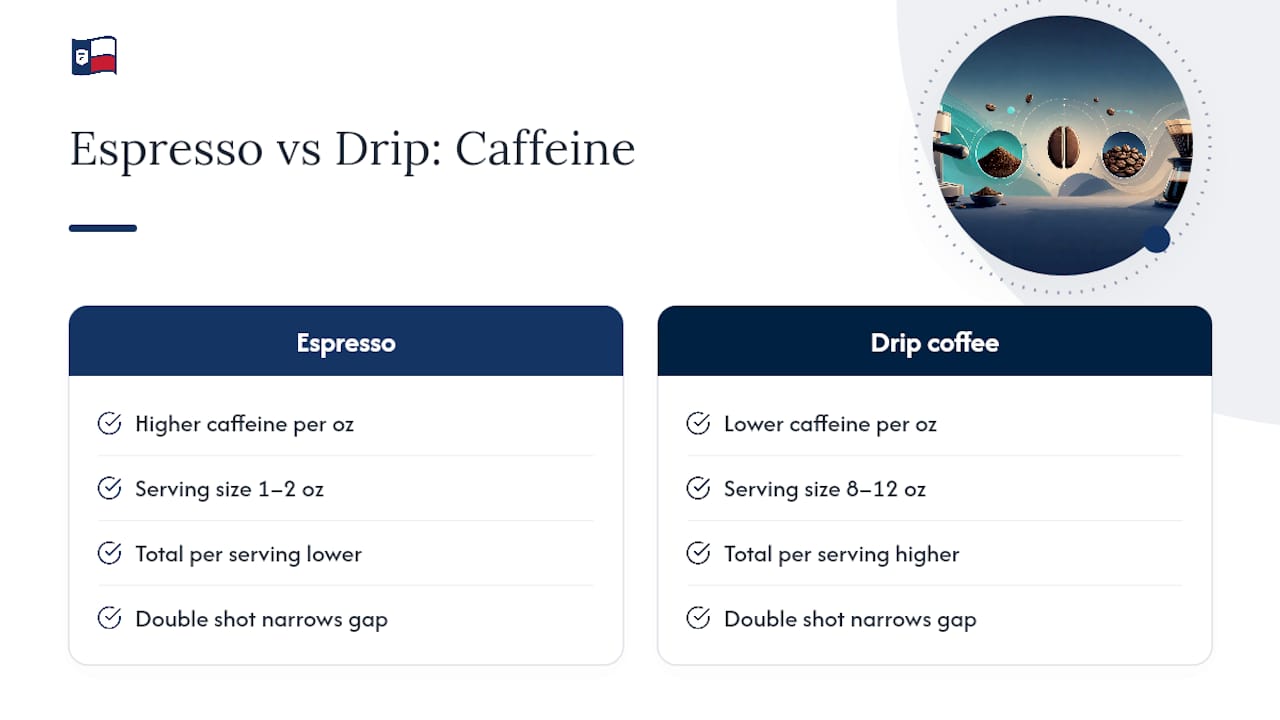
Ounce for ounce, espresso is more caffeinated than drip coffee. But because a typical drip coffee serving is substantially larger than a shot, a regular 8 to 12 ounce cup of coffee usually delivers more total caffeine than a single 1 to 2 ounce shot of espresso. A double shot narrows that gap, but most people drinking a full mug of drip are still taking in more caffeine overall than someone knocking back one espresso.
Can You Use Any Coffee Bean for Espresso?
Almost any bean can be pulled as espresso, but not every bean pulls well. Bean density, roast development, and freshness all affect whether a shot channels, chokes, or flows smoothly. Very light natural process beans and overly oily, stale dark roasts both tend to cause problems, the first from uneven density and inconsistent solubility, the second from clogged grinders and rancid-tasting oils.
Run through this before committing a bag to your espresso machine:
- Check the roast date. Anything past six to eight weeks old is a gamble.
- Note the roast level. Very light naturals need real skill to pull cleanly.
- Adjust grind and dose first before assuming the bean is the problem.
- Watch shot time. Under 20 seconds or over 35 seconds means something needs adjusting.
- Taste and correct.
Pro Tip: If your shot tastes sour, grind finer or extend the time. If it tastes bitter or harsh, grind coarser or pull it shorter. Most “bad bean” complaints are actually grind problems.
Freshness, Degassing, and Storage: What Roasters Actually Recommend
Freshly roasted beans are still releasing CO2, a process called degassing; for details on preparation and freshness, see this гъбено кафе, което вкусва като истинско. That gas is part of why very fresh beans throw impressive crema, but a short rest window after roasting often improves shot balance even though the crema may look slightly less dramatic. Most espresso beans taste best somewhere between a window of several days after roasting off roast.
- Store beans in a sealed, opaque container, never a clear jar on the counter.
- Keep them somewhere cool and dry, away from the stove or a sunny window.
- Buy in quantities you’ll use within a few weeks rather than stockpiling.
Our roasts in small batches help maintain tighter roast dates and faster shipping. For a deeper look at rest windows, see Font-mag’s degassing guide and storage breakdown.
A Simple Home-Brewer Routine Worth Copying
Keep two bags on rotation: a medium roast blend for milk drinks, a lighter single origin for straight shots. Dial in slowly, log your grind and time each morning, and let the numbers, not guesswork, tell you when a shot is right.
— Rosario
Try Both Approaches with Font-mag’s Starter Pairings
We make it simple to test everything covered above without guessing which bag to buy first. Pair a medium roast blend for your milk drinks with a lighter single origin for straight shots, and you’ll feel the roast, grind, and extraction differences firsthand instead of reading about them.
If milk drinks are your daily habit, Our flavored coffee pairs well with syrups from the Sweetbird lineup for café-style drinks at home. For non-coffee drinkers, we also offer a matcha selection and loose tea options to complement your order. Orders over a certain amount ship free, and subscription options keep fresh bags arriving on your doorstep before your current one goes stale. Start with a starter pairing and put your own dial-in notes to the test.
Sources
- What’s the difference between coffee and espresso? | America’s Test Kitchen
- The best espresso beans (Serious Eats)
FAQ
Is There a Real Difference Between Espresso Beans and Coffee Beans?
No. The same bean can be roasted and brewed as either; “espresso beans” typically just means a roast profile suited to pressure brewing, not a separate variety.
Can You Use Regular Coffee Beans in an Espresso Machine?
Yes, most beans can be pulled as espresso, though very light naturals and stale, overly oily dark roasts tend to cause channeling or clogging.
Does Espresso Have More Caffeine Than Regular Coffee?
Espresso has more caffeine per ounce, but a full cup of drip coffee usually contains more total caffeine than a single shot because the serving size is so much larger.
How Fresh Should Beans Be for Espresso?
Most espresso beans taste best between about a window of several days after roasting after the roast date, once initial degassing has settled but before oils turn stale.
Should I Buy a Blend or a Single Origin for Espresso?
Blends, like a medium roast for milk drinks, are more forgiving and consistent, while single origins reward careful dialing and highlight distinct origin character in straight shots.