

Dry Shake for Bar Quality Espresso Martini Mocktail, Add 0.5 oz Water
Build it with a chilled double shot of espresso, some simple syrup, a small amount of cold water, and an optional splash of cream or aquafaba. Dry shake first, then shake again with ice, double strain into a chilled glass, and drop in a few coffee beans. The dry shake matters more than any ingredient on that list: it’s what turns thin coffee liquid into the thick, lasting foam that makes this drink look and feel like a real espresso martini.
TL;DR:
- The quality of the espresso and the dry shake technique are the most critical factors in creating a rich, long-lasting foam in a non-alcoholic espresso martini.
- Using fresh, strong espresso and adding approximately 0.5 ounces of cold water to mimic vodka dilution are essential for balancing flavor and preventing excessive sweetness.
- A vigorous, extended dry shake aerates the espresso oils and develops the foam, which is more important than ingredient variations or spirits.
- Making the drink ahead is limited to batching the espresso-syrup mixture; the foam must be created fresh through shaking for each serve.
- Proper presentation, including chilled glasses, coffee bean garnish, and aroma-enhancing powders, enhances the visual appeal and overall experience of the mocktail.
Table of Contents
- What Makes a Great Non-Alcoholic Espresso Martini?
- Ingredients You’ll Need for One Espresso Martini Mocktail
- What Equipment Do You Need for This Recipe?
- How Do You Make an Espresso Martini Mocktail Step by Step?
- Why Shaking Technique Matters More Than Any Single Ingredient
- Creative Variations and Substitutions Worth Trying
- Can You Make This Ahead of Time for a Party?
- How Should You Serve and Garnish an Espresso Martini Mocktail?
- Font-mag’s Picks for Building This Drink at Home
- What I Think Actually Matters Here
- Sources
What Makes a Great Non-Alcoholic Espresso Martini?
A non-alcoholic espresso martini lives or dies on two things: the quality of the espresso and the shake. There’s no vodka or coffee liqueur to smooth over a bitter, thin shot, so the coffee has to carry the whole drink on its own. Wine Enthusiast’s guidance on the mocktail version is blunt about this: use good, strong espresso, because there’s nothing left to hide behind. BBC Food’s take on the same drink echoes the point, calling for “really good, strong espresso” as the base.
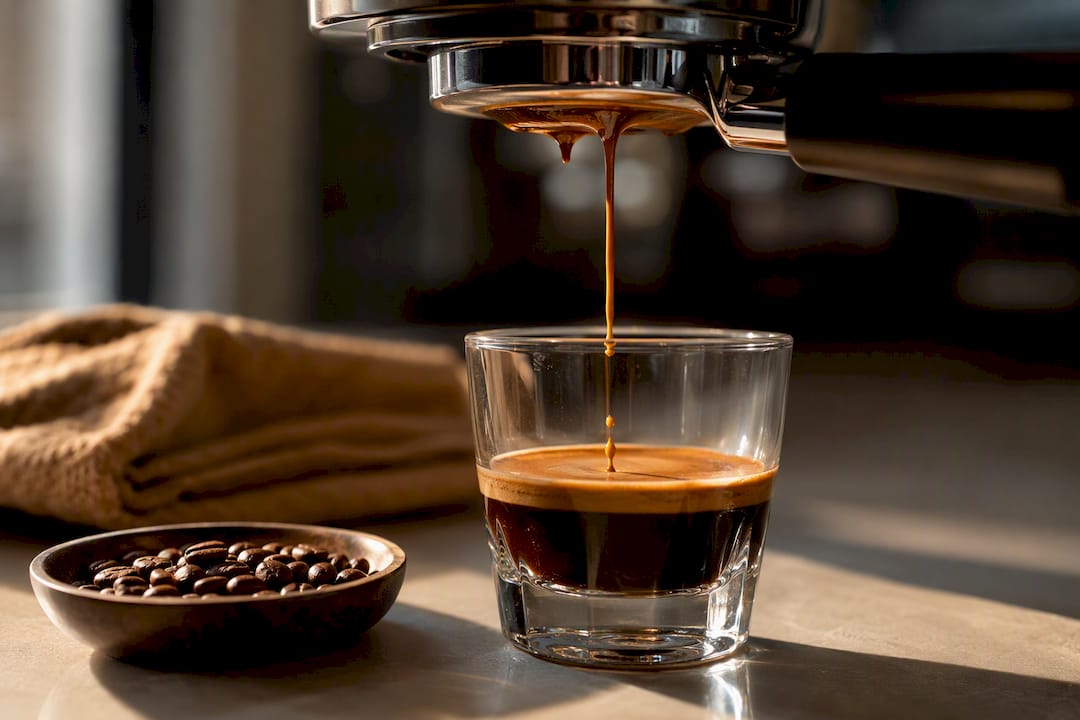
The standard industry term for this style of drink is a “zero-proof espresso martini” or “NA espresso martini,” though most home cooks search for it as an espresso martini mocktail or espresso mocktail recipe. Whatever you call it, the goal is the same: rich foam on top, balanced sweetness underneath, and a coffee flavor that doesn’t taste like an afterthought. Some versions lean into an espresso tonic mocktail style with sparkling water instead of shaking for foam, but the classic dry shake version is what most people picture when they order one at a bar.
Ingredients You’ll Need for One Espresso Martini Mocktail
Here’s what goes into a single serving. This scales cleanly, so double or triple it for a small gathering.
- freshly brewed espresso, cooled slightly
- simple syrup, adjusted to taste
- a small amount of cold water, to replace the dilution vodka normally provides
- optional heavy cream or chilled aquafaba, for a creamier texture and extra foam
- optional vanilla extract or non-alcoholic bitters, for depth
- coffee beans, for garnish
Swap in cold brew concentrate at roughly a 1:1 ratio for espresso if that’s what you have on hand. For a richer, coffee-liqueur-like flavor, use a dark brown sugar or muscovado syrup instead of plain simple syrup. If you’re making a vegan espresso martini, skip the cream and lean on aquafaba, which whips up almost identically when dry-shaken. For a caffeine-free cocktail version, brew your espresso from a decaf bean rather than swapping in coffee-flavored syrup, which tends to taste flat and one-note by comparison.
This recipe yields one 4 to 5 ounce serving in a classic coupe or martini glass. Scaling to four servings means shaking in two batches rather than doubling everything in one shaker. A single shaker rarely holds enough headspace for more than two drinks’ worth of foam at once.
What Equipment Do You Need for This Recipe?
You don’t need a full home bar, but a few pieces of gear make the difference between decent foam and no foam at all.
- Cocktail shaker (Boston or cobbler style) — this is where the foam actually forms
- Fine mesh strainer plus a Hawthorne strainer, for a smooth double strain
- Martini or coupe glass, chilled ahead of time
- Jigger or measuring spoons, for accuracy
- Milk frother, as a backup for building foam in small batches
No shaker? A mason jar with a tight lid works fine for the dry shake and ice shake both. Chill your glass in the freezer for 10 minutes before you start, and let your espresso cool for a couple of minutes off the machine. Hot espresso shocks the ice and melts it too fast, which waters the drink down before you’ve even shaken it.
How Do You Make an Espresso Martini Mocktail Step by Step?
This is the part that separates a flat, sad coffee drink from something that actually resembles the real cocktail.
- Brew a double shot of espresso and let it cool for 2 to 3 minutes. It should be warm, not hot.
- Add the espresso, syrup, cold water, and optional cream or aquafaba to your shaker. Do not add ice yet.
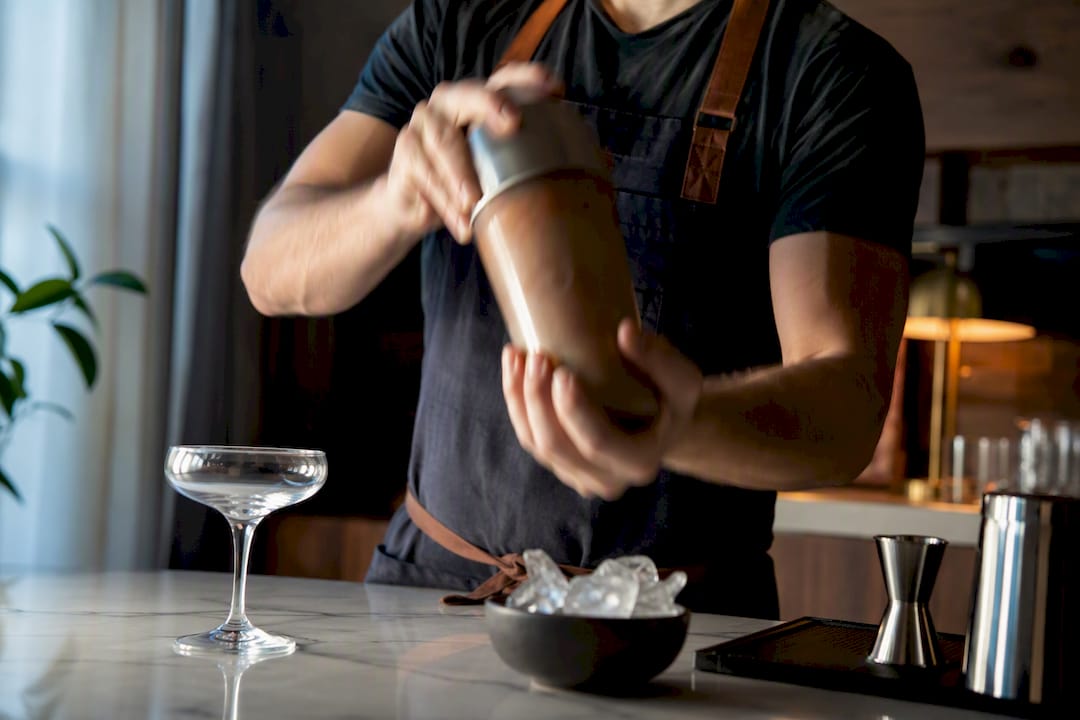
- Dry shake for 20 to 30 seconds. Shake hard. This is the step most people skip, and it’s the one that builds the foam’s structure before ice ever gets involved.
- Add a full scoop of ice to the shaker and shake again for 15 to 25 seconds, until the shaker feels frosty and almost too cold to hold comfortably.
- Double strain through a Hawthorne strainer and a fine mesh strainer directly into your chilled glass, catching any ice shards or grit.
- Garnish with three coffee beans, placed gently on top of the foam.
The 0.5 ounce of cold water in step 2 isn’t optional filler. It’s there specifically to replicate the dilution that vodka would normally add to the classic cocktail, and skipping it is the single most common reason home versions taste too syrupy or too intensely of straight coffee.
Pro Tip: Judge your ice shake by feel, not the clock. When the shaker is genuinely cold enough that holding it for another ten seconds gets uncomfortable, the foam is set. Pull it too early and the foam collapses within a minute of pouring; that thick cap should hold its shape for at least a few minutes in the glass.
Why Shaking Technique Matters More Than Any Single Ingredient
The two-stage shake isn’t a bartending flourish. Recipe testing that focuses specifically on foam quality shows that a vigorous, extended shake, longer than what the boozy original needs, is what aerates the espresso’s natural oils into a foam that actually holds. Espresso has more surface tension and body than drip coffee, largely because of those oils, and that’s what gives it foaming power once air gets whipped in.
Here’s a quick troubleshooting checklist if something’s off:
- Foam is flat or disappears fast: dry shake longer (30 seconds minimum), or add 0.5 oz aquafaba as a stabilizer.
- Drink tastes too sweet: cut the syrup to 0.5 oz and taste before adding more.
- Drink tastes too concentrated or bitter: add another splash of cold water, 0.25 to 0.5 oz at a time.
- Drink tastes watery or thin: you likely over-iced or let the espresso sit too long before shaking; use less ice or shake immediately after cooling.
Aquafaba, the starchy liquid drained from a can of chickpeas, behaves almost identically to egg white when dry-shaken, which is why so many mocktail recipes lean on it for stable, long-lasting foam without any dairy or alcohol involved.
Creative Variations and Substitutions Worth Trying
Once you’ve nailed the base recipe, there’s plenty of room to play. A few directions that hold up well:
- Zero-proof coffee liqueur swap: a splash of non-alcoholic amaro or a coffee-flavored zero-proof spirit adds bittersweet complexity closer to Kahlúa’s profile.
- Creamy version: add 0.5 oz heavy cream or oat milk, shaken in with the rest, for a softer, dessert-like texture.
- Clear version: skip cream entirely and lean on the dry shake alone for foam; the drink stays sharper and more coffee-forward.
- Vanilla-balsamic syrup: BBC Food’s approach stirs a half teaspoon of balsamic or sherry vinegar into a vanilla simple syrup, which adds a subtle sharpness that stands in for the complexity spirits normally bring.
- Brown sugar syrup: swap in dark brown sugar or muscovado syrup for a molasses-deep sweetness closer to real coffee liqueur.
- Cold brew swap: replace espresso with cold brew concentrate at a 1:1 ratio if you don’t own an espresso machine.
Font-mag’s craft cocktail and tea syrups guide walks through building flavored syrups from scratch if you want to go beyond a basic simple syrup.
Can You Make This Ahead of Time for a Party?
Yes, partly. Espresso mixed with syrup keeps well refrigerated for up to 24 hours, so you can batch that portion ahead of any gathering.
- Safe to prep ahead: simple syrup (up to two weeks refrigerated), and an espresso-syrup mix (up to 24 hours refrigerated).
- Never pre-shake: foam breaks down within minutes, so shaking has to happen glass by glass, right before serving.
- For batch service: keep the espresso-syrup mix cold and pre-portioned in a pitcher, then dry shake and ice shake each drink individually as guests arrive.
- Leftovers: a finished, shaken mocktail is best within 15 minutes; after that the foam collapses and the drink separates.
How Should You Serve and Garnish an Espresso Martini Mocktail?
Presentation carries real weight with this drink, since so much of its appeal is visual. A chilled martini or coupe glass matters more here than with most mocktails, since the foam holds its shape better against cold glass.
- Place three whole coffee beans in a small triangle on the foam. Tradition ties them to wealth, health, and happiness.
- A light dusting of cocoa powder or cinnamon over the foam adds aroma without extra sweetness.
- A vanilla sugar rim gives a nice contrast if you’re serving a creamier version.
- Pair it with biscotti, a square of dark chocolate, or a light pastry. If you’re building out a broader drink menu for the evening, this guide to apéritif culture is worth a look for how coffee-forward drinks fit into a night’s pacing.
Font-mag’s Picks for Building This Drink at Home
Your espresso is the foundation, so start there. Font-mag’s flavored coffee collection gives you options if you want a vanilla or hazelnut note baked into the base rather than added through syrup. For a caffeine-free cocktail version to serve later in the evening, Downshift Decaf pulls a full, rich shot without the jolt.
On the syrup side, Font-mag’s syrup collection covers everything from classic simple syrup to flavored options that save you the step of making one from scratch. For a dairy-free creamy variant, Sweetbird’s non-dairy vanilla bean frappe base whips into foam nearly as well as cream.
Font-mag ships fast, with free shipping on any order over $35, and stocks its coffee and syrups in small batches to keep everything tasting fresh from the roast date through the bottle.
What I Think Actually Matters Here
Most espresso martini mocktail recipes online treat the shake as an afterthought and the syrup as the star. That’s backward. The syrup only needs to be decent; the shake is what determines whether you get a drink that looks like it came from a bar or one that looks like chilled coffee with bubbles on top.
Conventional advice fixates on finding the “right” zero-proof spirit to replace vodka, when vodka barely contributed flavor to the original cocktail anyway. The real gap between amateur and restaurant-quality versions is dilution and foam mechanics, not spirit substitution. If you get the 0.5 ounce water addition right and shake until the tin genuinely hurts to hold, you’re most of the way to a great drink before you’ve thought about garnish once.
Prioritize the espresso. A mediocre shot pulled from stale beans will taste worse here than in a latte, because there’s nowhere for it to hide. Everything else, syrup flavor, cream or no cream, garnish, is customization on top of a foundation that either works or doesn’t.
— Rosario
Sources
- Best non-alcoholic espresso martini recipe | Wine Enthusiast
- Espresso martini mocktail | BBC Food
- A Non-Alcoholic Espresso Martini Mocktail With Real Foam | Little Party Pixie
- Non-Alcoholic Espresso Martini Recipe | ThirstyBear