

Matcha or Hojicha: 19–88 mg vs 8 mg, Choose by Energy and Taste
If you want alert, focused energy and the highest antioxidant punch, matcha wins. If you want a low-caffeine, soothing cup that won’t wreck your sleep, hojicha is the better call. Matcha is the concentrated, shade-grown powder; hojicha is the roasted, mellow tea. Reach for matcha before noon and hojicha anytime you want calm without the jitters.
TL;DR:
- Matcha provides a higher antioxidant content and caffeine level, making it suitable for morning focus and alert energy.
- Hojicha contains less caffeine, tends to be gentler on digestion, and offers a toasted, nutty flavor ideal for evening or calming drinks.
- The shading and steaming process in matcha increases chlorophyll and L-theanine, while roasting reduces catechins in hojicha, creating different health and flavor profiles.
- Matcha is best whisked with hot water at 70-80°C, while hojicha steeps at higher temperatures around 90-95°C for one minute or less.
- Caffeine intake from matcha can be comparable to a small coffee, whereas hojicha has minimal caffeine, roughly 8 mg per 12-ounce cup for sensitive individuals.
Table of Contents
- What Are Matcha and Hojicha, Exactly?
- How Processing Reshapes the Chemistry
- What Matcha and Hojicha Actually Taste Like
- Caffeine and Nutrients, Side by Side
- Matcha Benefits vs Hojicha Health Effects
- How to Brew Matcha and Hojicha the Right Way
- Which One Should You Actually Drink?
- An Editorial Take on Drinking Both
- Try Both From Font-mag’s Curated Collection
- Sources
- FAQ
What Are Matcha and Hojicha, Exactly?
Matcha starts as tencha, a shade-grown green tea leaf that spends its final weeks under cover before harvest. That shading forces the plant to produce more chlorophyll and L-theanine, the amino acid behind matcha’s smooth, calm-focus buzz. Growers steam the leaves to lock in color, dry them, then stone-grind them into the fine, vivid-green powder used in ceremonial tea and lattes.
Hojicha takes a different path entirely. It’s made by roasting sencha, bancha, or even tea stems at high heat, a technique developed in Kyoto in the 1920s to make use of lower-grade leaves that would otherwise go to waste. That roasting is the whole story:
- Matcha: shade-grown, steamed, stone-milled, whole leaf consumed
- Hojicha: sun-grown leaf or stem, roasted at high temperature, brewed and strained like standard tea
Harvest timing and leaf part matter more than most people assume. Matcha uses only the youngest spring leaves; hojicha often repurposes twigs and later-season leaves that carry less caffeine to begin with, before roasting removes even more.
How Processing Reshapes the Chemistry
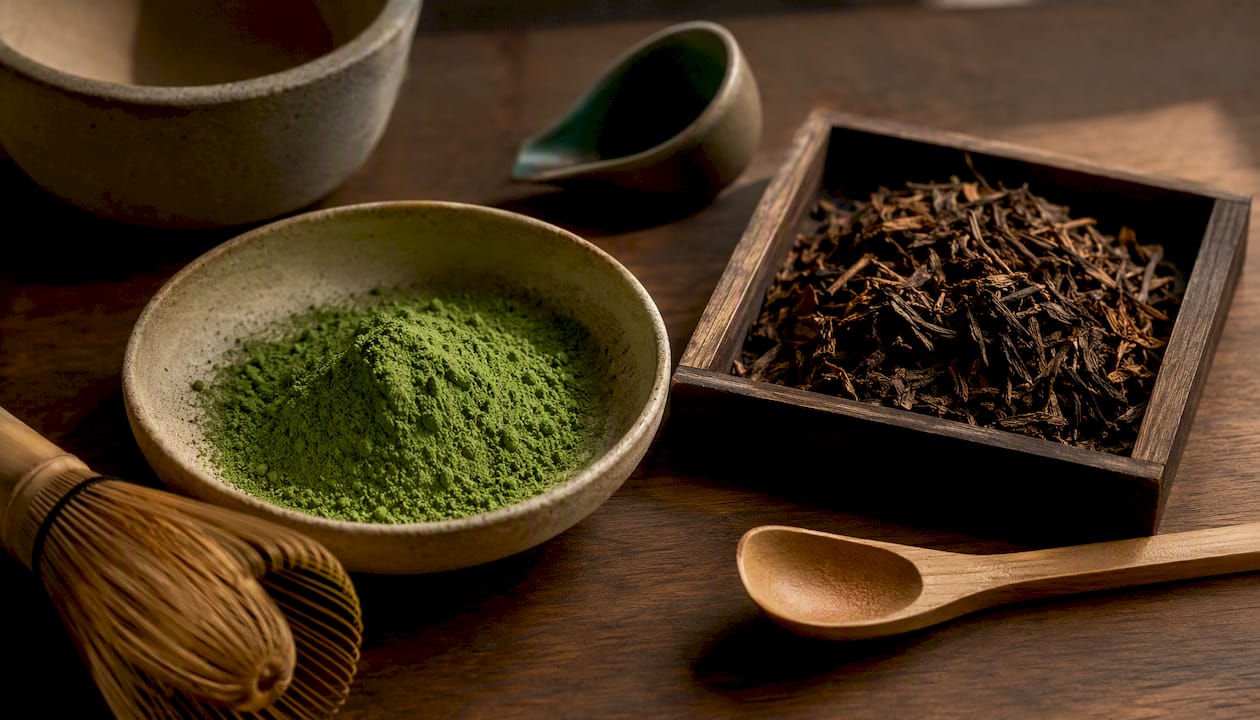
Shade growing is the single biggest reason matcha looks and tastes the way it does. Less sunlight means the plant compensates with more chlorophyll and higher L-theanine and catechin concentrations, and because you drink the whole ground leaf rather than a steeped-and-discarded one, you get all of it in the cup.
Hojicha’s transformation happens after harvest, in the roaster. High heat drives off moisture, breaks down chlorophyll (hence the shift from green to reddish brown), and creates pyrazine compounds responsible for that nutty, toasted aroma.
- Shading raises chlorophyll and amino acid content in matcha
- Steaming halts oxidation and preserves matcha’s green pigments
- Stone-grinding concentrates nutrients since the whole leaf is consumed
- Roasting generates aroma compounds while reducing antioxidant levels and caffeine
Roasting cuts more than color. The same heat that turns hojicha brown and toasty also lowers its catechin content compared to unroasted green tea, which is exactly why it’s gentler on a sensitive stomach.
What Matcha and Hojicha Actually Taste Like
Matcha tastes vegetal and umami first, with a bright, almost seaweed-like edge and a bitterness that mellows once whisked into a frothy, slightly thick liquid. Ceremonial grades lean sweeter and smoother; culinary grades carry more bite, which is exactly why they hold up in lattes and baked goods.
Hojicha reads like a completely different beverage. Expect toasty, nutty notes with hints of caramel and a light smokiness, finishing smooth with almost no bitterness. That roasted profile has made hojicha a fixture on café menus, especially for drinkers who find matcha’s grassiness too intense.
- Matcha: vegetal, umami, bright, mildly bitter, thick when whisked
- Hojicha: toasty, nutty, caramel-like, smoky undertones, smooth finish
These flavor profiles steer how each tea gets used. Matcha’s intensity plays well against citrus, mint, and dark chocolate, while hojicha’s roasted sweetness pairs naturally with cinnamon, vanilla, and roasted nuts, similar to how roast level shapes flavor in coffee.
Caffeine and Nutrients, Side by Side
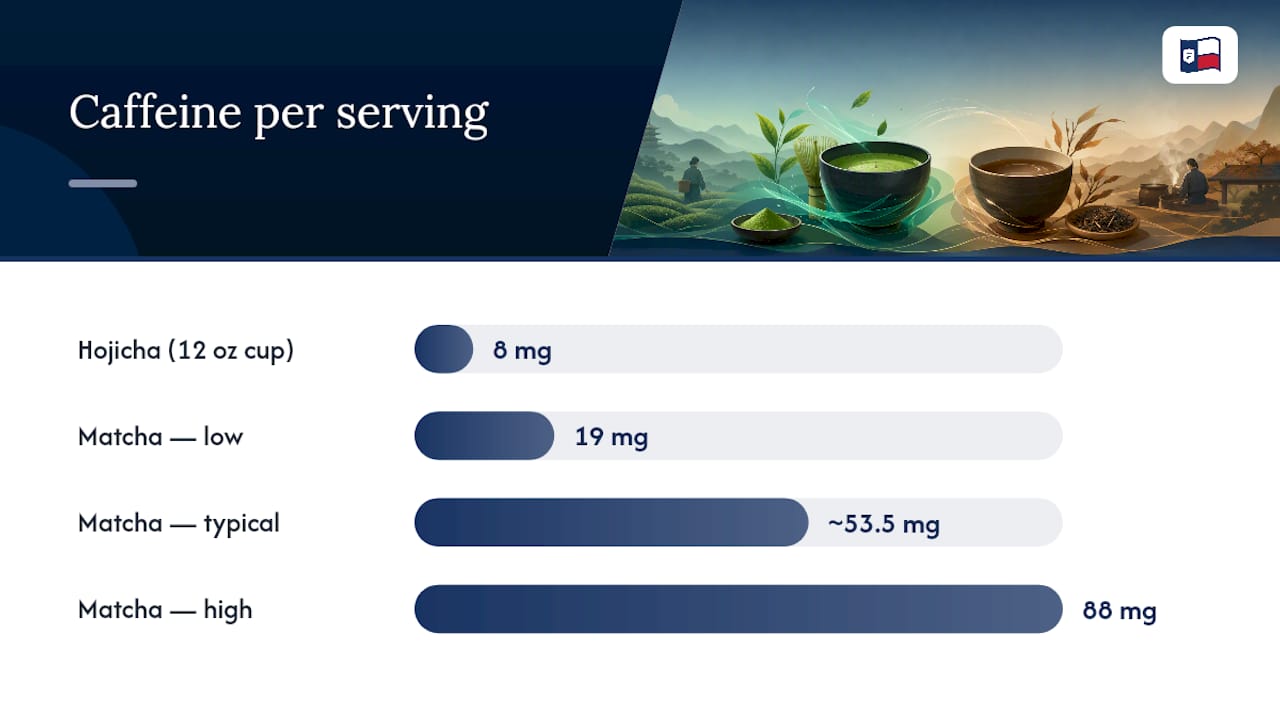
This is where the two teas really part ways. Matcha delivers roughly 19 to 44 milligrams of caffeine per gram, so a typical 1 to 2 gram serving lands somewhere between 19 and 88 milligrams, comparable to a small cup of coffee. Hojicha contains significantly less caffeine per brewed cup compared to matcha, making it a low-caffeine option.
That gap traces straight back to processing. Matcha’s whole-leaf format means you’re consuming everything the plant produced, including a concentrated dose of catechins, EGCG, and L-theanine. Hojicha’s roasting process breaks down a portion of those same catechins, which is part of why it’s considered easier on digestion.
- Matcha: ~19 to 88 mg caffeine per typical 1 to 2 g serving
- Hojicha: roughly 8 mg per 12 oz brewed cup in published comparisons
- Matcha retains higher EGCG and antioxidant density from whole-leaf consumption
- Hojicha loses some catechins to roasting but keeps its L-theanine
Where matcha and hojicha caffeine land compared to coffee: matcha sits closer to a weak espresso shot, while hojicha barely registers next to a standard drip cup. If you’re caffeine-sensitive, pregnant, or on medication that interacts with stimulants, talk to your doctor before making either a daily habit, and check a broader caffeine comparison across coffee and tea if you’re tracking intake closely.
Matcha Benefits vs Hojicha Health Effects
Matcha’s higher catechin and L-theanine content is the basis for most of its health reputation. Because you consume the whole leaf, you get a more concentrated dose of antioxidants than steeped green tea typically provides, which researchers associate with metabolic and cognitive support, though experts caution that higher antioxidant concentration doesn’t automatically guarantee bigger long-term outcomes.
Hojicha loses some of that catechin content to roasting, but it isn’t nutritionally empty. It still carries L-theanine, and the roasting process itself creates pyrazine compounds that some sensory studies link to reduced tension and improved mood when compared to controls. That calming effect appears to work through a different mechanism than matcha’s L-theanine-driven focus, tied instead to the aroma compounds formed during roasting.
- Matcha: higher catechins and EGCG, associated with antioxidant and metabolic support
- Hojicha: lower catechins post-roast, but retains L-theanine and calming aroma compounds
- Matcha suits mornings when you want alertness with a research-backed antioxidant edge
- Hojicha suits evenings or sensitive stomachs where a gentler cup matters more
Pro Tip: If you love the ritual of whisking matcha but hate the caffeine hit at 4 PM, brew hojicha the same way. The technique carries over even though the chemistry doesn’t.
How to Brew Matcha and Hojicha the Right Way
- Sift matcha first. Use 1 to 2 grams (about half a teaspoon) and sift it into your bowl to break up clumps before adding water.
- Whisk at the right temperature. Heat water to 70 to 80°C, add it to the sifted matcha, and whisk in a brisk “W” motion until frothy. For lattes, use culinary-grade matcha and steamed milk instead of ceremonial grade.
- Steep hojicha loose or as powder. Use water closer to 90 to 95°C, steep loose leaf for 30 seconds to a minute, or dissolve hojicha powder directly for a cold brew or latte.
- Store both away from light and heat. Airtight containers in a cool, dark cabinet keep matcha’s color and hojicha’s roasted aroma intact longest.
Both hold up well as iced drinks; matcha benefits from a quick pre-whisk with a splash of hot water before ice goes in, since it won’t dissolve smoothly in cold liquid alone. For dialed-in temperatures across teas generally, this tea brewing temperature guide is worth bookmarking.
Which One Should You Actually Drink?
Run through this before you buy either one:
- Energy needs: want a caffeine lift comparable to coffee? Matcha. Want almost none? Hojicha.
- Flavor preference: crave vegetal and bright? Matcha. Prefer toasty and sweet? Hojicha.
- Time of day: morning focus session, matcha; evening wind-down or a cup for kids, hojicha.
- Sensitivity: caffeine-sensitive or pregnant? Hojicha’s low dose is the safer default, though checking with a doctor is still smart.
- Budget and grade: ceremonial matcha costs more than culinary grade; hojicha is generally the more affordable of the two across most retailers.
For freshness, buy matcha in small quantities and check for a vivid green color rather than a dull olive tone, since color fades fast once opened. A bamboo whisk and a wide-mouth bowl make matcha prep far less messy than trying to stir it with a spoon.
An Editorial Take on Drinking Both
Treating this as a competition misses the point. Matcha earns its place when you need alert, sustained focus, the L-theanine smooths out the caffeine curve so you don’t get the jittery spike coffee sometimes brings. Hojicha earns its place when the goal is winding down, not gearing up. Curated matcha and loose-leaf selections make it easy to keep both in rotation and match the cup to the moment instead of defaulting to one out of habit.
— Rosario
Try Both From Font-mag’s Curated Collection
Reading about the differences only gets you so far. The real test is tasting a culinary-grade matcha whisked into a latte, then switching to a roasted hojicha the next afternoon and noticing how differently your body responds.

The matcha collection includes options built for both ceremonial sipping and everyday lattes, including the Rishi Tea Bulk Barista Matcha, a culinary-grade pick that froths well and holds up against milk. Pair it with a bamboo matcha whisk if you’re whisking at home for the first time. For hojicha and other roasted, low-caffeine options, browse the loose tea collection for curated picks worth steeping side by side. Every order over $35 ships free.
Sources
- PMC review article — roasting effects and antioxidant changes
- Hojicha vs. Matcha: Which Green Tea Is Better for Energy, Antioxidants, and Heart Health? — Verywell Health
- What Is Hojicha? The roasty tea taking over café menus — Bon Appétit
FAQ
Is Hojicha Healthier Than Matcha?
Neither is strictly “healthier.” Matcha carries more antioxidants and caffeine for an energy and metabolic edge, while hojicha’s lower caffeine and gentler roast make it easier on digestion and sleep.
Does Hojicha Have Caffeine?
Yes, but very little. Brewed hojicha averages around 8 milligrams per 12-ounce cup, compared to matcha’s roughly 19 to 88 milligrams per typical serving.
Can I Drink Matcha and Hojicha Every Day?
Most healthy adults can enjoy either daily within normal caffeine limits, though anyone pregnant, caffeine-sensitive, or on medication should check with a doctor first, especially with matcha’s higher dose.
Which Tea Is Better for Beginners, Matcha or Hojicha?
Hojicha is usually the gentler starting point since its roasted, low-bitterness flavor is easier to enjoy without training your palate, while matcha rewards those who like a bolder, more vegetal cup.
Where Can I Buy Quality Matcha and Hojicha?
Font-mag’s matcha and loose tea collections carry culinary and ceremonial-grade matcha alongside curated roasted tea options, with fast shipping and free delivery on orders over $35.