

How to Reduce Sugar in Your Coffee Drinks
Cut the sugar, keep the ritual. The fastest plan: measure what you currently add, halve it today, and replace the rest with a flavor enhancer like cinnamon or vanilla within two weeks. That’s it. Everything below shows you exactly how.
Quick-start actions for your next cup:
- Measure your usual sugar before adding it, then put half back
- Stir in 1/4 teaspoon of ground cinnamon instead of the second half
- If you’re at a coffee shop, ask for “half the pumps” on any flavored drink
The American Heart Association recommends no more than 6 teaspoons (25 grams) of added sugar per day for women and 9 teaspoons (36 grams) for men. A single large flavored latte can blow past that entire daily limit on its own.
Key Takeaways
Cutting sugar from your coffee is fastest when you combine an immediate halving of your current amount with mindful tasting and a flavor enhancer like cinnamon or vanilla, starting today.
| Point | Details |
|---|---|
| Start with half | Cut your current sugar amount in half on day one; use cinnamon or vanilla to fill the flavor gap. |
| AHA daily limits | Women: 6 tsp (25 g) added sugar per day; men: 9 tsp (36 g). One large flavored latte can exceed this. |
| Mindful tasting wins | A published behavior study found mindful tasting outperformed gradual reduction for lasting sugar-free coffee habits. |
| Alternatives work | Matcha, rooibos, and chicory satisfy the coffee ritual without needing added sugar; check labels on kombucha. |
| Font-mag’s range | Flavored beans, clean-ingredient syrups, and barista-grade matcha let you keep flavor while dropping added sugar. |
Table of Contents
- How do you reduce sugar in coffee drinks step by step?
- How much sugar are you actually adding per cup?
- Which sugar substitutes actually work in coffee?
- Flavor enhancers and lower-sugar coffee recipes that actually taste good
- How to order a lower-sugar drink at any coffee shop
- What can you drink instead of sweetened coffee?
- How mindful tasting helps you drink less-sweet coffee long term
- What to expect when you cut sugar from coffee
- A flavor-first approach to cutting sugar
- Font-mag has what you need to cut sugar without cutting flavor
- Sources
How do you reduce sugar in coffee drinks step by step?
The most sustainable program combines a rapid first cut with mindful tasting, not a slow, indefinite taper that drags on for months.
Week 1: Day-by-day plan
- Day 1: Measure your current sugar. Write it down.
- Day 2: Cut the amount in half. Use a flavor enhancer (cinnamon, vanilla) to fill the gap.
- Day 3–4: Hold at half. Notice how the coffee actually tastes without the sweetness masking it.
- Day 5: Reduce by another quarter. You’re now at 25% of your starting amount.
- Day 6–7: Try one cup completely unsweetened. If it’s unpleasant, adjust the roast or brewing temperature before adding sugar back.
Month 1 milestones:
- Week 2: Zero added sugar in at least one daily cup
- Week 3: Unsweetened coffee as your default; sweetener only as an occasional addition
- Week 4: Order or brew without sugar automatically, without thinking about it
Self-assessment checklist before you start:
- How many teaspoons do you add per cup?
- How many cups per day?
- Do you add sugar at home, at a café, or both?
- Are you using flavored syrups, packets, or loose sugar?
Pro Tip: Attach the new habit to something you already do. Put the cinnamon jar next to the coffee maker so it’s the first thing you reach for, not the sugar bowl. Behavior researchers call this “environment design,” and it works faster than willpower alone.
How much sugar are you actually adding per cup?
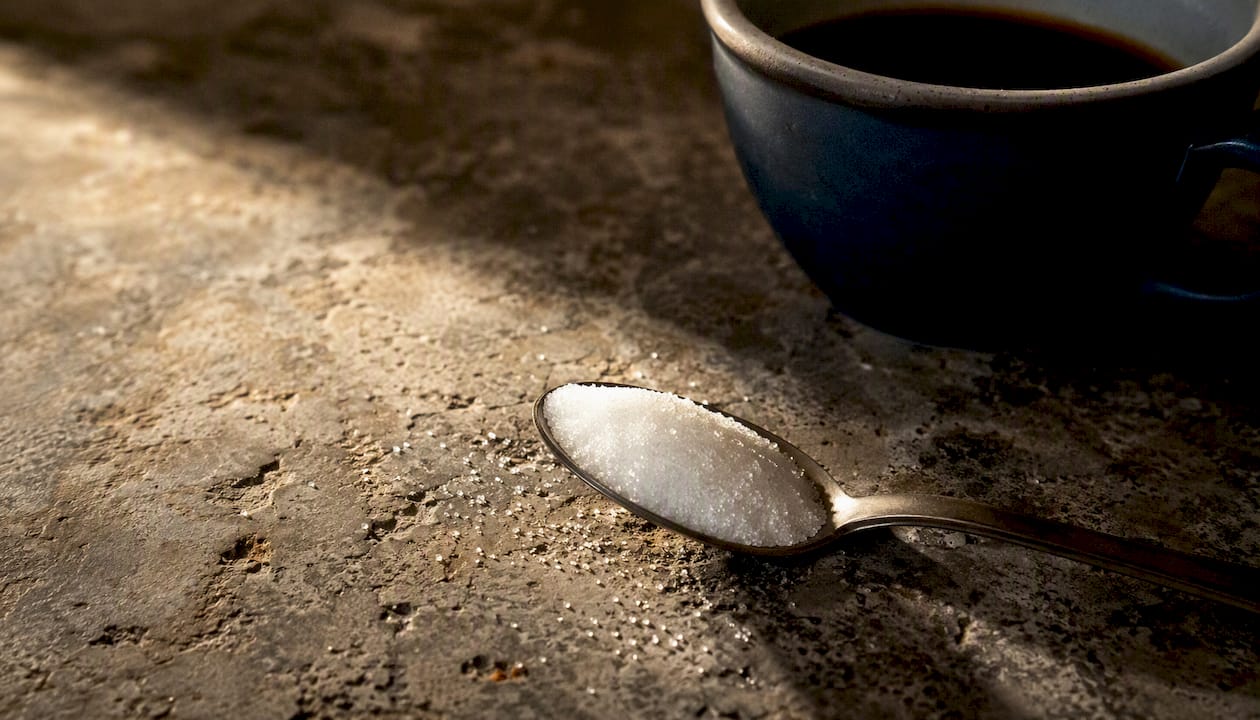
One teaspoon of granulated sugar equals 4 grams. That’s the conversion that matters most.
| Measure | Grams of Sugar | Teaspoons |
|---|---|---|
| 1 sugar packet | ~4 g | ~1 tsp |
| 1 tablespoon | ~12 g | ~3 tsp |
| 1 syrup pump (standard café) | ~5 g | ~1 tsp |
| 2 syrup pumps | ~10 g | ~2.5 tsp |
| 4 syrup pumps (large flavored latte) | ~20 g | ~5 tsp |
How to measure at home:
- Use a measuring spoon, not a kitchen spoon, which can hold anywhere from 1 to 2.5 teaspoons depending on size
- Check nutrition labels on flavored creamers: the serving size is usually 1 tablespoon, but most people pour 3–4
- For café drinks, ask the barista how many pumps of syrup come standard, then check the brand’s nutrition page for grams per pump
A large flavored coffee drink with 4 syrup pumps delivers roughly 20 grams of added sugar before any milk or whipped cream. For women, that’s nearly the entire AHA daily limit in one drink. Switching to a “half-pump” order or a zero-sugar version can reduce your daily intake by 4–5 teaspoons per cup, depending on your baseline.
Which sugar substitutes actually work in coffee?
The best general strategy: use a non-nutritive sweetener as a short-term bridge while you retrain your palate, then phase it out in favor of spices and flavor-forward beans. The American Heart Association supports low- or no-calorie sweeteners as a temporary tool, not a permanent replacement.
Quick pros/cons:
- Stevia: Zero calories, widely available, but the aftertaste bothers some people in black coffee
- Monk fruit: Cleaner finish than stevia, dissolves well in hot drinks, harder to find in smaller stores
- Erythritol: Works well in cold brew and iced lattes; can cause digestive discomfort in large amounts
- Raw honey/maple syrup: Real flavor complexity, but still add calories and raise blood sugar, so use sparingly
- Cinnamon: No sweetness on its own, but it enhances sweetness perception, which is the real trick
Health note: Non-nutritive sweeteners are generally recognized as safe by the FDA for most adults, but research on long-term gut microbiome effects is still developing. Use them as a bridge, not a destination.
Pro Tip: If stevia’s aftertaste puts you off, try a 50/50 blend of monk fruit and erythritol. Many commercial “natural sweetener” blends use exactly this ratio because the two compounds cancel out each other’s off-notes.
For readers who want clean-ingredient options without hunting through grocery store labels, Font-mag’s clean-ingredient syrup alternatives cover the best low-sugar choices already vetted for flavor.
Flavor enhancers and lower-sugar coffee recipes that actually taste good
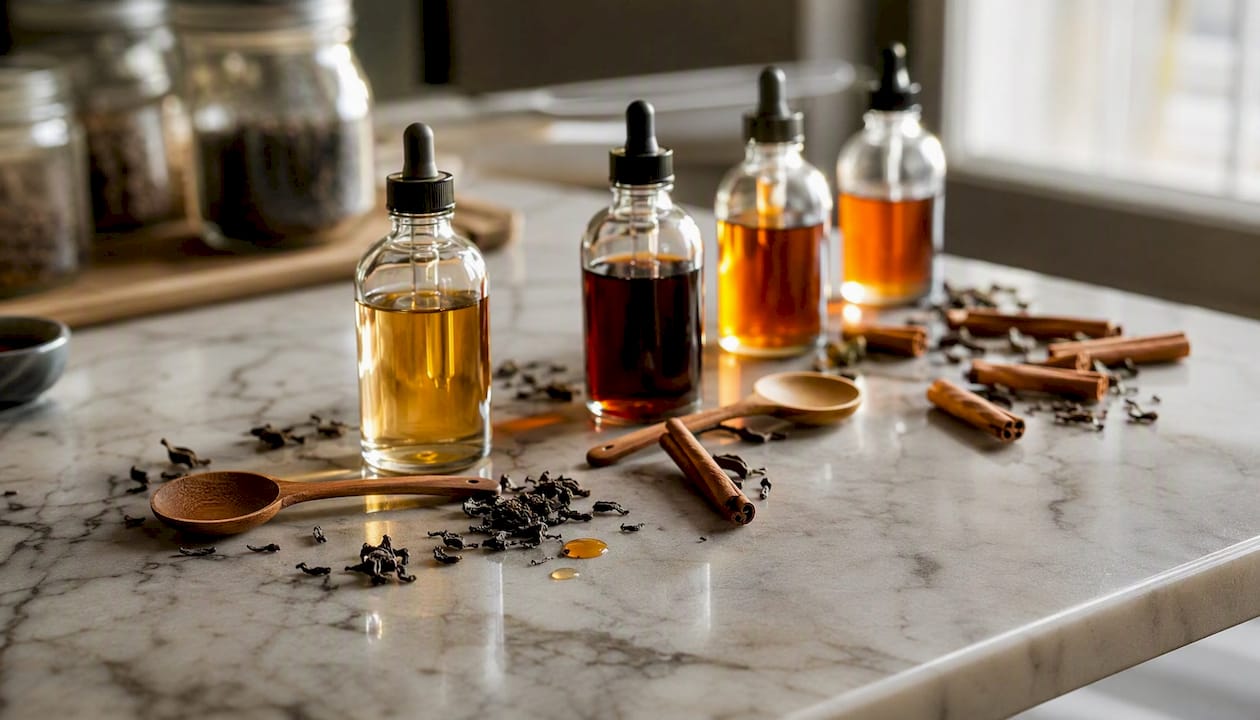
Spices and extracts don’t add sweetness directly. They enhance sweetness perception, which means your brain reads the drink as sweeter than it is. Cinnamon, cocoa, vanilla, cardamom, and a pinch of salt all work this way, and the effect is real enough that most people don’t miss the sugar after a few days.
Which enhancer works best where:
- Black coffee: Cinnamon, cardamom, a pinch of sea salt
- Milk-based drinks (lattes, cappuccinos): Vanilla extract, cocoa powder, cinnamon
- Iced drinks: Vanilla, cold-brew concentrate with cardamom, coconut extract
Six micro-recipes to try now:
- Cinnamon vanilla latte: 8 oz brewed coffee, 1/4 tsp cinnamon, 1/8 tsp pure vanilla extract, 2 oz steamed milk. No sugar needed.
- Mocha without the syrup: 8 oz coffee, 1 tsp unsweetened cocoa powder, 2 oz milk. Whisk cocoa into hot coffee before adding milk.
- Cardamom cold brew: 12 oz cold brew, 2 pods crushed cardamom steeped overnight, splash of oat milk. Naturally sweet-tasting.
- Salted caramel-style black coffee: 8 oz coffee, 1 tiny pinch sea salt, 1/8 tsp vanilla. The salt suppresses bitterness and makes the coffee taste rounder.
- Coconut iced latte: 8 oz cold brew, 2 oz coconut milk, 1/8 tsp coconut extract. No syrup required.
- Spiced hot chocolate coffee: 6 oz coffee, 2 oz steamed milk, 1 tsp cocoa, 1/4 tsp cinnamon, pinch of cayenne. Rich enough to feel indulgent.
Pro Tip: If your unsweetened coffee tastes harsh or sour, the problem is usually roast level or water temperature, not the missing sugar. A medium roast brewed at 195–205°F tends to have natural sweetness from the Maillard reaction. Switching roasts can do more for palatability than any sweetener. Font-mag’s roast level guide walks through exactly how roast affects flavor.
How to order a lower-sugar drink at any coffee shop
You don’t need to explain your health goals to a barista. These phrases get you a lower-sugar drink without any awkwardness.
Copy-ready phrases:
- “Can I get that with half the pumps of syrup?”
- “No classic syrup, please.”
- “Light syrup on that.”
- “Can you leave off the whipped cream and drizzle?”
- “Oat milk instead of vanilla sweet cream.”
Common swaps that work at most major cafés:
- Flavored latte: ask for 1 pump instead of the standard 3–4
- Iced coffee: request “unsweetened” or “no classic syrup”
- Blended drinks: ask for “light base” or “no added sugar base”
- Hot chocolate: request “half the mocha sauce”
- Seasonal drinks: ask what the default pump count is, then halve it
Before you pay, run through this quick check:
- Syrup pumps: confirmed at half or less?
- Milk: plain dairy or unsweetened plant milk (not vanilla-flavored)?
- Toppings: no whipped cream, caramel drizzle, or sugar-dusted garnish?
- Size: smaller size means fewer pumps by default
Pro Tip: If you order through an app, you can usually type a custom note or select “no syrup” from a dropdown. App orders tend to be more accurate than verbal ones because the instruction is written, not interpreted.
What can you drink instead of sweetened coffee?
The best alternatives for cutting both sugar and caffeine are matcha, chicory, rooibos, and golden milk. Each satisfies a different part of the coffee ritual without requiring added sugar to taste good.
Top alternatives at a glance:
- Matcha: Earthy, slightly grassy, naturally umami. Contains caffeine (roughly 70 mg per 8 oz serving, though this varies by grade and preparation). Pairs well with oat milk and a small amount of honey if needed. Font-mag carries barista-grade matcha that works in lattes without added sweetener.
- Chicory root coffee: Roasted and brewed like coffee, with a similar earthy profile and zero caffeine. The Cleveland Clinic notes it contains inulin, a prebiotic fiber, though a single cup provides too little for significant clinical effects.
- Rooibos: Naturally sweet-tasting, caffeine-free, and low in tannins. Works as a latte base with steamed milk. No bitterness, so no sugar needed to balance it.
- Golden milk: Turmeric, ginger, cinnamon, and black pepper in warm milk. Zero caffeine, anti-inflammatory profile, and naturally warming. Use unsweetened plant milk to keep sugar out entirely.
- Kombucha: Fermented, lightly effervescent, and available in coffee-adjacent flavors. Read the label carefully. Many commercial kombuchas contain 8–12 grams of added sugar per bottle, which erases the health benefit.
Harvard Health cautions that marketed “wellness” alternatives can still carry comparable caffeine to coffee, and that added syrups or flavored bases can negate any health advantage. Check the ingredient list before assuming a drink is lower in sugar just because it’s not coffee.
Pro Tip: Rooibos brewed strong and served with steamed oat milk is the closest thing to a latte that needs no sweetener at all. The natural sweetness of rooibos does the work. Font-mag’s MAG Tea loose-leaf selection includes options that work beautifully as a latte base.
For matcha specifically, Font-mag’s iced matcha sweetener guide covers which sweeteners hold up in cold preparations without overpowering the tea’s natural flavor.
How mindful tasting helps you drink less-sweet coffee long term
Paying full attention to aroma, mouthfeel, and flavor while you drink helps people sustain sugar-free coffee consumption longer than gradual reduction alone. A published behavior study covered by Psychology Today found that mindfulness outperformed both cold-turkey and gradual-reduction approaches for lasting change, and the underlying PubMed research supports this finding on behavior-change interventions.
Five-step mindful tasting practice:
- Before the first sip: Smell the coffee. Identify one or two specific aromas (chocolate, fruit, nuts, earth).
- First sip: Hold it in your mouth for two seconds before swallowing. Notice temperature, texture, and the first flavor that hits.
- Second sip: Focus on the finish. Does it linger? Is there bitterness, acidity, or a sweet note?
- Third sip: Ask yourself: what does this coffee actually taste like without sugar? Name it out loud or write one word.
- After the cup: Rate your satisfaction on a 1–5 scale. Track it for one week.
Why does this work better than gradual reduction? Gradual reduction keeps your attention on what’s missing. Mindful tasting redirects attention to what’s already there, which rewires the expectation of sweetness over time. Most people find that after 7–10 days of this practice, unsweetened coffee stops feeling like deprivation.
To combine this with the stepwise program: practice mindful tasting on the first cup of the day, and use that cup as your unsweetened cup. Keep a sweetener available for later cups if needed, but make the morning cup the training ground.
Pro Tip: Write one tasting note per morning for two weeks. “Nutty finish, slightly acidic, no bitterness” is enough. The act of naming flavors accelerates the brain’s shift away from sweetness as the primary reference point.
What to expect when you cut sugar from coffee
Most people notice real taste adaptation within 2–3 weeks, with cravings peaking in the first 3–5 days and then dropping sharply.
Typical timeline:
- Days 1–3: Coffee may taste bitter or flat. Cravings for sweetness are strongest here.
- Days 4–7: Bitterness starts to normalize. Flavor notes become more distinct.
- Weeks 2–3: Unsweetened coffee becomes neutral or pleasant. Previously sweet drinks may taste cloying.
- Month 1: The new baseline is set. Most people find they can’t go back to their original sugar level without noticing it’s too sweet.
Troubleshooting common problems:
- Too bitter: Switch to a medium roast, lower your brew temperature slightly, or try a coarser grind.
- Strong cravings mid-morning: Add a small protein snack with your coffee. Blood sugar dips drive sweetness cravings more than habit does.
- Social triggers (coffee with colleagues, café visits): Use the half-pump ordering script. One lower-sugar café drink won’t derail progress.
- Relapse after a stressful week: Don’t restart from zero. Go back to the half-sugar amount and reduce again over 3 days.
- Sweetener dependence: If you’ve swapped sugar for a non-nutritive sweetener and can’t seem to drop that either, try the mindful tasting practice for one week before attempting to reduce the sweetener.
Relapse prevention tactics:
- Keep unsweetened flavored coffee or a cinnamon shaker at your desk
- Change your café order in the app so the default is already set to half pumps
- If you drink coffee at home, move the sugar to a less accessible cabinet
A brief note on sweeteners: non-nutritive sweeteners are considered safe for most adults, but if you have specific health conditions, check with your doctor before using them regularly. This article provides general guidance, not medical advice.
A flavor-first approach to cutting sugar
There’s a version of this conversation that focuses entirely on willpower, and it’s the least useful one. What actually works is changing what you’re reaching for, not just how much of it you use.
Specialty coffee, when it’s fresh and well-roasted, doesn’t need sugar to taste good. The natural sweetness in a properly developed medium roast, the floral notes in a washed Ethiopian, the caramel finish in a good espresso blend, these are real flavor compounds, not marketing language. When you start tasting them, the sugar stops being the point.
Font-mag’s small-batch offerings, including the Broken Arrow Reserve, are roasted to bring out those natural notes rather than mask them. The matcha from Font-mag’s lineup works the same way: a quality ceremonial or barista-grade matcha has enough natural umami and sweetness that most people don’t reach for the honey after the first few cups. The Sweetbird syrups in Font-mag’s catalog are worth knowing about too, because they include lower-sugar options that don’t taste like a compromise.
The shift from “how do I make this less sweet” to “how do I make this taste better” is where real change happens. That’s the frame worth keeping.
Font-mag has what you need to cut sugar without cutting flavor
Font-mag’s specialty lineup is built for exactly this kind of swap. Fresh-roasted beans with natural sweetness, clean-ingredient syrups, and barista-grade matcha mean you’re not choosing between flavor and health.
Here’s what fits the lower-sugar goal from Font-mag’s current range:
- Flavored coffee: Beans with natural flavor notes (vanilla, hazelnut, chocolate) that taste sweet without any added syrup. A direct replacement for the sugar-and-plain-coffee habit.
- Matcha: Barista-grade matcha for lattes that need no sweetener. The Rishi Bulk Barista Matcha is a strong starting point.
- Decaf coffee: For readers reducing caffeine alongside sugar, Font-mag’s decaf range keeps the ritual without the stimulant.
- Wholesale coffee: Café owners looking to offer lower-sugar options at scale can source directly through Font-mag’s wholesale program.
These gastronomy trends confirm what specialty roasters have known for years: consumers are moving toward less-sweet, more flavor-forward drinks. Font-mag is already there. Free shipping on orders over $35, and most orders ship the same day.
Sources
The recommendations in this article draw from health organization guidance, published behavior research, and clinical nutrition resources.
- Tips for cutting down on sugar — American Heart Association
- Coffee alternatives and why you should try them — Cleveland Clinic
- Energy-boosting coffee alternatives: What to know — Harvard Health
- Study suggests most effective way to cut sugar from coffee — Psychology Today
- PubMed record — 28795605
This article is general information, not a substitute for advice from a qualified doctor. Consult a qualified healthcare professional about your own circumstances before acting on anything here.
Recommended
- Top 5 Clean Ingredient Coffee Syrup Alternatives 2026 – Font Coffee Roasters
- Top 5 Matcha Green Tea Sweetener Alternatives 2026 – Font Coffee Roasters
- Iced Coffee vs Iced Tea: Which Is Healthier for You? – Font Coffee Roasters
- What Is a Barista Style Syrup? A Home Barista’s Guide – Font Coffee Roasters