

What Is a Signature Coffee Blend? A Full Guide
Most people assume a coffee blend is just leftover beans mixed together to cut costs. That’s one of the most persistent myths in specialty coffee. What is a signature coffee blend, really? It’s a deliberately crafted combination of beans from different origins, roast levels, or processing methods, designed to produce a flavor profile that no single origin could achieve on its own. For coffee enthusiasts, understanding how these blends are built changes the way you taste, choose, and appreciate every cup.
Table of Contents
- Key takeaways
- What is a signature coffee blend, defined
- Pre-roast vs. post-roast blending
- The art and science of choosing blend components
- Flavor profiles that make blends worth seeking out
- How to choose and appreciate signature blends
- My honest take on blends and why they deserve more respect
- Discover Font-mag’s signature blend collection
- FAQ
Key takeaways
| Point | Details |
|---|---|
| Blends are intentional, not accidental | Roasters select beans from multiple origins specifically to build layered, balanced flavor profiles. |
| Two core blending methods exist | Pre-roast and post-roast blending each offer distinct advantages for flavor control and consistency. |
| Component selection is a science | Bean density, variety, processing method, and roast behavior all affect how a blend comes together. |
| Flavor profiles are layered and complex | Signature blends can offer chocolate, caramel, fruity, or floral notes that shift across the cup. |
| Blends suit nearly every brew method | From espresso to drip to milk drinks, a well-made blend adapts without losing its character. |
What is a signature coffee blend, defined
In the specialty coffee world, the recognized industry term for this type of product is simply a coffee blend or proprietary blend. The word “signature” signals that a specific roaster has put their name and craft behind it. It’s their statement of intent in a bag.
Signature blends are curated combinations designed to highlight complementary flavor notes, creating balanced acidity, sweetness, bitterness, and body in a single cup. By drawing beans from different growing regions and roast levels, roasters build something more than the sum of its parts.
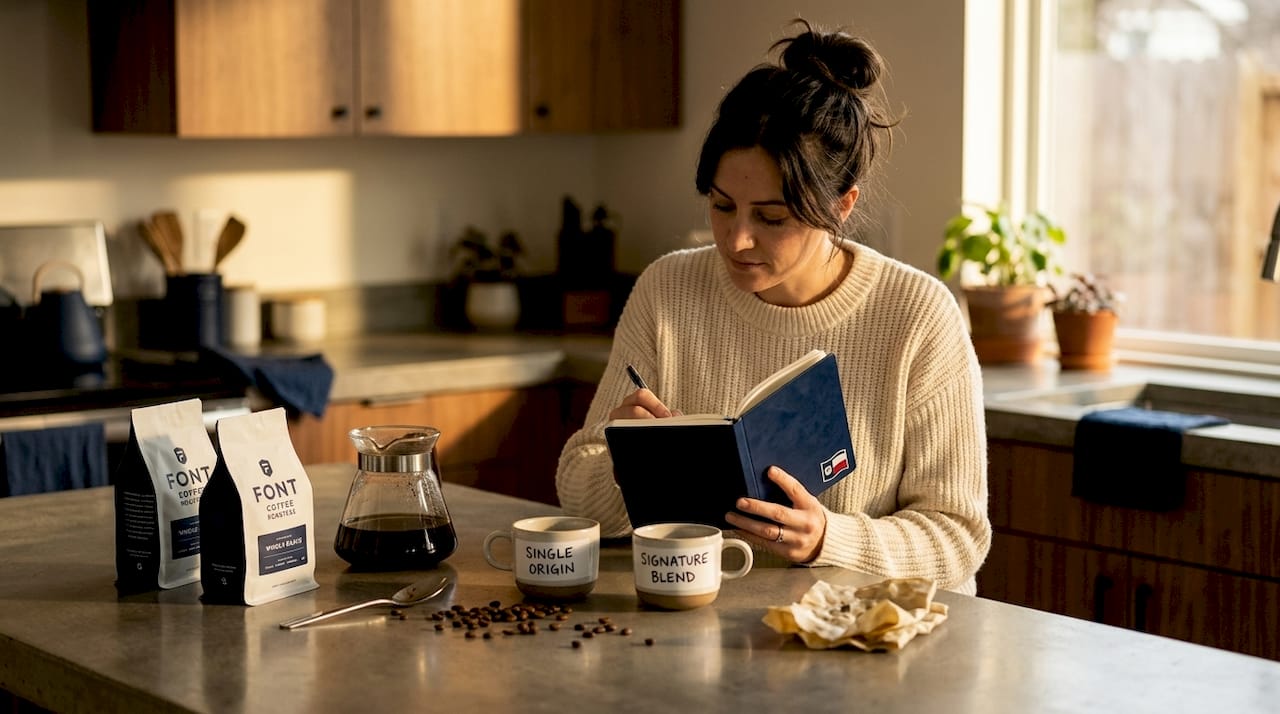
This separates a signature blend from a commodity blend. Commodity blends prioritize cost efficiency and volume. Signature blends prioritize flavor architecture. The Specialty Coffee Association recognizes blending as central to producing repeatable, consistent profiles at scale, which matters enormously for cafés that need the same cup every morning.
Compare that to single-origin coffee, which spotlights the unique character of one farm, region, or country. Single-origin excels at transparency and terroir. Blends excel at balance, consistency, and complexity. Neither is superior. They serve different purposes and different palates.
Signature coffee characteristics at a glance
The distinguishing features of a well-made signature blend include:
- Balanced acidity: Not sharp or flat, but present and clean, often contributed by a brighter African or Central American bean
- Sweetness: Usually caramel or brown sugar qualities that come from medium-roasted components
- Body: A sense of weight and texture in the mouth, often supplied by a lower-grown, fuller-bodied bean
- Complexity: Flavors that shift from first sip to finish, a quality that single-origin coffees sometimes struggle to deliver consistently
Pre-roast vs. post-roast blending
How a blend gets made physically is where things get genuinely interesting, and where most coffee drinkers have no idea what’s happening behind the scenes.
| Method | Process | Best for | Key challenge |
|---|---|---|---|
| Pre-roast blending | Green beans from multiple origins are mixed before roasting | Cost efficiency, simpler workflow | Different beans may roast unevenly |
| Post-roast blending | Each component is roasted separately, then combined | Flavor precision, optimal roast for each bean | More labor-intensive, higher cost |
Post-roast blending helps manage situations where some varieties naturally roast darker than others under identical conditions. A dense Ethiopian bean and a lower-grown Brazilian bean will behave very differently in the drum. Roasting them together means one will be underdeveloped while the other is past its peak.
Pre-roast blending works when the beans have similar densities, moisture levels, and roast curves. It’s faster and more economical, and many excellent commercial blends use this method successfully.
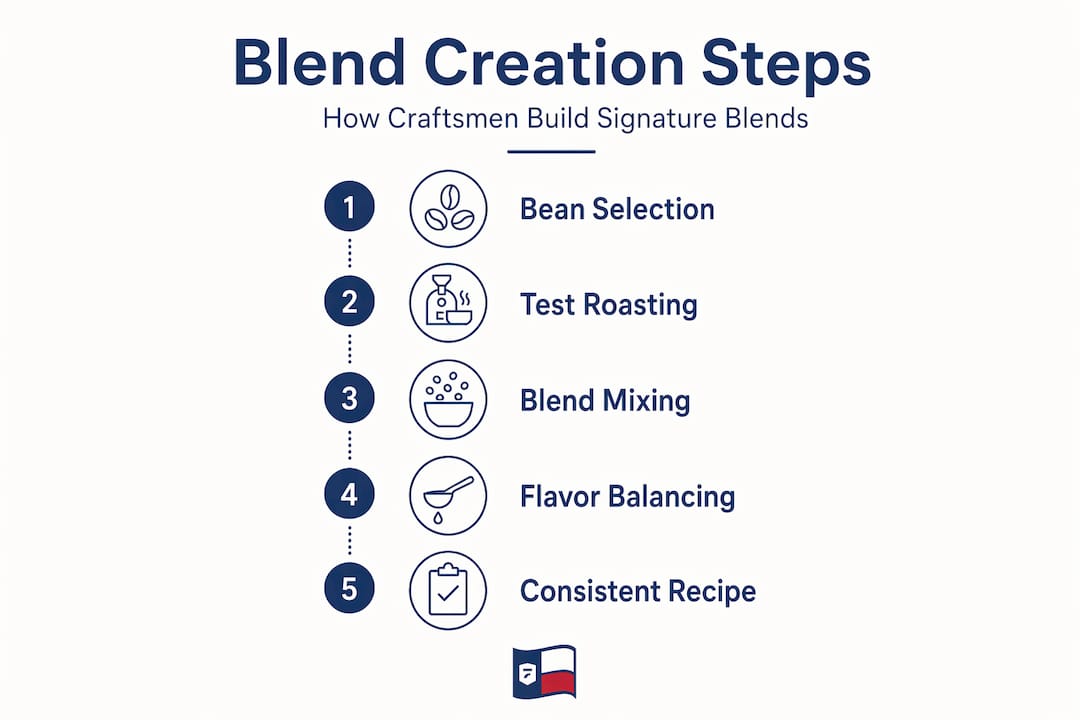
Pro Tip: If you’re buying a specialty blend and want to know which method was used, ask the roaster directly. Roasters who post-roast blend are almost always doing it for quality reasons and will be happy to explain why.
The method a roaster chooses reveals their priorities. Post-roast blending takes more time and costs more, but it lets each component reach its potential before the final assembly. Think of it like cooking each element of a dish to the right temperature rather than throwing everything in the pot at once.
The art and science of choosing blend components
This is where blending moves from craft into something closer to a discipline. Choosing which beans go into a signature blend is not guesswork. It’s an iterative process grounded in sensory analysis, data, and deep knowledge of how specific varieties behave.
Multi-variety blends allow careful calibration so all components work together in the final cup. Roasters consider bean density, screen size, processing method (washed, natural, honey), and variety before a single test batch gets pulled.
The pairing logic matters too. African varieties like SL28 and Ruiru 11 blend well together precisely because they balance each other’s acidity and sweetness without competing. A fruity Ethiopian natural might provide brightness and berry notes, while a Brazilian pulped natural brings the nutty body and low acidity that keeps the cup from feeling thin or sharp.
Factors roasters assess during component selection:
- Density and screen size: Denser, harder beans roast differently and often need longer development time
- Processing method: Natural-processed beans bring sweetness and fruit; washed beans bring clarity and brightness
- Origin altitude: Higher-altitude beans tend toward more acidity and complex aromatics
- Variety: Bourbon, Catuai, Geisha, SL28 all behave differently at the same roast level
“The art of blending is a balance of science and experimentation to achieve perfect harmony.” — Perfect Daily Grind
Roasters often run multiple test batches and adjust roasting profiles per bean variety before final assembly. A blend that tastes great at 85% one component and 15% another might fall apart at 80/20. Getting to that sweet spot takes time, cupping sessions, and a willingness to discard batches that almost work.
Flavor profiles that make blends worth seeking out
Here’s where the experience becomes personal. Blends can express chocolate, caramel, fruity, floral, and nutty notes, sometimes all in one cup at different stages of the drink cooling down.
A well-designed espresso blend might open with a dark chocolate bitterness that softens into caramel as it cools, with a finish that lingers like a roasted almond. That arc is intentional. The roaster built it.
Pro Tip: Let your espresso or drip coffee cool slightly before your second sip. The flavor of a good blend shifts noticeably at different temperatures, revealing layers that are masked when the drink is too hot.
What defines a house blend or proprietary mix is that the recipe stays consistent season after season, which means the roaster substitutes component origins when a crop underperforms without breaking the flavor profile. That’s a serious skill. It’s the reason why blends integrate multiple sources to maintain both consistent flavor and supply chain stability. Your favorite café’s morning blend tastes the same in March as it does in October not by accident, but by design.
Blends also serve a practical purpose in milk drinks. A single-origin coffee with very high acidity can taste thin or sour under steamed milk. A blend designed for milk-based drinks typically uses beans with more body, lower acidity, and notes that amplify rather than get lost behind dairy.
How to choose and appreciate signature blends
Knowing what goes into a blend is one thing. Actually tasting it well is another. Here’s a practical approach to get more out of every cup:
- Start with the tasting notes on the bag. These are guides, not guarantees, but they tell you what the roaster was aiming for. If it says “dark chocolate and dried cherry,” look for those markers when you brew.
- Brew it two ways. Try the same blend as a pour-over and as an espresso. Blends suit a range of preparations including espresso and milk drinks, and the same blend can taste surprisingly different depending on your brew method. Understanding coffee extraction basics helps you read those differences rather than blame the beans.
- Compare roast levels deliberately. A light-roasted blend will lean bright and fruity. A medium roast develops sweetness and body. Dark roasts push into chocolate and smoke. Try the same blend at different roast levels if the roaster offers them, and notice how your preference shifts.
- Take notes, even simple ones. You don’t need a cupping sheet. Just write down what you notice. Over a few weeks, patterns emerge and you’ll know whether you gravitate toward bright East African components or heavier, low-acid South American profiles.
- Match the blend to your usual drink. If you primarily drink flat whites or lattes, look for blends labeled as espresso blends or milk-drink friendly. If you brew drip every morning, medium-roasted blends with clean acidity tend to shine in that format.
Exploring origin coffees alongside blends is a great way to train your palate. Once you know how a single Ethiopian washed coffee tastes on its own, you’ll start recognizing its contribution when it shows up in a blend.
My honest take on blends and why they deserve more respect
I’ve been tasting and talking about coffee long enough to have watched the specialty world swing from celebrating blends to treating them as second-class citizens next to single-origins. That pendulum has overcorrected.
In my experience, the best signature blends require more skill to create than most single-origin coffees require to source. Picking a great single-origin is largely about finding an excellent farm and not ruining it in the roaster. Building a blend that tastes exactly right, holds that profile through seasonal crop changes, and works equally well in an espresso machine and a pour-over kettle? That’s genuinely hard.
I’ve watched roasters spend three months and dozens of test batches getting a house espresso blend right, only to have their crop supply shift mid-year and force a full reformulation. Nobody sees that work. They just see a bag on a shelf.
My contrarian take: for everyday drinking, a great blend often outperforms a great single-origin for most people. Not because blends are better, but because they are more forgiving. A slightly imprecise grind or water temperature matters less when the cup has built-in balance. Single-origins can be punishing if your technique isn’t dialed in.
If you’ve written off blends as the safe, boring choice, I’d push back on that. Find a roaster you trust and ask them what they’re most proud of in their blend lineup. The answer will almost always surprise you.
— Rosario
Discover Font-mag’s signature blend collection
At Font-mag, blending is part of a craft that goes back four generations of Texas coffee making. The Broken Arrow Reserve is one of our most celebrated small-batch blends, built for the kind of complexity that holds up whether you’re pulling a shot or brewing a full pot. Alongside that, our retail coffee collection covers everything from bold espresso profiles to clean, bright medium roasts suited for drip brewing.
We’ve also expanded well beyond coffee. Our lineup now includes Japanese matcha, premium loose-leaf teas from MAG Tea, and the full Sweetbird collection of syrups and café essentials. If you’re building a home setup or stocking a café, Font-mag ships everything fast, with free shipping on orders over $35.
FAQ
What makes a coffee blend “signature”?
A signature blend is a proprietary recipe created by a specific roaster using beans from multiple origins, designed to produce a consistent and intentional flavor profile that represents their craft and brand.
Is a blend better than single-origin coffee?
Neither is objectively better. Single-origin coffees highlight the character of one specific source, while blends prioritize balance, consistency, and complexity across multiple components. Your preference depends on how and what you like to drink.
What are the most common flavor notes in a signature blend?
Blend flavor profiles often include chocolate, caramel, fruity, floral, and nutty notes, layered to suit a range of tastes and brewing methods.
How do roasters keep blends tasting consistent year-round?
Roasters substitute bean origins when crops change, choosing replacement components that match the flavor role of the original, which is why sourcing from multiple coffee origins is central to blend stability.
What is a signature blend gift?
A signature blend gift typically refers to a curated coffee package featuring a roaster’s proprietary blend, often paired with brewing accessories or complementary items. It makes a practical and personal gift for anyone who takes their coffee seriously.