

6 Categories Coffee Shop Supplies Checklist That Converts to SKUs
Order these six categories first: whole-bean coffee for espresso and filter, milk and dairy alternatives, syrups or concentrates, disposable cups with matching lids and sleeves, food-safe cleaning supplies, and core smallwares like pitchers and filters. Set a par level for each based on weekly usage plus a few days of safety stock, then turn that par into actual SKUs and case counts. A well-chosen lineup including signature coffee and syrup options can cover most of that list in one order.
TL;DR:
- Stock at least 57 pounds of espresso beans for a small cafe using 40 pounds weekly, to cover usage and safety stock during reorder.
- Count high-turnover supplies weekly and slower items monthly or biweekly, considering lead times and minimum order quantities.
- Confirm minimum order sizes, pack configurations, and lead times with suppliers to prevent surprises and ensure smooth replenishment.
- Schedule seasonal ingredient orders two to three weeks in advance of marketing pushes, accounting for lead times and promotional packaging needs.
- Track waste and spoilage regularly, especially for perishables like dairy milk, to adjust par levels and minimize unnecessary costs.
Table of Contents
- Building Your Coffee Shop Supplies Checklist by Category
- What Cleaning Supplies Do You Need on Hand?
- How Do You Set Par Levels for Café Supplies?
- What Should You Confirm Before Placing a Supplier Order?
- Planning Seasonal and Promotional Supplies Ahead of Time
- Cutting Spoilage and Waste Without Cutting Quality
- What Does a Coffee Shop Supplies Checklist Cost Monthly?
- The Publisher’s View on Simplifying Your Supply List
- Order Your Café Essentials Directly From Font
- Sources
- FAQ
Building Your Coffee Shop Supplies Checklist by Category
A coffee shop supplies checklist only works once you break it into the categories you’ll actually reorder on different schedules. Beans and milk move fast. Cups and cleaning chemicals move slower but run out at the worst possible time if nobody’s watching them. Here’s how to sort every consumable into an order sheet you can hand to a supplier or plug into a spreadsheet.
Coffee beans. Stock separate roasts for espresso and batch filter if your menu supports both. Whole-bean formats stay fresher longer than pre-ground, so buy whole and grind to order. Retail-facing bags run 12 to 16 ounces; wholesale service typically comes in 5-pound bags, which is the sweet spot for most single-location cafés brewing daily. A retail coffee rotation that includes a signature roast and a decaf option covers most customer requests without overcomplicating your bean inventory.
Tea and matcha. Loose-leaf tea for steeped service and culinary-grade matcha for lattes both need airtight, light-blocked storage. Bulk barista matcha commonly ships in 100 gram units built for high-volume use, and that format holds its color and flavor far longer once opened than smaller retail tins.
Syrups and concentrates. Flavor families like vanilla, caramel, and seasonal fruit blends usually come in 1-liter bottles for pump service or 4x1kg bags for frappé-style concentrates. Non-dairy syrup options exist for cafés serving plant-based frappes, and it’s worth knowing which of your syrup flavors actually sell before committing to a full case of anything new.
Milk and milk alternatives. Fresh dairy needs a tight reorder cycle, often two to three deliveries a week depending on your cooler space. Oat, almond, and soy alternatives keep longer unopened but still deserve weekly par checks once your menu depends on them.
Disposable serviceware. Hot cups, iced cups, dome and flat lids, sleeves, carriers, napkins, and stirrers all need case-pack thinking, not just unit counts. Choosing consistent cup sizes across your menu, say 8, 12, and 16 ounces, simplifies ordering because you’re not juggling five lid SKUs for three cup shapes.
Smallwares and consumables. Steaming pitchers, tampers, knock-box liners, paper filters, roast-date labels, and bag clips are easy to forget until you’re out mid-shift. Keep a running list separate from your big categories so nobody assumes “someone else” ordered the filters.
Cleaning consumables. Espresso machine detergent, food-safe descaler, brushes, and microfiber cloths belong on every order alongside your ingredients, not as an afterthought once something breaks down.
What Cleaning Supplies Do You Need on Hand?
Flavor problems and equipment downtime almost always trace back to a skipped cleaning step, not a bad bag of beans. A basic schedule breaks down like this:
- Daily: Wipe and purge the steam wand after every use, empty portafilters and grounds bins, rinse baskets, and top off backup sanitizer.
- Weekly: Soak group heads and portafilter baskets in detergent, run a backflush cycle, scrub pitchers, and deep-clean floor drains.
- Monthly: Inspect gaskets and seals for wear, swap water filters, and run a full descaling cycle on your machine.
This daily, weekly, and monthly rhythm mirrors the cadence most cleaning checklists for coffee equipment recommend, and it’s the fastest way to catch a failing gasket before it turns into a $400 repair bill.
Keep a standing stock of Cafiza-style espresso detergent, food-safe descaler, stiff brushes, microfiber cloths, and basic PPE like gloves. Airpot and dispenser care deserves its own routine too, since dispensers hold flavor residue longer than most people expect.
Pro Tip: Keep a laminated cleaning schedule taped inside a cabinet door. Baristas check boxes with a whiteboard marker, and you get a visual record without any software.
How Do You Set Par Levels for Café Supplies?
Par level math isn’t complicated: average weekly usage, multiplied by however many days you want covered, plus a buffer for a bad delivery week. A café using 40 pounds of espresso beans weekly with a 3-day safety margin needs roughly 57 pounds on hand at any reorder point.
Counting frequency should match how fast an item moves:
- Count beans, milk, and popular syrups weekly. A small café can knock out a weekly count in 30 to 45 minutes.
- Count cups, lids, and cleaning supplies monthly, since they last longer and fluctuate less.
- Count seasonal or slow-moving syrup flavors biweekly as a middle ground.
Every supplier field you record affects your reorder math, not just your paperwork. Capture the minimum order quantity, how the product is packed (each, inner, case), and the actual lead time from order to delivery, since a 2-day lead time and a 10-day lead time demand very different safety stock.
A minimal reorder worksheet needs just five columns: SKU, eaches per case, average weekly usage, par level, and lead time, plus a sixth for who owns reordering that item. Without a named owner, even a good spreadsheet turns into a “someone else will handle it” problem.
What Should You Confirm Before Placing a Supplier Order?
Before you commit to a regular order cycle, get these commercial details in writing, not just implied in a catalog listing.
- Confirm the minimum order quantity and whether it’s per SKU or per order.
- Confirm pack configuration, meaning whether pricing is quoted by each, by inner pack, or by full case.
- Get an honest lead time estimate, including production time separate from shipping time.
- Ask for sample or reference items before committing to a full case of a new flavor or format.
- Confirm the return and exception policy for damaged goods or short shipments.
- Get a direct escalation contact, not just a general support inbox.
Recording these fields in a replenishment worksheet before onboarding a new supplier catches most surprises before they hit your invoice.
Industry advisers generally steer operators away from suppliers who bury fees in fine print or lock buyers into rigid long-term contracts. A supplier willing to work around your actual pack sizes and delivery windows, rather than forcing you into theirs, tends to be the one you keep for years.
Planning Seasonal and Promotional Supplies Ahead of Time
Seasonal menus fail more often from a supply gap than from a bad recipe. If you’re launching a pumpkin spice latte in September or an iced matcha push for summer, your syrup and matcha orders need to land two to three weeks ahead of the marketing push, not the week it goes live.
Build a simple seasonal calendar with three columns: campaign date, ingredient needed, and order-by date. Work backward from your supplier’s lead time. If Sweetbird seasonal syrup takes 5 business days to arrive and you want a week of buffer stock before launch, your order-by date sits roughly two weeks before the promotion starts.
Cups and sleeves matter here too. A holiday-branded sleeve or a limited seasonal cup size needs its own par adjustment, since you don’t want to run a promotion for three weeks only to hit a cup shortage in week two. Order enough disposable serviceware to cover the full promotional window plus a cushion, and confirm with your supplier whether seasonal packaging counts against a separate minimum order quantity.
Don’t let seasonal excitement blow out your regular par levels either. A pumpkin spice push shouldn’t mean neglecting your everyday vanilla and caramel syrup stock, since regular customers still expect their usual order on the way out the door.
Cutting Spoilage and Waste Without Cutting Quality
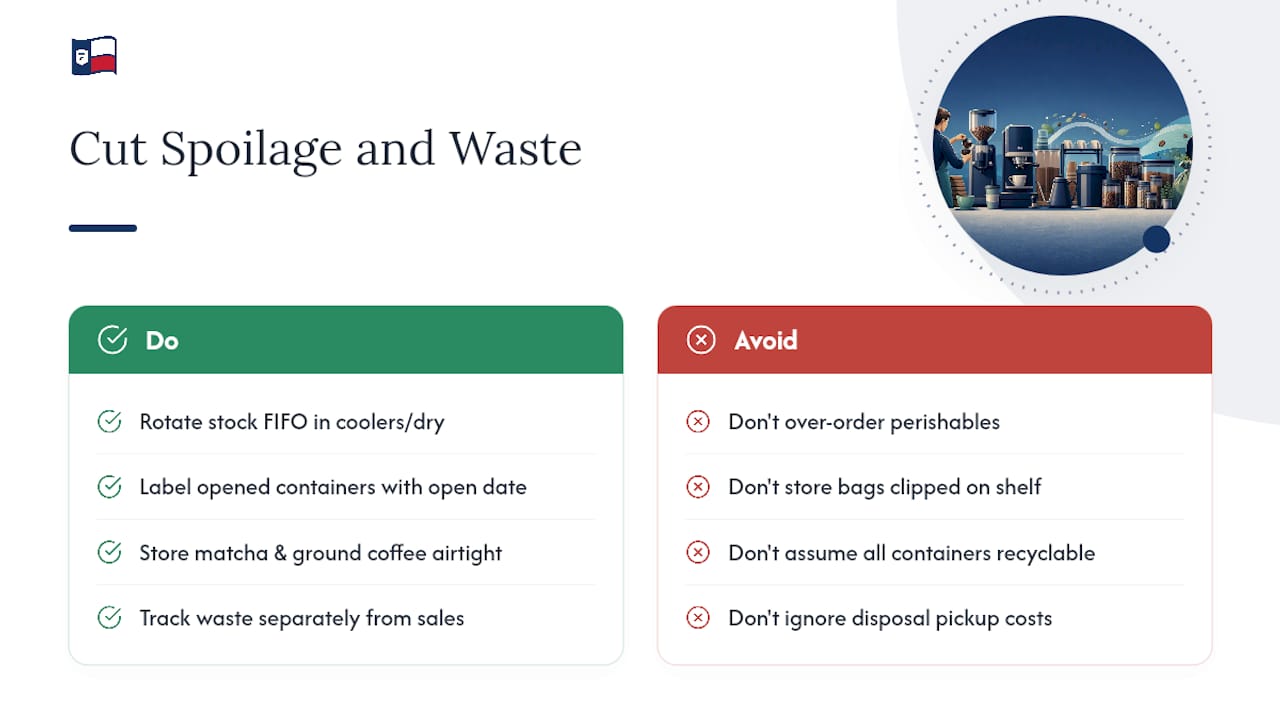
Spoilage almost always comes from over-ordering perishables faster than you can move them, not from bad luck. Dairy milk is the biggest offender here, since it has the shortest shelf life of anything on your checklist and the steepest cost when it goes bad.
A few habits keep waste down without hurting drink quality. Rotate stock using first-in, first-out placement in every cooler and dry storage shelf, and label opened containers with the date they were opened, not just the date they arrived. Matcha and ground coffee lose potency once exposed to air and light, so store both in airtight, opaque containers rather than leaving bags clipped shut on an open shelf.
Track waste separately from sales in whatever system you use, even if it’s just a clipboard near the trash bin. Knowing that you’re pouring out two gallons of oat milk a week tells you something your sales report never will: your par level for that item is set wrong.
Disposal costs add up too. Cardboard and cup sleeves are recyclable in most municipal programs, but syrup bottles and detergent containers often aren’t, depending on local rules. Check with your waste hauler about what’s actually accepted, since paying for mixed waste pickup when half of it could go in a cheaper recycling stream is a cost most café owners never audit.
What Does a Coffee Shop Supplies Checklist Cost Monthly?
Costs vary widely by café size and menu, but a rough monthly range gives you something to budget against. A small café pouring 150 to 200 drinks a day might spend $600 to $900 monthly on beans, $300 to $500 on milk and alternatives, $150 to $250 on syrups, and another $200 to $350 on disposable serviceware. Cleaning consumables usually run smaller, often $50 to $100 a month unless you’re replacing filters or descaling supplies in bulk.
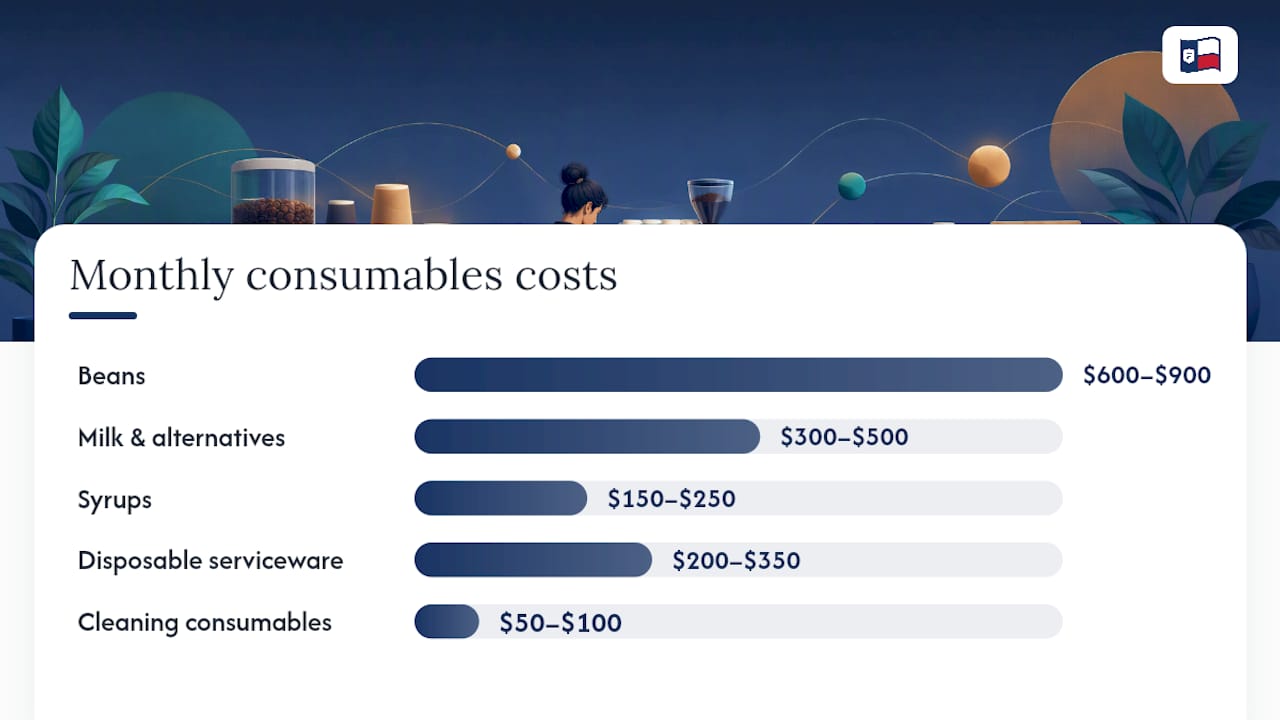
Add those ranges together and a lean single-location café might spend several thousand dollars a month on consumables alone, before rent, labor, or equipment maintenance enter the picture. Larger cafés or those running heavy seasonal promotions will sit well above that range.
The real value in estimating cost isn’t the total figure. It’s catching which category is eating more of your budget than it should. If syrup spend suddenly jumps 30% month over month without a matching sales increase, that’s a par level or a waste problem, not a pricing problem.
The Publisher’s View on Simplifying Your Supply List
Some specialty beverage companies grow out of a legacy of craftsmanship, shaping the belief that a café doesn’t need ten suppliers to run well, it needs a handful of trustworthy SKUs per category. Signature options for coffee, loose-leaf tea, and syrups exist because juggling separate vendors for each category can multiply admin time and shipping risk.
Consolidating to fewer, better-chosen suppliers tends to produce more consistent pack configurations and faster fulfillment, which matters more to a small operation than most owners realize until a shipment is late during a busy weekend.
— Rosario
Order Your Café Essentials Directly From Font
Some suppliers stock the categories on this checklist in one place: flavored coffee, matcha, loose-leaf tea, syrups, and cleaning supplies to keep equipment running clean. Consolidating orders reduces the complexity of coordinating multiple vendors and shipping schedules. Fast shipping options and free shipping thresholds can help avoid freight penalties with regular reorders.
Start with the flavored coffee collection if your menu needs a seasonal rotation, or browse matcha options if you’re building out an iced matcha program. If you’re setting par levels for a multi-location café or need wholesale pricing guidance, it’s advisable to contact the supplier’s support team directly for help matching pack sizes to your actual weekly usage.
Sources
- Coffee Shop Inventory Management: Reduce Waste & Profit
- Cleaning Checklist for Coffee Machine Businesses - CleaningBro
FAQ
How Often Should I Count Coffee Shop Inventory?
Count high-turnover items like beans, milk, and popular syrups weekly, and slower-moving items like cups, lids, and cleaning supplies monthly.
How Much Coffee Should a Small Café Stock Weekly?
Base it on your average weekly usage plus a few days of safety stock. A café using 40 pounds a week with a 3-day buffer should keep roughly 57 pounds on hand at reorder time.
Should I Buy Café Supplies by the Case or by the Each?
Buy fast-moving basics like beans, milk, and everyday syrups by the case for better unit pricing, and order slower or seasonal items by the each or inner pack until you know how fast they’ll sell.
How Often Should Espresso Equipment Be Cleaned?
Clean the steam wand and grounds daily, backflush and deep-clean weekly, and inspect gaskets and replace water filters monthly.
Does Font-mag Sell Cleaning Supplies for Coffee Equipment?
Yes, Font carries food-safe cleaning products like espresso machine detergent and café sanitizer alongside its coffee, matcha, and syrup lines.