

Coffee Processing Methods Explained for Every Brewer
Coffee processing is defined as the method used to remove the fruit layers of the coffee cherry and prepare the raw bean for roasting, and it is the second most influential flavor factor after origin. Two batches from the same harvest, processed differently, can taste like entirely different coffees in your cup. Understanding coffee processing methods explained in practical terms gives you a real advantage when selecting beans, dialing in your brew, and interpreting what roasters print on their bags. The four classic methods are washed, natural, honey, and wet-hulled, with a growing family of experimental techniques pushing flavor into genuinely new territory.
What are the primary coffee processing methods explained?
Processing is best understood as a spectrum of mucilage retention and fermentation style rather than a set of rigid boxes. The amount of fruit left on the bean during drying, and how long fermentation is allowed to run, determines the flavor compounds that develop before roasting even begins.
Washed (wet) process strips the cherry’s skin and mucilage before the bean dries. Fermentation tanks hold the beans for 12 to 72 hours to break down remaining fruit residue, then the beans dry to roughly 11% moisture. The result is a clean, bright cup that puts origin character front and center. Ethiopia Yirgacheffe processed this way delivers floral, citrus-driven clarity that would be muted under any other method. Washed coffee represents approximately 60% of global specialty production as of 2026, making it the default benchmark most tasters use.
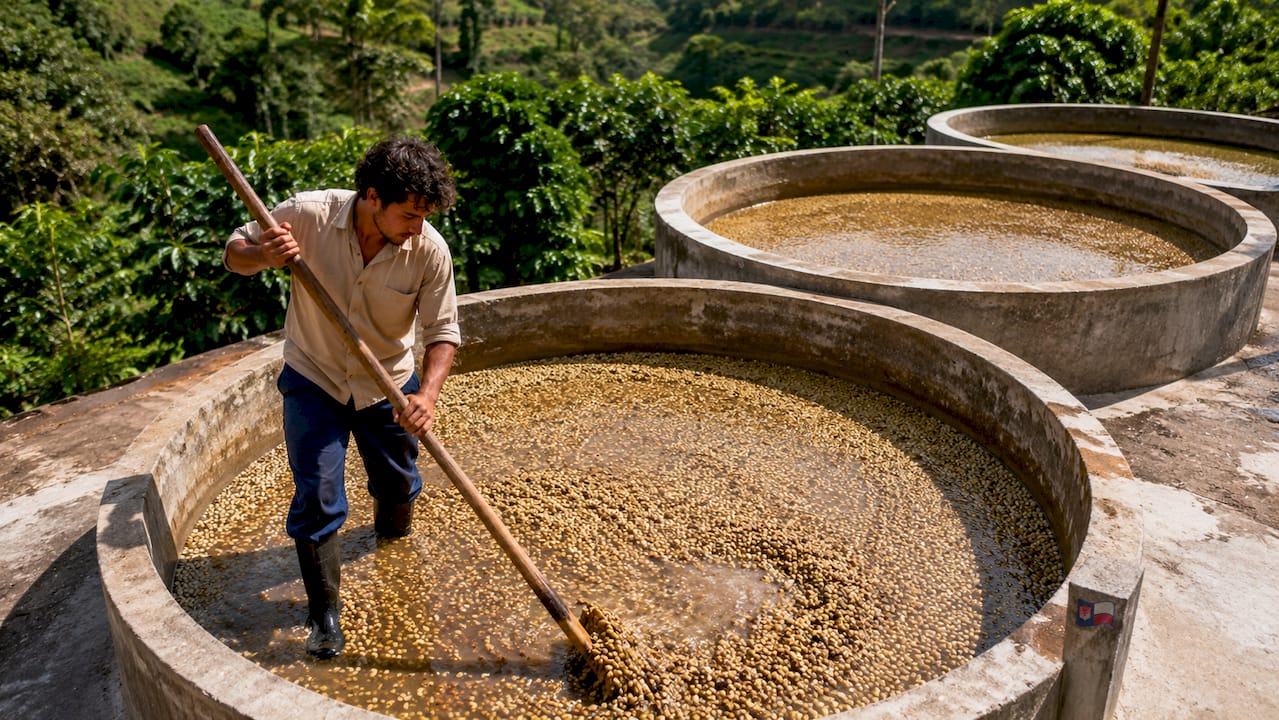
Natural (dry) process dries the whole cherry intact, sometimes for three to six weeks on raised beds. The bean absorbs sugars and fermentation byproducts directly from the surrounding fruit. Ethiopian naturals and Brazilian naturals are the clearest examples: expect blueberry, strawberry jam, and a heavy, syrupy body. The trade-off is consistency. Natural processing is weather-dependent and requires constant turning to prevent mold, so quality varies more than with washed lots.
Honey process removes the skin but leaves varying amounts of mucilage on the bean during drying. Honey processing originated in Costa Rica and is graded by mucilage retention: yellow honey retains roughly 25%, red honey around 50%, and black honey up to 100%. More mucilage means more sweetness and body in the cup, with a profile that sits between the clarity of washed and the fruit intensity of natural. Costa Rican and Salvadoran producers have made honey processing a regional signature.
Wet-hulled (Giling Basah) is unique to Indonesia, particularly Sumatra, Sulawesi, and Flores. The parchment layer is removed while the bean still holds high moisture, then drying continues. This produces the earthy, full-bodied, low-acid character that defines Sumatran Mandheling and Toraja coffees. It is not a flaw. It is a deliberate regional technique that creates a flavor profile unavailable through any other method.
| Processing method | Mucilage retained | Flavor profile | Key origin examples |
|---|---|---|---|
| Washed | None | Clean, bright, origin-forward | Ethiopia, Kenya, Colombia |
| Natural | Full cherry intact | Fruity, heavy body, wine-like | Ethiopia, Brazil |
| Honey | Partial (25–100%) | Sweet, balanced, medium body | Costa Rica, El Salvador |
| Wet-hulled | Varies (high moisture) | Earthy, full body, low acid | Sumatra, Sulawesi |
Pro Tip: When you see “black honey” on a bag, treat it almost like a natural. The flavor intensity and body are comparable, but the clarity is slightly higher because the skin was removed.
How do experimental processing methods expand flavor possibilities?
Modern coffee processing innovations like anaerobic fermentation and carbonic maceration have created taste dimensions that were simply not available a decade ago. These methods borrow heavily from winemaking and craft brewing, applying controlled microbial science to coffee cherries.
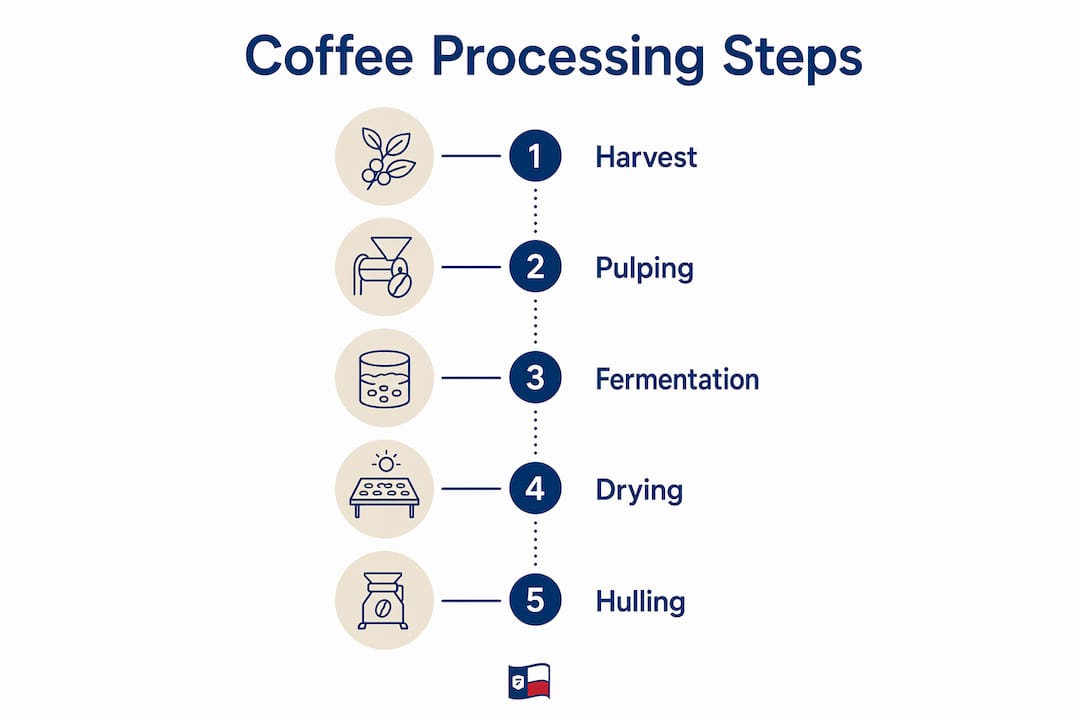
Anaerobic fermentation seals whole or depulped cherries in oxygen-free tanks for 24 to 96 hours at controlled temperatures. Without oxygen, the microbial population shifts toward organisms that produce intense, tropical, and wine-like flavor compounds. Anaerobic processing produces flavors like passionfruit, guava, and dark cherry that no traditional method replicates. The controlled environment also reduces batch-to-batch inconsistency compared to open-air natural processing.
Carbonic maceration takes the concept further. Intact cherries are placed in a CO2-flushed vessel, triggering intracellular fermentation inside each cherry before any external microbial activity begins. Carbonic maceration creates unique aromatic esters and confectionery sweetness, often described as candy, rose water, or bergamot. The technique was pioneered in specialty coffee competitions and has since moved into commercial production in Colombia, Ethiopia, and Taiwan.
Lactic acid fermentation introduces specific bacterial cultures, primarily Lactobacillus strains, to guide fermentation toward lactic acid production. The result is a distinct creamy acidity and sweetness that differs from both washed brightness and natural fruitiness. Producers in Panama and Colombia have used this approach to create coffees with yogurt-like or stone-fruit acidity.
Other emerging techniques include nitrogen maceration, which replaces CO2 with nitrogen to further restrict oxygen exposure, and frozen cherry processing, where cherries are frozen before fermentation to preserve volatile aromatic compounds. These methods are still rare and expensive, but they signal where specialty coffee is heading.
Pro Tip: Fermentation’s microbial activity varies with oxygen presence, temperature, and duration, creating unique flavor compounds. If you find an anaerobic or carbonic maceration lot, brew it as a pour-over first. The clarity of that method shows off the exotic flavor notes better than espresso.
How does processing affect your brewing and flavor in the cup?
Processing impacts brewing behavior in concrete ways: naturals and anaerobics typically need a finer grind and different extraction approach, while washed coffees show extraction faults more clearly. Knowing the processing method before you brew is not just trivia. It changes your setup.
-
Washed coffees reward precision. Their clean flavor profile means over-extraction shows up as harsh bitterness and under-extraction as sharp sourness. Use a consistent grind, a stable water temperature around 200°F, and a medium roast to let the origin character speak. These coffees are ideal for learning coffee extraction fundamentals because the feedback is immediate and unambiguous.
-
Natural coffees are more forgiving at higher temperatures. Their fruit-forward, heavy-bodied character holds up well in espresso and French press. A slightly coarser grind than you would use for a comparable washed coffee prevents the dense, syrupy body from turning muddy. Roasters typically use a gentler roast curve to protect the fruit notes from burning off.
-
Honey processed coffees sit in the middle. They carry the sweetness and body of a natural with enough clarity to reward a pour-over or Chemex. Red and black honey lots work particularly well in flat whites and cortados because the sweetness integrates with milk without disappearing.
-
Wet-hulled coffees from Indonesia are built for immersion brewing. French press and AeroPress bring out their earthy, chocolatey depth without amplifying the low acidity into flatness. Avoid very light roasts with these beans. The wet-hulled process produces a denser, less uniform bean structure that needs more heat to develop fully.
-
Experimental processed coffees (anaerobic, carbonic maceration) often need a slightly finer grind than their roast level suggests. The intense flavor compounds can taste diluted at standard extraction. Start finer, taste, and adjust. These coffees also degas faster after roasting, so use them within four to six weeks of the roast date.
Understanding how coffee origins interact with processing gives you a complete picture of why two bags from the same country can taste nothing alike.
What should you look for when selecting coffee by processing type?
Reading a coffee bag correctly is a skill that pays off every time you buy. Coffee bag labels often state the processing method directly: washed, natural, honey (sometimes with a color grade), or anaerobic. If no processing method is listed, the coffee is almost certainly washed. That is not a criticism. It simply means the roaster is working with the specialty market’s default.
Freshness and shelf life vary by processing type. Washed coffees tend to have a longer green bean shelf life than naturals or honeys because their lower moisture content slows degradation. Once roasted, naturals and honeys often taste best within three to five weeks of the roast date, while washed coffees can hold their peak flavor slightly longer.
Match processing to your flavor preference honestly. If you drink coffee black and want clarity and brightness, start with washed lots from Kenya or Ethiopia. If you prefer sweetness and body, a Costa Rican honey or a Brazilian natural will suit you better. If you want something genuinely unusual, an anaerobic or carbonic maceration lot from a competition-focused producer is worth the premium price.
Roast level matters alongside processing. A natural coffee roasted too dark loses its fruit character entirely. Look for roasters who specify a light to medium roast for naturals and honeys, and who explain their roast approach on the bag or website. Transparency about processing and roast is a reliable signal of quality. It also connects directly to why specialty coffee costs more: the labor and precision involved in honey and experimental processing are significantly higher than washed production.
Key takeaways
Processing method is the single most controllable variable between origin and your cup, and matching it to your brew style produces consistently better results.
| Point | Details |
|---|---|
| Processing defines flavor | The same farm’s coffee processed differently produces distinct, sometimes unrecognizable taste profiles. |
| Washed dominates specialty | Roughly 60% of specialty coffee is washed, making it the baseline for flavor comparison. |
| Honey grades matter | Yellow, red, and black honey differ in sweetness and body based on mucilage retention percentage. |
| Experimental methods are real | Anaerobic and carbonic maceration produce tropical, confectionery flavors unavailable through traditional processing. |
| Brewing adjustments are necessary | Naturals and anaerobics need finer grinds and gentler roasts; washed coffees demand extraction precision. |
Processing is more interesting than most people realize
I have tasted a lot of coffee over the years, and the most common misconception I run into is the idea that one processing method is objectively better than another. Washed is not cleaner in a superior sense. Natural is not messier or lower quality. They are different tools for different flavor goals, and the best producers in the world use all of them deliberately.
What I find genuinely exciting right now is how anaerobic and carbonic maceration are forcing tasters to reconsider what coffee can be. I have had carbonic maceration lots from Colombia that tasted like rose water and raspberry candy, and my first instinct was that something had gone wrong. Nothing had gone wrong. The science was working exactly as intended.
My practical advice: buy one washed, one natural, and one honey lot from the same country at the same time. Brew all three the same way. The differences will teach you more about processing than any article can. Ethiopia is the best country for this experiment because all three methods are widely produced there and the origin character is distinctive enough to track across methods.
One thing I always check before buying is the roast date alongside the processing method. A natural coffee that is eight weeks past roast date has lost most of what made it worth buying. Coffee freshness and processing are inseparable. The fruit compounds that make naturals and honeys special are also the most volatile, and they fade faster than the clean acids in a washed coffee.
— Rosario
Explore Font-mag’s curated coffee collection
Font-mag carries washed, natural, honey, and experimentally processed coffees across its small-batch lineup, including the celebrated Broken Arrow Reserve. Whether you are building your palate through side-by-side comparisons or looking for a specific flavor profile to match your brewing setup, the selection is built for exactly that kind of exploration.

Beyond coffee, Font-mag’s full beverage range includes vibrant Japanese matcha, premium loose-leaf teas from MAG Tea, and the Sweetbird collection of syrups and café essentials. Free shipping applies to all orders over $35. Browse the retail coffee collection to find your next processing experiment, or check the specialty offerings for competition-grade anaerobic and carbonic maceration lots sourced directly from producers.
FAQ
What does coffee processing mean?
Coffee processing is the method used to remove the fruit layers of the coffee cherry and prepare the raw bean for roasting. It is the second most influential factor in a coffee’s final flavor, after its growing origin.
What is the difference between washed and natural processing?
Washed processing removes all fruit before drying, producing a clean and bright cup. Natural processing dries the whole cherry intact, transferring fruit sugars directly to the bean and creating a fruity, heavy-bodied flavor.
What is honey processed coffee?
Honey processed coffee has its skin removed but retains varying amounts of mucilage during drying. The color grade (yellow, red, black) indicates how much mucilage remains, with black honey producing the sweetest and heaviest cup.
How does processing affect how I should brew coffee?
Naturals and anaerobics typically benefit from a finer grind and gentler roast, while washed coffees require precise extraction because their clean profile makes over-extraction and under-extraction immediately obvious.
How can I tell what processing method a coffee used?
Check the bag label. Most specialty roasters state the processing method directly. If no method is listed, the coffee is almost certainly washed, which accounts for roughly 60% of global specialty production.
Recommended
- What Is Coffee Extraction and How It Shapes Flavor – Font Coffee Roasters
- Why Coffee Origins Taste Different: A Flavor Science Guide – Font Coffee Roasters
- Texas Roast Coffee Brewing Guide for Enthusiasts – Font Coffee Roasters
- Why Freshness Matters in Coffee: Flavor Science Explained – Font Coffee Roasters