

Signs of Fresh Roasted Coffee: 9 Indicators to Know
Fresh roasted coffee is defined by a specific set of sensory and physical markers, not simply by a date printed on a bag. The signs of fresh roasted coffee include vibrant aroma, visible bloom during brewing, proper roast date validation, and distinct bean appearance. Each of these indicators reflects the chemical state of the bean, particularly the concentration of volatile organic compounds (VOCs) and the presence of CO2 from degassing. Recognizing these signs transforms how you buy, store, and brew, and it separates a genuinely great cup from one that merely looks the part.
1. Intense, complex aroma on opening the bag
Aroma is the single most immediate indicator of coffee freshness. High VOC concentration gives fresh beans a bright, layered scent with floral, fruity, chocolatey, or nutty notes depending on origin. When those compounds degrade through oxidation, the aroma flattens into a dull, generic bitterness. If you open a bag and the smell hits you immediately with complexity, the beans are fresh. If you have to search for the scent, you are already behind the curve.
The chemical story behind this is specific. Methanethiol transforms into dimethyl disulfide as beans age post-roast, shifting the aromatic profile from reactive and vivid toward stable but noticeably muted. This is not a gradual, imperceptible change. Most experienced tasters detect the shift within days. Smell your beans immediately after opening, then smell them again after grinding. Fresh beans produce a second aromatic burst after grinding that stale beans simply cannot replicate.
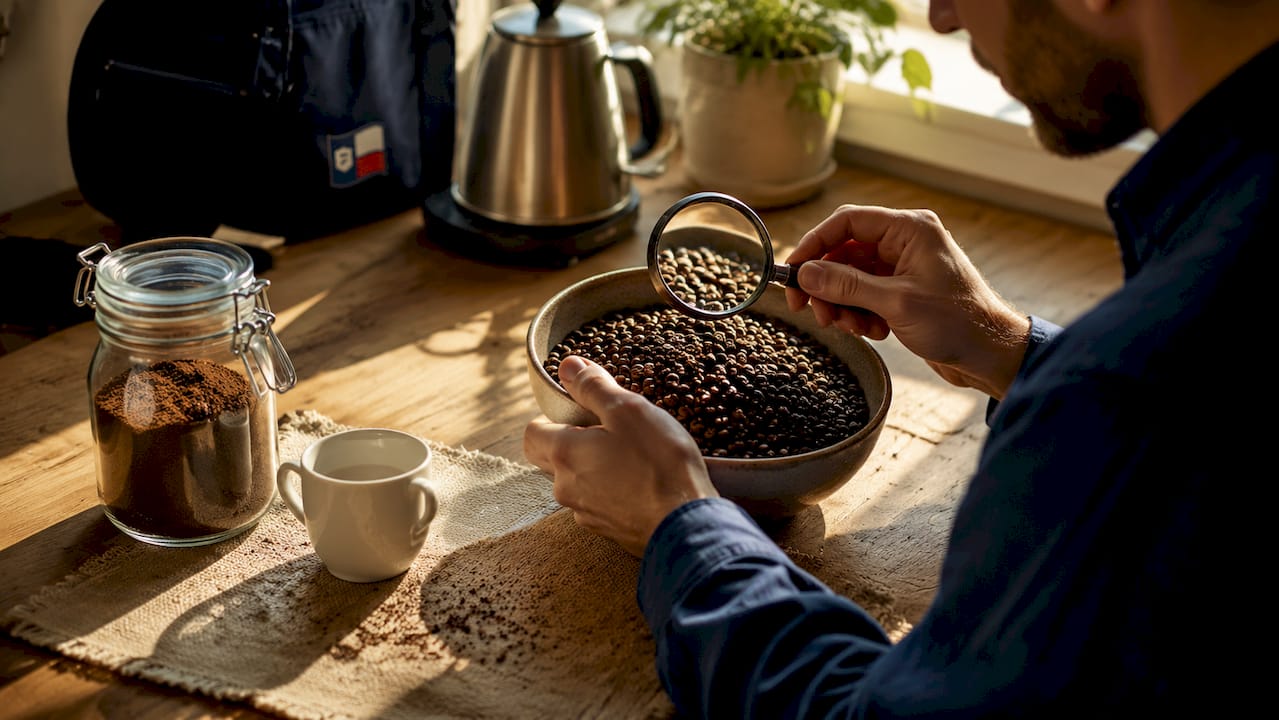
Pro Tip: Cup your hands around a small pile of freshly ground beans and inhale slowly. If the aroma fills your hands with distinct notes, the beans are in their prime. A faint or one-dimensional smell is a reliable warning sign.
2. Vigorous bloom during pour-over brewing
Bloom is the foamy, bubbling expansion that occurs when hot water first contacts coffee grounds. Fresh beans between 5 and 21 days old produce a vigorous, domed bloom because CO2 trapped inside the bean during roasting releases rapidly on contact with water. This is one of the most reliable visual cues for fresh coffee you can observe at home without any equipment beyond your brewer.
Stale beans produce little to no bloom. The CO2 has already escaped during storage, so the grounds sit flat and wet when water hits them. Beyond the visual, this matters for flavor. CO2 acts as a temporary barrier during extraction, and its controlled release during bloom helps regulate how evenly water saturates the grounds. No bloom means uneven extraction, which typically produces a flat or sour cup.
A strong, domed bloom that holds its shape for 30 to 45 seconds during the pre-infusion phase is one of the clearest signs that your beans were roasted recently and stored correctly.
To test this at home, pour a small amount of water just off the boil over your grounds and watch for 30 seconds. The difference between fresh and stale is visible to the naked eye.
3. Thick, persistent crema in espresso
Espresso crema is the reddish-brown foam that forms on the surface of a properly pulled shot. Crema stability correlates directly with CO2 retention post-roasting, making it one of the best indicators of coffee freshness for espresso drinkers. Fresh beans produce crema that is thick, golden to reddish-brown in color, and holds for at least a minute after pulling the shot.
Stale beans produce crema that is pale, thin, and disappears within seconds. Some very fresh beans, pulled within the first three days of roasting, can actually produce too much CO2, leading to inconsistent extraction and uneven crema. Peak flavor expression occurs between 3 and 21 days after roasting, with the first few days representing an initial degassing phase where brewing results are unpredictable. The sweet spot for espresso is typically 7 to 14 days post-roast.
4. Uniform bean color and slight natural sheen
Fresh beans have a consistent, uniform color across the batch. Aroma intensity, uniform bean color, and slight sheen without excessive oil are reliable physical signs of freshness. For medium roasts, that means an even medium-brown tone. For light roasts, a consistent tan. For dark roasts, a deep, uniform brown with a modest surface sheen from natural oils.
Inconsistent coloring within a single batch suggests uneven roasting or poor quality control, which affects both freshness and flavor. A dull, matte appearance on beans that should have some natural luster signals oxidation and age. Conversely, beans that are excessively wet-looking and heavily coated in oil are often over-roasted or have been sitting long enough for internal oils to migrate fully to the surface.
Pro Tip: Hold a handful of beans under good light and look for consistency. Any beans that look significantly lighter, darker, or more matte than the rest of the batch are worth questioning before you commit to a full brew.
5. Firmness and intact shape when handled
Fresh beans feel firm and dense when you press them between your fingers. Stale beans become brittle and may crumble or crack with minimal pressure because moisture loss and oxidation degrade the cellular structure over time. This tactile test takes seconds and adds a layer of confirmation beyond what your nose tells you.
Intact shape also matters. Fresh beans should be whole, with clean edges and no visible cracking along the seam. Excessive chipping or fragmentation in an unopened bag suggests rough handling or age-related brittleness. Sensory evaluation combining aroma, visual, and tactile tests alongside roast date offers the most reliable way to verify freshness in practical settings. No single test is definitive. The combination is what builds confidence.
6. Roast date within the optimal freshness window
Roast dates are more reliable than best-before dates for determining true coffee freshness. Best-before dates are set for shelf-life and marketing purposes, not for peak flavor. A bag labeled “best before 12 months” may still be technically safe to drink at month 11 but will taste nothing like it did at week two.
The practical freshness windows differ by roast level. Light roasts maintain peak freshness up to 21 days because lower oil content slows oxidation and preserves complex flavor compounds longer. Dark roasts, with oils already surfaced, hit their peak earlier and begin declining around 10 days. Medium roasts fall in between, typically performing best between 7 and 18 days post-roast.
| Roast level | Peak freshness window | Key risk after window |
|---|---|---|
| Light roast | 7 to 21 days post-roast | Flavor complexity fades, acidity flattens |
| Medium roast | 7 to 18 days post-roast | Sweetness dulls, body thins |
| Dark roast | 5 to 10 days post-roast | Surface oils turn rancid, bitterness increases |
Pro Tip: When buying from a local roaster or sourcing fresh beans, ask for the roast date directly. If a retailer cannot provide it, that absence of information is itself a freshness signal.
7. The sealed bag puff test
A one-way valve on a coffee bag serves a specific purpose: it lets CO2 escape without letting oxygen in. A bag that puffs slightly due to CO2 degassing suggests the beans were roasted recently and sealed while still actively off-gassing. This is a quick, zero-effort freshness check you can perform before you even open the bag.
Press gently on a sealed bag. If it feels firm and slightly inflated, CO2 is still present and the beans are likely fresh. A completely flat, deflated bag suggests either the beans are old, the valve has failed, or the roaster waited too long before sealing. This test is not foolproof on its own, but combined with a visible roast date, it adds useful confirmation.
8. Absence of stale or rancid off-aromas
Freshness is not only about what you smell. It is also about what you do not smell. Stale coffee carries a flat, papery, or cardboard-like odor. Rancid coffee, particularly dark roasts past their window, smells faintly of old cooking oil or wet newspaper. These off-aromas are caused by lipid oxidation and the breakdown of aromatic compounds that once gave the coffee its character.
Understanding why coffee goes stale helps you recognize these warning signs faster. If you detect any musty, sour, or oily-rancid notes on opening a bag, the beans are past their best regardless of what the label says. Trust your nose over any printed date. The absence of off-aromas, combined with a strong positive aroma, is a two-part confirmation of freshness.
9. Grounds that release aroma immediately after grinding
Ground coffee deteriorates measurably within hours to days, while whole beans last weeks under proper storage. This gap exists because grinding dramatically increases the surface area exposed to oxygen, accelerating oxidation and VOC loss. Fresh whole beans, ground just before brewing, release an immediate aromatic burst that pre-ground or stale coffee cannot produce.
If you grind your beans and the kitchen fills with a rich, specific aroma within seconds, the beans are fresh. If the grind smells faint or generic, the beans have already lost significant aromatic complexity. This is why grinding just before brewing is not just a preference among enthusiasts. It is the most practical way to preserve and verify freshness at the moment it matters most.
Key takeaways
Identifying fresh roasted coffee requires combining aroma evaluation, visual inspection, tactile testing, and roast date verification rather than relying on any single indicator.
| Point | Details |
|---|---|
| Aroma is the first signal | Bright, complex scent on opening and after grinding confirms high VOC concentration. |
| Bloom reveals CO2 presence | Vigorous pour-over bloom indicates beans roasted within the last 5 to 21 days. |
| Roast date beats best-before | Use roast date to calculate freshness windows by roast level, not shelf-life labels. |
| Tactile and visual checks matter | Firm, uniformly colored beans with slight sheen and intact shape signal peak condition. |
| Grind just before brewing | Whole beans preserve freshness for weeks; ground coffee degrades within hours to days. |
What I have learned from years of chasing fresh beans
I spent a long time believing that buying expensive coffee from a well-known brand was enough. It is not. The most important lesson I have taken from years of tasting and sourcing is that freshness is not a premium feature. It is the baseline requirement for any coffee to taste the way it was designed to taste.
The shift that changed my approach was learning to read roast dates instead of trusting packaging. I started buying from roasters who stamp the roast date prominently, not buried in small print. That one habit improved my daily cup more than any grinder upgrade or brewing method change. The flavor science behind coffee origins only matters if the beans are fresh enough to express those characteristics.
My honest recommendation is to trust your senses over any marketing claim. A bag with beautiful design and vague language about “premium quality” tells you nothing. A bag with a roast date from 10 days ago and a slightly puffed valve tells you everything. Combine the smell test, the bloom test, and the roast date check, and you will rarely be disappointed. Store your beans in an airtight container away from light and heat, and grind only what you need. That is the whole system.
— Rosario
Explore fresh coffee at Font-mag

At Font-mag, every bag of coffee in the retail coffee collection comes with a clear roast date so you can apply everything above the moment your order arrives. The Broken Arrow Reserve and other small-batch selections are roasted in limited quantities to keep freshness at the center of every shipment. Beyond coffee, the Font-mag lineup includes decaf options roasted with the same transparency, plus the Sweetbird collection of premium syrups for customizing your fresh brews. Free shipping applies to all orders over $35, with fulfillment fast enough that your beans arrive well within their peak freshness window.
FAQ
What are the main signs of fresh roasted coffee?
The main signs are a strong, complex aroma on opening the bag, vigorous bloom during brewing, firm and uniformly colored beans, and a roast date within 7 to 21 days depending on roast level.
How does bloom indicate coffee freshness?
Bloom occurs when CO2 trapped in freshly roasted beans releases rapidly on contact with hot water. Beans between 5 and 21 days old produce a visible, foamy dome during the first pour. Stale beans produce little or no bloom.
Is roast date or best-before date more reliable for freshness?
Roast date is more reliable. Best-before dates reflect shelf stability for safety purposes, not peak flavor. Tracking freshness from the roast date gives you accurate windows: up to 21 days for light roasts and around 10 days for dark roasts.
Why does fresh coffee smell so much stronger after grinding?
Grinding breaks open the bean’s cell structure and releases volatile organic compounds all at once. Fresh beans produce an immediate, rich aromatic burst after grinding. Stale beans have already lost most of those compounds to oxidation, so the grind smells faint or flat.
Can you test coffee freshness without brewing it?
Yes. Check the aroma immediately on opening the bag, press the sealed bag to feel for CO2 puffing, inspect beans for uniform color and slight sheen, and test firmness by pressing a bean between your fingers. Combining these checks gives a reliable freshness assessment before a single cup is brewed.
Recommended
- Why Locally Roasted Coffee Is Fresher and Tastes Better – Font Coffee Roasters
- Supporting Local Roasters Checklist for Coffee Lovers – Font Coffee Roasters
- Why Coffee Goes Stale and How to Stop It – Font Coffee Roasters
- Why Coffee Origins Taste Different: A Flavor Science Guide – Font Coffee Roasters