

Storing Roasted Coffee Beans for Peak Freshness
Storing roasted coffee beans freshness is a matter of controlling four specific threats: oxygen, heat, moisture, and light. According to Starbucks Coffee Master Lincoln Bechard, these four environmental factors are responsible for virtually all flavor degradation in roasted beans. Staleness begins the moment roasting ends, and every hour of improper storage compounds the loss. The good news is that the right container, the right location, and a few consistent habits will protect your beans’ aroma and complexity far longer than most home brewers expect. This guide covers the science and the practice, from pantry setup to freezer protocol.
What conditions best preserve roasted coffee bean freshness?
The four enemies of fresh coffee are oxygen, heat, moisture, and light. Each one triggers a distinct degradation pathway. According to research on aroma staling kinetics, four simultaneous chemical processes drive staling: oxidation, evaporative loss, CO2 stripping, and thiol-melanoidin conjugation. Understanding that these processes run in parallel explains why no single fix is enough. You need to address all four at once.
Heat is particularly aggressive. Staling rate doubles with every 10°C increase in temperature, which means beans stored near a stove or in a warm cabinet degrade twice as fast as beans kept at room temperature. Light compounds the problem by breaking down flavor compounds directly. A clear glass jar on a sunny countertop is one of the worst storage setups you can choose, even if it looks appealing.
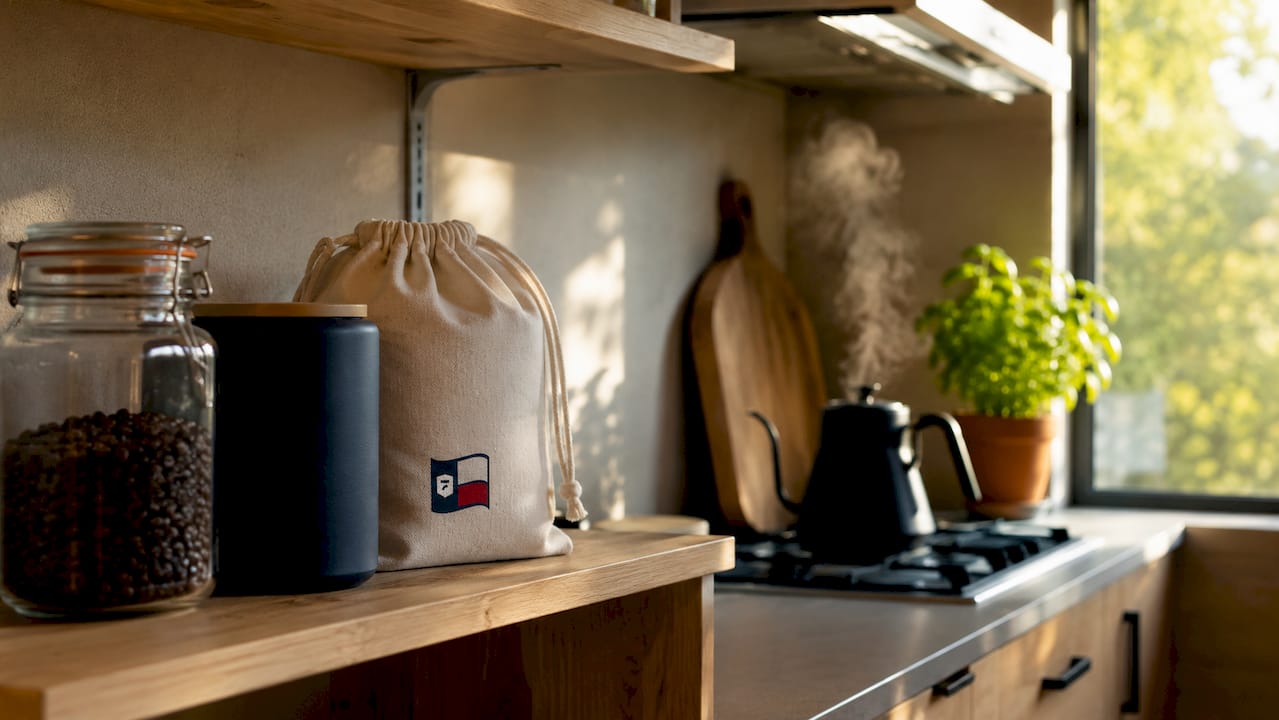
The ideal storage environment is a cool, dark, dry pantry or cabinet away from the oven, dishwasher, or any appliance that radiates heat. Both The Kitchn and Starbucks recommend airtight containers kept at room temperature as the baseline standard for keeping coffee beans fresh. The container material matters too.
Comparing container types for coffee storage
| Container type | Pros | Cons |
|---|---|---|
| Original bag with one-way valve | Releases CO2 without letting oxygen in; purpose-built | Not resealable after opening; degrades over time |
| Opaque airtight canister (ceramic or metal) | Blocks light and oxygen; durable | No CO2 release valve unless purpose-built |
| Clear glass jar | Easy to see contents | Allows light penetration; poor freshness protection |
| Vacuum-sealed canister | Removes oxygen actively; excellent for longer storage | Higher cost; requires manual pumping |
| Zip-lock or clip-seal bag | Convenient | Poor oxygen barrier; not recommended for more than a day |
Pro Tip: When transferring beans to a canister, fill it as full as possible. Less headspace means less trapped oxygen, which directly slows oxidation.
Roast level also affects how quickly beans stale. Dark roasts peak earlier and decline faster because the roasting process fractures the bean’s cellular structure, releasing oils and CO2 more rapidly. Light roasts, with their intact cellular structure, hold their character longer under the same storage conditions. If you drink light roasts, you have a slightly wider freshness window. If you drink dark roasts, tighter storage discipline matters more.
How does grinding affect freshness and what are the best practices?
Grinding is the single biggest accelerant of coffee staling that you control every day. When you grind whole beans, you shatter them into thousands of particles, multiplying the surface area exposed to oxygen by an enormous factor. Research on aroma staling shows that volatile aromatics escape immediately after grinding, with most of the character-defining compounds gone within 60 minutes. That is not a slow decline. It is a cliff.
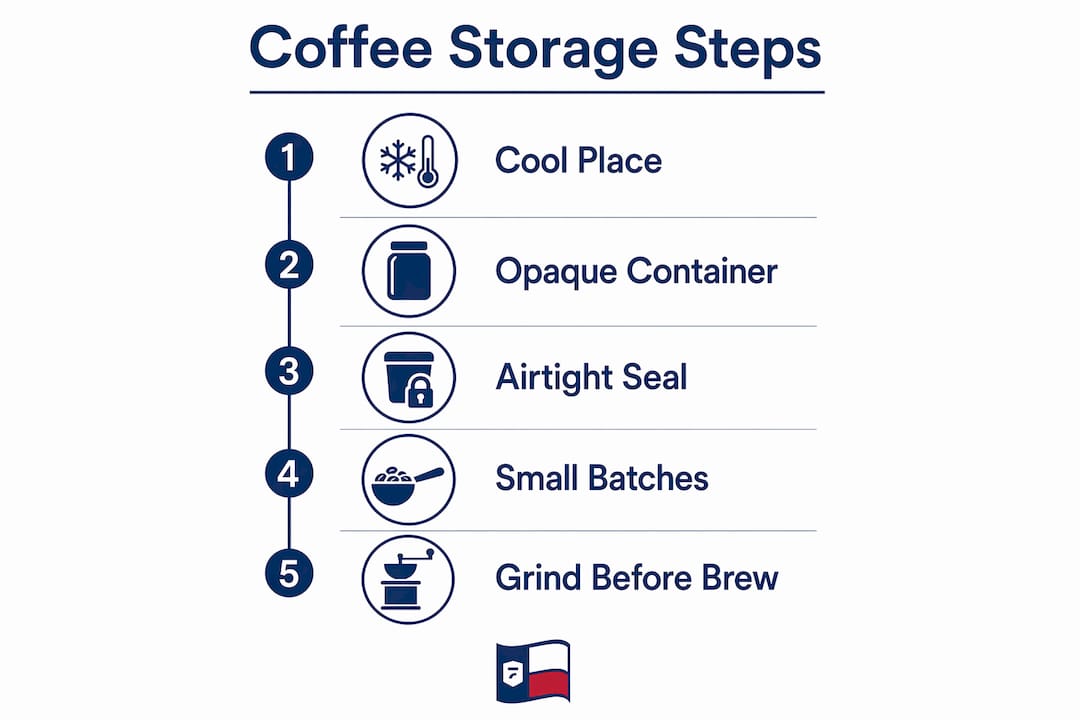
Whole beans stay fresh significantly longer than ground coffee under identical storage conditions. Grinding immediately before brewing is the highest-impact habit a home brewer can adopt. The difference between coffee ground 30 minutes ago and coffee ground fresh is detectable even to an untrained palate.
If pre-ground coffee is unavoidable for your routine, follow these practices to slow the damage:
- Store ground coffee in an airtight, opaque container immediately after opening or grinding.
- Keep the container in a cool, dark cabinet, never on the counter.
- Use ground coffee within one to two days of grinding for best flavor.
- Buy pre-ground in the smallest quantity your usage supports to minimize storage time.
- Never store ground coffee in the original paper bag once opened. Transfer it immediately.
Pro Tip: Match your grind size to your brew method right before you brew. Grinding coarser than needed and storing the excess wastes both beans and flavor. Grind exactly what you need, when you need it.
Understanding how freshness shapes flavor at the molecular level makes these habits feel less like rules and more like logic. Fresh grounds produce a noticeably brighter, more complex cup. Stale grounds produce flat, muted coffee regardless of how good the beans were at the start.
Is freezing roasted coffee effective for long-term storage?
Freezing is one of the most debated topics in coffee storage, and the answer is nuanced. Done correctly, freezing whole beans can extend freshness for 3 to 4 months without meaningful flavor loss. Done carelessly, it introduces moisture damage and odor contamination that ruins the beans entirely. The method is everything.
The core risk with freezing is condensation. When cold beans meet warm air, moisture forms on the surface. That moisture accelerates staling faster than room-temperature storage would. Frequent freezer access causes repeated temperature swings that compound this problem with every opening. The solution is portioning before freezing, so you never thaw more than you need.
Vacuum sealing takes the approach further. Vacuum-sealed single doses dramatically slow oxidation and can preserve flavor for 6 to 12 months according to expert baristas and scientific testing. This is the method used by specialty coffee professionals for competition prep and long-term bean preservation.
There is also a bonus to grinding from frozen. Cold grinding produces a more uniform particle size distribution, which improves extraction consistency and preserves flavor compounds that heat from friction would otherwise degrade.
Here is the correct freezer storage protocol:
- Divide your beans into single-use portions immediately after purchase, before any freezing occurs.
- Place each portion in a vacuum-sealed bag or a small airtight freezer bag with as much air removed as possible.
- Label each portion with the roast date and freeze immediately.
- When ready to use, remove one portion only. Do not return it to the freezer.
- Grind the beans directly from frozen without thawing. Brew immediately.
- Never refreeze beans that have been thawed or partially used.
Pro Tip: Use a kitchen vacuum sealer like FoodSaver to portion beans into 30g or 40g doses. Each sealed bag becomes a single brewing session, and you never expose the rest of your stock to air or temperature change.
What common mistakes undermine coffee freshness?
Most coffee goes stale not because of bad beans but because of avoidable storage errors. Recognizing these mistakes is the fastest way to improve your daily cup without spending anything.
- Storing near heat sources. Placing beans on top of the refrigerator, near the stove, or on a windowsill exposes them to temperature spikes that accelerate staling. A dedicated cabinet away from appliances is always better.
- Using transparent containers. Clear glass or acrylic jars look great but allow light to degrade flavor compounds. Switch to opaque ceramic, stainless steel, or purpose-built coffee canisters.
- Refrigerating beans. Refrigeration causes humidity and odor absorption that degrades coffee faster than pantry storage. Coffee’s porous structure readily absorbs surrounding odors, so a fridge full of leftovers is a hostile environment for beans.
- Opening large bags repeatedly. Every time you open a bag, you expose the remaining beans to a fresh dose of oxygen and ambient moisture. Divide large purchases into smaller portions immediately.
- Grinding too early. Grinding hours before brewing wastes the volatile aromatics that define your coffee’s character. Grind within two minutes of brewing.
- Buying more than you can use in two weeks. Freshness has a hard ceiling. Even perfect storage cannot fully compensate for beans that have been sitting for a month.
The why coffee goes stale breakdown explains the chemistry behind each of these mistakes in detail, which is worth reading if you want to understand the mechanisms rather than just the rules.
How to buy beans in the right quantities to support freshness
The best storage container in the world cannot save beans you bought three weeks ago and are only halfway through. Purchasing strategy is as important as storage method when it comes to preserving coffee bean flavor.
Buy from roasters who print the roast date on the bag, not just a “best by” date. A best-by date tells you almost nothing about freshness. A roast date tells you exactly how much time you have. Locally roasted coffee typically reaches you within days of roasting, which gives you the longest possible freshness window before staling begins.
Size your purchase to your actual consumption. If you brew one cup a day, a 12-ounce bag lasts roughly two weeks. That aligns well with the freshness window for whole beans stored properly. Portioning into one to two week supplies is the expert recommendation for matching usage to peak quality. Buying a 5-pound bag because it is cheaper per ounce only saves money if you can consume it before it stales.
Whole beans always outlast pre-ground under the same conditions. If long-term coffee storage tips are your priority, buying whole beans and grinding as needed is the single most effective purchasing decision you can make.
Key takeaways
Proper storage of roasted coffee beans requires airtight, opaque containers in a cool, dark pantry, combined with fresh grinding and smart purchasing to keep every cup at peak flavor.
| Point | Details |
|---|---|
| Control the four enemies | Protect beans from oxygen, heat, moisture, and light at all times. |
| Choose the right container | Use opaque, airtight canisters or vacuum-sealed options; avoid clear glass. |
| Grind fresh, every time | Grind immediately before brewing to prevent rapid aroma loss. |
| Freeze correctly or not at all | Portion and vacuum seal before freezing; never refreeze thawed beans. |
| Buy to match your usage | Purchase whole beans with a roast date and consume within one to two weeks. |
What I’ve learned from years of storing coffee the wrong way first
I spent a long time storing beans in a clear glass jar on my kitchen counter, right next to the stove. It looked good. The coffee tasted fine, or so I thought, until I started buying from a local roaster who printed the roast date on every bag. Tasting beans within four days of roasting versus beans I had been storing for two weeks was a revelation. The difference was not subtle.
The habit that made the biggest practical difference for me was portioning. I now divide every new bag into weekly doses the day it arrives. One portion goes into my ceramic canister for the week. The rest goes into vacuum-sealed bags in the freezer. It takes about five minutes and completely eliminates the slow degradation that used to happen as I worked through a bag over three weeks.
I am also skeptical of people who dismiss freezing entirely. The technique works when you do it right. The failure mode is treating the freezer like a pantry and pulling beans in and out repeatedly. Portion first, freeze once, grind from frozen. That protocol produces excellent results consistently.
One more thing worth saying: invest in a decent burr grinder before you invest in a fancy storage system. The grinder is where freshness is either captured or lost at the final moment. A quality burr grinder paired with a basic airtight canister will outperform an expensive vacuum canister paired with a blade grinder every single time.
— Rosario
Fresh beans, better brews: what Font-mag offers

At Font-mag, freshness is not a marketing claim. It is the standard behind every product we ship. Our freshly roasted coffee lineup includes small-batch offerings like the Broken Arrow Reserve, sourced and roasted with the same four-generation Texas craftsmanship that built this brand. Whether you are stocking your home setup or supplying a café, you will find whole beans with roast dates you can trust. We also carry flavored coffee options for those who want something beyond the classic, plus the full Sweetbird syrup collection to round out your brewing routine. Free shipping on all orders over $35.
FAQ
How long do roasted coffee beans stay fresh?
Once opened, roasted coffee beans stay at peak freshness for about one week according to Starbucks coffee science. Flavor becomes noticeably muted and less aromatic after that point, even with proper storage.
Should I store coffee beans in the refrigerator?
No. Refrigeration exposes beans to humidity and surrounding food odors, both of which accelerate staling. A cool, dark pantry is consistently the better option for keeping coffee beans fresh.
What is the best container for storing coffee beans?
An opaque, airtight canister made from ceramic, stainless steel, or purpose-built coffee storage material is the best storage for coffee beans. Containers with a one-way CO2 valve offer additional protection for freshly roasted beans.
Can you freeze coffee beans without ruining them?
Yes, if you portion beans into single-use vacuum-sealed bags before freezing and never refreeze after thawing. Freezing whole beans this way can preserve freshness for 3 to 4 months, and grinding from frozen actually improves grind consistency.
Does grinding coffee in advance hurt flavor?
Significantly. Volatile aroma compounds begin escaping immediately after grinding, and most are gone within 60 minutes. Grinding immediately before brewing is the most effective single step for preserving coffee bean flavor.