

Texas Craft Roasting Heritage: What Coffee Lovers Must Know
Texas craft roasting heritage is the living tradition of artisanal coffee production that fuses 1800s cowboy coffee methods with modern specialty roasting to create a distinctly Texan cup. This tradition spans family-run operations, regional flavor obsessions, and technical innovations that changed how America stores and drinks coffee. From the cattle drives that made strong, boiled coffee a daily necessity to places like Heritage Coffee in Waco roasting beans inside a working chocolate factory, the Texas roasting legacy is as bold and layered as the blends it produces. Understanding it means understanding why craft coffee in Texas hits differently than anywhere else.
What is Texas craft roasting heritage?
Texas craft roasting heritage is defined as the multi-generational practice of producing coffee through artisanal, small-batch methods rooted in regional culture, historical necessity, and a commitment to local identity. The industry term most professionals use is specialty coffee roasting, but in Texas, that phrase carries extra weight because the state’s roasting culture predates the modern third-wave movement by over a century.
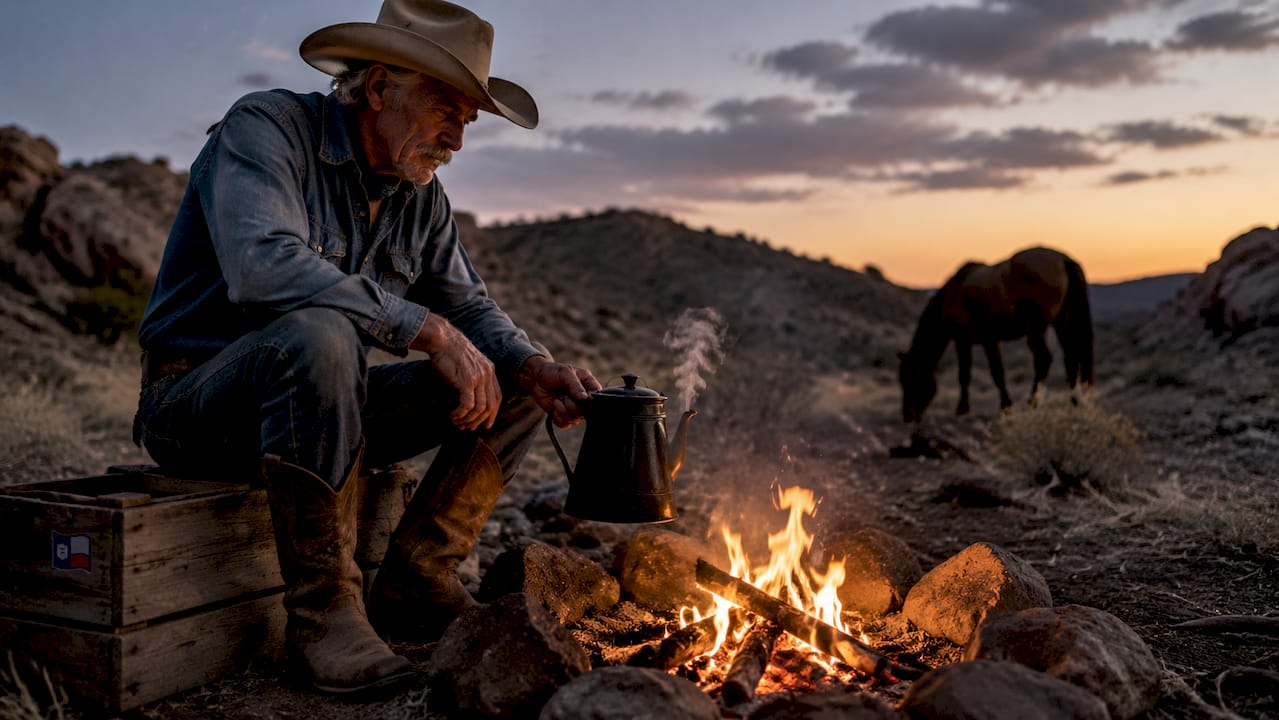
Cowboy coffee on cattle drives was the original Texas roasting tradition. Cowhands boiled coarse grounds directly in water over open fires, producing a thick, intensely strong brew that demanded high-quality, dark-roasted beans. That preference for bold, full-bodied coffee never left the state’s palate. It shaped every roaster that followed, from early 20th-century commercial operations to today’s farm-to-cup specialists.
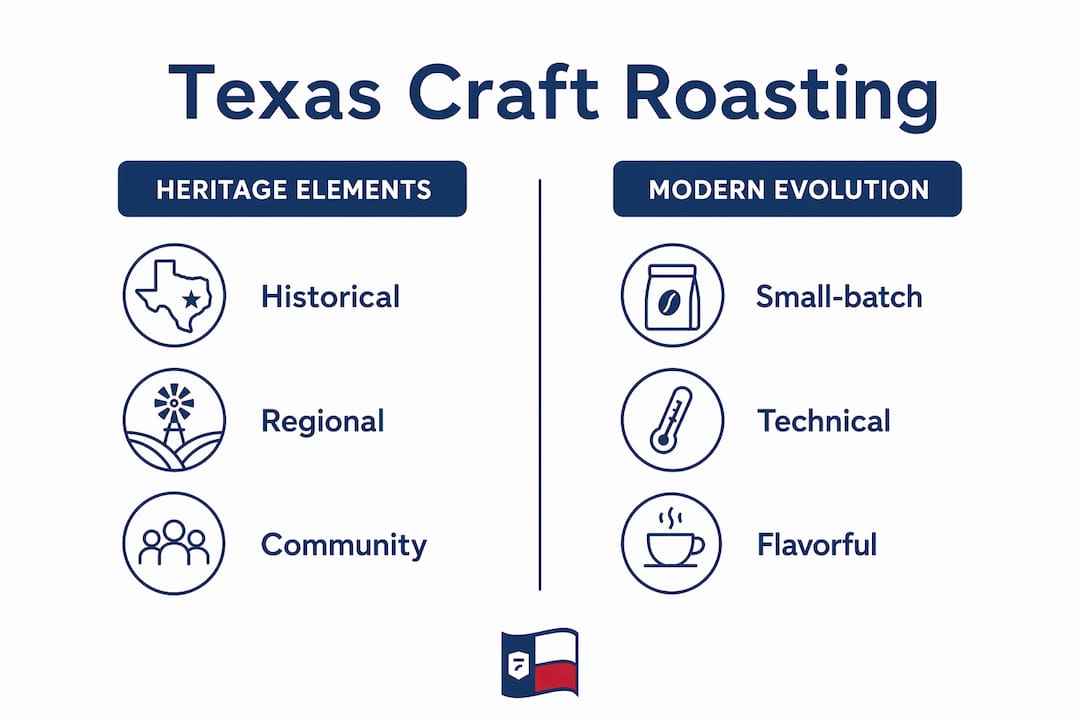
Three elements define this heritage above all others: historical continuity, regional flavor identity, and community anchoring. Roasters like Anderson’s Coffee in Austin, operating out of a 5,000-square-foot facility since 1972, and Heritage Coffee in Waco, which roasts on-site and crafts syrups from scratch, represent both the commercial and artisanal ends of this spectrum. Both are unmistakably Texan in their approach.
What are the historical roots of Texas craft roasting?
The story begins on the open range. Cowboy coffee was the primary caffeine source on 1800s cattle drives, and the demand for beans that could survive long hauls and brutal heat pushed early Texas merchants to prioritize roast quality and shelf stability. That practical pressure became the foundation of a roasting culture built on durability and flavor intensity.
By the early 20th century, commercial roasters formalized what cowboys had practiced by instinct. Texas Coffee Company’s strategic alliances in the 1920s expanded regional production and distribution across the Golden Triangle area of Southeast Texas, creating an economic infrastructure for coffee that rivaled larger national players. These partnerships specialized roasting operations while sales networks grew, proving that Texas coffee was a serious industry, not a regional curiosity.
The single most consequential technical leap came in 1968, when Seaport Coffee pioneered vacuum-sealed foil packaging to address the Gulf Coast’s brutal humidity. Removing oxygen from packaging prevented staling during long distribution runs, a problem that had plagued Gulf Coast roasters for decades. This innovation became a national industry standard. Texas did not just participate in coffee history. It wrote part of it.
Cajun culture along the Louisiana border added another layer to Texas roasting traditions. Dark roasting preferences, chicory blends, and spiced profiles crossed state lines and embedded themselves in East Texas coffee culture, creating a regional sub-tradition that still influences roasters in Beaumont and Houston today.
Key historical milestones that shaped Texas craft coffee history:
- 1800s: Cowboy coffee establishes the Texas preference for bold, dark-roasted, high-strength brews
- 1920s: Texas Coffee Company builds the first major regional roasting and distribution network
- 1968: Seaport Coffee introduces vacuum-sealed foil packaging, solving the Gulf Coast freshness problem
- Post-1972: Anderson’s Coffee in Austin anchors the modern era of Texas specialty roasting
- 2000s onward: Third-wave standards arrive, and Texas roasters integrate ethical sourcing into their existing legacy frameworks
Pro Tip: If you want to understand a Texas roaster’s identity, look at their darkest roast first. The way a roaster handles a dark profile tells you everything about their relationship with the state’s historical palate.
How do modern Texas craft roasters uphold and evolve the heritage?
Modern Texas craft roasters operate at the intersection of tradition and technical precision. The small-batch roasting model that defines the contemporary scene is not a reaction against the past. It is a direct continuation of it, with better equipment and a global supply chain for green beans.
Heritage Coffee in Waco is the clearest example of this synthesis. Located inside a working chocolate factory, it roasts its own beans on-site and produces house-made syrups from scratch. The result is a coffee experience that is simultaneously local, artisanal, and forward-thinking. You cannot replicate that in a chain café. The flavor of the space is part of the product.
The steps most serious Texas craft roasters follow today reflect both their heritage and their ambitions:
- Source ethically at origin. Farm-to-cup sourcing, with direct relationships to growers in Colombia, Ethiopia, and Guatemala, is now standard practice among Texas’s leading independents.
- Roast in small batches. Batches of 10 to 25 pounds allow roasters to monitor development time and first crack with precision that large-drum commercial roasting cannot match.
- Develop regional flavor profiles. Blends inspired by local cuisine, including pecan pie sweetness, Mexican chocolate depth, and Cajun spice warmth, give Texas roasters a flavor identity that is geographically specific.
- Integrate the experience. On-site roasting, tasting bars, and house-made accompaniments turn the café into a destination, not just a transaction point.
- Maintain freshness standards. Ethical sourcing and freshness are the primary differentiators separating Texas craft roasters from mass-market competitors.
Pro Tip: When buying from a Texas craft roaster, check the roast date on the bag. Beans roasted within the past two weeks will show you what the roaster actually intended. Anything older is a compromise.
What defines the distinctive flavors and cultural influences in Texas craft coffee?
Texas coffee flavor is not accidental. It is the product of geography, immigration history, and a regional palate that has always favored intensity over subtlety. Regional flavors like Mexican chocolate and Cajun spices directly shape how Texas roasters develop their blends, creating profiles that read as distinctly local even when the beans originate in East Africa or Central America.
The Mexican influence is particularly strong in San Antonio and the Rio Grande Valley, where roasters incorporate cinnamon, dark chocolate, and piloncillo notes into their medium-dark profiles. The Cajun influence dominates East Texas, where darker roasts with chicory undertones remain a point of regional pride. Central Texas, anchored by Austin, leans toward the brighter, fruit-forward profiles associated with third-wave specialty standards, though even these roasters tend to finish with more body than their counterparts in Portland or Brooklyn.
| Flavor dimension | Historical Texas roasts | Modern Texas craft roasts |
|---|---|---|
| Roast level | Dark to very dark | Medium-dark to dark |
| Primary notes | Smoky, earthy, bold | Chocolate, caramel, regional spice |
| Cultural influence | Cowboy, Cajun | Mexican, farm-to-cup, third-wave |
| Sweetener tradition | Black or heavily sugared | House syrups, natural sweeteners |
| Brewing method | Boiled, percolated | Pour-over, espresso, cold brew |
This flavor evolution reflects a broader truth about Texas roasting traditions: the culture never abandoned its roots, it built on top of them. Roasters experiment with blends inspired by pecan pie and Mexican chocolate while still honoring the dark, bold baseline that cowboy culture established. The result is a coffee identity that is genuinely unique to the state.
How does Texas craft roasting heritage impact local communities?
Texas craft roasters function as cultural anchors, not just beverage producers. Famous neon signage and family operations contributed to brand identities that became neighborhood landmarks, turning roasteries into gathering places with the same social weight as a local diner or barbershop. This is not a recent trend. It has been the operating model since the early commercial roasters of the 1920s.
The community impact of Texas craft coffee culture shows up in several concrete ways:
- Job creation at every skill level. From green bean sorting and roasting to barista training and café management, craft roasteries generate skilled local employment that mass-market coffee chains do not.
- Local sourcing networks. Texas roasters increasingly source dairy, syrups, and baked goods from local producers, creating supply chain relationships that keep money circulating within regional economies.
- Cultural preservation. Operations like Seaport Coffee built brand identities so embedded in local culture that their signage and packaging became regional symbols. That kind of cultural weight does not come from a corporate playbook.
- Education and community programming. Many Texas craft roasters run cupping events, brewing classes, and origin story tours that turn customers into informed advocates for the craft.
The Texas coffee culture growth happening right now is not separate from this heritage. It is a direct extension of it. Every new specialty café that opens in Dallas or Houston is, consciously or not, participating in a tradition that stretches back to the cattle drives of the 1800s.
Key takeaways
Texas craft roasting heritage is the direct product of cowboy culture, regional flavor identity, and technical innovation, and every serious Texas roaster today operates within that lineage whether they know it or not.
| Point | Details |
|---|---|
| Historical foundation | Cowboy coffee on 1800s cattle drives established Texas’s preference for bold, dark-roasted beans. |
| Technical innovation | Seaport Coffee’s 1968 vacuum-sealed packaging solved Gulf Coast freshness problems and became a national standard. |
| Regional flavor identity | Mexican chocolate, pecan, and Cajun spice influences create flavor profiles unique to Texas roasting traditions. |
| Modern craft standards | Small-batch roasting, ethical sourcing, and on-site production define today’s Texas craft roasters like Heritage Coffee and Anderson’s Coffee. |
| Community impact | Texas roasters function as cultural landmarks and local economic anchors, not just coffee producers. |
Why this heritage deserves more than nostalgia
I have spent years tasting coffees from roasters across the country, and the ones that consistently surprise me come from Texas. Not because they are the most technically precise, though many are, but because they carry a sense of place that most specialty coffee lacks.
The craft roasting tradition in Texas succeeded because it was never purely about the coffee. It was about the community that gathered around it. Seaport Coffee’s neon signs were not marketing. They were neighborhood furniture. Heritage Coffee in Waco is not just a café. It is a sensory argument for why local production matters. That distinction is what separates genuine heritage from branding.
What I find most underappreciated is the technical courage of early Texas roasters. Solving the Gulf Coast humidity problem with vacuum-sealed packaging in 1968 was not a small thing. It required understanding both the chemistry of coffee oxidation and the logistics of regional distribution. Texas roasters were engineering solutions before the specialty coffee world had a vocabulary for what they were doing.
The risk going forward is that the heritage becomes a marketing label rather than a lived practice. “Texas craft” can mean anything if it means nothing specific. The roasters worth your attention are the ones who can tell you exactly where their beans came from, when they were roasted, and why they chose that profile. That specificity is the heritage. Everything else is decoration.
— Rosario
Explore craft coffee rooted in Texas tradition
Font-mag carries a curated selection of small-batch coffees built on the same principles that define Texas craft roasting heritage: fresh roasting, ethical sourcing, and flavor profiles with genuine regional character. The celebrated Broken Arrow Reserve is one example of what happens when four generations of Texas craftsmanship meet modern specialty standards.
Beyond coffee, Font-mag’s lineup includes Japanese matcha, premium loose-leaf teas from MAG Tea, and the globally recognized Sweetbird syrup collection, because the best beverage experience is never just one drink. Browse the wholesale coffee collection for café-quality options, or explore flavored coffee selections that reflect the bold, regional character Texas roasting has always delivered. Free shipping on all orders over $35.
FAQ
What is Texas craft roasting heritage?
Texas craft roasting heritage is the tradition of producing coffee through artisanal, small-batch methods that trace back to 1800s cowboy coffee culture and evolved through regional flavor influences and technical innovations like vacuum-sealed packaging. It combines historical continuity with modern specialty roasting standards.
What defines craft roasting in Texas compared to other states?
Texas craft roasting is defined by its dark-roast heritage, regional flavor influences including Mexican chocolate and Cajun spices, and a community-anchored business model that treats the roastery as a cultural landmark. These elements distinguish it from the lighter, more fruit-forward profiles dominant in Pacific Northwest specialty coffee.
Who are the most notable Texas craft roasters?
Heritage Coffee in Waco and Anderson’s Coffee in Austin are two of the most recognized names in Texas craft coffee history. Heritage Coffee roasts on-site inside a chocolate factory and produces house-made syrups, while Anderson’s Coffee has operated a 5,000-square-foot roasting facility since 1972.
How did Seaport Coffee influence Texas roasting traditions?
Seaport Coffee pioneered vacuum-sealed foil packaging in 1968 to address Gulf Coast humidity, which was causing coffee to stale during distribution. This innovation preserved bean freshness and eventually became a national industry standard, making it one of Texas’s most significant contributions to coffee history.
How can I support Texas craft roasting heritage today?
Supporting local Texas roasters directly, buying beans with visible roast dates, and learning the origin stories behind the blends you drink are the most direct ways to engage with this tradition. The farm-to-cup guide from Font-mag is a practical starting point for understanding ethical sourcing within Texas coffee culture.