

What Is Coffee Terroir? Flavor, Science, and Origin
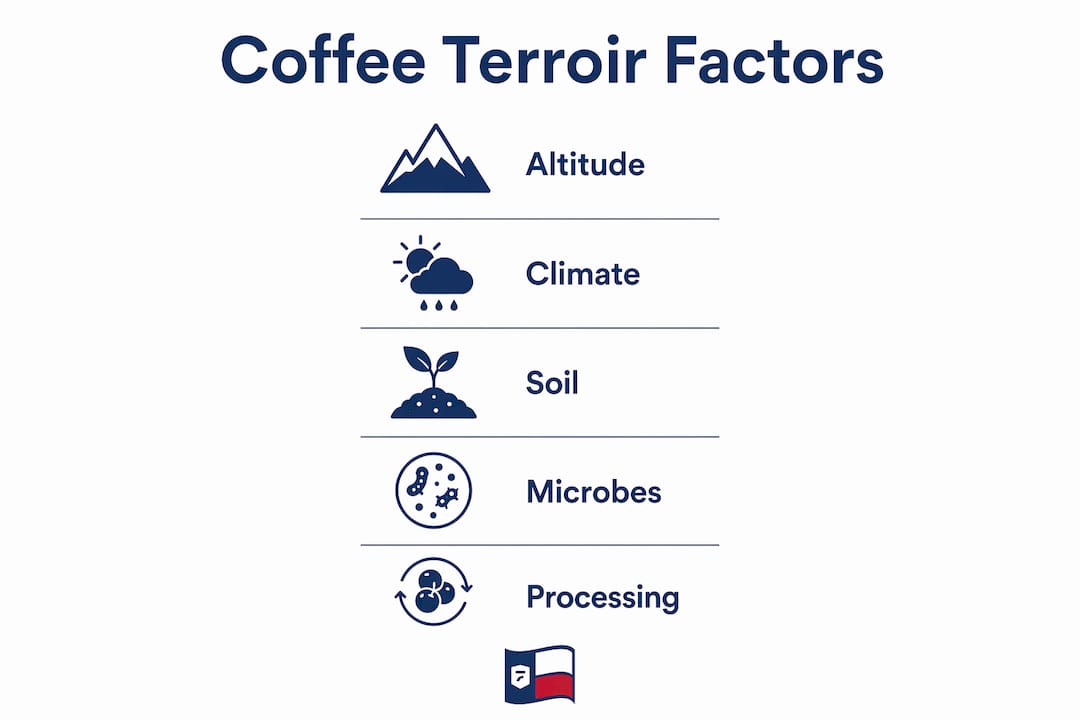
Coffee terroir is defined as the complete set of environmental and biological conditions at a coffee’s growing site that directly shapes its flavor, aroma, and quality potential. The term borrows from French winemaking vocabulary, but in coffee it carries a distinct meaning. Unlike wine grapes, coffee beans pass through drying, fermentation, and roasting before reaching your cup. Each stage filters and transforms what the land originally provided. Understanding terroir means understanding the raw material before any human hand touches it.
The Specialty Coffee Association and World Coffee Research both recognize terroir as a foundational concept in specialty coffee evaluation. Altitude, climate, soil composition, local microbial populations, and farming practices all contribute. Together, they explain why an Ethiopian Yirgacheffe tastes nothing like a Colombian Huila, even when both are washed-process Arabica.
What is coffee terroir and why does it matter?
Coffee terroir is the origin story written into every bean before harvest. It is not a single variable. It is a system of interacting factors, each one leaving a chemical signature in the seed. The Specialty Coffee Association uses terroir as a framework for understanding coffee origin taste differences that cannot be explained by processing or roasting alone.
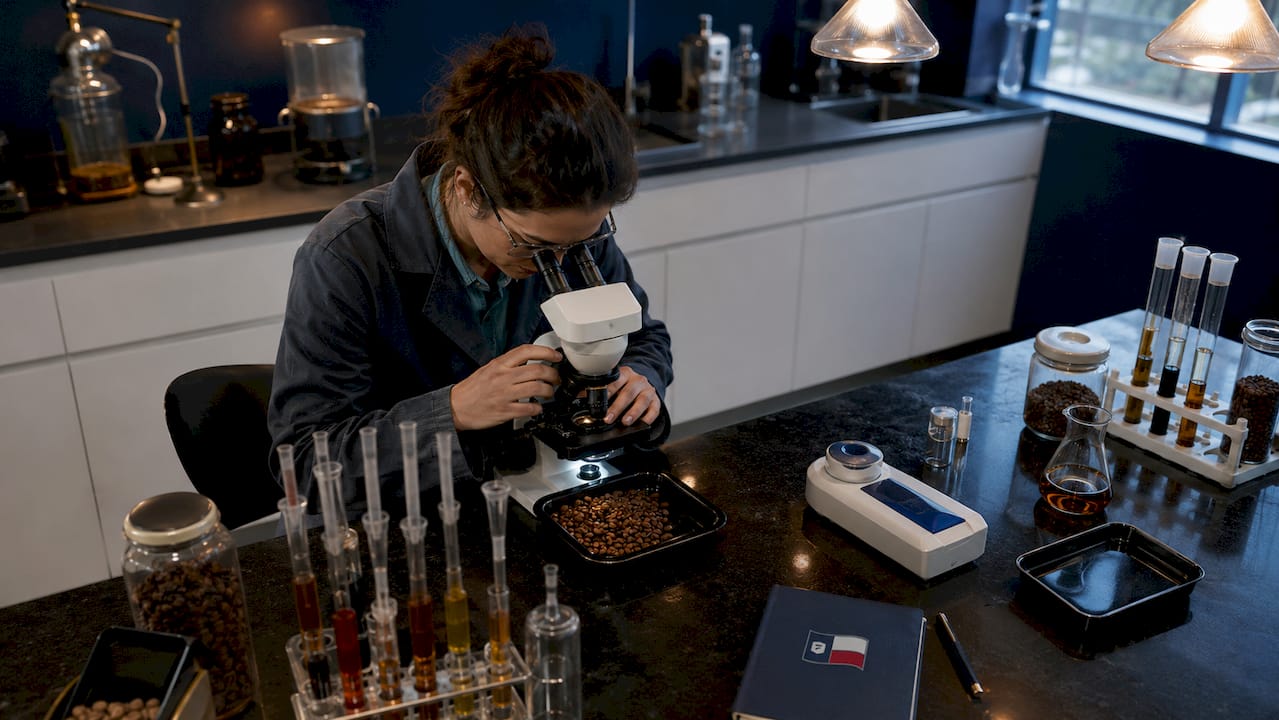
Terroir matters because it sets the ceiling. A coffee grown in poor soil at low altitude with inconsistent rainfall cannot be transformed into a complex, high-scoring cup by even the most skilled roaster. The raw potential is fixed at the farm. Processing and roasting work within that range, not beyond it.
One counterintuitive fact: terroir is dynamic, not static. The same plot of land produces measurably different flavor profiles from year to year depending on seasonal rainfall, temperature swings, and microbial shifts. That variability is not a flaw. It is what makes single-origin coffee worth tracking across harvests.
How do altitude and climate shape coffee quality?
Altitude is the single most studied terroir variable in coffee science, and the data is clear. Research on Peruvian Arabica shows that exportable yields ranged from 79.12% to 81.98% at elevations above 1,800 meters, with cup scores consistently above 80 points on the SCAA scale. That threshold of 80 points is the industry definition of specialty grade. Altitude, in this case, is not just a geographic detail. It is a quality predictor.
The chemistry behind this is well documented. At higher elevations, cooler temperatures slow bean development. That extended maturation period allows sugars and organic acids to accumulate more fully. Research confirms that phenolic compounds increase with altitude while caffeine levels decrease and physical defects decline. Higher phenolic content correlates with greater antioxidant complexity and flavor depth. Fewer defects mean a cleaner, more consistent cup.
Climate adds another layer. Consistent rainfall during flowering and a dry period at harvest are both critical. Regions like Antigua in Guatemala and Sidama in Ethiopia benefit from distinct wet and dry seasons that synchronize flowering and ripening. Irregular rainfall disrupts this cycle and introduces uneven ripeness, which shows up as inconsistency in the cup.
Pro Tip: When sourcing specialty coffee, ask producers for the elevation and annual rainfall data for their plots. These two numbers alone give you a reliable first filter for quality potential before you ever cup a sample.
| Altitude Range | Exportable Yield | Cup Score Range | Key Chemical Trait |
|---|---|---|---|
| Below 1,200m | Lower | Below 80 (SCAA) | Higher caffeine, more defects |
| 1,200–1,800m | Moderate | 78–82 (SCAA) | Balanced phenolics |
| Above 1,800m | 79.12%–81.98% | Above 80 (SCAA) | High phenolics, low defects |
Does soil composition define coffee terroir?
Soil is the medium through which all other terroir factors express themselves. Coffee plants draw nitrogen, phosphorus, potassium, and trace minerals directly from the ground. The balance of these nutrients shapes cell development in the cherry and, ultimately, the flavor compounds in the seed. Volcanic soils in regions like Kona, Hawaii, and Antigua, Guatemala are prized precisely because they deliver rich mineral content with excellent drainage. Clay-heavy soils retain moisture but can suppress root development if poorly managed.
Soil composition and farming methods produce substantial flavor differences even when the same variety grows across neighboring farms. A Bourbon variety grown in well-drained volcanic loam with shade management will taste structurally different from the same Bourbon grown in flat, sun-exposed clay soil two miles away. The variety is identical. The terroir is not.
Farming practices are part of terroir too. Shade management affects temperature regulation and cherry ripening speed. Organic farming preserves soil microbial diversity, which feeds back into fermentation quality. Conventional farming with synthetic inputs can suppress that microbial layer, narrowing the flavor range the farm can produce.
Key farming factors that shape terroir expression:
- Shade cover: Slows ripening, increases sugar accumulation, and reduces temperature stress on the plant
- Organic vs. conventional inputs: Organic practices preserve soil biology and microbial diversity
- Pruning and plant density: Affects airflow, disease pressure, and cherry development uniformity
- Harvest method: Selective hand-picking captures only ripe cherries, preserving the terroir’s quality ceiling
Pro Tip: When evaluating a farm’s terroir potential, ask for soil test results and shade coverage percentage alongside elevation data. A farm at 1,600 meters with rich volcanic soil and 40% shade cover will outperform a 1,900-meter farm with degraded, compacted soil.
What is microbial terroir in coffee fermentation?
Microbial terroir is the emerging science that explains one of coffee’s most persistent mysteries: why two farms in the same valley, growing the same variety at the same altitude, can produce cups that taste completely different. The answer lives in the soil, the water, and the air around the fermentation tank.
Microbial terroir modulates fermentation outcomes based on the local microbiome, including bacteria and wild yeast populations unique to each farm. These organisms colonize the coffee cherry during fermentation and produce metabolites including lactic acid, acetic acid, and ethanol. Each metabolite contributes directly to the sensory profile in the cup. A farm with a Lactobacillus-dominant microbiome produces a cleaner, brighter fermentation. A farm with diverse wild yeast populations may produce more complex, fruit-forward notes.
Research confirms that local bacteria and yeast populations drive unique fermentation profiles even among neighboring farms. This finding has significant practical implications. It means that replicating a processing recipe from one farm on another farm will not produce the same result. The microbiome is site-specific.
What this means for producers and buyers:
- Fermentation tanks, drying beds, and even the ambient air carry distinct microbial signatures
- Washing equipment shared between farms can transfer and dilute microbial identity
- Managing microbial terroir requires observation and adaptation, not recipe replication
- Sensory differences attributed to “processing style” are often partially microbial terroir at work
“Managing microbial terroir on farms through observation and adaptation rather than recipe replication is critical to expressing authentic coffee flavor and achieving high sensory quality.” — Atlántica Mercante
This is why the specialty coffee community increasingly treats fermentation management as a terroir practice, not just a processing step. The microbiome is as much a part of the farm’s identity as its soil or elevation.
Terroir vs. processing and roasting: what actually drives flavor?
Terroir provides the raw potential of a coffee’s flavor profile. Processing and roasting transform that potential into what you actually taste. This distinction matters because it clarifies what each stage of the supply chain controls and what it cannot change.
A washed process strips the cherry’s fruit layer quickly, producing a cleaner cup that expresses terroir more directly. Natural processing leaves the fruit on the bean during drying, adding fermentation-derived sweetness and body that can mask or amplify terroir characteristics. Anaerobic processing, where beans ferment in sealed tanks, introduces a controlled microbial environment that can override some site-specific microbial terroir. Each method is a choice about how much terroir signal to preserve or redirect.
Roasting operates on the same principle. Light roasts preserve the volatile aromatic compounds that carry terroir-derived floral and fruit notes. Dark roasts develop roast-driven flavors like chocolate and smoke that can obscure origin character. The 2016 World Coffee Research Sensory Lexicon defines 110 distinct flavor attributes organized into 9 primary categories, including Fruity, Floral, and Nutty/Cocoa. The SCA Flavor Wheel built on this lexicon gives cuppers a shared language for identifying which flavors come from terroir and which come from the roaster’s decisions. Learn more about how roast levels affect flavor expression from origin.
| Factor | What It Controls | Flavor Impact |
|---|---|---|
| Altitude and climate | Sugar and acid development in the cherry | Brightness, complexity, body |
| Soil composition | Mineral uptake and plant health | Depth, texture, mouthfeel |
| Microbial terroir | Fermentation metabolites | Fruit notes, acidity type, sweetness |
| Processing method | Fruit contact and fermentation duration | Cleanliness vs. fruit-forward character |
| Roast level | Volatile compound retention or destruction | Origin expression vs. roast character |
Coffee terroir differs fundamentally from wine terroir because coffee undergoes transformative human processes like drying and roasting that filter terroir expression. In wine, the grape goes directly to fermentation with minimal structural change. In coffee, the seed is dried, hulled, fermented, dried again, and then roasted at temperatures above 400°F. Terroir must survive all of that to reach your cup.
Key takeaways
Coffee terroir is the foundational raw material of specialty coffee quality, shaped by altitude, soil, climate, microbial communities, and farming practices, then expressed through processing and roasting.
| Point | Details |
|---|---|
| Altitude drives quality | Coffee above 1,800m scores above 80 SCAA points with higher phenolics and fewer defects. |
| Soil and farming are terroir | Soil composition and shade management create flavor differences even within the same variety. |
| Microbial terroir is site-specific | Local bacteria and yeast produce unique fermentation profiles that cannot be replicated by recipe alone. |
| Processing shapes terroir expression | Washed methods preserve terroir signal; natural and anaerobic methods redirect or amplify it. |
| Terroir is dynamic | Flavor shifts year to year from the same plot due to seasonal climate variation. |
Why terroir changed how i source coffee
I used to evaluate coffee almost entirely by processing method. Washed Ethiopian, natural Brazilian, honey-processed Costa Rican. The method felt like the story. Then I started digging into the altitude and soil data behind the coffees I was cupping, and the picture got much more interesting.
The moment that shifted my thinking was cupping two washed Yirgacheffes from farms less than three miles apart. Same variety, same processing, same roast profile. One was bright and jasmine-forward. The other was heavier, with a muted acidity and a slightly earthy finish. The elevation difference was about 200 meters. The soil types were different. The microbial populations were almost certainly different too. Terroir explained what processing could not.
What I tell roasters and buyers now: terroir is your starting point, not your guarantee. A high-altitude farm with rich volcanic soil gives you the best raw material. But if the fermentation is mismanaged or the roast is too dark, that potential disappears. The science on microbial terroir has made me much more interested in how producers manage their fermentation environments, not just what altitude they farm at.
The practical takeaway is this: learn to read a farm’s terroir profile the way you read a cupping score. Elevation, soil type, shade coverage, and fermentation management together tell you what the coffee is capable of. The cup score tells you whether the producer and roaster delivered on that potential.
— Rosario
Explore terroir-driven coffees at Font-mag
Font-mag sources coffees that put terroir at the center of the conversation. Every selection in our specialty offerings is chosen for distinct origin character, traceable growing conditions, and flavor profiles that reflect the land they came from. Whether you are a café owner building a single-origin menu or a home connoisseur chasing the next great cup, the collection gives you real variety across growing regions and processing styles.

Beyond coffee, Font-mag carries the full Sweetbird collection of syrups and café essentials, premium MAG Tea loose-leaf selections, and vibrant Japanese matcha. Free shipping applies to all orders over $35, with fast fulfillment from our Texas operation. If you want to taste what terroir actually means in the cup, the specialty collection is the right place to start.
FAQ
What does terroir mean in coffee?
Coffee terroir refers to the environmental and biological conditions at a farm, including altitude, soil, climate, and microbial populations, that shape the bean’s flavor and quality potential before processing begins.
How does altitude affect coffee flavor?
Higher altitudes slow bean development, increase phenolic compounds, and reduce defects. Research on Peruvian Arabica shows specialty-grade cup scores above 80 SCAA points consistently at elevations above 1,800 meters.
Can two farms in the same region taste different because of terroir?
Yes. Even neighboring farms share different soil profiles, shade conditions, and microbial populations. Research confirms that local bacteria and yeast drive unique fermentation profiles that produce measurably different sensory results.
Does processing override terroir?
Processing transforms terroir’s raw potential rather than overriding it. Washed processing preserves origin character most directly, while natural and anaerobic methods introduce additional flavor layers that can amplify or redirect terroir expression.
How do roasters use the SCA flavor wheel to evaluate terroir?
The SCA Flavor Wheel, built on the 2016 World Coffee Research Sensory Lexicon with 110 defined flavor attributes, gives cuppers a standardized language to identify which flavor notes originate from terroir and which come from roast development.
Recommended
- Why Coffee Origins Taste Different: A Flavor Science Guide – Font Coffee Roasters
- What Is Coffee Extraction and How It Shapes Flavor – Font Coffee Roasters
- Why Freshness Matters in Coffee: Flavor Science Explained – Font Coffee Roasters
- What Is Single Origin Coffee? A Flavor Guide for Enthusiasts – Font Coffee Roasters