

Why Caramel Syrup Is So Popular in Coffee Drinks
Caramel syrup is popular in coffee because it delivers concentrated caramelized-sugar aroma, focused midpalate sweetness, and a smooth mouthfeel that tames bitterness and lifts perceived richness without flooding the cup with sugar. It is not just sweetness you are adding. It is structure, aroma, and texture all at once.
The core reasons it works so well:
- Aroma priming: caramel’s toasted, nutty scent reaches your nose before the first sip, shifting how sweet and smooth the coffee tastes before you even drink it
- Sweetness balance: the caramelized-sugar compounds soften acidity and bitterness at the midpalate, making a cup taste rounder without doubling the sugar load
- Mouthfeel: a well-made caramel syrup adds a light gloss to the liquid, giving it a slightly fuller, silkier feel
- Solubility: unlike caramel sauce, a thin barista-style syrup dissolves instantly in hot or iced coffee, so it integrates rather than sinking or clumping
Font-mag carries the Sweetbird collection of syrups, which are built specifically for this kind of café-quality integration at home.
Key Takeaways
Caramel syrup is popular in coffee because it adds aroma, mouthfeel, and sweetness that work together to make coffee taste richer and smoother than the sugar content alone would suggest.
| Point | Details |
|---|---|
| Why caramel works in coffee | Caramelization creates toasty, nutty compounds that complement roasted coffee and soften bitterness. |
| Dosing starting point | Begin with 1–2 tablespoons per 8 ounces and adjust for cup size, roast, and milk type. |
| Syrup vs. sauce vs. simple syrup | Use syrup for drinks, sauce for drizzling, and simple syrup when you want neutral sweetness only. |
| DIY vs. store-bought | Homemade costs less per serving and tastes fresher; store-bought offers shelf stability and zero prep time. |
| Font-mag recommendation | Font-mag carries Sweetbird syrups and specialty beans that pair well together, with free shipping over $35. |
Table of Contents
- Why does caramel syrup change how coffee tastes?
- Caramel syrup vs. caramel sauce vs. simple syrup: which one do you need?
- How cafés and home baristas use caramel syrup
- Store-bought vs. homemade caramel syrup: which is worth it?
- How to make a barista-style caramel syrup at home
- How to choose a caramel syrup worth buying
- When caramel syrup is worth it and when to skip it
- Font-mag has the syrups and beans to match
- Sources
Why does caramel syrup change how coffee tastes?
Real caramel flavor is a chemistry event. When sugar heats to around 340–350°F, it undergoes caramelization, a browning reaction that produces hundreds of distinct flavor compounds. Those compounds are toasty, nutty, and carry a faint bitterness of their own. That last part is the key: caramel’s slight bitterness gives it structural affinity with coffee’s roasted notes, so the two flavors reinforce each other rather than competing.
Aroma does more work than most people realize. The caramel scent reaches your olfactory receptors before the liquid hits your tongue, and that priming effect changes what your taste buds register as sweet. A small amount of caramel syrup can make a cup taste noticeably sweeter than the actual sugar content would suggest, because your brain is already expecting sweetness from the smell. That is why caramel syrup adds aroma, midpalate sweetness, and a glossy mouthfeel that softens acidity and bitterness, increasing perceived sweetness without a proportional increase in sugar grams.
Mouthfeel is the third lever. A properly made caramel syrup has a slightly higher viscosity than water, which coats the palate lightly and makes the coffee feel richer. No dairy, no fat. Just the physical texture of a concentrated sugar solution doing what it does.
Pro Tip: Match caramel intensity to roast level. A lighter roast has brighter acidity and more delicate floral notes — a subtly caramelized syrup complements it without burying those flavors. A dark roast can handle a bolder, deeper caramel because its own roasted bitterness is already prominent.
Caramel syrup vs. caramel sauce vs. simple syrup: which one do you need?
Short answer: syrup for drinks, sauce for desserts, simple syrup when you want neutral sweetness only.
The differences are functional, not just cosmetic:
- Caramel syrup is thin, pourable, and dairy-free. It dissolves cleanly in hot and cold liquids, making it the right tool for espresso drinks, cold brew, and iced lattes. Its flavor comes from actual caramelization, so it adds depth, not just sweetness.
- Caramel sauce contains cream and butter. That fat content gives it a rich, clinging texture ideal for drizzling over desserts or finishing a specialty latte on top. It does not dissolve into a drink the way syrup does — stir it in and it can separate or leave a greasy film.
- Simple syrup is just sugar dissolved in water, heated until clear. It sweetens without adding any flavor. Useful when you want to control sweetness without changing the coffee’s character.
The sensory consequence of fat in sauce versus a clean syrup matters in practice. A caramel sauce drizzle on top of a latte looks beautiful and adds a rich hit on the first sip, but it does not integrate into the drink. A barista-style caramel syrup mixed in before the milk becomes part of the drink’s body from the first sip to the last. Different tools, different jobs.
How cafés and home baristas use caramel syrup
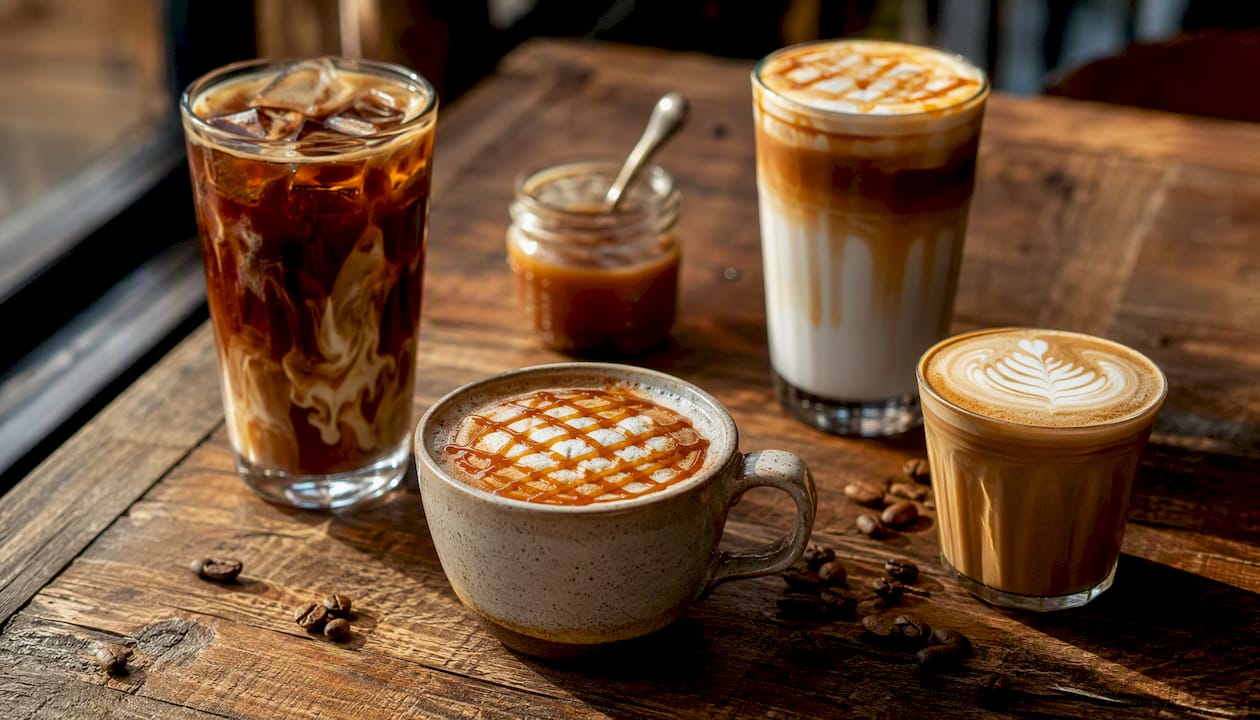
The most common uses are caramel lattes, caramel macchiatos, cold brew with caramel, salted caramel mochas, and caramel affogatos. Each one uses the syrup differently, and the dosing shifts depending on cup size, temperature, and how much milk is involved.
For dosing, Kitchn recommends starting at a small amount per 8 ounces as a baseline. A 12-ounce latte might take 2–3 tablespoons; a 16-ounce drink with a lot of milk can handle 3–4 before it starts tasting like dessert. Start low and adjust. Your sweetness tolerance and the roast level of your coffee both affect where the right dose lands.
Hot drinks are forgiving, especially when served in a white ridged-line coffee cup that complements the syrup’s viscosity and presentation. Syrup dissolves immediately in hot espresso or brewed coffee, so you can add it at any point. For iced drinks, technique matters more. Add the syrup to the cup first, then pour hot espresso directly over it. The heat helps the syrup dissolve before you add ice and cold milk. Pouring cold milk over undissolved syrup in a cold cup is how you end up with a sweet puddle at the bottom.
For visual finishing, caramel sauce (not syrup) is what you want for that drizzle on top of a latte. Syrup goes in the cup before the espresso; sauce goes on after the milk foam. They are not interchangeable for presentation purposes.
Pro tip on milk choice: oat milk amplifies caramel’s sweetness because of its natural sugars. Whole milk gives a creamier, more balanced result. If you are using a latte syrup ratio guide, factor in your milk type when calibrating the dose.
Store-bought vs. homemade caramel syrup: which is worth it?
Bottled syrups sell consistency and convenience. Homemade offers customization and often a cleaner, fresher caramel flavor. Both are legitimate choices depending on what you value.
Commercial caramel syrups are formulated for shelf stability and predictable dosing, which is why cafés rely on them. Stabilizers and preservatives keep them consistent from bottle to bottle and extend shelf life to a year or more unopened. The trade-off is that some of that fresh caramel depth gets smoothed out in the process.
| Factor | Homemade | Store-bought |
|---|---|---|
| Flavor depth | Fresher, more complex caramel notes | Consistent but sometimes flatter |
| Ingredients | Sugar, water, optional salt/vanilla | Sugar, stabilizers, preservatives |
| Shelf life | 2–4 weeks refrigerated | 12+ months unopened |
| Cost per serving | Lower for large batches | Higher per ounce, but no prep time |
| Customization | Full control over sweetness and flavor | Fixed formula |
| Convenience | Requires several minutes of active cooking | Ready to use immediately |
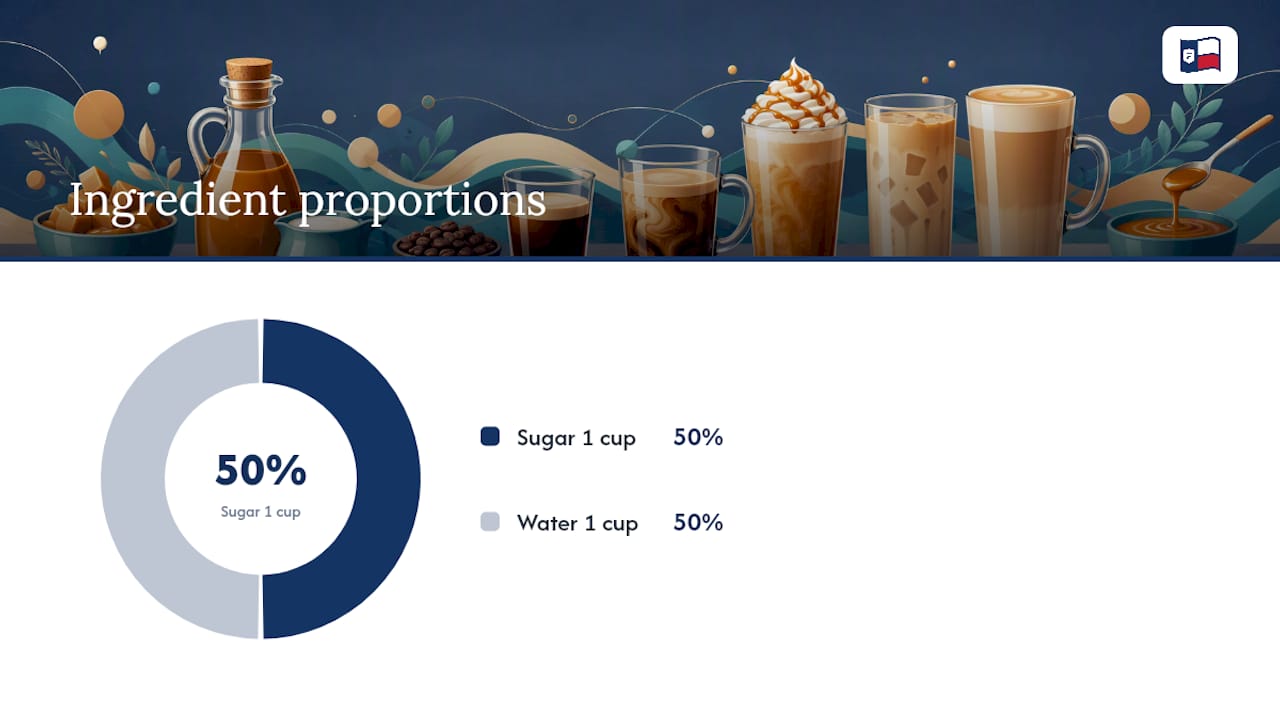
The batch economics favor homemade if you use syrup daily. A cup of sugar and a cup of water makes roughly 1.5 cups of syrup for under a dollar. A quality bottled syrup costs several dollars for a similar volume. The gap narrows if you factor in your time and the risk of burning a batch.
How to make a barista-style caramel syrup at home
This recipe produces a thin, pourable syrup that dissolves in both hot and iced coffee, with no dairy and no thickeners. Homemade versions taste cleaner and allow full customization of sweetness and caramel depth.
Ingredients:
- 1 cup granulated white sugar
- ½ cup water (plus ½ cup more for dilution)
- Optional: 1 teaspoon vanilla extract, ¼ teaspoon fine sea salt, 1 teaspoon light corn syrup (reduces crystallization)
Equipment: heavy-bottomed saucepan, heat-resistant spatula, candy thermometer (optional but helpful), glass jar with lid.
Steps:
- Combine sugar and ½ cup water in the saucepan over medium heat. Stir gently until the sugar dissolves, then stop stirring.
- Increase heat to medium-high and let the mixture cook undisturbed until it turns amber, roughly 340–350°F on a thermometer. Watch closely — it goes from golden to burnt in under a minute.
- Remove from heat immediately. Carefully pour in the remaining ½ cup of warm water (it will spatter). Stir until smooth.
- Return to low heat for 1–2 minutes to dissolve any hardened bits.
- Stir in vanilla and salt if using. Let cool, then transfer to a glass jar.
Troubleshooting:
- Crystallization: add a teaspoon of corn syrup or honey at step 1 to inhibit crystal formation
- Too thick after cooling: reheat gently and stir in a tablespoon of warm water at a time
- Burnt flavor: pull the pan off heat the moment the color hits deep amber; the residual heat continues cooking for a few seconds
- Separation in iced drinks: make sure the syrup is fully dissolved before adding cold liquid; add it to the warm espresso first
Stored in a sealed glass jar in the refrigerator, this syrup keeps for 2–4 weeks. Double or triple the batch easily — the ratio stays the same.
Pro Tip: For a dairy-free caramel syrup that works in oat milk lattes and vegan drinks, check Font-mag’s dairy-free caramel syrup guide for a tested variation.
How to choose a caramel syrup worth buying
Prioritize syrups that balance real caramelized sugar flavor with the right viscosity for your drink style. A syrup that tastes like candy flavoring or pours like water will disappoint in both flavor and integration.
What to look for:
- Ingredient list: real sugar (not just “natural flavors”) and a short list without unnecessary gums or thickeners signals a cleaner flavor
- Concentration: a well-concentrated syrup lets you use less per drink, which means better flavor control and lower cost per serving
- Viscosity: thin enough to dissolve in iced drinks, thick enough to add mouthfeel — pump-friendly bottles are a good indicator of the right consistency
- Sugar-free options: if you want lower calories, look for syrups using erythritol or monk fruit rather than sucralose, which can leave a metallic aftertaste in coffee
- Shelf life and packaging: dark glass or opaque bottles protect flavor; check for a best-by date at least 12 months out
Sweetbird-style barista syrups consistently hit this balance. They are formulated for café use, which means they dissolve cleanly, dose predictably, and hold up in both hot and iced applications. Font-mag carries the Sweetbird collection alongside its specialty coffee offerings, so you can pair the right syrup with the right bean in one order.
If you are exploring beyond coffee, Font-mag’s tea collection and loose-leaf selections from MAG Tea also pair well with flavored syrups. A caramel syrup in a strong black tea or a chai concentrate is a different experience worth trying.
When caramel syrup is worth it and when to skip it
Caramel syrup earns its place when you want dessert-like richness, a smoother bitterness, or a café-style drink at home. Skip it when you are trying to taste the clarity of a single-origin coffee or when you are already watching added sugar closely.
The most common mistake is using caramel syrup with a high-quality light roast that has been specifically chosen for its fruit-forward or floral notes. Those flavors are subtle, and even a modest dose of caramel will push them into the background. Save the syrup for medium and dark roasts, or for milk-heavy drinks where the espresso is more of a backbone than a feature.
Brew method matters too. Caramel syrup shines in espresso-based drinks and cold brew, where its sweetness and body complement the concentration of the coffee. In a delicate pour-over or a Chemex, the syrup can feel out of place. That is not a rule, just a tendency worth knowing.
One thing that gets overlooked: salt. A small pinch of salt in your caramel syrup, or a salted caramel variant, reduces perceived sweetness and amplifies the caramel’s depth. It is why salted caramel drinks work so well with milk-heavy beverages. The salt is not there to make it taste salty. It is there to make the caramel taste more like caramel. For salted caramel vegan options, Font-mag’s salted caramel guide covers both recipe and product routes.
Font-mag has the syrups and beans to match
Font-mag’s curated lineup gives you café-quality caramel syrup alongside the beans worth pairing it with. The Sweetbird collection, available through Font-mag, is formulated for barista use: clean ingredient lists, pump-friendly viscosity, and consistent dosing whether you are making a hot latte or a cold brew. Order both in one place and get free shipping on orders over $35.
If you want a lower-caffeine pairing, the Downshift Decaf is a medium-roast Colombia that holds up beautifully under caramel. Its natural sweetness and mild acidity make it one of the better bases for a caramel latte without the caffeine hit. Not a coffee drinker? Font-mag’s iced teas and tea concentrates work just as well with flavored syrups for a non-coffee treat. Browse the full range and find your next favorite combination at Font-mag.
Sources
- Caramel Syrup for Coffee Recipe (Easy, Smooth, Barista-Style)
- Caramel Coffee Syrups: Top Picks & Homemade Tips 2026
- Caramel Coffee Syrups: Kitchn recipe
- Caramel Syrup for Coffee | Cafe Du Monde