

Why Coffee Tastes Bitter and How to Fix It
You’ve done everything right. Fresh beans, your favorite mug, the same machine you’ve used for years. And still, that cup lands flat and sharp with a bitterness that lingers too long. Understanding why coffee tastes bitter isn’t as simple as blaming the caffeine. The real story runs deeper, through chemistry, extraction science, and small habits you might not even notice. This article breaks down exactly what causes bitter taste in coffee, which variables are under your control, and what to change today to brew a cup that’s balanced, complex, and genuinely enjoyable.
Table of Contents
- Key takeaways
- Why coffee tastes bitter: the chemistry behind it
- Brewing factors that drive bitterness
- How roast level and bean quality shape bitterness
- Practical ways to reduce coffee bitterness
- Troubleshooting bitterness by brewing setup
- My take on bitterness in the cup
- Explore fresher, better-tasting coffee with Font-mag
- FAQ
Key takeaways
| Point | Details |
|---|---|
| Caffeine isn’t the main culprit | Caffeine contributes only 10–30% of bitterness; roasting compounds are the bigger factor. |
| Over-extraction is the top brewing cause | Water temperature, grind size, and contact time all push coffee into bitter territory fast. |
| Dirty equipment quietly adds bitterness | Rancid oils in grinders and brewers build up over time and create persistent bitter flavor. |
| Roast level changes the bitterness equation | Dark roasts naturally produce more bitter compounds; lighter roasts preserve sweetness and acidity. |
| Small adjustments make a real difference | Coarser grind, filtered water, and fresher beans can transform your cup without new equipment. |
Why coffee tastes bitter: the chemistry behind it
Most people assume caffeine is the main reason coffee tastes bitter. That’s only partially true. Caffeine accounts for just 10–30% of the total bitterness in a cup. The bigger contributors are compounds created during the roasting process itself.
When green coffee beans are roasted, heat breaks down chlorogenic acids into two major bitter compounds: chlorogenic acid lactones and phenylindanes. Lighter roasts produce mostly the former, which taste relatively mild. Push the roast darker, and phenylindanes increase significantly, creating a prolonged, harsh bitterness that coats the palate.
Here’s the science that most casual coffee drinkers never hear:
- Your tongue detects these compounds through bitter taste receptor TAS2R43, one of 26 receptors that respond to bitter stimuli.
- Caffeine, chlorogenic acid lactones, and phenylindanes all trigger different receptors at different intensities.
- People vary genetically in how sensitive their bitter taste receptors are, which explains why two people drinking the same brew have completely different reactions to its bitterness.
Bitterness in coffee is not a flaw by nature. It’s an inherent part of the coffee flavor profile. The problem arises when bitter compounds dominate over the sweet and acidic notes that balance them.
This is a critical distinction. A well-roasted, properly brewed cup has bitterness as a background note, not the lead. When it surges to the front, something else has gone wrong, and understanding the chemistry is your first tool for diagnosing it.
Brewing factors that drive bitterness
Chemistry sets the stage, but how you brew determines the final cup. The causes of bitter coffee at the brewing level almost always trace back to one concept: over-extraction.
Extraction happens in a sequence: acids pull out first (giving you brightness or sourness), then sugars (sweetness and body), and finally polyphenols (bitterness and astringency). A well-balanced cup stops somewhere in the sweet spot. Over-extract, and you drag those bitter polyphenols into your cup.
Here’s how brewing variables tip you into over-extraction:
-
Grind too fine. A finer grind creates more surface area, which means water contacts more of the coffee and pulls compounds out faster. Espresso requires a very fine grind with a short contact time precisely because of this balance. Brew that same fine grind in a French press for four minutes, and you’ll get an intensely bitter result.
-
Water too hot. The common recommendation is around 195–205°F (90–96°C). Go above that range and hot water strips bitter elements rapidly. This is especially problematic with dark roasts, which are already loaded with bitter compounds.
-
Brew time too long. Every brewing method has a sweet spot. A standard pour-over should take 3–4 minutes. A French press around 4 minutes. Push past these windows and bitterness climbs steadily.
-
Wrong coffee-to-water ratio. Using too little coffee relative to water forces whatever grounds you have to over-extract trying to fill the cup. A standard starting ratio of 1:15 (coffee to water by weight) prevents this.
-
Poor water quality. Hard water loaded with minerals can interfere with extraction, creating an off-balance bitter result. Filtered or soft water yields a noticeably cleaner cup.
-
Dirty equipment. This one surprises most people. Coffee oils coat your grinder burrs, portafilter basket, and carafe over time. Those oils go rancid. Rancid oil buildup creates a persistent, nagging bitterness that no amount of grind adjustment will fix.
Pro Tip: If your coffee suddenly tastes more bitter and nothing in your recipe changed, clean your equipment first. Run a cleaning cycle on your machine, soak your portafilter basket, and brush out your grinder. Nine times out of ten, this is the culprit.
How roast level and bean quality shape bitterness
Two cups brewed identically can taste dramatically different depending solely on the beans used. Roast level and bean origin both play a major role in the bitter taste in coffee.
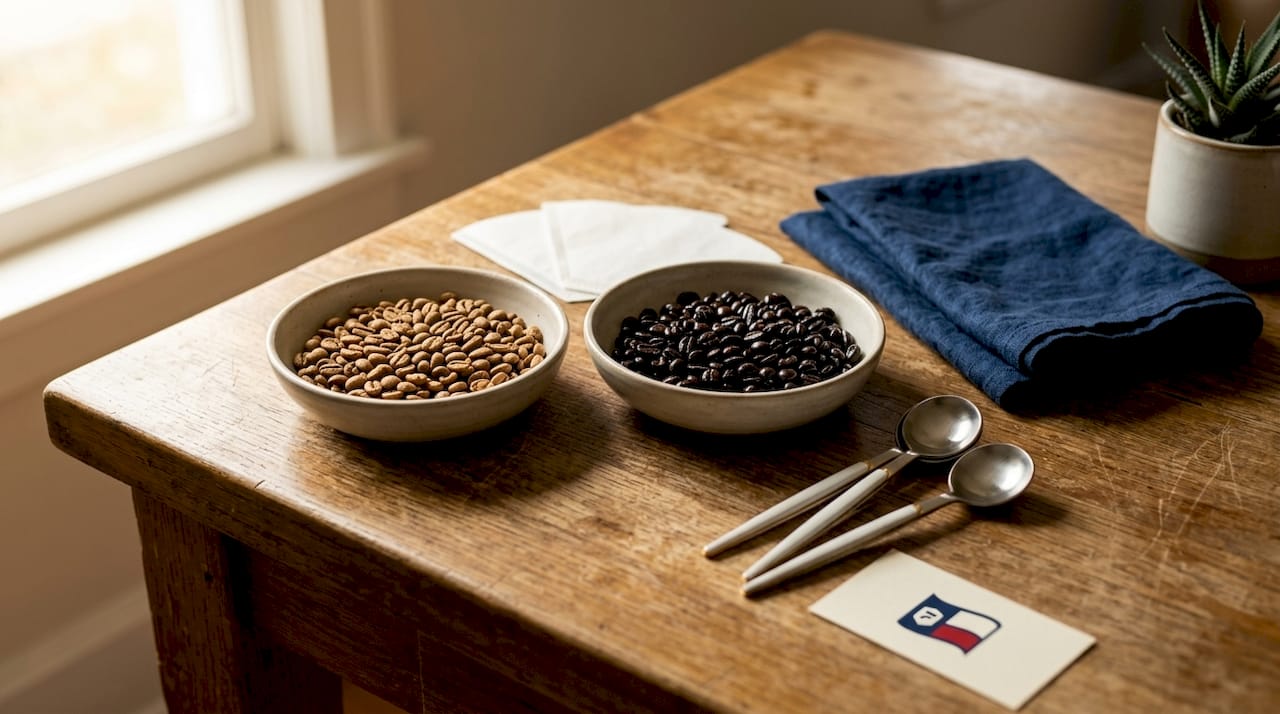
| Factor | Effect on Bitterness |
|---|---|
| Light roast | Lower bitter compounds; preserves fruit notes and brightness |
| Medium roast | Balanced; moderate bitterness with more sweetness development |
| Dark roast | High phenylindane content; pronounced, lasting bitterness |
| Arabica beans | Naturally lower bitterness; more nuanced flavor profile |
| Robusta beans | Higher caffeine and more bitter compounds by nature |
| Stale beans | Flat, bitter off-flavors from oxidation regardless of roast |
Arabica beans contain less caffeine and fewer harsh compounds than Robusta. This is why specialty coffee almost always leans Arabica. That doesn’t mean Robusta has no place, but if you’re buying supermarket blends, the higher Robusta content is a direct contributor to bitterness.
Freshness matters at least as much as bean type. Beans older than 4–6 weeks post-roast lose their volatile aromatics through oxidation. What’s left tastes flat and bitter. Pre-ground coffee ages even faster because the surface area exposed to oxygen is dramatically higher. Buying whole beans and grinding just before brewing is one of the highest-leverage changes any home brewer can make.
Understanding how supporting local roasters helps you access fresher beans is a worthwhile angle too. Roasters who sell in smaller batches typically have a faster turnover, meaning the beans on their shelves were roasted days ago, not months.
Practical ways to reduce coffee bitterness
You don’t need new equipment to make a noticeably better cup. These changes are ordered from easiest to most involved:
- Go coarser with your grind. If your coffee tastes bitter, this is your first move. A coarser grind slows extraction and stops those polyphenols from flooding in. Even one step coarser on your grinder makes a measurable difference.
- Drop your water temperature slightly. Particularly effective for dark roasts. Try brewing at 195°F instead of 205°F. You’ll notice less harsh bitterness and more of the roast’s natural flavor.
- Add a pinch of salt. This sounds odd but it works. Less than 1/16 teaspoon of salt per cup blocks bitter taste receptors without making your coffee taste salty. It also enhances the perception of sweetness. Bartenders have used this trick for years.
- Switch to filtered water. Tap water with heavy mineral content creates uneven extraction and metallic bitter notes. A basic pitcher filter makes a real difference over time.
- Clean your equipment on a schedule. Weekly cleaning for daily brewers. Monthly deep cleaning for grinders. This single habit eliminates one of the most common hidden causes of bitterness.
- Experiment with roast levels. If you’ve been buying dark roast out of habit, try a medium. You’ll likely find the cup is sweeter and more nuanced with none of the lingering sharpness.
Pro Tip: For brewing methods you’re still learning, French press is one of the most forgiving. It’s harder to destroy a French press brew than an espresso shot. Use it as your testing ground when experimenting with grind size or water temperature changes.
If you’re curious about how extraction science actually works beneath the surface, the breakdown of coffee extraction and flavor on Font-mag goes deep on the mechanics.
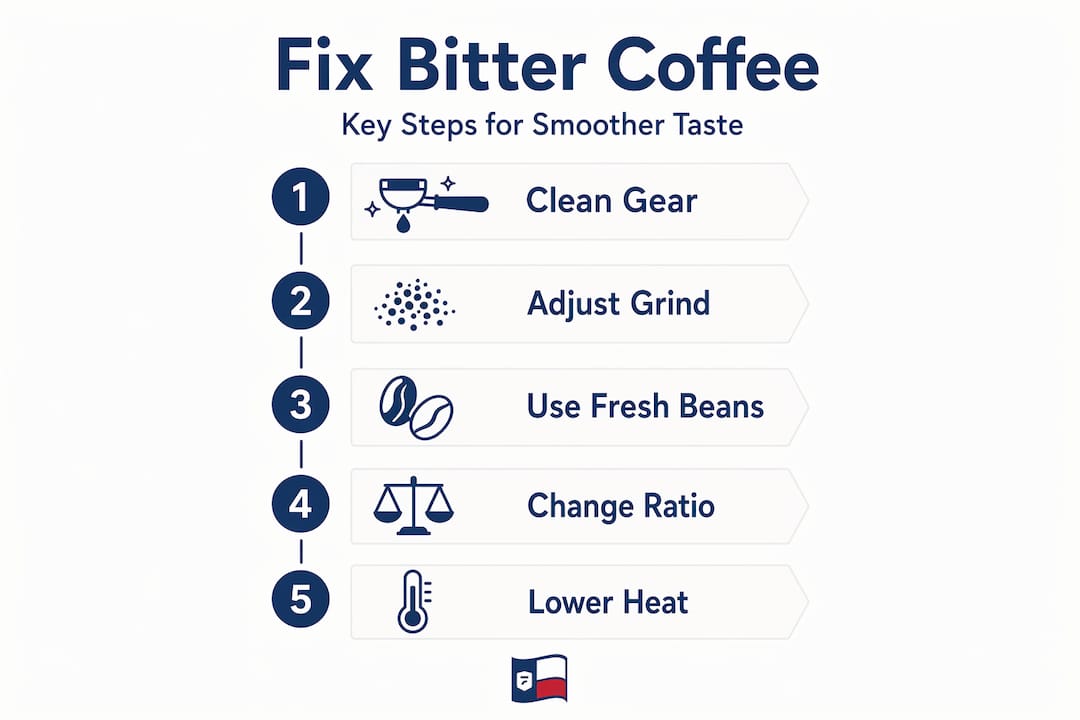
Troubleshooting bitterness by brewing setup
Knowing the causes is one thing. Diagnosing your specific situation is another. Here’s a practical troubleshooting sequence you can run whenever your cup tastes bitter:
-
Ask when the bitterness started. Did it come on gradually or appear suddenly? Gradual bitterness usually signals equipment buildup. Sudden bitterness typically points to a recipe change, a new bag of beans, or a water temperature issue.
-
Check your beans. When were they roasted? If the roast date on the bag is more than six weeks ago, freshness is your problem, not your technique. Check out a fresh coffee subscription to eliminate staleness permanently.
-
Evaluate your grinder. Blade grinders produce inconsistent grinds with fine dust particles that over-extract instantly and create sharp bitterness. If you’re using one, upgrading to a burr grinder is the single biggest equipment improvement you can make for flavor quality.
-
Measure your water temperature. Most people estimate this, which means most people are brewing too hot. An inexpensive thermometer removes all the guesswork.
-
Review your contact time. Time your brew. If you’re going long, shorten it. If you’re using an automatic drip machine, check whether the brew cycle matches the recommended time for your basket size.
Pro Tip: Run this checklist in order. Don’t buy new beans or adjust your grind before cleaning your machine. Start with the cheapest fix first.
Understanding how each variable interacts is what separates frustrated coffee drinkers from people who consistently brew well. It’s not about having the most expensive setup. It’s about knowing which lever to pull.
My take on bitterness in the cup
I’ve tasted a lot of coffee over the years, and the most common thing I see from home brewers is frustration directed at the wrong cause. They blame the beans. They buy a more expensive bag. The bitterness returns. The problem was never the beans.
In my experience, the three variables that cause most home brewing bitterness are equipment cleanliness, grind inconsistency, and bean staleness. Not roast level. Not water brand. Those three things account for at least 80% of the bitter cups I’ve encountered.
Here’s what I’d push back on in conventional coffee advice: lighter roasts are not always the answer to bitterness. I’ve had beautifully balanced dark roasts that tasted clean, sweet at the finish, and complex. I’ve also had light roasts that tasted sour and astringent because the grind was too fine. Roast level is one variable, not the whole story.
What I find genuinely interesting is how learning to manage bitterness changes how you taste coffee entirely. Once you understand that bitterness should be a background player, you start noticing when sweetness and acidity are actually doing their job. That moment of recognition, when a cup suddenly tastes balanced rather than just “not bitter,” is when people become real coffee enthusiasts. Don’t fear bitterness. Learn to work with it.
— Rosario
Explore fresher, better-tasting coffee with Font-mag
If this article has you rethinking what’s in your grinder, Font-mag has exactly what you need to start fresh. Our retail coffee selection is built around roast variety and freshness, so you can find a light, medium, or dark roast that fits your taste without the bitter guesswork. For café owners or home brewers who go through beans quickly, our wholesale coffee collection delivers small-batch quality in larger volumes. Not a coffee day? Explore our vibrant Japanese matcha, MAG Tea loose-leaf selections, or Sweetbird syrups to round out your brewing experience. Free shipping on all orders over $35.
FAQ
Why is my coffee so bitter even with good beans?
Good beans can still produce bitter coffee when brewing variables are off. Over-extraction from a grind that’s too fine, water that’s too hot, or dirty equipment are the most common culprits even with high-quality beans.
Does dark roast always taste more bitter?
Dark roasts contain more phenylindanes, which create prolonged bitterness. However, adjusting your grind coarser and lowering your water temperature when brewing dark roasts can significantly reduce that harsh edge.
What is the fastest way to reduce coffee bitterness at home?
The fastest fix is grinding coarser and cleaning your equipment. If bitterness appeared gradually over time, rancid oil buildup in your brewer or grinder is likely the cause, and a thorough cleaning often solves it immediately.
Does adding salt to coffee actually work?
Yes. Adding less than 1/16 teaspoon of salt per cup blocks bitter taste receptors and enhances perceived sweetness. The amount is too small to taste the salt, but the effect on bitterness is noticeable.
How does grind size affect coffee bitterness?
A finer grind increases the surface area exposed to water, pulling out bitter polyphenols faster and in higher quantities. Coarsening your grind slows extraction and keeps the bitter compounds from dominating the cup.