
Why Specialty Coffee Costs More: A Clear Price Breakdown
Specialty coffee is defined by a scoring system where beans must achieve 80 points or above on the Specialty Coffee Association’s 100-point scale, and that standard alone eliminates the vast majority of global coffee production from consideration. The result is a product that commands a real price premium. Specialty coffee retail prices averaged $31.52 per pound roasted in Q4 2025, while commodity green coffee sat at $2.90 per pound. That gap tells the whole story of why specialty coffee costs more: every step from seed to cup adds cost, and those costs are real, justified, and worth understanding.
Why specialty coffee costs more starts at the farm
The short answer is scarcity. Only 5 to 10% of global Arabica production meets specialty grade, which means roasters are competing for a small slice of the world’s harvest. That competition drives prices up before a single bean is roasted.
High-scoring Arabica beans grow best at altitude, in specific microclimates, on small farms where manual harvesting is the only practical method. A picker selecting only ripe cherries by hand on a steep Colombian hillside costs far more than a mechanical harvester rolling through a flat Brazilian plantation. That labor cost is baked into every bag you buy.
Climate change compounds the problem. Unpredictable rainfall, rising temperatures, and increased pest pressure reduce yields and push quality-focused farmers to invest more in shade-grown techniques, irrigation, and crop management. When a harvest underperforms, the limited supply of specialty-grade beans gets even tighter, and prices respond accordingly.
- Bean quality scoring: Specialty grade requires an SCA score of 80 or above, with zero category-one defects allowed.
- Harvest method: Hand-picking selective ripe cherries is 3 to 5 times more labor-intensive than strip or mechanical harvesting.
- Processing: Washed, natural, and honey processing methods each require different infrastructure, water management, and drying time, all of which cost money.
- Certification: Organic, Fair Trade, and Rainforest Alliance certifications add compliance costs that are passed through the supply chain.
Pro Tip: When you see a bag listing a specific farm name and altitude, that detail signals genuine traceability. Farms willing to be named are typically the ones investing in quality, and that investment shows up in the cup.
How supply chain costs stack up between farm and roaster
Getting specialty-grade green coffee from a farm in Ethiopia or Guatemala to a roaster in Texas involves more financial layers than most consumers realize. Median green specialty coffee prices reached approximately $4.39 per pound in 2024/25, already a significant premium over commodity pricing. But that number is just the starting point.
Here is how the supply chain adds cost at each stage:
- Export processing and milling: Coffee must be hulled, sorted, graded, and bagged at origin. Wet mills and dry mills charge for this service, and quality-focused processing commands higher fees.
- Freight and logistics: Port congestion and container shortages introduce 10 to 20% price swings in green coffee contracts. A delayed shipment can force a roaster to buy spot inventory at a premium.
- Import duties and tariffs: Arabica prices peaked above $4 per pound in 2024 to 2025, and tariff adjustments on major producing countries like Brazil and Vietnam pushed import costs higher still for U.S. roasters.
- Importer and broker margins: Most small roasters buy through specialty importers who provide cupping notes, traceability documentation, and sample lots. That service is not free.
- Currency fluctuation: Coffee is priced in U.S. dollars globally, but farmers in Colombia, Kenya, or Indonesia operate in local currencies. Exchange rate shifts affect what producers actually receive and how they price future lots.
One counterintuitive fact worth knowing: coffee futures fell roughly 27% in recent months, yet retail prices have not followed. This is because roasters lock in green coffee prices months in advance through forward contracts. When futures drop, roasters are often still working through inventory purchased at higher prices. The lag between commodity markets and your local café menu is structural, not opportunistic.
What roasting, packaging, and retail margins add to the final price
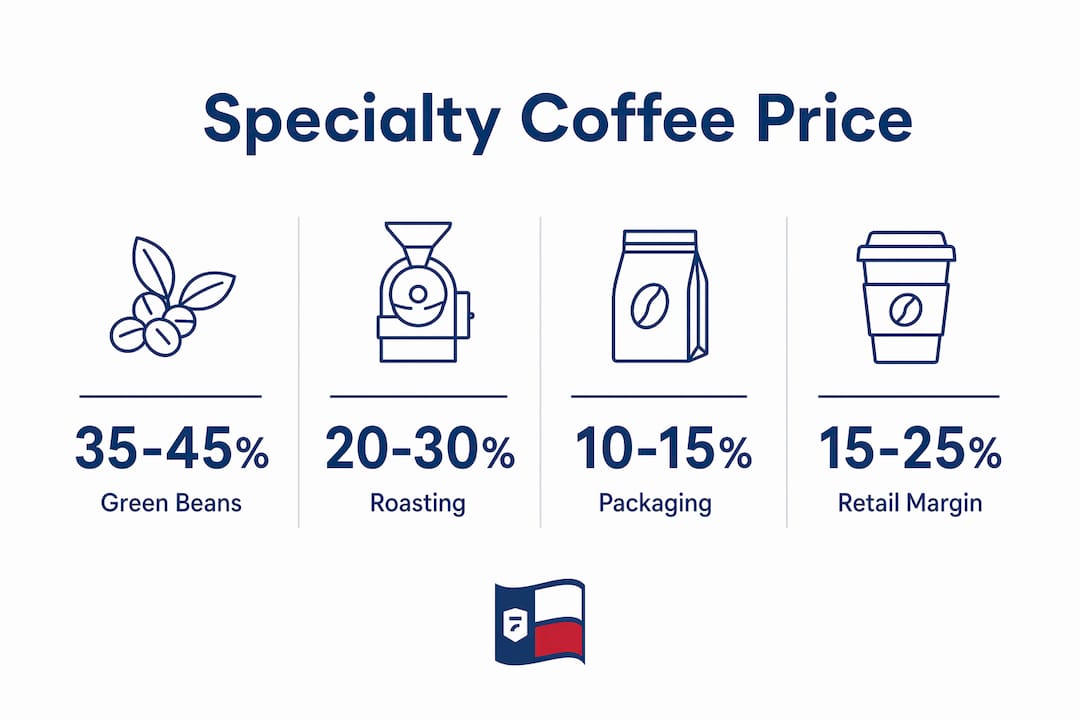
Once green coffee arrives at a roastery, the cost-building continues. Roasting is a skilled trade. A head roaster with the experience to develop a complex Ethiopian natural profile without scorching it earns a professional salary, and smaller batch roasters invest heavily in quality control and sourcing agility. That expertise is part of what you pay for.
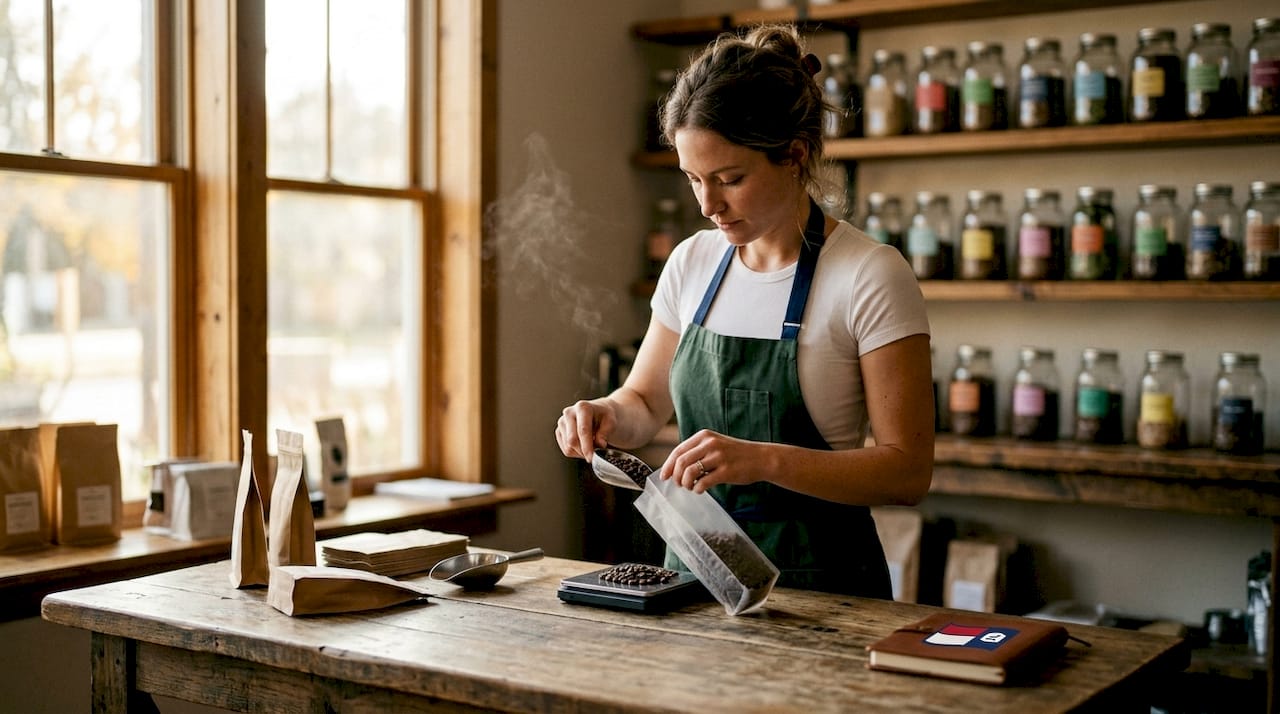
Roaster operations and packaging add substantial costs beyond green coffee, with labor, energy, and compliance price increases all contributing to retail prices. A commercial roaster running 500-pound batches spreads those fixed costs across more units. A specialty roaster running 15-pound batches on a Loring or Probat machine does not have that luxury.
| Cost component | Approximate contribution to retail price |
|---|---|
| Green coffee (specialty grade) | 35 to 45% |
| Roasting labor and energy | 15 to 20% |
| Packaging (valve bags, labels) | 8 to 12% |
| Overhead and compliance | 10 to 15% |
| Retailer or café margin | 20 to 30% |
Packaging alone deserves attention. One-way degassing valve bags, which allow CO2 to escape without letting oxygen in, are the industry standard for preserving freshness in locally roasted coffee. These bags cost significantly more than standard foil pouches. For a roaster producing small runs of single-origin lots, packaging can represent a disproportionately high per-unit cost.
Pro Tip: Buying directly from a roaster’s website or through a subscription often cuts out the retail margin entirely. You get fresher coffee at a better price per pound, and the roaster keeps more of the revenue.
How transparency shapes what consumers pay and expect
Price transparency has become a defining feature of the specialty coffee sector, and it cuts in two directions. Roasters who explain their pricing build consumer trust and reduce churn when prices rise. But transparency initiatives do not automatically mean a higher share of revenue reaches the farmer. The supply chain is complex, and a roaster being honest about their costs does not guarantee the same honesty exists at every upstream node.
What transparency does accomplish is consumer education. When a roaster publishes the FOB price they paid for a Kenyan lot alongside the retail price, consumers can see exactly where the margin lives. That kind of disclosure is still rare, but it is growing, particularly among roasters who sell direct-to-consumer and want to differentiate on ethics as much as flavor.
- Consumers consistently say they value ethical sourcing, but price sensitivity increases sharply above $20 per bag for most households.
- High specialty coffee prices do not always mean higher pay for farmers, because retail prices reflect contracts, inventories, and operating costs that are disconnected from spot market movements.
- Rising operational costs are forcing some roasters to reduce their SKU count, focusing on fewer, better-selling origins rather than maintaining a wide catalog.
- The farm-to-cup supply chain for specialty coffee involves more documented handoffs than commodity coffee, and each one costs money to verify.
Specialty roasters surveyed by Fresh Cup reported spending significantly more time on sampling and cupping to manage green coffee cost volatility, which itself raises labor costs. The search for the right lot at the right price is not a passive process.
Specialty vs. commercial coffee: what the price difference actually buys you
Commercial coffee is commodity-driven. Brands like Folgers or Maxwell House blend beans from multiple origins to hit a consistent flavor profile at the lowest possible cost. The ICO Composite Price for commodity green coffee reflects this: it is a floor price, not a quality benchmark.
Specialty coffee pricing, by contrast, reflects a quality ceiling. The SCA score, the farm name, the processing method, and the roast date on the bag are all signals that someone, at every stage, made a more expensive choice to preserve quality. That is what the premium buys.
For consumers managing costs, a few practical approaches work well. Buying wholesale coffee in larger quantities reduces per-cup cost without sacrificing quality. Subscribing to a roaster’s regular shipment often unlocks a 10 to 15% discount. Choosing a medium-roast single-origin over a highly processed flavored blend typically delivers more flavor complexity per dollar. And understanding that a $22 bag of specialty coffee brewed at home costs roughly $0.50 per cup makes the math look very different than the sticker price suggests.
Key takeaways
Specialty coffee costs more because every stage of its production, from selective hand-harvesting to skilled roasting and traceable packaging, requires greater investment than commodity coffee production.
| Point | Details |
|---|---|
| Bean scarcity drives base cost | Only 5 to 10% of global Arabica meets specialty grade, creating real supply constraints. |
| Supply chain adds multiple cost layers | Freight, tariffs, importer fees, and currency risk all inflate prices before roasting begins. |
| Roasting and packaging are skilled expenses | Labor, energy, and valve-bag packaging add 25 to 35% to the cost of green coffee alone. |
| Retail prices lag commodity markets | Forward contracts mean price drops in futures take months to reach your bag. |
| Transparency helps but has limits | Roasters explaining price increases build trust, but producer income is not always proportional. |
The price is the point
I have spent years tasting coffees at every price point, and the honest truth is this: the gap between a $12 commodity bag and a $28 specialty bag is not marketing. It is craft, risk, and labor compressed into a few ounces of roasted beans.
What frustrates me is when consumers assume that a high price is just a roaster being greedy. The numbers tell a different story. Green coffee at $4.39 per pound, freight volatility adding another 10 to 20%, skilled roasting labor, and proper packaging mean a roaster charging $28 for a 12-ounce bag is working on margins that would make most industries wince. The roasters I respect most are the ones who publish their costs and still manage to pay farmers fairly.
The other thing worth saying: specialty coffee is not the only premium beverage category where this logic applies. At Font-mag, we see the same dynamic with Japanese matcha from our MAG Tea lineup and with the Sweetbird syrups we carry. Premium ingredients, careful sourcing, and skilled preparation cost more at every level. The consumer who understands that tends to get far more satisfaction from what they buy, because they know what they are actually paying for.
My advice is simple. Find a roaster you trust, learn their sourcing story, and buy direct when you can. The price will make more sense once you know where it comes from.
— Rosario
Explore Font-mag’s specialty coffee collection
Font-mag carries a curated range of specialty coffees built on four generations of Texas craftsmanship, from the celebrated Broken Arrow Reserve to single-origin lots sourced for flavor and traceability. Every bag ships fast, with free delivery on orders over $35. Whether you are stocking a home setup or running a café, the retail coffee collection covers every preference and price point. For those who want to explore something beyond the standard cup, the flavored coffee lineup delivers specialty-grade beans with natural flavor profiles that hold up to scrutiny. Quality, freshness, and honest sourcing are non-negotiable at Font-mag.
FAQ
Why is specialty coffee so much more expensive than regular coffee?
Specialty coffee requires hand-harvested, high-scoring Arabica beans that represent only 5 to 10% of global production. Labor-intensive farming, skilled roasting, and traceable supply chains all add cost that commodity coffee avoids.
Does a higher coffee price mean the farmer gets paid more?
Not automatically. Retail prices reflect contracts, inventories, and operating costs that are often disconnected from what producers receive. Transparent roasters who publish FOB prices give consumers the clearest picture of producer income.
Why haven’t specialty coffee prices dropped even though futures fell?
Roasters buy green coffee through forward contracts months in advance. When futures fall, most roasters are still working through inventory purchased at higher prices, so retail prices adjust slowly.
What is the most cost-effective way to buy specialty coffee?
Buying direct from a roaster, subscribing for regular shipments, or purchasing in larger quantities through wholesale channels typically reduces per-cup cost by 10 to 15% without sacrificing quality.
Is specialty coffee worth the price compared to commercial brands?
Specialty coffee delivers measurably different flavor complexity, ethical sourcing documentation, and freshness standards that commodity brands do not match. At roughly $0.50 per home-brewed cup, the per-serving cost is competitive with most café alternatives.
Recommended
- Why Coffee Origins Taste Different: A Flavor Science Guide – Font Coffee Roasters
- Why Locally Roasted Coffee Is Fresher and Tastes Better – Font Coffee Roasters
- Farm to Cup Texas Coffee Guide for True Enthusiasts – Font Coffee Roasters
- What Is Coffee Extraction and How It Shapes Flavor – Font Coffee Roasters