

Local vs Chain Coffee Differences for Café Owners
Specialty local roasters optimize for origin-driven flavor, short roast-to-service windows, and traceable supply chains. Mass-market chain roasting optimizes for repeatability, shelf life, and cost. That single distinction drives every procurement decision that follows.
TL;DR:
- Local small-batch roasters = origin-focused profiles, visible roast dates, higher per-pound cost, smaller minimums
- Mass-market chain coffee = standardized dark roasts, longer shelf life, lower cost, predictable cup
- For high-volume automated service: mass-market supply simplifies operations
- For menu differentiation, filter bars, or specialty espresso: local roasters deliver what chain supply cannot
Cafés running a full specialty program should source beans from a local or small-batch roaster and use mass-market supply only for high-volume commodity formats where consistency beats character.
Table of Contents
- What makes local small-batch roasting different from commercial supply
- How chain and mass-market commercial roasting actually works
- What you will actually taste and how that shapes your menu
- Freshness windows, storage, and what cafés get wrong
- Sourcing, traceability, and the trust signals that actually matter
- Wholesale pricing, minimums, and the operational trade-offs cafés face
- How to choose between local specialty and mass-market supply
- Why syrups, matcha, and premium teas belong in your specialty program
- Key Takeaways
- The comparison that actually matters for your program
- Build your specialty program with Font-mag
- Useful sources
What makes local small-batch roasting different from commercial supply
Specialty roasting emphasizes relationships with individual farmers, lot-level roast decisions, and flavor as the primary goal. That is not marketing language. It changes what ends up in the bag.
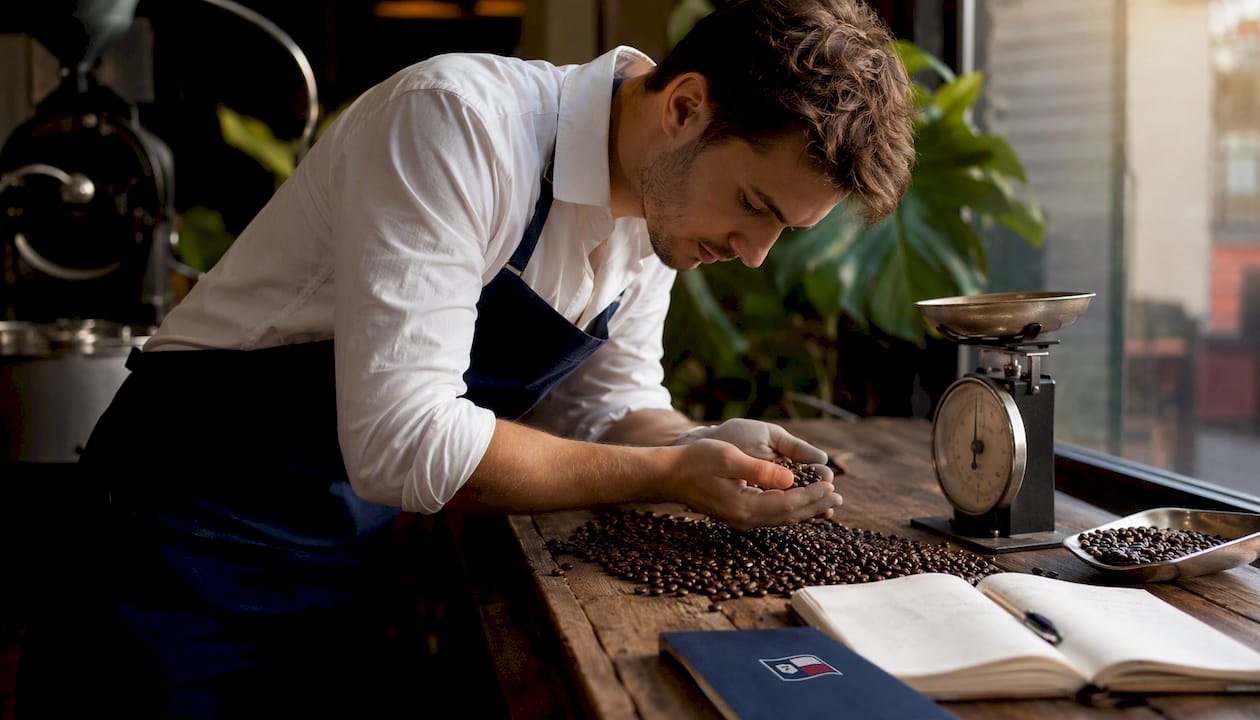
A small-batch roastmaster adjusts temperature curves and development time for each lot, because a Kenyan washed coffee from one harvest behaves differently than the same farm’s next crop. Every bag carries a visible roast date, a lot number, and cupping notes. Those details are not decoration. They tell you exactly what you are buying and when it was made.
Commercial markers you should expect from a legitimate specialty supplier:
- Roast date printed on the bag (not a “best by” date)
- Lot or farm name, not just a country of origin
- Cupping score or tasting notes from the roastmaster
- Direct-trade or farm-relationship statement
- Sample cupping availability before committing to a wholesale order
- Clear wholesale terms: pricing, minimums, and lead times
Font-mag’s Broken Arrow Reserve is a good example of what this looks like in practice. It is a signature small-batch offering built on Font’s four generations of Texas craftsmanship, with the kind of lot-level attention that mass-market supply chains cannot replicate at scale.
Pro Tip: Before placing a wholesale order with any local roaster, ask for the roast date on your sample bag and request a cupping session. A roaster who cannot provide either is not operating at specialty standards, regardless of what the label says.
How chain and mass-market commercial roasting actually works
Mass-market roasting is engineered for repeatability and shelf life, not origin expression. That is not a criticism. It is the design goal, and it serves a real operational need.
Large commercial roasters blend beans across multiple origins and harvests to flatten variability. Automated roast profiles run the same curve season after season. The result is a cup that tastes the same in January as it does in August, whether it is brewed in Texas or Ohio.
That is why chain coffee skews dark. It is not that customers universally prefer dark roast. It is that dark roasting is the most reliable way to standardize flavor across commodity-grade beans that vary in density, moisture, and defect rate. The roast becomes the product, not the bean.
For buyers, the operational consequence is predictable: long distribution chains, 6–12 month shelf-life targets, and a cup that is consistent but muted in origin character.
What you will actually taste and how that shapes your menu
Specialty local roasters deliver higher flavor complexity and origin clarity. Mass-market coffees deliver uniform, familiar flavors and stability. Here is how those differences map to specific sensory attributes:
| Attribute | Specialty / Local Roast | Mass-Market / Chain Roast |
|---|---|---|
| Tasting notes | Fruit, floral, chocolate, caramel (origin-driven) | Bitter, roasty, smoky, uniform |
| Acidity | Bright to moderate, structured | Low, often flat |
| Body | Medium to full, clean | Heavy, sometimes ashy |
| Sweetness | Natural, from bean quality | Minimal without additives |
| Roast level | Light to medium (origin-forward) | Medium-dark to dark |
| Best format | Filter, single-origin pour, specialty espresso | High-volume espresso, drip, automated |
Menu-matching guidance:
- Single-origin filter bar: light-to-medium specialty roast, days 4–14 post-roast
- Signature espresso blend: medium specialty roast, days 5–14 post-roast
- High-volume drip or automated machine: mass-market supply handles this well and simplifies inventory
On caffeine: lighter roasts retain slightly more caffeine by weight than darker roasts, though the difference is small in a standard serving. Perceived strength is mostly extraction and grind, not roast level. A well-profiled specialty roast often tastes less bitter than a dark commercial roast but is not weaker.
Freshness windows, storage, and what cafés get wrong
Peak flavor is not just about buying good beans. It is about serving them at the right time. Roasted coffee needs a degassing period before it extracts cleanly, and it has a hard expiration on peak flavor that most cafés ignore.
| Roast Level | Rest Period | Peak Service Window |
|---|---|---|
| Light (filter) | 4–14 days | Days 4–21 post-roast |
| Medium (filter or espresso) | 3–5 days | Days 5–18 post-roast |
| Medium-dark (espresso) | 2–4 days | Days 5–14 post-roast |
| Dark (espresso/drip) | 1–3 days | Days 3–10 post-roast |
Ranges sourced from specialty freshness guidance and roast-rest research. For many light-to-medium specialty roasts, the peak filter window extends through day 21 after roast.
Storage checklist for cafés:
- Store whole beans in a sealed valve bag, one-way valve facing up
- Keep away from heat, light, and moisture (not above the espresso machine)
- Never freeze beans you plan to use within two weeks
- Grind only what you need per service session
- Rotate stock so no bag sits open longer than 10 days
Pro Tip: Over-resting is as damaging as under-resting. A light roast left open for three weeks tastes flat and papery. Build your ordering schedule around your weekly volume, not your storage capacity. Locally roasted coffee delivered fresh gives you that control.
Sourcing, traceability, and the trust signals that actually matter
Traceable, farm-level sourcing usually correlates with better flavor and higher farm pay. Commodity sourcing favors cost and volume. The gap between them shows up in the cup and in the paperwork.
Trust signals to look for on a bag or in a wholesale document:
- Roast date (not “best by”)
- Farm or lot name, not just country
- SCA cupping score of 80 or above (specialty threshold; only a small fraction of global production qualifies)
- Direct-trade or farm-relationship statement from the roaster
- Sample availability before minimum order commitment
- Wholesale terms in writing: price per pound, minimum order, lead time
Third-party certifications (Fair Trade, Rainforest Alliance, Organic) signal ethical intent but do not guarantee cup quality. Direct-trade relationships, where the roaster has visited the farm and pays above commodity price, are a stronger indicator of both quality and producer welfare. Ask your roaster which they have.
Wholesale pricing, minimums, and the operational trade-offs cafés face
Specialty beans cost more per pound, but they can raise retention and menu differentiation. Mass-market supply costs less and simplifies inventory. Both are true, and neither cancels the other.
Qualitative pricing bands for U.S. café buyers:
| Supply Tier | Per-Pound Range | MOQ | Lead Time | Packaging |
|---|---|---|---|---|
| Commodity / mass-market | Low | High (often 50+ lbs) | Long (weeks) | Vacuum brick or can |
| Quality-focused wholesale | Mid | Moderate (10 lbs) | 1–2 weeks | Valve bag |
| Small-batch specialty | Premium | Low (5–10 lbs) | Days to 1 week | Valve bag with roast date |
Ranges are qualitative; actual figures vary by roaster and region.
Local roaster partnerships provide fresh delivery without roasting infrastructure, but they do impose scheduling constraints. You need to order on the roaster’s schedule, not yours. Questions to ask before committing:
- What is your minimum order and how often do you roast?
- Can I get a sample before placing a standing order?
- What is your lead time from order to delivery?
- Do you offer wholesale pricing tiers and at what volume?
- How is the coffee packaged and what is the recommended use-by window?
For a detailed cost breakdown of why specialty pricing is structured the way it is, that context helps when presenting pricing to your team or customers.
How to choose between local specialty and mass-market supply
Choose what matches your service format, equipment, and customer expectations. Then follow this checklist.
- Define your service goals. Are you running a specialty filter bar, a high-volume drive-through, or a hybrid? The answer determines which supply model fits.
- Order samples. Never commit to a wholesale relationship without cupping the coffee first. Ask for a 250g or 1 lb sample at the roast level you plan to serve.
- Evaluate freshness and traceability. Check the roast date, lot information, and cupping notes. No roast date is a red flag.
- Compare wholesale terms. Get pricing, minimums, lead times, and packaging specs in writing from at least two suppliers.
- Run a two-week café trial. Serve the coffee across your normal volume and collect staff and customer feedback before locking in a standing order.
Red flags to walk away from:
- No roast date on the bag
- “Origin: South America” with no farm or region detail
- Minimum orders above 50 lbs with 3+ week lead times from a “specialty” supplier
- No sample policy
- Cupping scores not available or not offered
A practical pilot timeline: order samples in week one, cup internally in week two, run a two-week service trial in weeks three and four, then evaluate and decide. Use the supporting local roasters checklist to structure that evaluation.
Why syrups, matcha, and premium teas belong in your specialty program
Premium syrups and barista-grade matcha are not optional accessories for a specialty program. They ensure the whole beverage menu matches coffee quality and customer expectation. A $18 pour-over next to a syrup latte made with low-grade flavoring sends a contradictory signal.
Font-mag carries three product lines that address this directly:
- Sweetbird collection syrups: Clean, consistent flavor designed for specialty coffee menus. The Sweetbird range covers classic and seasonal profiles without the artificial aftertaste that undercuts a well-pulled espresso.
- MAG Tea loose-leaf: Premium loose-leaf teas for cafés building tea-forward menus or pairing tea service alongside coffee. Shelf life and dosing are consistent enough for barista service without specialized training.
- Rishi Barista Matcha 100g: A culinary-grade barista matcha that whisks clean and holds up in milk-based drinks. It is the right choice for lattes, iced matcha, and ceremonial-adjacent menu items without the ceremonial price point.
Pairing notes:
- Light roast coffee pairs well with floral or citrus syrups (elderflower, yuzu, bergamot)
- Dark roast espresso holds up against caramel, vanilla, and hazelnut profiles
- Matcha lattes pair naturally with honey, vanilla, or unflavored oat milk for a clean finish
- Iced tea menus benefit from fruit-forward syrups; avoid overly sweet options that mask tea character
Pro Tip: For syrup dosing consistency, use a measured pump rather than free-pouring. A barista syrup guide can help you set standard doses by drink size so flavor stays consistent across staff.
Key Takeaways
Specialty local roasters and mass-market chain supply serve different operational goals, and matching your supply model to your service format is the single most consequential procurement decision a café makes.
| Point | Details |
|---|---|
| Roast goal drives everything | Specialty roasters optimize for origin flavor; mass-market roasters optimize for repeatability and shelf life. |
| Freshness windows are tight | Light-to-medium specialty roasts peak during a defined freshness window after roasting; serve outside that window and you lose what you paid for. |
| Traceability signals quality | Roast date, lot name, and an SCA score above 80 are the baseline trust signals for specialty supply. |
| Wholesale terms vary sharply | Small-batch specialty suppliers offer lower minimums and faster turnaround; commodity suppliers offer lower cost and simpler inventory. |
| Font-mag covers the full program | Font-mag stocks Broken Arrow Reserve small-batch coffee, Sweetbird syrups, MAG Tea loose-leaf, and Rishi Barista Matcha for cafés building a cohesive specialty menu. |
The comparison that actually matters for your program
Most café owners frame the local vs chain coffee differences question as a quality debate. It is really a strategy question. Dark-roasted commodity supply is not bad coffee. It is the right tool for a specific job: high-volume, low-variance, cost-controlled service where the customer is not paying for origin character. Trying to run that format with small-batch specialty beans is expensive and operationally painful. Running a specialty filter bar on commodity supply is a different kind of mismatch.
What the industry undersells is how much the non-coffee menu amplifies or undermines the coffee program. A café that sources excellent beans and then uses low-grade syrups is leaving the customer experience half-finished. The Sweetbird collection, MAG Tea, and Rishi Barista Matcha exist precisely because the beverage program is a system, not a single product. Every element should be held to the same standard.
The practical advice: start with your service format, work backward to the supply model that fits, and treat syrups, matcha, and teas as part of the same sourcing conversation, not an afterthought.
Build your specialty program with Font-mag
Font-mag stocks everything a café or serious home connoisseur needs to run a cohesive specialty beverage program, from Broken Arrow Reserve small-batch coffee to the full Sweetbird syrup collection, MAG Tea loose-leaf, and barista-grade matcha from Rishi.
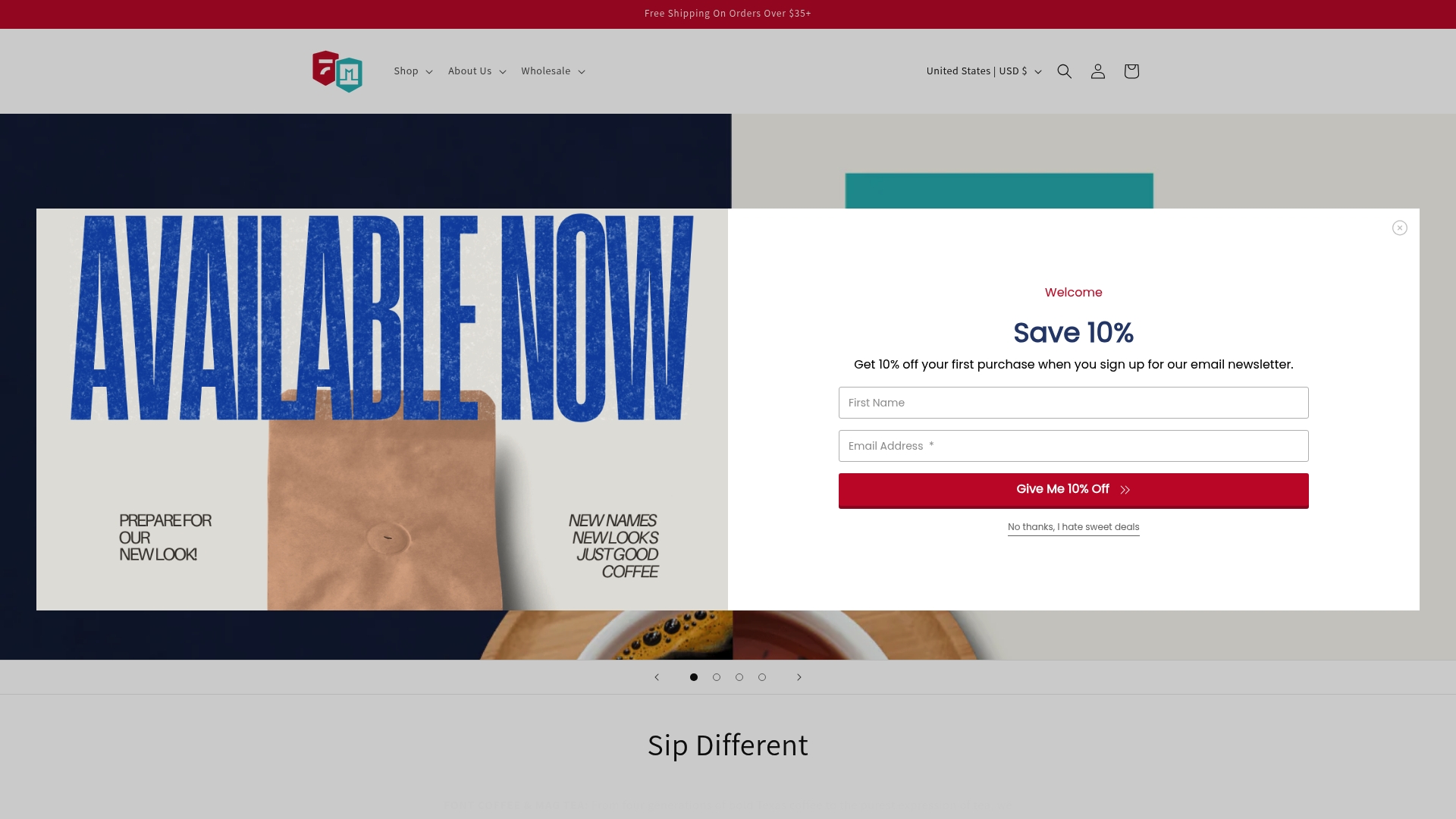
A practical starter bundle for cafés: pick a small-batch coffee roast that matches your primary brew format, add two or three Sweetbird syrups for your espresso menu, and stock the Rishi Barista Matcha 100g for matcha lattes. That covers the core of a specialty menu without overcomplicating inventory. Free shipping applies to all orders over $35, and fulfillment is fast enough to support weekly ordering cycles. Browse the flavored coffee collection or the full syrups and sauces range to start building your order.
Useful sources
- Mass-market vs. specialty coffee: What coffee drinkers need to know — The Manual
- Specialty Coffee vs. Chain Coffee: What You Are Actually Paying For — Pulled Journal
- What Separates a $5 Bag of Coffee From a $50 Bag — Bean Ground
- Why Fresh Roasted Coffee Beans Drive Higher Café Profits — B2B Guide
- Why freshly roasted coffee matters — Alma Cafe
- Coffee Bean Freshness Guide — Auresso Supplies
- Coffee Roasting Profiles: A Specialty Roaster’s Practical Guide — Keith Lyons
When evaluating any new supplier, request the roast date, lot number, and cupping score in writing before placing a standing order. A supplier who cannot provide all three is not operating at specialty standards.
Recommended
- Why Independent Roasters Beat Corporations: 2026 Guide – Font Coffee Roasters
- Supporting Local Roasters Checklist for Coffee Lovers – Font Coffee Roasters
- Why Locally Roasted Coffee Is Fresher and Tastes Better – Font Coffee Roasters
- Why Specialty Coffee Costs More: A Clear Price Breakdown – Font Coffee Roasters