

What Is Carbon Neutral Coffee Roasting? A Clear Guide
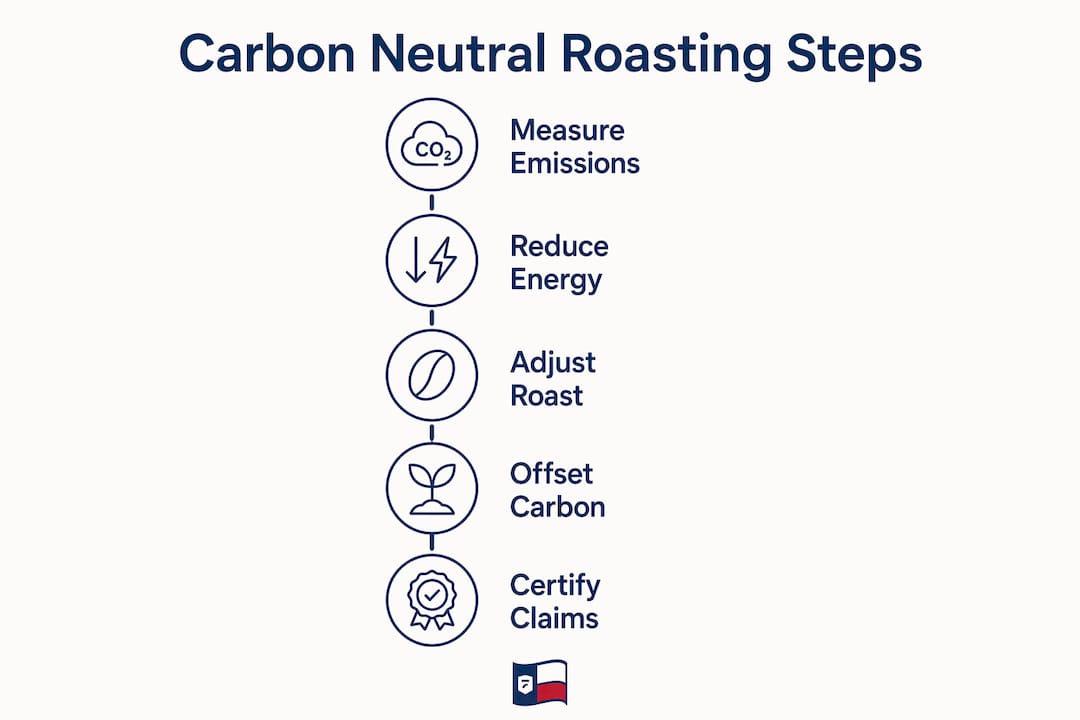
Carbon neutral coffee roasting is the process of measuring, reducing, and offsetting all greenhouse gas emissions from the coffee roasting process to achieve a net zero carbon impact. The practice follows the ISO 14068-1:2023 framework, which requires roasters to quantify their emissions, implement a documented reduction plan, and apply verified offsets only as a final step. For eco-conscious coffee drinkers, this distinction matters because it separates genuine environmental commitment from vague marketing language. Understanding how the process works gives you the tools to evaluate any roaster’s sustainability claims with confidence.
What is carbon neutral coffee roasting and how is it defined?
Carbon neutral coffee roasting is defined by the ISO 14068-1:2023 standard as a three-stage process: quantify all greenhouse gas emissions, reduce them through documented strategies, and offset only what remains. The standard is the most credible international framework for carbon neutrality claims across industries, including specialty coffee. Roasters who follow it cannot simply buy carbon credits and call their product carbon neutral. They must show a reduction trajectory first.
This framework matters because the coffee industry has a history of broad sustainability claims without the documentation to back them up. ISO 14068-1 closes that gap by requiring third-party verification and a formal carbon management plan. Consumers who see this certification on a bag of coffee can trust that the roaster has done more than write a check to a reforestation project.
“Carbon neutrality under ISO 14068-1 is not a destination. It is a managed process with annual reporting, reduction milestones, and verified offset quality requirements.”
The standard also distinguishes between direct roasting emissions and ancillary sources. A full audit under ISO 14068-1 covers process and ancillary emissions, including logistics, packaging, and facility energy use. This scope prevents roasters from measuring only the roaster drum while ignoring the delivery van idling outside.
Key requirements under ISO 14068-1:2023 include:
- Emission quantification: A complete inventory of all greenhouse gases across the roasting operation
- Reduction plan: A documented strategy with measurable targets and timelines
- Offset quality: Credits must meet verified standards and move toward permanent carbon removals
- Third-party audit: Independent verification of claims before certification is granted
- Annual reporting: Ongoing documentation to maintain certification status
How the coffee roasting process drives carbon emissions
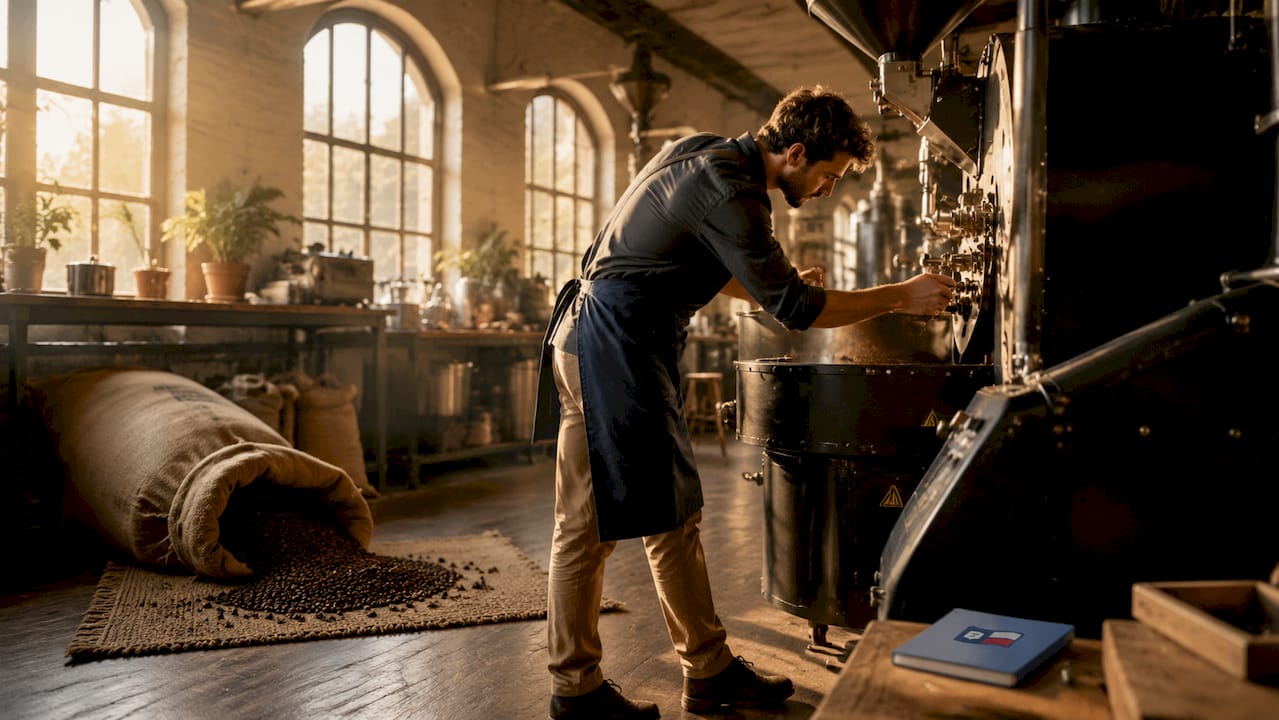
The coffee roasting process runs at temperatures between 196 and 230°C for 8 to 15 minutes per batch, and that heat demand is the primary driver of carbon emissions in a roastery. Green coffee beans enter the drum, absorb heat, and undergo Maillard reactions that develop flavor compounds. Every minute of that process consumes energy, and the source of that energy determines the size of the carbon footprint.
| Roast Level | Relative Energy Use | Carbon Impact |
|---|---|---|
| Light roast | Lowest | Lowest emissions per batch |
| Medium roast | Moderate | Mid-range emissions |
| Dark roast | Highest | Up to 33% more than light roast |
Light roasting emits 33.33% less carbon than dark roasting and 16.67% less than medium roasting. This means a roastery that shifts its product mix toward lighter profiles can reduce its carbon footprint without changing a single piece of equipment. That is a significant lever that most sustainability conversations overlook.
Beyond the drum itself, a credible carbon audit includes packaging lines, refrigeration, office energy, and outbound shipping. Roasters who only measure drum heat are underreporting their actual footprint. The full picture requires accounting for every kilowatt-hour and every kilometer traveled.
Pro Tip: When evaluating a roaster’s sustainability claims, ask specifically whether their carbon audit covers Scope 1 (direct emissions), Scope 2 (purchased energy), and Scope 3 (supply chain and logistics). A roaster who can answer that question clearly is operating at a different level than one who simply mentions “eco-friendly practices.”
Understanding how coffee processing methods upstream of roasting also affect the total footprint helps you see the full picture of sustainable coffee production.
How sustainable roasting practices reduce greenhouse gas emissions
Reducing emissions before reaching for offsets is the defining characteristic of credible sustainable coffee roasting. Roasters have several proven pathways to cut their carbon output, and the most effective combine energy source changes with process optimization.
-
Switch to renewable energy. Biofuels, solar, and geothermal energy can replace natural gas in roasting operations. Solar installations on roastery rooftops are increasingly common in Texas and California. Geothermal is more relevant for roasters in Iceland or New Zealand, but the principle applies globally. Each renewable swap reduces Scope 2 emissions directly.
-
Optimize roast profiles. Shorter roast times and lower peak temperatures reduce energy consumption per batch. Modern drum roasters from manufacturers like Loring Smart Roast use recirculating hot air systems that cut fuel use by up to 80% compared to traditional drum designs. Profile optimization is free once the equipment is in place.
-
Shift toward lighter roast profiles. Because light roasting is both profitable and environmentally favorable, roasters have a business case for offering more light and medium roasts alongside their dark blends. Specialty coffee’s growing preference for single-origin light roasts aligns naturally with this sustainability goal.
-
Implement heat recovery systems. Exhaust heat from roasting drums can be captured and redirected to preheat incoming air or warm facility spaces. This reduces the total energy input needed per roast cycle without affecting flavor development.
-
Integrate smart grid scheduling. Running energy-intensive roasting cycles during off-peak hours reduces the carbon intensity of grid electricity. In regions with high renewable penetration during midday hours, scheduling roasting around solar generation peaks can cut emissions without any capital investment.
Pro Tip: If you roast at home or run a small café, choosing a light or medium roast from a roaster who publishes their energy source is the single highest-impact purchasing decision you can make for sustainable coffee. Roast level affects emissions more than most people realize.
Roasters who combine these strategies before purchasing offsets are following the measure, reduce, and offset hierarchy that ISO 14068-1 requires. Those who skip straight to offsets are making a weaker claim, even if the marketing language sounds identical.
What role do carbon offsets play in achieving neutrality?
Carbon offsets are the final step in achieving carbon neutral status, not the first. ISO 14068-1 mandates that offsets are applied only after a roaster has implemented all feasible reduction measures and documented the residual emissions that cannot yet be eliminated. This sequencing is what separates credible carbon neutral coffee from offset-only greenwashing.
High-quality offsets used by specialty roasters typically fall into a few verified categories:
- Verified Carbon Standard (VCS) credits: Issued by Verra, these cover forestry, renewable energy, and methane capture projects with rigorous third-party auditing
- Gold Standard credits: Developed with WWF involvement, these focus on projects with co-benefits like biodiversity and community development
- Biochar and soil carbon credits: Emerging offset types that store carbon in stable form for centuries, moving toward the permanent removals that ISO 14068-1 increasingly favors
- Direct air capture credits: High-cost but highly permanent, these are entering roaster offset portfolios as prices decline
The difference between carbon neutral and net zero is worth understanding clearly. Carbon neutral allows offsets to cover residual emissions after some reductions. Net zero, as defined by the Science Based Targets initiative (SBTi), requires a 90% reduction in absolute emissions before any offsets are applied. A roaster claiming net zero is making a far more demanding commitment than one claiming carbon neutrality.
Third-party certification and audit build consumer trust in sustainability claims, and the trend in offset quality is moving toward permanence. Forestry credits, which can be reversed by wildfires or deforestation, are losing credibility. Roasters building future-proof offset portfolios are shifting toward geological storage and biochar. When you support a roaster who publishes their offset registry and credit type, you are funding that transition.
Key takeaways
Carbon neutral coffee roasting requires measuring all emissions, reducing them through documented strategies, and offsetting only what remains under the ISO 14068-1:2023 framework.
| Point | Details |
|---|---|
| ISO 14068-1:2023 is the standard | Credible carbon neutral claims require quantification, reduction, and verified offsets in that order. |
| Roast level affects emissions directly | Light roasting emits 33.33% less carbon than dark roasting, making profile choice a sustainability lever. |
| Offsets come last | Roasters must reduce emissions first; offsets cover only residual emissions that cannot be eliminated. |
| Carbon neutral vs. net zero differ | Net zero requires 90% emission cuts before offsets; carbon neutral allows offsets after partial reductions. |
| Full audits include more than the drum | Logistics, packaging, and facility energy all count toward a complete carbon footprint assessment. |
Why I think most “eco-friendly coffee” claims deserve more scrutiny
I have spent years reading sustainability reports from coffee companies, and the gap between marketing language and actual practice is wider than most consumers realize. The phrase “carbon neutral coffee” appears on bags from roasters who have done rigorous ISO-certified work and from roasters who purchased a small batch of forestry credits and called it a day. Those two situations are not the same, and the packaging rarely tells you which one you are holding.
What I find genuinely encouraging is that the ISO 14068-1 framework gives consumers a specific question to ask: “Are you ISO 14068-1 certified, and can I see your carbon management plan?” A roaster who has done the work will answer that question immediately. One who has not will pivot to talking about their compostable bags.
The roast level insight is the one I think deserves far more attention. Choosing a light or medium roast from a transparent roaster is a real, measurable act. It is not symbolic. It directly reduces the energy consumed to produce your coffee, and it often produces a better cup because lighter roasts preserve more of the origin character that makes specialty coffee worth drinking in the first place. Flavor quality and environmental responsibility are not in tension here. They point in the same direction.
I also want to push back gently on the idea that consumers are powerless in this space. Supporting local roasters who publish their emission data, asking hard questions about offset quality, and choosing products from roasters who follow verified standards are all concrete actions. The market responds to purchasing decisions, and eco-conscious consumers who ask specific questions change what roasters prioritize.
— Rosario
Explore sustainable coffee and specialty beverages at Font-mag
Font-mag sources specialty coffees with the same rigor it applies to every product in its lineup, from small-batch Texas-roasted selections to premium matcha and Sweetbird café essentials. If you are looking for coffee that aligns with your values, the specialty offerings collection is a strong starting point, with options that reflect careful sourcing and roasting decisions. For those who prefer a lower-caffeine option without sacrificing quality, Font-mag’s decaf coffee selection includes roasts that meet the same premium standard. And if you want to round out your home café setup, the flavored coffee range pairs beautifully with Sweetbird syrups for a complete, thoughtfully curated experience. Free shipping applies on all orders over $35.
FAQ
What does carbon neutral coffee roasting mean?
Carbon neutral coffee roasting means the total greenhouse gas emissions from the roasting process are balanced to net zero through a combination of reduction strategies and verified carbon offsets. The ISO 14068-1:2023 standard defines the credible framework for this claim.
How is carbon neutral different from net zero in coffee?
Carbon neutral allows offsets to cover residual emissions after some reductions, while net zero requires a 90% absolute emission cut before any offsets are applied. A roaster claiming net zero under SBTi standards is held to a significantly higher bar.
Does roast level really affect carbon emissions?
Yes. Light roasting produces 33.33% fewer emissions than dark roasting because it requires less energy and shorter roasting times. Choosing lighter roasts is one of the most direct ways a consumer can reduce the carbon footprint of their coffee habit.
How can I verify a roaster’s carbon neutral claims?
Ask whether the roaster holds ISO 14068-1:2023 certification and whether their carbon audit covers logistics and packaging in addition to roasting energy. Third-party verification and a published carbon management plan are the clearest indicators of a credible claim.
Are carbon offsets reliable for coffee sustainability?
Offsets vary significantly in quality. Credits verified under the Verified Carbon Standard or Gold Standard are more reliable than unverified forestry credits. The trend in credible offset portfolios is moving toward permanent carbon removals like biochar and direct air capture.
Recommended
- Supporting Local Roasters Checklist for Coffee Lovers – Font Coffee Roasters
- Texas Roast Coffee Brewing Guide for Enthusiasts – Font Coffee Roasters
- Why Locally Roasted Coffee Is Fresher and Tastes Better – Font Coffee Roasters
- Signs of Fresh Roasted Coffee: 9 Indicators to Know – Font Coffee Roasters