

Coffee Degassing Explained: Rest Windows and Brew Timing
Coffee degassing is the natural release of carbon dioxide (CO₂) from roasted beans, and it starts the moment the roast ends. Brew too early and that escaping gas physically pushes water away from the grounds, producing sour, metallic, or uneven cups. The fix is straightforward: let whole beans rest for several days before brewing, depending on your roast level and brew method, and store them in a valve bag until you’re ready.
Pro Tip: If you’re in a pinch and need to brew before the ideal window, use a short bloom to force out residual CO₂ before your main pour.
Table of Contents
- What is coffee degassing, and why does it happen?
- How does CO₂ get into coffee during roasting?
- How long does coffee degassing take?
- Does degassing actually affect how your coffee tastes?
- What happens after beans fully degas?
- How to apply rest windows at home: a practical guide
- Special cases: decaf, espresso, and cold brew
- The short version: what to do with your beans right now
- Key Takeaways
- Why rest windows matter more than most roasters admit
What is coffee degassing, and why does it happen?
Degassing is the ongoing, natural process by which roasted coffee releases gases formed during the roast, primarily CO₂ along with small amounts of other volatile compounds. It isn’t a flaw or a sign of poor packaging. It’s chemistry doing exactly what it should.
You’ll notice it in a few ways at home:
- Puffed bags: A bag that looks inflated isn’t leaking. It’s actively venting CO₂ from fresh beans.
- Bloom bubbling: That satisfying dome of foam during a pour-over is CO₂ escaping on contact with hot water.
- Audible hiss from valve bags: The one-way valve is doing its job, releasing gas without letting oxygen in.
Pro Tip: A puffed bag is actually a freshness indicator in specialty roasting, not a sign of a bad seal. If anything, it tells you the beans are recent.
How does CO₂ get into coffee during roasting?
Heat triggers a cascade of chemical reactions inside the bean. Carbohydrates break down through the Maillard reaction and caramelization, generating CO₂ as a byproduct. Some of that gas escapes during the roast itself, but a significant portion gets trapped inside the bean’s porous cell structure under pressure.
A few variables shape how much gas stays locked in:
- Roast degree: Darker roasts create more fractures in the bean’s cell walls, which means gas escapes more readily both during and after roasting.
- Roast duration: Longer roasts at a given temperature tend to drive out more gas before the bag is sealed.
- Bean density and processing: Dense, high-altitude beans and naturally processed coffees often hold more gas per gram than washed, lower-grown beans.
Grinding shatters the cell walls entirely. Ground coffee can release most of its remaining CO₂ within 15–30 minutes, which is why grinding immediately before brewing matters so much for flavor stability. Understanding how coffee processing methods affect bean structure helps explain why two coffees at the same roast level can behave very differently during degassing.
How long does coffee degassing take?
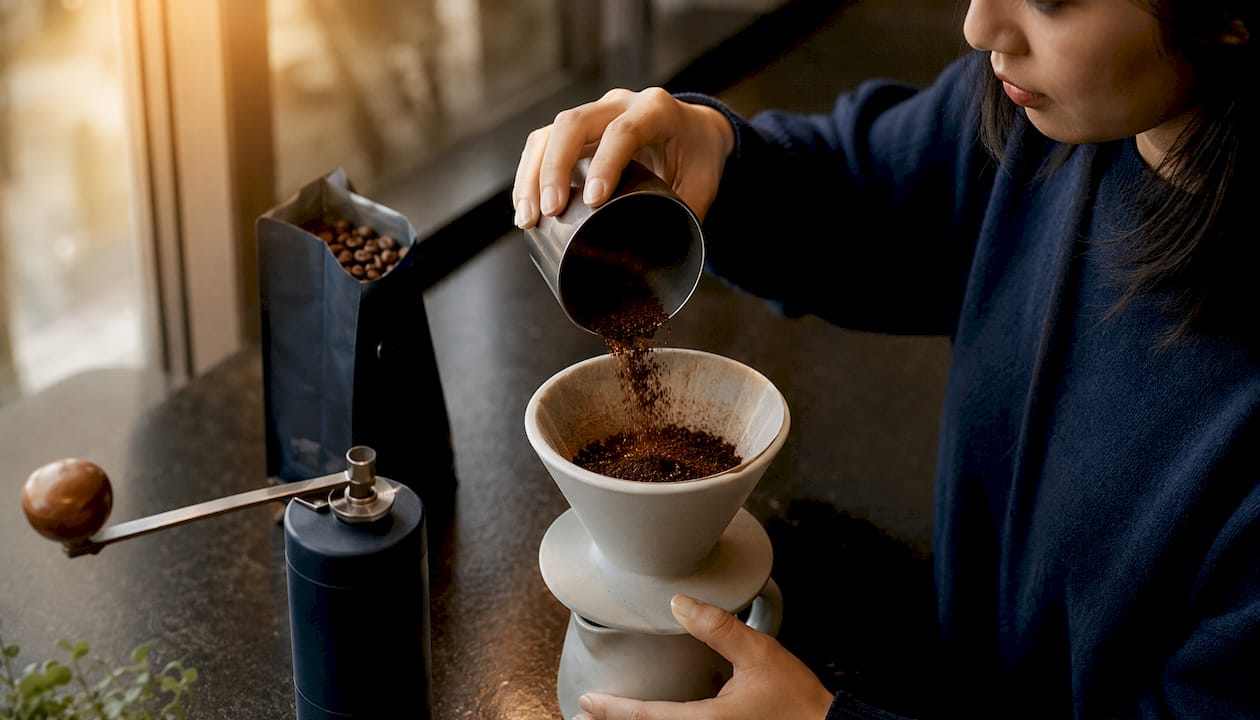
There’s no single answer, which is why most advice gives a range rather than a fixed day. Roughly 40% of CO₂ leaves in the first 24 hours after roasting. After that, the rate slows considerably and continues over days to weeks.
Variables that shift the timeline:
- Roast level (darker = faster degassing)
- Bean origin and density
- Processing method (natural vs. washed)
- Whether beans are whole or ground
- Storage temperature and container type
Most beans reach a brewing-ready window somewhere between 2 and 12 days post-roast. Full degassing and stabilization can take several weeks, at which point the protective residual CO₂ is largely gone and oxidation begins to accelerate.
| Roast Level | Brew Method | Suggested Rest Window |
|---|---|---|
| Dark | Espresso | 2–5 days |
| Dark | Pour-over / drip | 2–4 days |
| Medium | Espresso | 5–10 days |
| Medium | Pour-over / drip | 3–7 days |
| Light | Espresso | 10–14 days |
| Light | Pour-over / drip | 7–12 days |
| Any | Cold brew | 3–7 days (tolerates fresher) |
| Any | French press | 3–8 days |
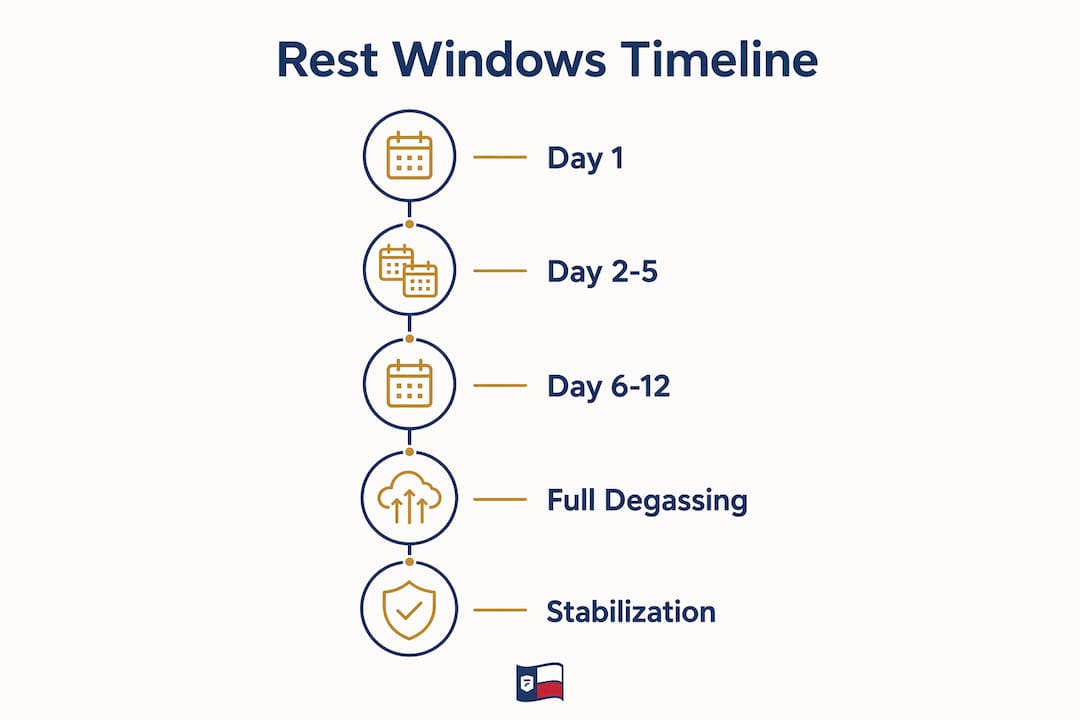
Pro Tip: Use the lower bound of the window as your starting point, then check the bloom. A vigorous, domed bloom means more CO₂ is still present. A flatter, slower bloom signals the beans are closer to peak.
Does degassing actually affect how your coffee tastes?
Yes, and the effect is more mechanical than most people expect. CO₂ bubbles form a physical barrier between water and the coffee grounds. Water can’t penetrate evenly, so it dissolves compounds from the outer surface of each particle rather than extracting from the whole ground. The result is a cup that’s simultaneously too acidic and oddly flat, sometimes with a metallic edge.
The brew methods most sensitive to excess CO₂:
- Espresso: High pressure and a short contact time leave no room to compensate. Crema becomes unstable and extraction goes uneven.
- Moka pot: Similar pressure dynamics; over-gassing causes sputtering and inconsistent flow.
- Pour-over: Highly visible bloom; easier to manage with a proper pre-infusion, but still affected if beans are very fresh.
Slower methods like French press and cold brew are more forgiving because extended contact time allows CO₂ to dissipate during brewing. That said, even these methods benefit from a short rest.
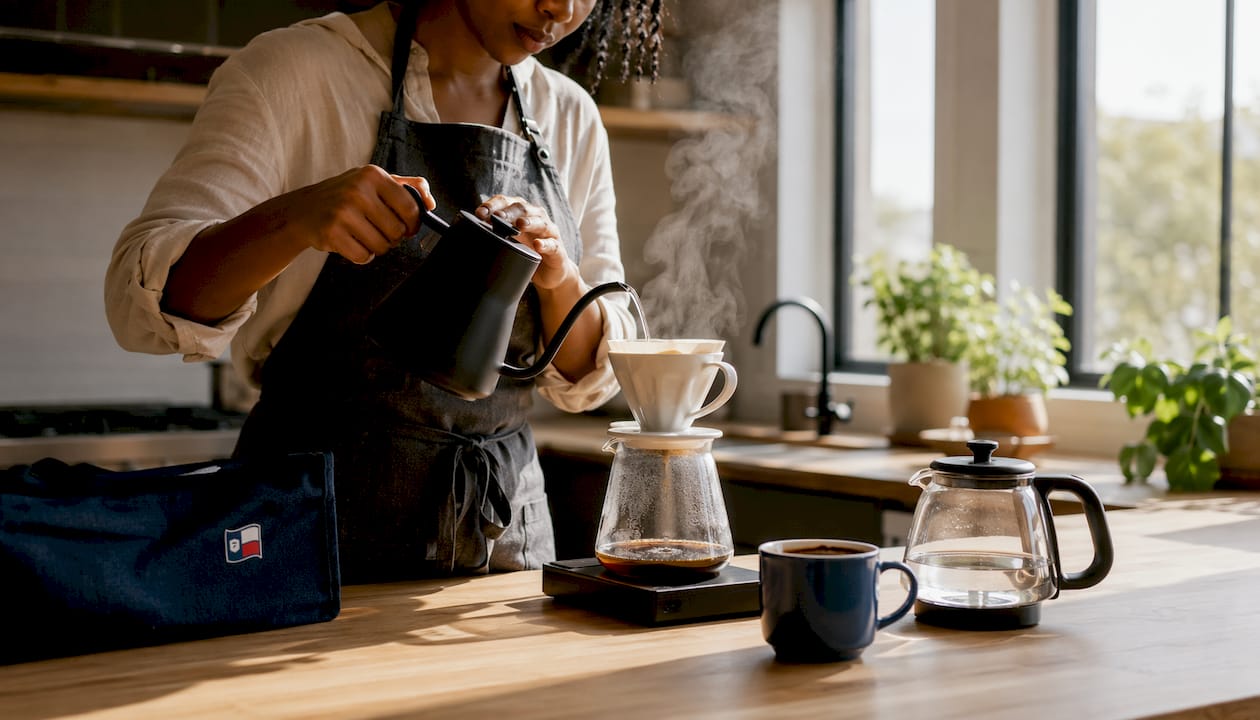
A 30–45 second bloom before your main pour is the most practical in-brew fix. It forces out a burst of CO₂ before full extraction begins, improving water contact and evenness. For a deeper look at how this connects to overall coffee extraction, the mechanics are worth understanding.
What happens after beans fully degas?
Once the residual CO₂ is gone, the beans lose a natural buffer against oxygen. Oxidation moves in fast, flattening aromatics and dulling the brightness that made the coffee worth buying in the first place. Whole beans stored at room temperature without a valve bag can enter this rapid decline after several weeks following roasting.
Storage choices at this stage matter a lot:
- Valve bags: The one-way valve lets CO₂ out while blocking oxygen ingress, buying meaningful time during shipping and on-shelf storage.
- Airtight opaque containers: Once you’ve opened the bag and reached your preferred rest window, transfer beans to a sealed, dark container to slow oxidation.
- Avoid the freezer for daily-use beans: Repeated temperature cycling introduces moisture. Reserve freezing for long-term storage of sealed, unopened bags.
Pro Tip: Keep beans in their original valve bag until you hit the lower bound of your rest window. Then transfer to an opaque, airtight jar at home. This two-stage approach gives you the best of both worlds: active degassing during shipping, controlled oxidation management at home.
For more on what drives coffee going stale after peak, the oxidation timeline is worth knowing before you buy in bulk.
How to apply rest windows at home: a practical guide
Here’s how to put all of this into practice without overthinking it.
Step-by-step:
- Note the roast date on the bag (not the “best by” date).
- Use the rest window table below as your starting point.
- At the lower bound, pull a small test dose and check the bloom and aroma.
- If the bloom is aggressive and the aroma is sharp or grassy, wait another 2–3 days.
- Once the bloom is moderate and the aroma opens up with sweetness and clarity, you’re in the window.
- Grind immediately before each brew.
| Roast Level | Suggested Rest (Days) |
|---|---|
| Dark | 2–12 |
| Medium | 2–12 |
| Light | 2–12 |
Storage checklist:
- Ship and store in a valve bag until the rest window begins.
- Keep the bag sealed and away from heat, light, and moisture.
- Transfer to an opaque, airtight container after opening.
- Grind only what you need, immediately before brewing.
Pro Tip: If you need to brew before the ideal window, dial back your grind slightly coarser and use a longer bloom. It won’t fully compensate, but it reduces CO₂ interference enough to get a decent cup.
Special cases: decaf, espresso, and cold brew
Decaf
Decaffeination processes vary widely, and some (particularly Swiss Water and CO₂ methods) alter the bean’s cell structure and volatile content. Decaf often degasses faster and with less total gas than its caffeinated counterpart. The practical advice: decaf coffee generally needs a shorter rest, but rely on sensory checks rather than fixed timelines since the behavior varies by process.
Espresso
Espresso is the most CO₂-sensitive brew method. Many experienced home baristas and café operators wait 7–21 days for medium and light roasts before pulling shots, adjusting by roast level. Crema stability is the clearest signal: thin, dissipating crema often means too much CO₂ (too fresh) or too little (over-rested). Dark espresso roasts can be ready in as few as 2–5 days.
Cold brew
Cold brew’s long steep time (12–24 hours) gives CO₂ plenty of opportunity to dissipate during extraction. Fresher beans are more tolerable here than in any other method. That said, beans that are aggressively off-gassing in the first 24–48 hours post-roast can still produce slightly grassy or vegetal notes even in cold brew. A 3–5 day rest is a reasonable minimum.
When in doubt, run a simple A/B test: brew the same beans at two different rest points and compare. Your palate will tell you more than any chart.
The short version: what to do with your beans right now
Degassing is normal, necessary, and manageable. Here’s the one-paragraph version:
Let whole beans rest in their valve bag for the window that matches your roast level and brew method (2–12 days for most coffees). Store in an opaque, airtight container after opening. Grind immediately before brewing. Use a 30–45 second bloom to handle any residual CO₂. Check the bloom and aroma at the lower bound of your window and adjust from there.
- Degassing = CO₂ leaving the bean; it starts at the moment the roast ends.
- Too much CO₂ at brew time causes uneven extraction, sourness, and unstable crema.
- Rest windows vary by roast level and brew method; 2–12 days covers most situations.
- Full degassing (4–8 weeks) precedes rapid oxidation and flavor loss.
- Valve bags protect during shipping; airtight opaque containers protect at home.
- Grind immediately before brewing to avoid accelerated post-grind degassing.
Key Takeaways
Coffee degassing requires a method-specific rest window of 2–12 days, proper valve-bag storage during shipping, and immediate pre-brew grinding to preserve peak flavor and extraction quality.
| Point | Details |
|---|---|
| Rest before you brew | Whole beans need 2–12 days post-roast depending on roast level and brew method. |
| 40% leaves in 24 hours | The bulk of initial CO₂ exits fast; the rest tapers over days to weeks. |
| Full degas triggers staling | After 4–8 weeks, residual CO₂ is gone and oxidation accelerates flavor loss. |
| Valve bags are not optional | One-way valves let CO₂ out while blocking oxygen, protecting freshness during shipping. |
| Grind at brew time | Ground coffee loses most remaining CO₂ within 15–30 minutes, so grind immediately before use. |
Why rest windows matter more than most roasters admit
There’s a tendency in specialty coffee to treat freshness as a single axis: newer is better, full stop. The degassing reality complicates that. A bag roasted this morning is not better than one roasted five days ago. For most brew methods, it’s actually worse.
What I find genuinely underappreciated is how much the rest window varies by origin and processing, not just roast level. A dense, naturally processed Ethiopian light roast can hold CO₂ noticeably longer than a washed Colombian at the same roast degree. The rest-window tables in this guide are starting points, not verdicts. The bloom check is the real diagnostic.
At Font-mag, this thinking shapes how we handle small-batch roasts like the Broken Arrow Reserve. Beans ship in valve bags specifically so the CO₂ has somewhere to go in transit, and customers receive them within a window that puts them at or near the lower bound of the ideal rest range. The goal is that you’re not waiting a week after the bag arrives. You’re already close.
The same freshness logic applies across our full lineup. Our matcha selection, including options from Rishi Tea, follows similar principles: oxidation is the enemy, and packaging and turnover speed are the defenses. Whether it’s a light roast or a ceremonial-grade matcha, the underlying principle is the same. Freshness isn’t a marketing claim. It’s a function of how the product was stored, shipped, and when it reaches you.
For home roasters specifically: the sensory bloom check is worth building into your routine. Pull a small dose at the lower bound of your rest window, watch the bloom, smell the dry grounds, and taste the result. That 60-second ritual will tell you more about your specific beans than any fixed timeline.