

Why Coffee and Tea Pair with Food: The Sensory Guide
Coffee and tea change how food tastes. Their aroma compounds, acidity, bitterness, sweetness, body, and tannins interact with food at a chemical level — amplifying certain flavors, muting others, and resetting the palate between bites. That’s the short answer to why coffee and tea pair with food, and everything else in this guide unpacks how to use it.
Three quick rules:
- Match intensity. A light, floral pour-over gets buried by a rich beef stew; a bold dark roast overwhelms a delicate white fish. Keep weights in the same range.
- Use bridge notes. Shared aroma compounds create synergy. A chocolate-forward espresso and a brownie both carry Maillard reaction notes — they reinforce each other.
- Contrast to cleanse. Tannic black tea cuts through fatty cheese. Bright, acidic coffee cuts through buttery richness. Contrast resets the palate so the next bite tastes as good as the first.
Two key pairing principles to remember are: light beverages go with light dishes, and bold beverages with bold dishes. Also, tannic teas help cleanse fatty foods, while bright coffees counterbalance rich flavors.
Table of Contents
- Why does coffee or tea make food taste better?
- What are the sensory building blocks that determine a good pairing?
- What are the three pairing strategies you can actually use?
- Which coffees and teas pair with which foods?
- How does brewing method and temperature change a pairing?
- How do you taste-test a pairing at home?
- What do experts say about pairing coffee and tea with food?
- Key Takeaways
- The case for restraint — and for going beyond coffee
- Explore Font-mag’s coffees and teas for your next pairing
Why does coffee or tea make food taste better?
The simplest explanation is that beverages and food share volatile aroma compounds, and when those compounds overlap, the brain perceives the combination as more harmonious. Aromatic similarity in food and beverage pairings measurably increases perceived harmony and complexity — it’s the same principle behind the shared flavor network concept that food scientists use to explain why certain ingredients just work together.
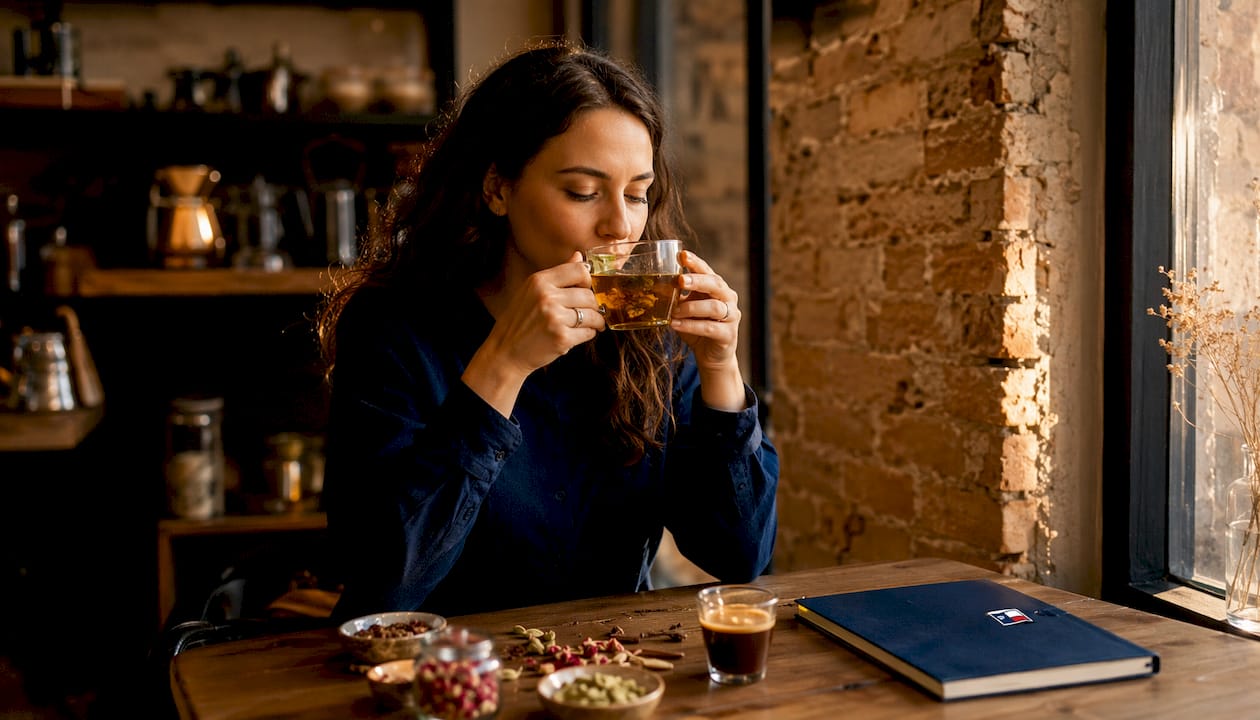
Taste-stage interactions matter just as much. Acidity brightens food by contrast — a sip of high-acid Ethiopian pour-over before a bite of rich scrambled eggs makes the eggs taste cleaner and less heavy. Bitterness balances sweetness: espresso’s bitter edge keeps a chocolate dessert from reading as cloying. Sweetness softens acidity, which is why a naturally sweet medium roast can make a tart fruit pastry feel rounder.
Three quick sensory examples:
- Breakfast croissant + medium roast coffee. The coffee’s caramel and toasted-grain notes echo the pastry’s Maillard browning. Both carry the same roasted-sweet compounds, so each sip amplifies the other.
- Fatty charcuterie + black tea. Tannins in black tea bind to fat molecules and proteins, stripping the coating from your palate. The next bite of cured meat tastes sharper and cleaner.
- Fresh oysters + green tea. Green tea’s grassy, umami-adjacent notes mirror the oceanic minerality of raw shellfish without competing. The low tannin level protects the seafood’s delicate sweetness.
What are the sensory building blocks that determine a good pairing?
Each sensory attribute in your cup does something specific to the food that follows it. Here’s a practical reference:
| Attribute | What it is | Pairing effect |
|---|---|---|
| Aroma | Volatile compounds released by heat or brewing | Shared notes create a “bridge” — chocolate, citrus, roasted, floral |
| Acidity | Bright, lively tartness (malic, citric, phosphoric acids) | Cleanses the palate; lifts fatty or rich foods |
| Bitterness | Chlorogenic acids, caffeine, tannins | Balances sweetness; adds structure to dessert pairings |
| Sweetness | Natural sugars from roast or tea oxidation | Softens acidity in food; makes savory pairings feel rounder |
| Body/mouthfeel | Oils, proteins, dissolved solids | Match weight to weight — full body with rich food, light body with delicate food |
| Tannins | Polyphenols (higher in black tea, oxidized oolong) | Bind fat and protein; act as a palate cleanser for creamy or fatty dishes |
| Umami | Amino acids, especially L-theanine in tea | Tea’s L-theanine amplifies umami when paired with miso or aged cheese, creating savory synergy |
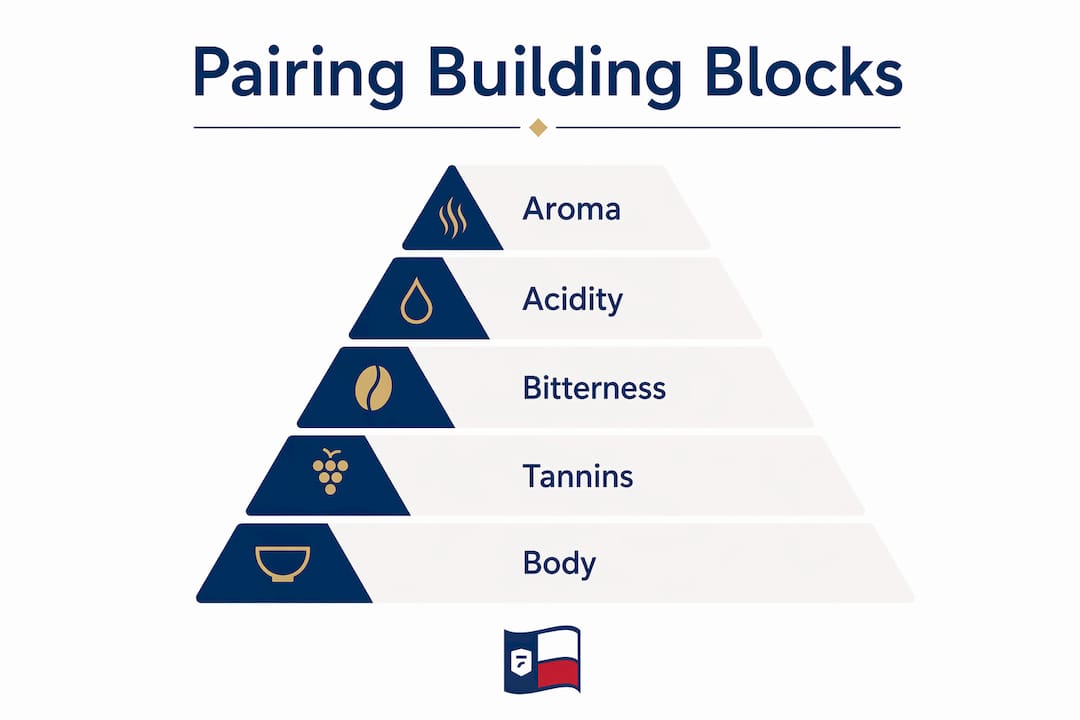
Aroma as a bridge. The most reliable pairing shortcut is finding a shared aroma note. Roasted coffee carries Maillard reaction compounds — the same caramel, chocolate, and nutty molecules produced when bread bakes or meat browns. That’s why a dark roast and a piece of chocolate cake feel inevitable together. Citrus notes in a washed Ethiopian coffee bridge naturally to lemon tart. Floral oolong bridges to honey-glazed fruit.
The ITMA Tea Aroma Wheel and the SCA Coffee Taster’s Flavor Wheel are both useful navigation tools. Find your beverage’s dominant note on the wheel, then look for food that shares a nearby branch.
What are the three pairing strategies you can actually use?
Match: same intensity, same weight
Pair a beverage and dish that occupy the same sensory weight class. A delicate white tea belongs with mild, lightly seasoned food — steamed fish, plain rice crackers, fresh fruit. A full-bodied French press dark roast belongs with braised short ribs or a dense chocolate torte. The logic is simple: neither should overpower the other.
- Coffee example: Medium roast pour-over + almond croissant. Both are moderate in intensity, and the nutty notes align.
- Tea example: White tea + fresh strawberries. Both are light, subtly sweet, and low in tannin.
Complement (bridge): shared flavor notes
Find a flavor note the beverage and food share, then let them amplify each other. Maillard reaction compounds in roasted coffee pair naturally with baked goods that carry the same caramel and nutty chemistry.
- Coffee example: Chocolatey Brazilian espresso + dark chocolate brownie. The shared cocoa compounds make both taste more intensely chocolate.
- Tea example: Lightly smoky Lapsang Souchong + aged Gouda. The smoke note in the tea echoes the caramelized, crystalline quality of the cheese.
Contrast: use the beverage to cleanse
A beverage that contrasts a dish’s dominant quality resets the palate so every bite stays vivid. High-acid coffee cuts through butter; tannic tea strips fat from the tongue.
- Coffee example: Bright, high-acid Kenyan pour-over + buttery shortbread. The acidity slices through the fat and makes the cookie taste less heavy.
- Tea example: Strongly tannic Assam black tea + brie or camembert. The tannins bind the cream and fat, leaving the palate clean.
Pro Tip: Choose your strategy by meal moment. At breakfast, complement works best — match the coffee’s roasted notes to toasted bread or pastry. At dessert, contrast is often more interesting — a bitter espresso stops a sweet dessert from becoming too much. At a heavy dinner, contrast again: a tannic tea or bright coffee keeps rich food from feeling like a wall.
Which coffees and teas pair with which foods?
Coffee by roast and brew
Light roast coffees are bright, fruit-forward, and often floral. They suit delicate foods: fruit tarts, yogurt parfaits, mild cheeses, and lightly dressed salads. Pour-over brewing (Chemex, V60) keeps the cup clean and transparent, which protects those delicate notes.
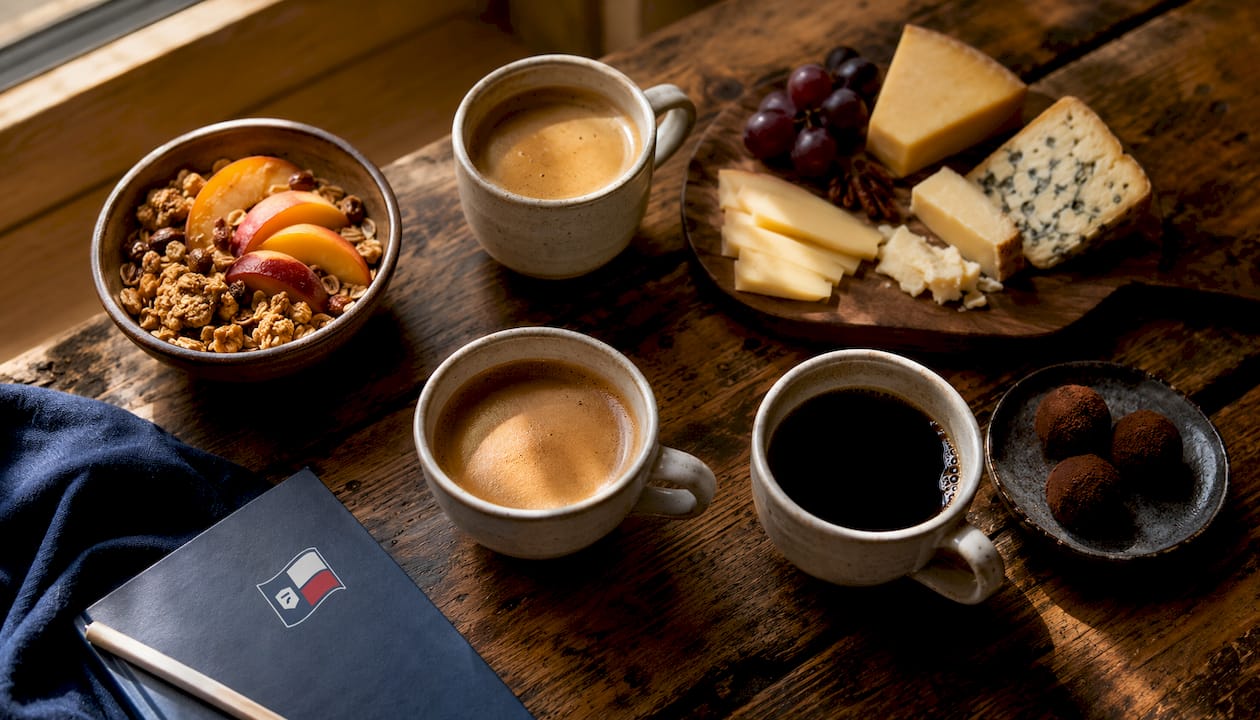
Medium roast is the most flexible. Caramel, nut, and mild chocolate notes pair with pastries, breakfast sandwiches, cookies, and most everyday café foods. Both pour-over and drip work well.
Dark roast is bolder and more bitter, with roasted, smoky, or dark chocolate character. It stands up to rich desserts, fatty meats, and anything caramelized. French press and espresso suit it best because the added body matches the food’s weight.
Espresso pairs naturally with dark chocolate cake, tiramisu, and brownies. The concentration holds its own against intense desserts. Cold brew’s low acidity and smooth body pair well with milk-based desserts — panna cotta, crème brûlée, vanilla ice cream — because the muted acidity lets creamy textures lead.
Research suggests chocolate, nutty, and sweet coffees pair more broadly across food categories than fruity or floral profiles, which are better reserved for specific fruit-forward dishes.
Tea by category
| Tea type | Typical notes | Tannin level | Best pairings |
|---|---|---|---|
| Green | Grassy, vegetal, umami | Low | Seafood, sushi, light salads, mild soft cheese |
| White | Floral, honey, melon | Very low | Fresh fruit, delicate pastries, mild fish |
| Oolong | Floral to roasted (varies) | Low–medium | Dim sum, roasted nuts, stone fruit, mild spice |
| Black | Malty, brisk, sometimes fruity | High | Fatty meats, aged cheese, buttery pastries, spicy food |
| Pu-erh | Earthy, woody, fermented | Medium–high | Rich braised meats, mushroom dishes, dark chocolate |
| Herbal | Varies widely (mint, chamomile, hibiscus) | None–low | Desserts, fruit, light savory snacks |
Tea Master GI Na’s guidance holds here: white and green teas preserve seafood sweetness, while oxidized teas like pu-erh suit richer meats. For a fun casual pairing, a bright hibiscus herbal tea alongside gourmet popcorn works surprisingly well — the tartness of the hibiscus cuts through butter and salt in the same way a high-acid coffee would. For more creative snack-pairing ideas, gourmet popcorn pairings offer a useful starting point.
How does brewing method and temperature change a pairing?
The same coffee bean brewed two different ways can require completely different food matches. James Hoffmann’s observation is worth taking seriously: brewing method changes which foods best match a coffee because extraction highlights different notes.
Brewing method rules:
- A clean, filtered brew (Chemex, V60, Kalita Wave) produces a transparent cup that favors delicate food. Pair with mild pastries, fresh fruit, or lightly seasoned dishes.
- A full-bodied brew (French press, AeroPress with a metal filter) adds oils and texture. It stands up to fatty, strongly flavored foods — charcuterie, aged cheese, rich stews.
- Espresso is concentrated and intense. It needs food with enough sweetness or fat to absorb that intensity.
- Cold brew is low-acid and smooth. It suits creamy desserts and mild savory snacks where acidity would clash.
Temperature effects. Hotter service increases volatile release, which means more aroma and more perceived bitterness. A piping-hot black tea will taste more tannic and astringent than the same tea served at 140°F. Cooler service mutes acidity and can emphasize sweetness — cold brew tastes sweeter than the same coffee served hot because the acids that register as sharp are less volatile at low temperatures.
Milk, cream, and sweeteners. Adding milk softens tannins and bitterness, which shifts the pairing logic. A milky latte pairs more like a dessert drink than a straight espresso. If you’re adjusting your brew to tailor a pairing, the home barista ingredient guide covers how milk fat percentage and sweetener type change the cup’s final character.
Pro Tip: If a pairing feels off, check the temperature before changing the food. A tea that tastes too bitter with cheese may simply be too hot. Let it cool two minutes and try again.
How do you taste-test a pairing at home?
A structured tasting takes about five minutes and tells you more than a dozen random sips.
- Smell the beverage first. Before tasting, hold the cup under your nose and breathe in. Identify one or two dominant aroma notes — roasted, fruity, floral, earthy. This primes your palate.
- Sip alone. Take a small sip and let it coat your whole mouth. Note the acidity, bitterness, sweetness, and body. Score it 1–5 on each if you want to track results.
- Eat one small bite. A single bite, chewed fully. Don’t sip yet.
- Return to the beverage. Sip again immediately. Ask: does the coffee or tea taste different? Better, worse, or just changed?
- Note the interaction. Did the food make the beverage taste more bitter? Sweeter? Did the beverage make the food taste richer or cleaner?
- Does the second sip improve? If yes, you have a working pairing. If the beverage now tastes flat or harsh, the pairing is fighting itself.
A simple, restrained bite often reveals a beverage’s character better than a complex dessert. A plain salted cracker or a single nut strips away distraction and lets the cup speak. Sequence also matters: pairing coffee with food that increases perceived sourness can actively reduce how much you enjoy the coffee, so if a pairing feels wrong, try reversing the order.
What do experts say about pairing coffee and tea with food?
The practitioners who work with food and beverage pairings daily tend to agree on a few things that casual guides miss.
“The key is to match the weight of the tea to the weight of the dish. A light, delicate tea should not be asked to stand up to a rich, fatty course — it will disappear. Protect the tea’s qualities first, and let the food meet it there.” — Tea Master GI Na, as cited in Michelin’s guide to tea pairing
Sommelier Federico Quintavalle notes that tea pairing is growing in fine dining as a serious non-alcoholic option, with chefs treating tea the way they treat wine when planning multi-course experiences. The structural difference is that tea lacks alcohol’s role in cutting fat, so tannins and acidity carry more weight in the pairing logic.
For home tasters, the practical takeaway from all three expert perspectives is the same: start with the beverage, identify its dominant quality, and find food that either shares or productively contrasts that quality. The coffee and tea pairing guide at Font-mag applies this framework across specific dishes and beverage profiles if you want a ready reference.
Key Takeaways
Coffee and tea pair with food because their aroma, acidity, bitterness, tannins, and body interact with food compounds to amplify, balance, or cleanse flavors at every bite.
| Point | Details |
|---|---|
| Match intensity first | Light cup with light dish; bold cup with bold dish — weight mismatch is the most common pairing mistake. |
| Use bridge aromas | Shared Maillard compounds (roasted, caramel, chocolate notes) create synergy between coffee and baked goods. |
| Tannins and acidity cleanse | Tannic black teas cut fat; high-acid coffees cut richness — contrast resets the palate between bites. |
| Brewing method shifts the pairing | A clean pour-over suits delicate food; a full-bodied French press suits fatty or strongly flavored dishes. |
| Font-mag for tasting experiments | Font-mag’s retail coffees and MAG loose-leaf teas give you a range of profiles to test these principles at home. |
The case for restraint — and for going beyond coffee
Most pairing guides push complexity. Try this combination, layer these flavors, build a tasting menu. The practitioners who actually do this for a living tend to say the opposite: restraint reveals more.
A single plain cracker alongside a cup of white tea will teach you more about that tea’s character than a three-course meal will. The same principle applies to coffee. When you strip away competing flavors, the beverage’s actual qualities become audible. That’s when you start noticing that a washed Yirgacheffe has a jasmine note, or that a Broken Arrow Reserve carries a caramel depth that makes a simple butter cookie taste like something you’d pay for in a café.
What surprises people at Font tastings is how well the non-coffee offerings hold up as pairing partners. Japanese matcha has a grassy, umami-rich depth that works beautifully with savory snacks and mild cheeses in ways that coffee simply can’t replicate. MAG Tea’s loose-leaf selections span the full range from delicate white teas to robust blacks, and each category opens a different set of pairing possibilities. Iced teas, often treated as an afterthought, can be genuinely elegant alongside spicy food or fruit-forward desserts when you choose the right profile.
The encouragement here is to experiment with the full beverage range, not just the roast you already know. Some of the best pairings are the ones you stumble into.
Explore Font-mag’s coffees and teas for your next pairing
Font-mag’s catalog is built for exactly this kind of experimentation. The iced tea collection includes MAG Tropical Black Iced Tea and other profiles that pair well with spicy dishes, fruit desserts, and casual snack moments — the kind of pairings that work just as well at a backyard table as at a café counter.
For coffee, the small-batch retail coffees give you a range of roast levels and origin profiles to test the principles in this guide. Light roasts for delicate pairings, dark roasts for bold ones, and everything in between. Free shipping on orders over $35 makes it easy to grab a few different profiles and run your own tasting. Browse the full collection at font-mag.com and pick a starting point.
Recommended
- Coffee and Tea Pairing Guide: Flavors That Actually Work – Font Coffee Roasters
- Coffee vs Tea Caffeine Comparison: What You Need to Know – Font Coffee Roasters
- Why Coffee Origins Taste Different: A Flavor Science Guide – Font Coffee Roasters
- What Is Coffee Terroir? Flavor, Science, and Origin – Font Coffee Roasters