

Your Afternoon Tea and Coffee Ritual Guide
A meaningful afternoon ritual is a deliberate pause built from three repeatable parts: the drink, a small plate, and a no-phone window. You don’t need a tea service or a specialty café. You need a kettle, a cup, something small to eat, and the intention to stop for a few minutes.
Here’s the short version before anything else:
Three rituals to pick from:
- Coffee reset (20 minutes): Pour-over or French press, one small snack, phone face-down. Good for solo focus breaks between 2–4 PM.
- Classic afternoon tea (30–45 minutes): Loose-leaf steep, scones or a simple sandwich, served in the correct order (savories first, sweets last). Works well for two or more people.
- Hybrid dirty chai or yuanyang (25 minutes): Brewed black tea plus a shot of espresso or strong coffee, milk, and a touch of sweetener. Bridges both worlds when you can’t decide.
Non-negotiables:
- A kettle (temperature control preferred, but a thermometer works)
- A cup you actually like drinking from
- A small plate with something on it
- A 15–30 minute window with no screen
Pro Tip: Set a recurring alarm at 2:30 PM. The ritual only becomes a ritual when it happens at roughly the same time each day. The alarm does the habit-building for you.
Research from Snug Science confirms that a deliberate afternoon pause supports metabolic stability and creativity, with tea’s L-Theanine producing an “alert calmness” that pairs well with modest caffeine. That’s the science behind what most people already know intuitively: the afternoon slump is real, and a short, intentional break cuts through it better than a third cup of coffee at your desk.
Key Takeaways
A meaningful afternoon ritual comes down to three things: a good drink brewed correctly, a small plate of food, and 20–45 minutes away from a screen.
| Point | Details |
|---|---|
| Structure the ritual simply | Drink + small plate + no-screen pause, 20–45 minutes, same time each day. |
| Match brew method to the moment | Pour-over or French press for solo focus; loose-leaf teapot for social gatherings; dirty chai or yuanyang for hybrid days. |
| Temperature controls everything | A 5–10°F shift changes the cup noticeably; use a thermometer or temperature-controlled kettle. |
| Serve in the right order | Savories first, scones second, sweets last — the sequence shapes how flavors build across the ritual. |
| Font-mag stocks the full ritual | Broken Arrow Reserve, MAG Tea loose-leaf, and Sweetbird syrups cover coffee, tea, and hybrid rituals in one order. |
Table of Contents
- What does a good afternoon tea coffee ritual look like?
- What equipment and pantry items do you actually need?
- How do you brew each method correctly?
- What is the correct order and etiquette for afternoon tea?
- What should you serve with your afternoon drink?
- How do afternoon rituals vary across cultures?
- Why do the ratios and temperatures actually matter?
- Why ritual matters more than the perfect cup
- Where to get started with Font-mag
- Sources
What does a good afternoon tea coffee ritual look like?
Three blueprints cover most situations. Each one is repeatable, timed, and specific enough that you can run it today without buying anything new.
The coffee afternoon reset
This one is for solo use, ideally in the mid-afternoon when concentration often dips. Brew a pour-over or French press using a medium or light roast. The goal is clarity, not a caffeine spike, so keep the coffee-to-water ratio moderate and use water at an appropriate high temperature for brewing.
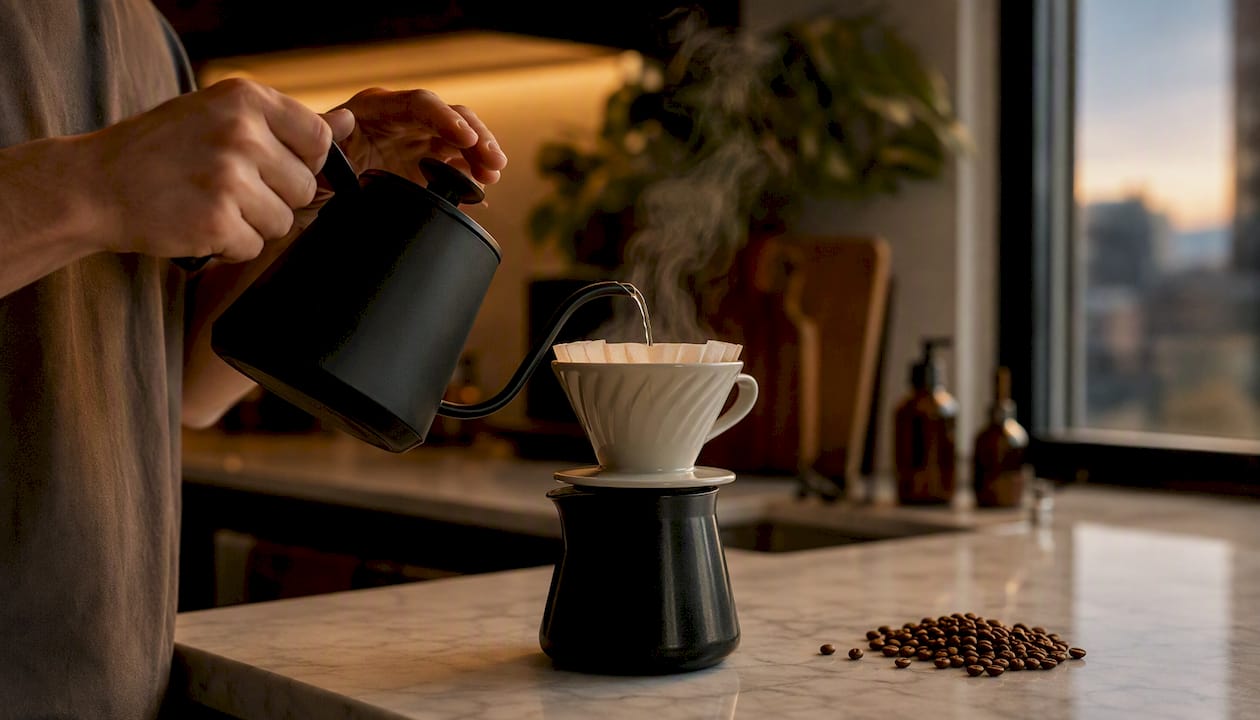
While the coffee brews, set up a dedicated spot away from your desk. Sip & Sense recommends a no-screen rule and a short breathing or stretching pause during a short mindful break. Put the phone in another room. Pair the cup with something small: a piece of dark chocolate, a few crackers, or a handful of nuts. The point is to give your hands and attention something other than a keyboard.
Who it fits: Anyone working from home or in a quiet office who needs a clean mental reset without a social component.
Classic afternoon tea
The British afternoon tea tradition was designed to bridge the gap between lunch and an early dinner, and the structure still works. Plan for 30–45 minutes and serve in the correct order: savory finger sandwiches or small bites first, then scones with clotted cream and jam, then sweets or pastries last. The progression matters because savory items prepare the palate, and ending on something sweet feels satisfying rather than abrupt.
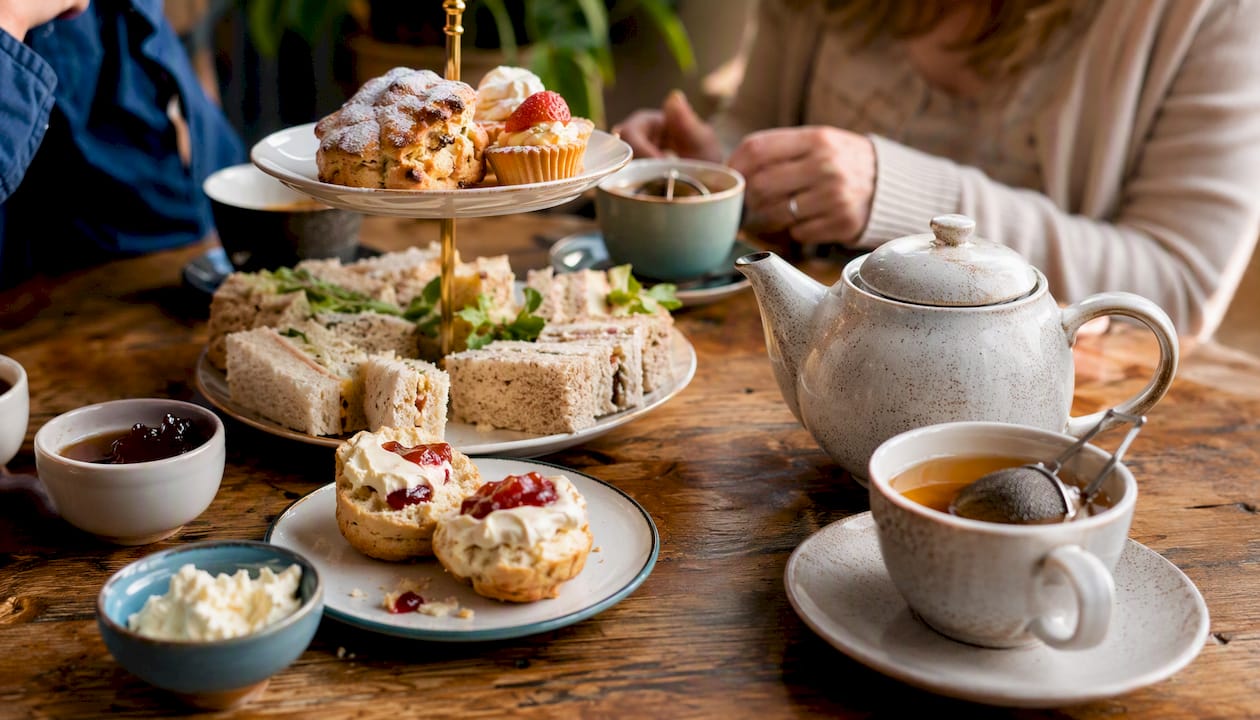
For the tea itself, steep loose-leaf black tea (Assam, Darjeeling, or a classic English Breakfast blend) at 200–212°F for 3–5 minutes. Use a teapot with an infuser so you can remove the leaves at the right moment and avoid bitterness. Pour for your guests before they pour for themselves.
Who it fits: Two or more people, a weekend afternoon, a slow catch-up with someone you haven’t seen in a while.
The hybrid ritual: dirty chai and yuanyang
This is the most interesting option for people who genuinely love both coffee and tea. A dirty chai is simply a shot of espresso (or strong brewed coffee) added to a spiced masala chai. A yuanyang, the Hong Kong classic, blends strong black tea with coffee at roughly a 3:2 ratio, usually with condensed milk or evaporated milk.
Both work because, as Tasting Table explains, milk and a small amount of sweetness bridge the astringency of tea and the bitterness of coffee into a smoother mouthfeel. Without that fat and sweetness, the two liquids fight each other. With it, they complement. Serious Eats documents the barista technique in detail: brew each component separately at full strength, then combine while both are hot, adding milk last.
Who it fits: Anyone who wants something more interesting than a standard cup, or who needs a lighter caffeine hit than straight espresso but more than plain tea.
What equipment and pantry items do you actually need?
The short answer: less than you think. Here’s what earns its place on the counter.
Essential tools
- Kettle with temperature control (a Fellow Stagg EKG or similar gooseneck model): precise temperature is the single biggest variable in extraction quality. A standard kettle plus a probe thermometer works as a budget substitute.
- Kitchen scale: measuring by weight (grams) is more consistent than scoops. A basic digital scale under $15 does the job.
- Timer: your phone’s clock app is fine, but a dedicated kitchen timer keeps you off the screen.
- Burr grinder: blade grinders chop unevenly, producing a mix of fine powder and coarse chunks that extract at different rates. A burr grinder (hand-crank models start around $30) produces a uniform particle size. Grind just before brewing.
- Brewing vessel: French press, AeroPress, or a V60 pour-over dripper for coffee; a teapot with a built-in infuser or a separate mesh strainer for loose-leaf tea.
- Cups you like: this sounds obvious, but the cup shape and material affect temperature retention and the experience of drinking. A wide ceramic mug cools faster than a narrow porcelain one.
For home barista setup details, the Font-mag home barista guide covers ingredient selection and small-scale equipment choices in practical depth.
Pantry basics
- Whole-bean coffee: buy by roast date, not “best by” date. Aim to use beans within 2–4 weeks of roast. Font-mag’s Broken Arrow Reserve is a small-batch option worth keeping on hand for afternoon sessions when you want something with character.
- Loose-leaf tea: MAG Tea’s loose-leaf selections cover black, green, and oolong options. Loose leaf extracts more evenly than most bagged teas and gives you control over strength.
- Milk or milk alternatives: oat milk is the most forgiving for hybrid drinks because its fat content mimics whole milk without the dairy. Coconut milk adds sweetness; almond milk tends to thin the texture.
- Sweetbird syrups: a small bottle of vanilla or caramel syrup lets you adjust sweetness without granulated sugar, which doesn’t dissolve evenly in warm (not hot) liquids. Sweetbird’s range is designed for café use, which means the flavor concentration is consistent pour to pour.
- Snacks: scones, pan casero, simple finger sandwiches, or a small piece of cake. Keep portions small. The food is a companion to the drink, not a meal.
Buying note: check the harvest or batch date on loose-leaf tea the same way you check the roast date on coffee. Freshness matters for both.
How do you brew each method correctly?
Ratios, temperatures, and times for the five most common methods:
Pour-over (V60)
- Rinse the paper filter with hot water, then discard the rinse water.
- Add ground coffee (medium-fine grind, similar to table salt).
- Pour just enough water to saturate the grounds (about twice the coffee weight) and wait 30–45 seconds. This is the bloom: CO2 releases and the grounds swell.
- Pour the remaining water in slow, steady circles over 2.5–3 minutes.
- The brew is done when the drip slows to a stop. Total time: 3–4 minutes.
French press
- Add coarse-ground coffee (like rough sea salt) to the press.
- Pour all the water at once, stir once, and place the lid on without pressing.
- Wait 4 minutes exactly.
- Press slowly and pour immediately. Leaving coffee in contact with the grounds after pressing makes it bitter.
AeroPress
- Insert a filter, rinse it, and lock the cap onto the chamber.
- Add medium-fine ground coffee, pour water to the top of the number 2 mark, and stir for 10 seconds.
- Press slowly over 30 seconds. Total brew time: 1–2 minutes.
- The AeroPress is forgiving with temperature, which makes it good for travel or quick afternoon sessions.
Loose-leaf tea
- Measure 2–3 grams of leaf per 8 oz of water (a heaped teaspoon for most black teas).
- Heat water to the correct temperature for the tea type (see table above).
- Steep for the recommended time, then remove the infuser immediately.
- Pour and serve. Don’t let the leaves sit in the water.
Matcha
- Sift 1–2 teaspoons of matcha powder into a bowl to break up clumps.
- Add 2 oz of 175°F water and whisk in a W-motion until frothy (about 30 seconds with a bamboo chasen).
- Add the remaining water or steamed milk for a matcha latte.
Troubleshooting by sensory cue
- Too bitter: water was too hot, or brew time was too long. Lower temperature by 5–10°F or reduce steep/contact time by 15–20 seconds.
- Flat or weak: grind is too coarse, or water was too cool. Go finer on the grind or raise temperature slightly.
- Sour or sharp: under-extracted. Extend contact time or use slightly hotter water.
- Cloudy or muddy (French press): grind is too fine. Coarsen it one step.
- Matcha clumping: water was too hot or you skipped sifting. Always sift and keep water below 180°F.
The best troubleshooting habit, per Sip & Sense, is to change one variable at a time: temperature, grind, or time. Changing all three at once tells you nothing useful.
What is the correct order and etiquette for afternoon tea?
The traditional British afternoon tea follows a specific sequence, and the order isn’t arbitrary. It’s designed around how flavors build.
Correct service order:
- Savory finger sandwiches (cucumber, egg and cress, smoked salmon)
- Plain or fruit scones with clotted cream and jam
- Pastries and sweets (small cakes, tarts, macarons)
The savories come first because they’re light and don’t overwhelm the palate. Scones are the centerpiece, not a side note. Sweets close the service because they linger pleasantly.
Basic manners worth knowing
- Pouring: the host pours. If you’re the host, pour for your guests before yourself.
- Milk first or last: the “milk in first” tradition dates to when thin porcelain cups cracked from hot liquid. With modern cups, it’s a preference, not a rule. Add milk after pouring tea so you can judge the strength before adjusting.
- Scone technique: split the scone horizontally, apply cream first, then jam (the Cornish way) or jam first, then cream (the Devon way). Both are defensible. Eating a scone whole like a sandwich is the one thing to avoid.
- Refusing a second cup: a simple “no, thank you” with your hand briefly over the cup is the universal signal. No explanation needed.
- Pacing: a 30–45 minute afternoon tea shouldn’t feel rushed. Eat slowly, refill cups once or twice, and let conversation carry the time.
Common host mistakes
- Serving everything at once instead of in sequence
- Brewing tea too early so it’s cold by the time guests arrive
- Forgetting to warm the teapot before adding leaves (cold porcelain drops the water temperature by 10–15°F immediately)
- Cutting sandwiches too thick (finger sandwiches should be two or three bites, not a full portion)
Germany’s Kaffee und Kuchen tradition offers a useful contrast: guests are expected to arrive punctually at 3 PM, and lingering conversation is part of the plan. The whole cake served at the table signals that this is a proper gathering, not a quick snack.
What should you serve with your afternoon drink?
Pairing isn’t complicated, but a few principles make a real difference. Strong, tannic teas need something with fat or sweetness to balance them. Light, floral teas pair better with delicate flavors. Coffee’s bitterness plays well against sweetness and salt.
| Drink | Best pairings | Notes |
|---|---|---|
| Black tea (Assam, English Breakfast) | Scones, shortbread, cucumber sandwiches | Milk in the tea softens tannins; cream in the scone does the same |
| Green tea (Sencha, Dragonwell) | Fruit tarts, light sponge cake, mild cheese | Avoid anything heavily spiced — it overpowers the tea |
| Light roast coffee | Citrus pastries, almond cake, fresh fruit | Bright acidity in the coffee echoes citrus notes |
| Medium/dark roast coffee | Chocolate, caramel, nut-based pastries | Bitterness and sweetness balance each other |
| Dirty chai or yuanyang | Spiced cookies, pan casero, mild cheese | The spice in chai and the richness of yuanyang need something plain to anchor them |
For a deeper look at the sensory logic behind these combinations, Font-mag’s coffee and tea pairing guide breaks down flavor interactions in practical terms.
Serving sizes for a 20–45 minute ritual
- Solo: 1 cup of tea or coffee, 2–3 small bites (a scone half, two finger sandwiches, or a small slice of cake)
- Two people: 1 teapot or 2 cups of coffee, 4–6 pieces total, split evenly
- Small group (3–4): a full teapot, one plate of sandwiches, one plate of scones, one plate of sweets
Substitutions worth knowing
- Gluten-free: almond flour scones hold together well and have a slightly denser texture that pairs nicely with strong black tea.
- Dairy-free: oat milk in tea and coffee, coconut cream as a clotted cream substitute (chill overnight for thickness).
- Lower caffeine: MAG Tea’s herbal and rooibos selections work in the same steep ratios as black tea without the caffeine load. Font-mag also carries decaf coffee options for readers who want the ritual without the late-afternoon caffeine.
How do afternoon rituals vary across cultures?
The afternoon pause is a near-universal human habit. Three traditions show how differently it can look.
Costa Rica’s cafecito
The cafecito is a social pause, typically 30–40 minutes, held around 3–4 PM. Coffee is served alongside pan casero (homemade bread), queso fresco, and small sweets. The gathering emphasizes hospitality and conversation more than the beverage itself. Costa Rican coffee is often brewed using a chorreador, a simple cloth filter suspended over a cup, and brewed to be stronger than standard American drip coffee to complement salty and sweet accompaniments.
If you’re invited to a cafecito, accept and sit. Declining or rushing the visit reads as impolite. The invitation carries social meaning that goes well beyond the coffee.
Germany’s Kaffee und Kuchen
Held at 3 PM, Kaffee und Kuchen centers on filter coffee (not espresso) and a whole cake served at the table. The tradition expresses Gemütlichkeit, a German cultural preference for cozy, comfortable contentment. Punctuality is expected. Lingering conversation is the point. Bringing a small cake or pastry as a guest is a common and appreciated gesture.
British afternoon tea
Developed in the 1840s as a bridge between an early lunch and a late dinner, British afternoon tea is the most structured of the three. The service order (savories, scones, sweets) is fixed. Tea is the anchor, not an afterthought. Dress is typically smart-casual for a formal setting, relaxed at home.
When and how to invite people:
- For a cafecito-style gathering: a casual text or verbal invitation works. “Come by around 3” is enough.
- For a Kaffee und Kuchen: give a specific time and stick to it. Guests will arrive on time and expect you to be ready.
- For a British-style afternoon tea: a few days’ notice, a clear start time, and a note about duration (“plan for about an hour”) sets the right expectations.
Pro Tip: If you’re hosting a coffee-focused gathering for the first time, the Third Space Coffee guide to planning a coffee tasting event walks through logistics, flow, and how to structure the experience for guests who aren’t coffee experts.
Why do the ratios and temperatures actually matter?
Brewing rules aren’t arbitrary. They map directly to chemistry, and understanding the logic makes troubleshooting much faster.
Extraction basics
Coffee and tea both release soluble compounds into water. The rate and completeness of that release depend on three variables: temperature, time, and surface area (grind size for coffee, leaf size for tea). Higher temperature extracts faster and pulls more compounds. Longer contact time does the same. Finer grind or smaller leaf pieces expose more surface area, accelerating extraction.
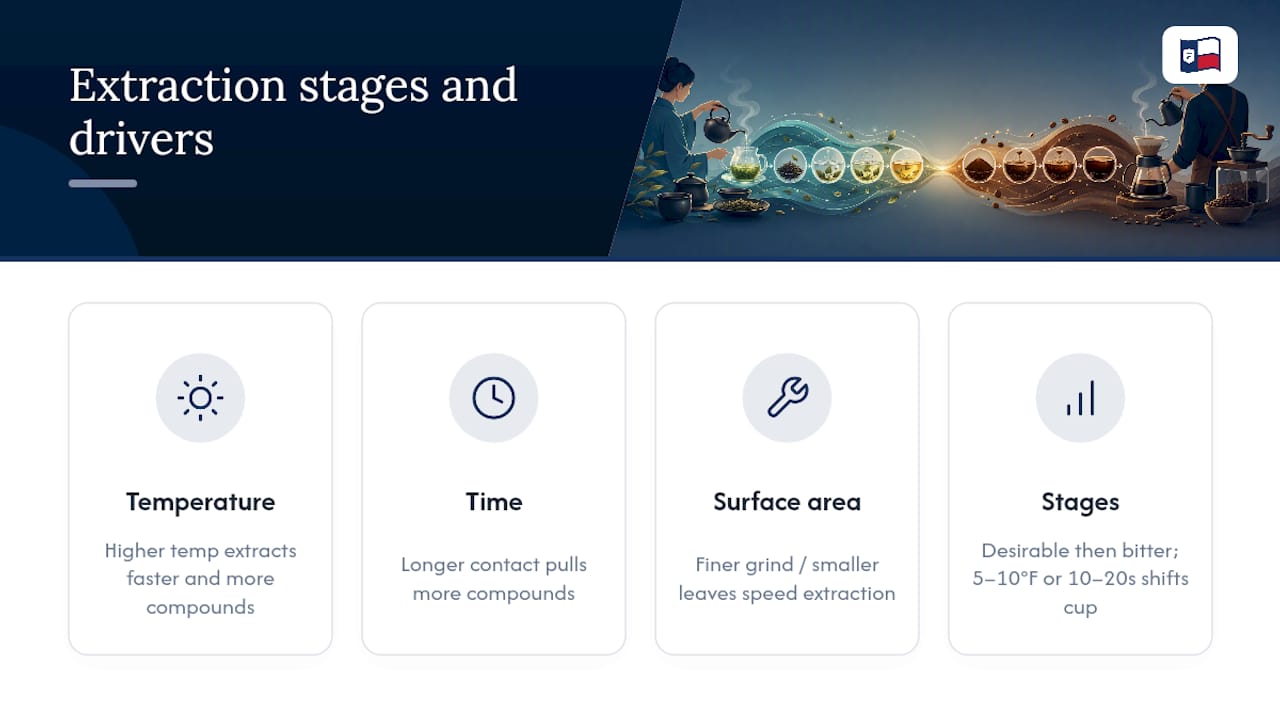
The problem is that different compounds extract at different rates. Desirable flavors (sweetness, fruit, florals) extract first. Bitterness and astringency extract later. The goal of any brewing method is to stop extraction at the point where you’ve pulled enough of the good stuff without too much of the harsh stuff.
A 5–10°F change in water temperature, or 10–20 seconds of additional steep time, can shift the cup noticeably. That’s not a small margin. It’s why temperature control matters more than most beginners expect.
The L-Theanine effect
Tea’s L-Theanine, an amino acid found almost exclusively in the Camellia sinensis plant, promotes relaxed alertness by modulating alpha brain wave activity. When combined with moderate caffeine, it tends to smooth the stimulant’s edge, producing focus without the jitteriness that straight coffee sometimes causes. A deliberate afternoon tea pause, timed to the natural post-lunch dip, supports metabolic stability and encourages the kind of context shift that restores creative thinking.
That’s the mechanism behind the Snug Science finding on afternoon tea and productivity. It also explains why a hybrid dirty chai or yuanyang, which combines both caffeine sources, often feels more balanced than a double espresso at 3 PM.
For a full breakdown of how caffeine and L-Theanine compare across coffee and tea, Font-mag’s caffeine comparison guide covers the practical differences.
Sensory markers to watch
- Aroma: a good brew smells complex and inviting before you taste it. Flat or sharp aroma usually means stale ingredients or incorrect temperature.
- Color: black tea should be a deep amber, not pale yellow (under-steeped) or near-opaque brown (over-steeped). Pour-over coffee should be a clear, warm brown with no cloudiness.
- Mouthfeel: a well-extracted cup coats the tongue lightly. Thin and watery means under-extraction. Dry and coating means over-extraction or too-fine a grind.
The sensory guide from Font-mag connects these cues to pairing decisions, which is useful when you’re building a plate to go alongside the drink.
Why ritual matters more than the perfect cup
There’s a version of the afternoon tea and coffee conversation that gets obsessive about gear: the $400 kettle, the single-origin micro-lot, the hand-thrown ceramic cup. None of that is wrong, exactly. But it misses the point.
The ritual works because it creates a boundary. You stop, you make something with your hands, you sit with it. The drink is the anchor, not the destination. A French press with grocery-store beans and a piece of toast does the same psychological work as a pour-over with a celebrated single-origin, as long as you’re actually present for it.
What Font-mag cares about, built across four generations of Texas craftsmanship, is that the ingredients you reach for are worth reaching for. The Broken Arrow Reserve is a small-batch coffee with enough character to reward attention. MAG Tea’s loose-leaf selections are chosen because loose leaf gives you control that a tea bag simply can’t. Sweetbird syrups are there for the days when you want a dirty chai with a precise hit of vanilla, not a vague sweetness.
The ritual is yours to build. The supplies should be good enough that they don’t get in the way.
Where to get started with Font-mag

Font-mag carries everything you need to stock a proper afternoon ritual from a single order. Start with whole-bean retail coffee from the Font-mag coffee collection, including the Broken Arrow Reserve for afternoons when you want something with real depth. Add a selection from MAG Tea’s loose-leaf range for classic afternoon tea sessions or hybrid experiments. Pick up a Sweetbird syrup or two for dirty chai and yuanyang variations. Font-mag also carries flavored coffees that work well for sweeter afternoon drinks without needing a separate syrup.
Orders over $35 ship free, and Font-mag’s fulfillment is built for speed, so you’re not waiting two weeks for beans that were roasted six months ago. Browse the full specialty offerings collection to see the complete range, including matcha, iced teas, and café essentials.
Sources
- The Afternoon Cafecito: Costa Rica’s Most Important Coffee Ritual – Cafe Tico
- Kaffee und Kuchen: The 3 PM Afternoon Tradition
- Why coffee and tea can make a delicious, unexpected drink combination — Tasting Table
- Should you add tea to coffee? — Serious Eats
- Building an Afternoon Coffee Reset Ritual — Sip & Sense
Recommended
- Coffee and Tea Pairing Guide: Flavors That Actually Work – Font Coffee Roasters
- Why Coffee and Tea Pair with Food: The Sensory Guide – Font Coffee Roasters
- Farm to Cup Texas Coffee Guide for True Enthusiasts – Font Coffee Roasters
- Craft Cocktail and Tea Syrups: Your Home Bar Guide – Font Coffee Roasters