

How to Infuse Herbs Into Coffee Syrup
The fastest way to infuse herbs into coffee syrup is a 1:1 simple syrup (equal parts water and sugar), steeped hot with sturdy herbs for 10 to 30 minutes or cold-infused overnight for delicate ones. Use a 2:1 sugar-to-water ratio instead when you want a thicker syrup that holds up in espresso drinks.
Here’s the one-minute version:
- Combine 1 cup water and 1 cup sugar in a saucepan; heat until the sugar dissolves.
- Remove from heat, add your herb (rosemary sprig, mint leaves, thyme, whatever you’re working with).
- Steep 10 to 20 minutes for most herbs, longer for a stronger flavor.
- Strain through a fine mesh strainer, then cool completely before bottling.
- Start with 1 teaspoon of syrup per 8-ounce drink and adjust from there, a ratio home cooks consistently land on for a reason: it lets the coffee stay the star.
Key Takeaways
Infusing herbs into coffee syrup comes down to picking the right method (hot for speed, cold for delicate aromatics), using a reliable 1:1 or 2:1 ratio, and storing the result safely.
| Point | Details |
|---|---|
| Choose your method by herb | Hot infusion (10-30 min) suits sturdy herbs; cold infusion (up to 24 hours) preserves delicate ones like mint and lavender. |
| Nail the ratio first | Use 1:1 for everyday syrup and 2:1 rich syrup when making espresso drinks. |
| Taste before you commit | Start with 1 teaspoon of herb syrup per 8-ounce drink and adjust from there. |
| Store it safely | Keep syrup refrigerated in clean bottles for two to three weeks, and discard at any sign of mold or off smell. |
| Buy ready-made when time is short | Font-mag’s flavored coffee and syrup lines cover the same flavor profiles for days you’d rather not steep. |
Table of Contents
- Hot Infusion vs Cold Infusion: When to Use Each
- What Ratios and Herb Amounts Actually Work?
- Which Herbs Actually Taste Good in Coffee?
- Four Herb Syrup Recipes You Can Make Tonight
- Getting the Right Tools and Preserving the Aroma
- How Long Does Herb-Infused Syrup Last?
- Fixing Bitterness, Cloudiness, and Crystallization
- How Much Syrup Should You Use in a Drink?
- Starting Small Before You Scale Up
- Where to Find Syrups and Supplies When You’d Rather Not DIY Every Batch
- Sources
Hot Infusion vs Cold Infusion: When to Use Each
Hot infusion means you make the syrup, pull it off the burner, drop in your herbs, and let residual heat do the extracting. Cold infusion means the syrup cools first, then herbs steep in the refrigerator for hours, sometimes overnight.
Hot works best when you’re short on time or working with sturdy herbs like rosemary, thyme, or sage. These hold their oils well and don’t mind a little heat. Steep times typically run 10 to 30 minutes, with shorter steeps for potent herbs and longer ones for milder leaves.
Cold infusion suits delicate, aromatic herbs like mint or lavender that lose their best qualities when heated. Their volatile oils, the ones that carry the actual floral or minty smell, evaporate fast in hot syrup. A cold soak in the fridge for several hours up to 24 hours pulls flavor out gently, without cooking off what made you want the herb in the first place.
- Hot infusion: 10 to 30 minutes, best for rosemary, thyme, sage.
- Cold infusion: several hours to 24 hours, best for mint, lavender, basil.
- Taste as you go; you can always steep longer, but you can’t un-steep.
Pro Tip: Set a timer. Herbal syrups go from “bright and balanced” to “tastes like cough medicine” faster than you’d expect, especially with lavender and sage.
What Ratios and Herb Amounts Actually Work?
Two ratios cover almost every situation. The standard 1:1 syrup (1 cup water, 1 cup sugar) works for everyday coffee, iced drinks, and lighter applications. The 2:1 rich syrup (2 cups sugar, 1 cup water) holds up better in espresso because it’s thicker and doesn’t water down a small shot.
For herb quantity, fresh herbs go in loosely packed, roughly ½ to 1 cup fresh herbs per cup of syrup. Dried herbs are more concentrated, so use about a third to half that amount, closer to 2 to 3 tablespoons per cup of syrup.
- 1:1 ratio = everyday syrup for lattes, iced coffee, cold brew.
- 2:1 ratio = rich syrup for espresso drinks that need body.
- Fresh herbs: ½ to 1 cup loosely packed per cup of syrup.
- Dried herbs: use roughly a third of the fresh amount.
Honey or maple syrup can replace some or all of the sugar, but add them off the heat once the syrup base has cooled slightly. Boiling honey directly can scorch it and turn the flavor bitter.
Which Herbs Actually Taste Good in Coffee?
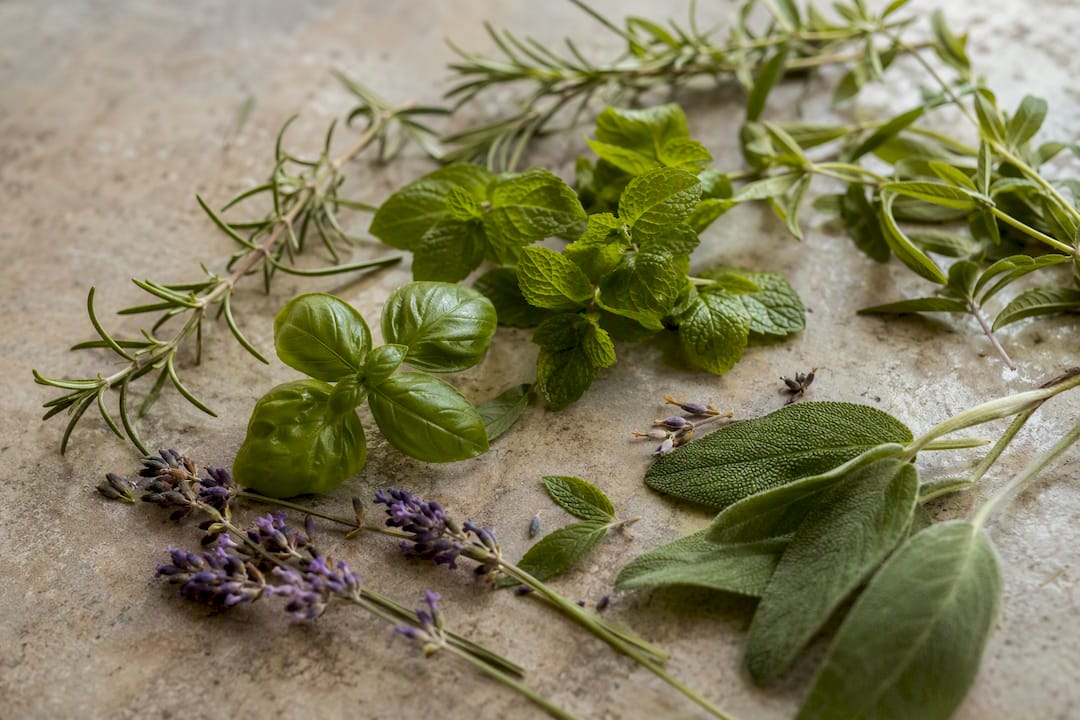
Not every herb belongs anywhere near a cup of coffee. Mint, lavender, rosemary, thyme, basil, lemon balm, and sage all work, but potent herbs like rosemary and lavender need a light hand or they overwhelm everything else in the cup.
Some pairings just click. Lavender with a splash of vanilla makes a lattes taste like a bakery. Rosemary with orange peel or a little maple syrup gives cold brew an almost holiday flavor. Mint paired with brown sugar instead of white sugar adds warmth that plain mint syrup lacks, especially in iced coffee.
The failure mode to watch for is “soapy” or “medicinal,” which happens when you oversteep or overload potent herbs like lavender, sage, or rosemary. The fix is simple: use less herb, steep for less time, and taste before you commit a whole batch. Grounding flavors like vanilla, brown sugar, orange peel, and cocoa tend to soften anything too herbaceous.
- Mint, basil, lemon balm: gentle, forgiving, hard to overdo.
- Lavender, rosemary, sage: potent, use sparingly and taste often.
- Thyme: middle ground, pairs well with honey.
These same syrups aren’t limited to coffee. Herb-infused syrups slide easily into tea, matcha, and even cocktails, so a batch of lavender syrup earns its keep well beyond the coffee pot. If you want more combinations built around botanicals specifically, this guide to botanical beverage syrups covers flavor pairings worth trying.
Four Herb Syrup Recipes You Can Make Tonight
Here are four recipes that cover the range from floral to earthy, all using the standard tools you already have.
- Lavender-vanilla syrup. Combine 1 cup water and 1 cup sugar, heat until dissolved. Remove from heat, add 2 tablespoons dried lavender buds and 1 teaspoon vanilla extract. Steep 15 minutes, strain, cool. Yields about 1 cup.
- Rosemary-orange rich syrup. Combine 2 cups sugar and 1 cup water, heat until dissolved. Add 2 sprigs fresh rosemary and the peel of one orange. Steep 20 minutes off heat, strain, cool. Yields roughly 1½ cups.
- Mint-brown-sugar syrup. Combine 1 cup water and 1 cup packed brown sugar, heat until dissolved. Add 1 cup loosely packed fresh mint leaves. Steep 10 minutes (mint turns bitter fast), strain, cool. Yields about 1 cup.
- Honey-thyme syrup. Combine 1 cup water, ½ cup honey, and ½ cup sugar in a saucepan. Simmer gently 10 minutes, remove from heat, add 6 to 8 fresh thyme sprigs, and steep 20 to 30 minutes. Strain, cool, refrigerate.
For serving, start with 1 teaspoon in an 8-ounce drink and work up to a tablespoon if you want the syrup to lead. All four recipes double or triple cleanly. Just remember that larger batches take slightly longer to cool fully before you cap and refrigerate them.
- All recipes strain through a fine mesh strainer or cheesecloth for clarity.
- Cool completely before bottling to avoid condensation and bacterial growth.
- Label the bottle with the date. You’ll forget which batch is three weeks old otherwise.
Getting the Right Tools and Preserving the Aroma
You don’t need specialty equipment. A small saucepan, a fine-mesh strainer, cheesecloth for delicate herbs, a funnel, and clean glass bottles handle nearly every recipe here. Font’s home barista ingredient guide covers the basics if you’re building out a kitchen setup from scratch.
For a clearer syrup, strain once through mesh, then again through cheesecloth if you used delicate leaves or flower buds that shed small particles. Taste before bottling. Too strong? Dilute with a little plain 1:1 syrup. Too weak? Reheat gently and add fresh herb for another short steep.
- Fine-mesh strainer for the first pass, cheesecloth for the second.
- Funnel keeps bottling clean and prevents sticky counters.
- Cool syrup quickly (an ice bath works) to lock in aroma before bottling.
Pro Tip: Add the most delicate aromatics, like mint or lavender, after the syrup has cooled slightly rather than while it’s still steaming. You’ll keep more of the scent in the bottle instead of in your kitchen air.
How Long Does Herb-Infused Syrup Last?
Refrigerated, sugar-based herb syrups generally keep for about two to three weeks, and honey-based versions like honey-thyme hold for up to three weeks refrigerated as well. That’s a very different safety picture from oil infusions.
Fresh herbs steeped in oil carry a real botulism risk if left at room temperature. Extension research recommends refrigerating fresh-herb oil infusions and using them within 2 to 4 days unless you follow a tested acidification method. Clemson’s Cooperative Extension has developed a specific procedure using a 3% citric acid soak for garlic, basil, oregano, and rosemary that allows safer short-term room storage, but that process doesn’t apply to sugar syrups and shouldn’t be improvised.
- Store syrup in clean, sealed glass bottles, refrigerated.
- Label with the date you made it.
- Freeze small portions if you won’t use a batch within a few weeks.
- Discard immediately if you notice mold, cloudiness that wasn’t there before, or an off smell.
Fixing Bitterness, Cloudiness, and Crystallization
Bitter syrup usually means you oversteeped or used too much herb. Dilute with plain syrup or make a fresh batch with a shorter steep next time.
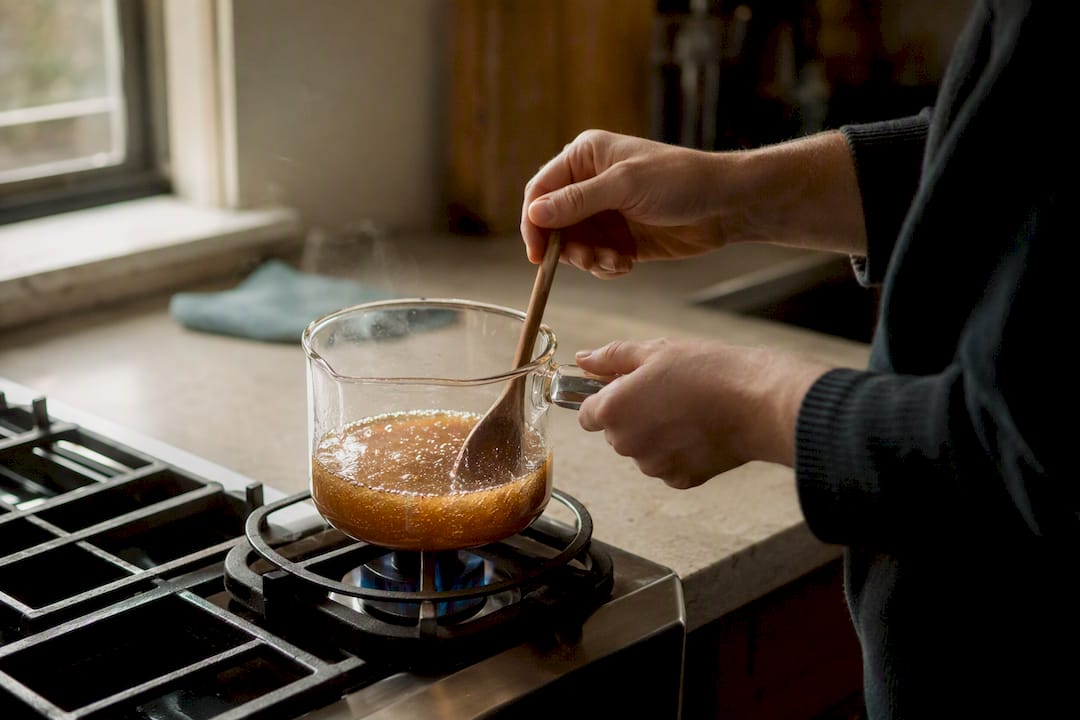
Weak flavor means understeeping. Reheat gently, add a bit more fresh herb, and steep again for 10 minutes.
Cloudy syrup often comes from overheating or sugar that never fully dissolved. Reheat gently, stir until clear, and re-strain.
Crystallization happens when sugar recrystallizes in the bottle. Reheat with a splash of water until it smooths out again, or add a small amount of corn syrup next batch to prevent it.
How Much Syrup Should You Use in a Drink?
Start light: 1 teaspoon for subtlety in a standard cup, 1 to 2 teaspoons for iced coffee where cold mutes sweetness, and ½ to 1 tablespoon if you want a syrup-forward espresso drink.
Lavender-vanilla works beautifully in steamed milk lattes. Rosemary-orange or rosemary-maple shines in cold brew. These same syrups cross over cleanly into tea and matcha, so it’s worth checking Font’s tea syrup recipes if you want to stretch one batch across multiple drink types.
Starting Small Before You Scale Up
Test a single cup before committing to a full batch. Herb potency varies by season and freshness, so what worked last month might overwhelm this month’s rosemary.
If you’re moving from personal use toward café-style volume, that’s when store-bought flavored coffees or commercial syrups start making sense for consistency. Document each trial, keep pairings simple at first, and resist stacking three herbs into one syrup before you’ve mastered one.
Where to Find Syrups and Supplies When You’d Rather Not DIY Every Batch
Not every week has room for a saucepan and cheesecloth, and that’s fine. Font-mag stocks flavored syrups, small-batch coffees, and café essentials built for exactly the drinks this guide walks you through, so you can skip the steeping when time is short and still land the same lavender-vanilla latte or rosemary cold brew.
If you’d rather grab a specialty roast that already pairs well with herbal syrups, browse the flavored coffee collection for beans that complement lavender, rosemary, or mint without any extra prep. Want to stretch your homemade batch into iced tea too? The iced tea collection gives you another base to test the same syrups against. Either way, a quick order gets fresh ingredients to your counter fast, no separate errand required.
Sources
- How to safely make infused oils — Penn State Extension
- Herb-infused oils — Clemson Cooperative Extension (HGIC)
- Wild Kitchen Series: Herbal syrups — Duke Students
- Honey thyme simple syrup (The Slotted Spoons)
- Coffee syrups you can make with herbs — The Fabled Alchemist