

How to Read Coffee Origin Sourcing Labels: A Buyer's Checklist
Six fields on a coffee bag tell you almost everything worth knowing before you buy: roast date, origin specificity (country → region → farm or cooperative), processing method, varietal, elevation, and roast level paired with any certifications. A bag that shows all six is making verifiable commitments. One that shows only a country name and the word “smooth” is hiding behind marketing language. The buying rule is simple: prefer bags with a roast date, a specific origin, and a named processing method. Treat vague tasting adjectives alone as a weak signal.
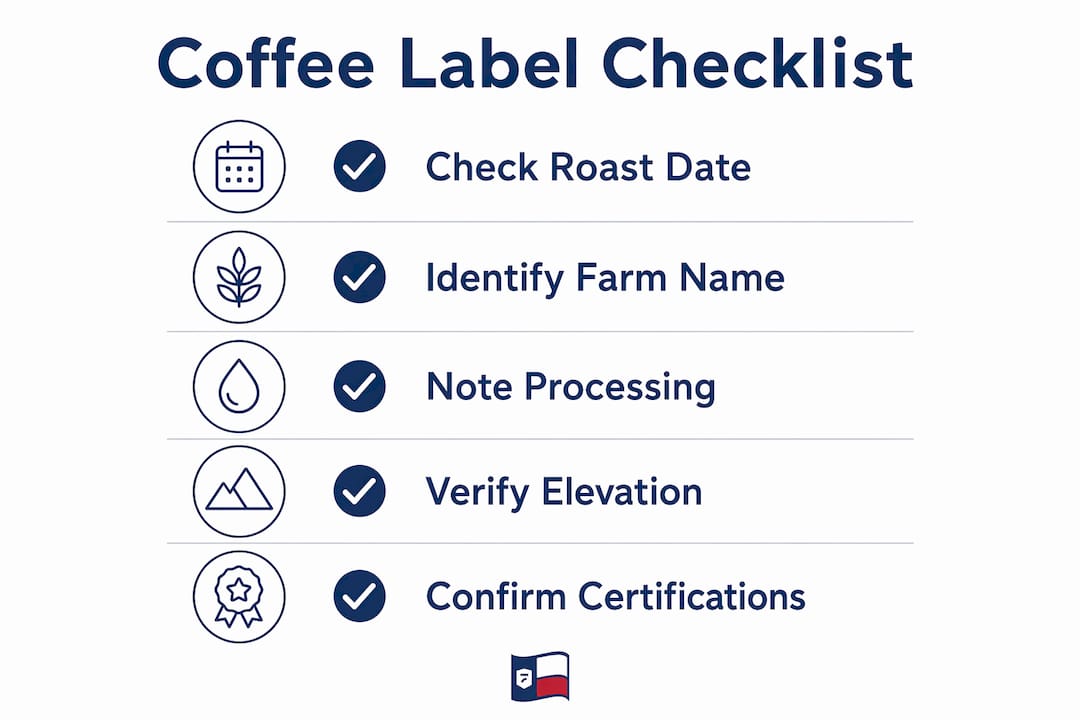
Quick label checklist to use in the store or online:
- Roast date printed (not just “best by”)
- Origin listed beyond country level (region, farm, or cooperative named)
- Processing method stated (washed, natural, honey, anaerobic)
- Varietal named (Bourbon, Typica, Gesha, SL28, etc.)
- Elevation or altitude listed (meters above sea level)
- Certifications or sourcing claims with a named certifier
Pro Tip: If a bag has a roast date, a named farm, and a stated process, it almost certainly came from a roaster who paid attention at every step. Those three fields together are the fastest shortcut to quality.
Table of Contents
- How does origin specificity change what you can expect from a coffee?
- What does the processing method tell you about flavor?
- How do varietal names and elevation predict your cup?
- Why roast date matters more than “best by” on the label
- What do certifications and sourcing claims actually guarantee?
- Single-origin vs. blends: how to tell them apart and when to choose each
- Red flags on a coffee label: what to skip
- A practical buying checklist for choosing coffee
- Why traceability and transparency matter beyond the label
- Key Takeaways
- The real trade-off most coffee buyers miss
- Font-mag brings the same transparency standards to every bag it ships
- Useful sources and further reading
How does origin specificity change what you can expect from a coffee?
Origin labeling follows a clear hierarchy of traceability: country is the broadest signal, region adds meaningful context, and a named farm, cooperative, or washing station gives you maximum traceability and the strongest indicator of specialty-grade sourcing. Each level up the ladder narrows the flavor variables and raises the accountability of everyone in the supply chain.
Here is what each level typically implies:
- Country only (e.g., “Ethiopia”): tells you broad flavor tendencies based on climate and tradition, but nothing about how this specific lot was grown or handled.
- Region or subregion (e.g., “Ethiopia, Yirgacheffe”): narrows the terroir considerably. Yirgacheffe coffees, for example, are known for floral, citrus-forward profiles. You can start making reliable flavor predictions.
- Farm, cooperative, or washing station (e.g., “Ethiopia, Yirgacheffe, Kochere Washing Station”): this is where traceability becomes real. A named producer means the roaster knows who grew the coffee, which usually means better quality control and more direct producer relationships.
To see the difference in practice, consider how the same coffee might appear at each level:
- Low specificity: “Ethiopian Coffee”
- Medium specificity: “Ethiopia, Sidama Region”
- High specificity: “Ethiopia, Sidama, Shantawene Farm, Washed”
The third label is a series of verifiable commitments. The first is a country of origin and not much else. A good specialty bag will give you origin, altitude, variety, process, roast level, roast date, tasting notes, and sometimes a cupping score. The more of those fields a roaster fills in, the more transparent they are being.
Pro Tip: Check roast date, farm name, and process together. If all three appear, the roaster almost certainly sourced this lot intentionally rather than buying through a commodity broker. That combination is a faster quality signal than any certification badge.
What does the processing method tell you about flavor?
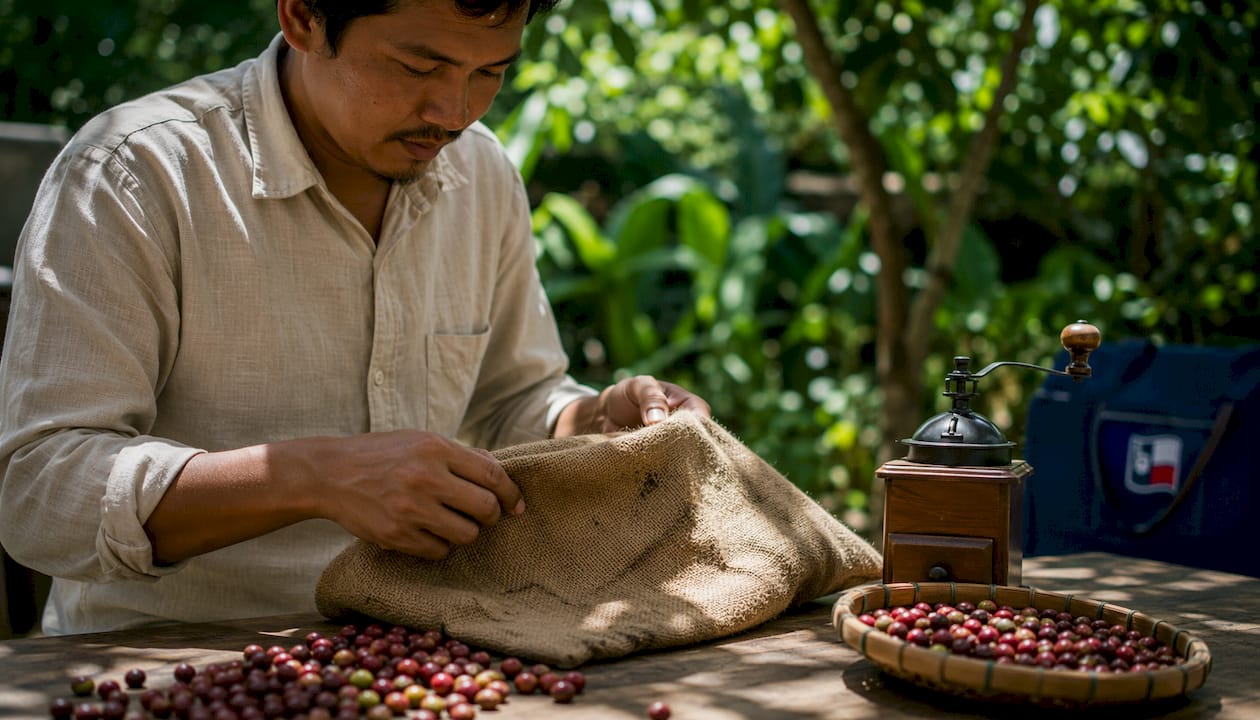
Processing is often the single biggest driver of what ends up in your cup, more so than roast level for many specialty coffees. The method describes how the coffee cherry’s fruit is removed from the seed before drying, and each approach leaves a distinct fingerprint on flavor and body.
Here is how the main methods map to cup character, based on established process-to-flavor research:
- Washed (wet-processed): fruit is removed before drying. Result: clean, bright, high acidity. Origin character comes through clearly. Best for tasting terroir and varietal nuance.
- Natural (dry-processed): cherry dries whole around the seed. Result: bold, fruity, full-bodied, sometimes wine-like or berry-forward. Best for people who want intensity.
- Honey: partial fruit left on during drying. Result: balanced, medium body, enhanced sweetness. A middle ground between washed and natural.
- Anaerobic / experimental: fermentation happens in a sealed, oxygen-free environment. Result: layered, complex, sometimes polarizing. Flavors can range from tropical fruit to fermented funk depending on execution.
If you prefer a clean, tea-like cup, look for washed. If you want something that tastes like blueberry jam in a cup, reach for a natural. Honey processes suit people who find naturals too wild but washed too austere.
The fastest way to train your palate to read these signals is to taste a washed and a natural from the same region side by side. The difference is dramatic enough that you will never ignore the process field on a label again.
How do varietal names and elevation predict your cup?
Varietal names on a label are genetic shorthand. They tell you what plant the coffee came from, and different cultivars carry different flavor tendencies baked into their DNA. Elevation tells you how hard the plant worked to ripen, which directly affects bean density and flavor complexity.
Common varietals and what to expect
- Bourbon: a classic, often sweet and balanced with stone fruit or chocolate notes. Common in Latin America.
- Typica: one of the oldest cultivars; clean, delicate, and nuanced. Found across many origins.
- SL28 / SL34: Kenyan selections bred for drought resistance; known for blackcurrant, tomato, and bright acidity.
- Gesha (also spelled Geisha): floral, jasmine, bergamot, and tropical fruit. Originally from Ethiopia, now grown in Panama and beyond. One of the most celebrated varietals in specialty coffee.
- Catimor / Castillo: hybrid cultivars bred for disease resistance. More common in commercial lots; generally less complex but reliable.
Keep in mind that a Gesha from one farm can taste dramatically different from a Gesha grown elsewhere. Terroir and processing choices shape the final cup as much as genetics do. Varietal names give you a starting expectation, not a guarantee.
Altitude ranges and what they predict
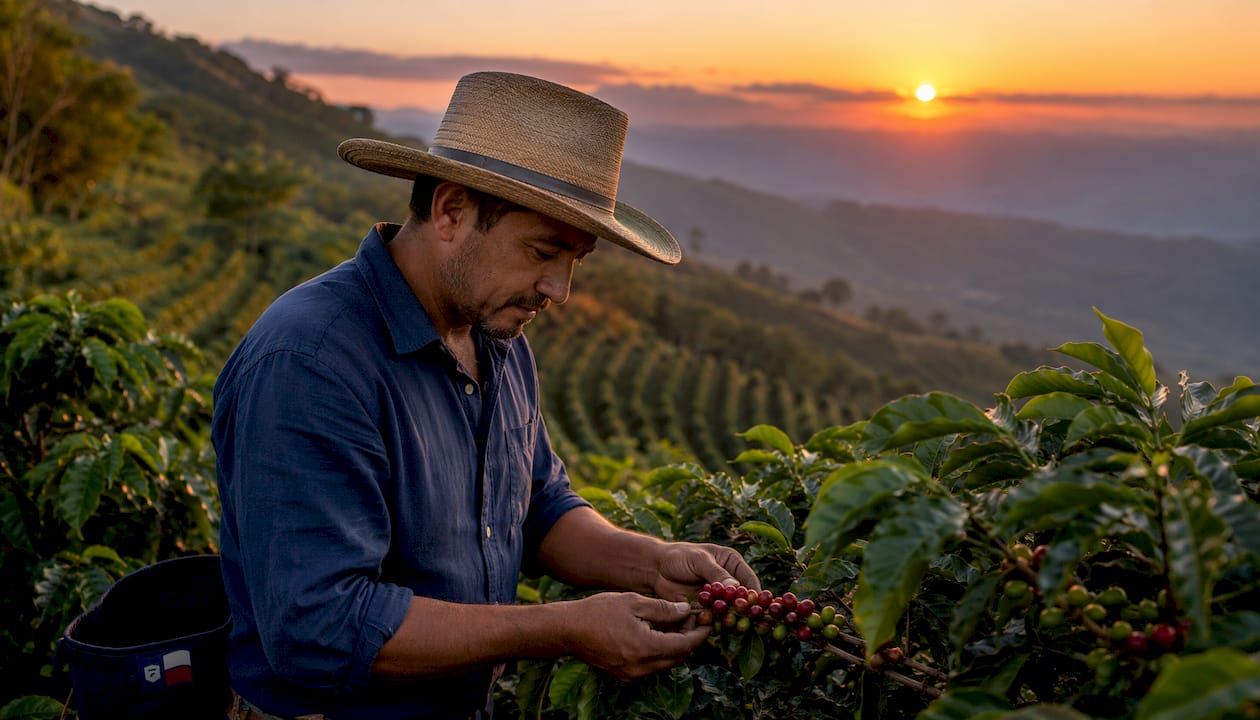
Higher altitude slows cherry maturation, allowing more complex sugars and acids to develop. Elevated, cooler conditions are a reliable proxy for bean density and cup complexity.
| Elevation (masl) | Typical cup character |
|---|---|
| — | Lower acidity, softer body, milder flavor |
| — | Balanced acidity and body, good sweetness |
| — | Specialty-level complexity, bright acidity, nuanced flavor |
One caveat: “high altitude” means something different in Costa Rica than in Colombia. Use elevation as a within-region comparator rather than an absolute quality threshold. A coffee from 1,400m in a cooler Guatemalan microclimate may outperform a 1,800m lot from a warmer region. The number matters most when you are comparing coffees from the same country or growing zone.
Why roast date matters more than “best by” on the label
A roast date is a commitment. A “best by” date is a calculation that can hide months of warehouse time. Bags that print a roast date are making a transparency statement; bags that only show “best by” are giving you no real information about when the coffee was actually roasted.
The practical freshness window for most specialty coffees runs from a few days after roasting up to about one month. Younger coffee is still actively degassing and can taste flat or sour. Beyond several weeks, aromatics begin to fade noticeably. The sweet spot for most light-to-medium roasts is generally within the first few weeks post-roast.
Roast level changes this window slightly:
- Light roast: more delicate aromatics; best consumed within 2–3 weeks of roast for peak brightness.
- Medium roast: a bit more forgiving; 1–4 weeks is a solid window.
- Dark roast: oils are more exposed and oxidize faster; drink within 1–2 weeks for best results.
Roast level also shifts the flavor promise of the whole bag. A light roast is origin-forward: you are tasting the farm, the varietal, the process. A dark roast is roast-forward: caramelization and smoke dominate, and origin character recedes. Neither is wrong, but they are different products. A bag labeled “dark roast” from a named Ethiopian farm is not going to taste like that farm’s terroir. The roast is the story.
Pro Tip: When buying for espresso with milk, a medium-dark roast or a blend will hold up better against dairy than a delicate light roast. Save the single-origin light roast for a pour-over or Aeropress where origin character can shine.
For more on signs of fresh roasted coffee, the roast date is just one of several freshness indicators worth checking before you brew.
What do certifications and sourcing claims actually guarantee?
Certifications are third-party signals, not guarantees of perfection. Each one verifies something specific and leaves other things unverified. Knowing what each badge actually covers helps you weigh it correctly instead of treating any logo as a blanket endorsement.
| Certification / Claim | Core guarantee | Key limitation |
|---|---|---|
| USDA Organic | No synthetic pesticides or fertilizers | Does not address price paid to farmers or labor conditions |
| Fair Trade | Minimum price floor and community premiums | Price floor may still be below specialty market rates; does not verify cup quality |
| Rainforest Alliance | Environmental and social farm standards | Allows blending; a bag can be certified with as little as 30% certified content |
| Bird-Friendly (Smithsonian) | Shade-grown, organic, habitat-certified | Strictest environmental standard; small number of certified farms globally |
| Direct Trade | Claimed direct relationship with producer | No third-party verification; the term is unregulated and self-defined |
| Traceable Microlot | Specific lot from a named producer | Strength depends entirely on roaster’s transparency and sourcing documentation |
Transparency in sourcing is essential for producer equity. Farmers often receive only a small fraction of the final retail price, which is why certifications that set price floors or require long-term relationships matter more than environmental logos alone. A Fair Trade badge means a minimum was paid; it does not mean the roaster paid above that minimum or that the coffee is specialty grade.
When a bag claims “Direct Trade,” ask the roaster for the exporter name, a lot number, or a published sourcing report. Those are lightweight checks that reveal whether “direct” was a marketing word or actual traceability. A roaster who can answer those questions quickly is one worth trusting.
For a deeper look at what ethical sourcing claims actually cover, the distinctions between certification tiers matter more than most buyers realize.
Pro Tip: The Bird-Friendly certification from the Smithsonian Migratory Bird Center is the most rigorous environmental standard in coffee. It requires USDA Organic compliance plus strict shade-canopy requirements. If you see it, you are looking at a genuinely high-bar environmental commitment. Learn more about Bird-Friendly coffee before your next purchase.
Single-origin vs. blends: how to tell them apart and when to choose each
“Single-origin” sounds precise, but the term is frequently only country-level in practice. A bag labeled “single-origin Colombia” could contain coffee from dozens of farms across multiple regions. It is not a guarantee of single-farm traceability. If you want consistent origin character, look for a named region or farm alongside the country.
Single-origin: pros and cons
- Pros: showcases terroir and varietal character; seasonal variation keeps things interesting; supports direct relationships with specific producers; ideal for pour-over, Aeropress, and filter brewing.
- Cons: flavor changes with each harvest season; can be inconsistent across batches; delicate profiles may not hold up in milk-based drinks.
Blends: pros and cons
- Pros: designed for consistency across seasons; roasters can balance acidity, body, and sweetness deliberately; often better value for espresso and milk drinks.
- Cons: origin traceability is usually lower; individual farm or producer stories are harder to tell.
Label phrases that signal true single-lot traceability: “Kochere Washing Station, Yirgacheffe, Ethiopia, Lot 14” or “Finca El Paraíso, Huila, Colombia, Washed, Caturra.”
Label phrases that signal a broad country blend: “Single-Origin Ethiopia” or “100% Colombian” with no region, farm, or lot number.
If you are buying for espresso with oat milk, a well-crafted blend will serve you better than a fragile single-origin light roast. If you want to taste what a specific farm’s soil and altitude produce, a named-lot single-origin is the right call.
Red flags on a coffee label: what to skip
Some labels are designed to look premium without actually telling you anything, which is why choosing premium coffee packaging that clearly displays transparent labeling details is essential. These are the patterns worth recognizing quickly:
- No roast date, only “best by”: you have no idea when this coffee was roasted. Could be fresh, could be six months old.
- Country name only: “Ethiopian Coffee” or “Colombian Blend” with nothing else tells you almost nothing about quality or traceability.
- Only vague tasting adjectives: words like “smooth,” “rich,” “bold,” or “premium” with no varietal, process, or altitude listed are common markers of commodity-grade coffee intended to mask inconsistent quality.
- No processing method stated: a roaster who knows their coffee knows how it was processed. Omitting it is a gap.
- Missing weight or grind info on pre-ground coffee: basic labeling compliance issues suggest the product is not aimed at informed buyers.
- Certification logos with no certifier name: a generic “eco-friendly” badge with no named certifying body is not a certification. It is a design choice.
If you spot several of these on one bag, the simplest move is to choose a different bag. If you are in a café and curious about what is being served, ask the barista for the roast date and origin details. A well-trained barista at a specialty shop will know. If they do not, that tells you something too.
A practical buying checklist for choosing coffee
Use this sequence when you are standing in front of a shelf or browsing online:
- Check the roast date. Is it within the last 30 days? If only a “best by” date is shown, move on or ask.
- Read the origin specificity. Country only? Or does it name a region, farm, cooperative, or washing station?
- Find the processing method. Washed, natural, honey, anaerobic? Match it to your flavor preference.
- Note the varietal and elevation. Gesha at 1,900m in Ethiopia is a different product than Catimor at 900m anywhere.
- Check certifications. Which certifier? What does it actually cover? Is “Direct Trade” backed by any sourcing documentation?
- Read the roast level. Light for origin tasting; medium-dark or blend for milk drinks and daily consistency.
- Evaluate the tasting notes. Specific descriptors like “jasmine, bergamot, blackcurrant” mean someone cupped this coffee. Generic adjectives like “smooth” mean someone wrote copy.
Questions to ask a roaster or barista:
- “When was this roasted?”
- “Where did you source this lot? Do you have an exporter name or lot number?”
- “Is there a sourcing report or transparency page I can check?”
Quick decision rules:
- Single-origin light roast: pour-over, Aeropress, or filter brewing where origin character matters.
- Blend or medium-dark roast: espresso, lattes, and any drink where milk or pressure is part of the equation.
- Named farm + roast date + stated process: the minimum bar for a specialty-grade purchase.
For a broader look at how origin affects flavor science, the soil, climate, and altitude of a growing region leave fingerprints that a good label will reflect.
Why traceability and transparency matter beyond the label
More specific origin data on a label correlates directly with better traceability and higher specialty quality potential. That is not a coincidence. A roaster who publishes a roast date, named farm, process, varietal, and elevation is making a series of verifiable commitments. That level of disclosure usually signals specialty-quality sourcing because it requires the roaster to actually know their supply chain.
The stakes for farmers are real. Transparency in sourcing is essential for producer equity, and farmers often receive only a small fraction of the final retail price. Certifications and direct-trade claims can support better outcomes, but only when they are backed by genuine long-term relationships rather than marketing language. A label that names a specific producer is one small but meaningful way that accountability flows back through the chain.
Lot numbers and batch codes are another layer of this. If a roaster publishes a sourcing report, a lot number on the bag lets you verify the coffee’s path from farm to roaster. Ask for the lot or importer name and search the roaster’s transparency pages for a matching entry. Most specialty roasters who do this work are proud to show it.
Pro Tip: Ask for the importer’s name. Importers like Cafe Imports, Olam Specialty Coffee, and Red Fox Coffee Merchants publish detailed sourcing information for the lots they handle. If a roaster can tell you which importer they used, you can often verify origin claims independently.
Key Takeaways
A bag with a roast date, named farm or cooperative, stated processing method, and a specific origin is making verifiable commitments that predict both quality and ethical sourcing.
| Point | Details |
|---|---|
| Roast date over “best by” | Roast date is the real freshness signal; aim to brew 5–30 days after roast for peak flavor. |
| Origin specificity matters | Country only is a weak signal; a named farm, cooperative, or washing station indicates specialty-grade traceability. |
| Process predicts flavor | Washed = clean and bright; natural = fruity and full-bodied; honey = balanced and sweet. |
| Certifications have limits | Each badge covers something specific; “Direct Trade” is unregulated, so ask for a lot number or sourcing report. |
| Font-mag’s specialty offerings | Font-mag’s specialty collection follows the labeling practices covered here, with traceable, roast-dated small-batch coffees. |
The real trade-off most coffee buyers miss
Most buying guides treat taste and ethics as separate decisions. Pick the flavor you want, then add a certification badge if you care about sourcing. That framing misses something.
The label fields that predict the best-tasting coffee, a named farm, a stated process, a roast date, an elevation, are exactly the same fields that indicate a roaster who paid attention to producer relationships. Specialty quality and ethical sourcing are not competing priorities. They tend to come from the same supply chain discipline.
Where the conventional wisdom goes wrong is in treating certifications as the primary ethical signal. A Fair Trade logo on a commodity-grade bag from a country-level blend tells you less about producer outcomes than a roaster who names their farm, publishes their sourcing report, and prints a roast date. The paperwork matters less than the relationship.
The practical implication: when you read coffee origin sourcing labels with the checklist above, you are not choosing between a good cup and a good conscience. You are using the same signals for both. A bag that scores well on specificity, freshness, and process transparency is almost always one where the producer was treated as a partner rather than a commodity supplier.
That is the part worth remembering the next time you are standing in front of a shelf.
Font-mag brings the same transparency standards to every bag it ships
Font-mag’s retail coffee collection is built around the labeling practices covered in this guide: roast dates, named origins, stated processing methods, and traceable specialty lots. The Broken Arrow Reserve and other small-batch offerings reflect four generations of Texas craftsmanship applied to sourcing decisions that most commodity roasters skip entirely.
Beyond coffee, Font-mag carries the full MAG Tea loose-leaf lineup, Sweetbird syrups and café essentials, and a curated accessories range, so whether you are building a home setup or stocking a café, the same commitment to quality runs across every category. Free shipping on orders over $35 makes it easy to try something new alongside your next bag of specialty coffee. Browse the specialty offerings and check the roast dates for yourself.
Useful sources and further reading
- FoodPrint: The basics of coffee labeling — a clear overview of what U.S. coffee labels are and are not required to disclose, useful for understanding regulatory context.
- USDA AMS: Organic certifying agents — the official list of USDA-accredited certifiers; use it to verify whether a specific “organic” claim is backed by a real certifying body.
- Rainforest Alliance: Sustainable coffee farming impact study — research on what Rainforest Alliance certification actually delivers for farmers and ecosystems.
- FAO: Coffee markets and trade — global production and trade data; useful context for understanding price dynamics and why producer share matters.
- World Coffee Research: Variety catalog — the authoritative reference for coffee cultivar names, flavor tendencies, and agronomic traits; cross-check varietal claims here.
- Wikipedia: Fair trade coffee — a solid overview of Fair Trade’s history, price mechanisms, and documented criticisms.
- Columbia Law: Transparency and producer outcomes — academic research on sourcing transparency and its relationship to farmer equity.
- Font-mag: Why coffee origins taste different — explains how terroir, climate, and soil create the flavor signatures you are reading on labels.
- Font-mag: Ethically sourced coffee guide — deeper breakdown of certification tiers and what ethical sourcing claims actually cover in practice.
- Font-mag: Coffee processing methods explained — detailed guide to washed, natural, honey, and anaerobic processing and how each affects your brew.
Recommended
- Why Coffee Origins Taste Different: A Flavor Science Guide – Font Coffee Roasters
- Supporting Local Roasters Checklist for Coffee Lovers – Font Coffee Roasters
- Ethically Sourced Coffee: Your 2026 Conscious Guide – Font Coffee Roasters
- What Is Single Origin Coffee? A Flavor Guide for Enthusiasts – Font Coffee Roasters