

How Altitude Shapes Coffee Flavor: A Specialty Guide
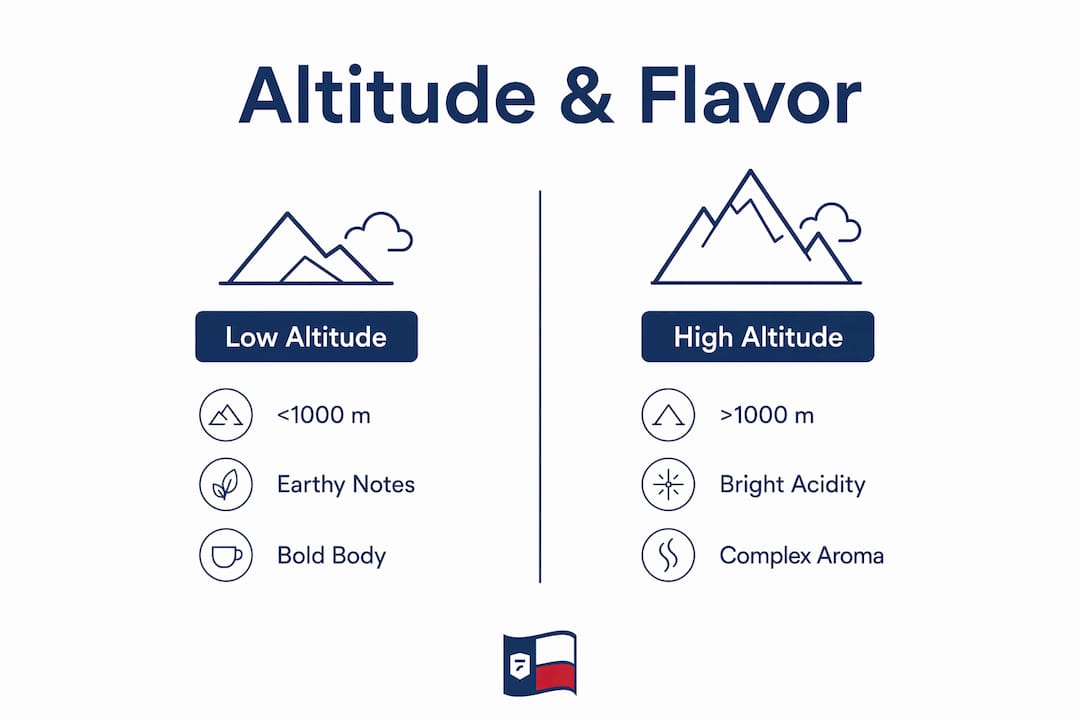
Altitude is the single most discussed variable in specialty coffee, and for good reason. Beans grown above 1,000 meters tend to produce cups that are aromatic, bright with acidity, and noticeably complex, while coffee from lower elevations often tastes earthier, more bitter, and flat by comparison. The role of altitude in coffee flavor comes down to one core mechanism: cooler temperatures at elevation slow cherry maturation, giving the fruit more time to concentrate sugars, acids, and lipids inside the bean. The result shows up directly in your cup.
Key flavor differences by altitude at a glance:
- High altitude (above 1,000 m): bright acidity, floral and citrus aromas, berry and stone fruit notes, clean finish
- Mid altitude (900–1,200 m): balanced sweetness, mild acidity, light chocolate or caramel tones
- Low altitude (below 850 m): earthy, grassy flavor, heavier bitterness, weaker aroma, higher astringency
How altitude ranges differ for Arabica and Robusta
The two dominant coffee species occupy very different elevation bands, and that gap explains a lot about why they taste so different.
Arabica thrives at 1,800–6,300 feet, where cooler temperatures and lower oxygen levels slow ripening and concentrate flavor. Robusta grows comfortably at 600–2,400 feet, in warmer, lower-oxygen-rich environments where it develops higher caffeine content but less aromatic complexity. Within those bands, elevation still matters: a Peru study found that coffees above 1,800 m consistently earned specialty grades above 80 points by SCAA standards, while beans from 1,600 m showed noticeably simpler sensory profiles.
| Altitude Range | Species | Typical Flavor Notes |
|---|---|---|
| Lower elevations typically favor Robusta with earthier and more bitter flavor profiles | ||
| Moderate elevations include both Robusta and Arabica with nuttier and mild chocolate notes | ||
| Higher elevations favor Arabica with chocolatey, fruity, and sweet characteristics | ||
| Among the highest elevations, Arabica varietals develop vibrant citrus, berry, and floral notes | ||
| Very high elevation Arabicas typically yield more intense fruit and complex sweetness |
Regional examples sharpen the picture. Ethiopian Yirgacheffe, grown at roughly 1,800–2,200 m, is famous for its jasmine and lemon brightness. Guatemalan Huehuetenango coffees from around 1,500–1,900 m carry stone fruit and brown sugar. Colombian beans from the Huila region, sitting near 1,700–2,000 m, tend toward red apple acidity and caramel body. Each of those profiles traces directly back to elevation and the growing conditions it creates.
Why high elevation creates better-tasting beans
The chemistry behind altitude’s effect on coffee is well documented. Cooler temperatures slow cherry maturation, allowing the plant to translocate sugars and chemical compounds to the fruit more gradually and completely than in warmer lowland conditions. That slower development builds higher concentrations of fatty acids, organic acids, and aromatic precursors inside the bean.
A study on Pu’er coffee found that fatty acid content increased with growing altitude, while alkaloids and chlorogenic acids decreased. Alkaloids and chlorogenic acids negatively affect cupping scores when present in high concentrations, so their reduction at elevation directly improves aroma, flavor, and aftertaste. The volatile compound profile also shifts: pyrazines (nutty, roasted) decrease, while aldehydes like furfural (sweet, caramellic, bread-like) increase. The net effect is a cup with less roasted bitterness and more sweet, caramel, and fruit character.
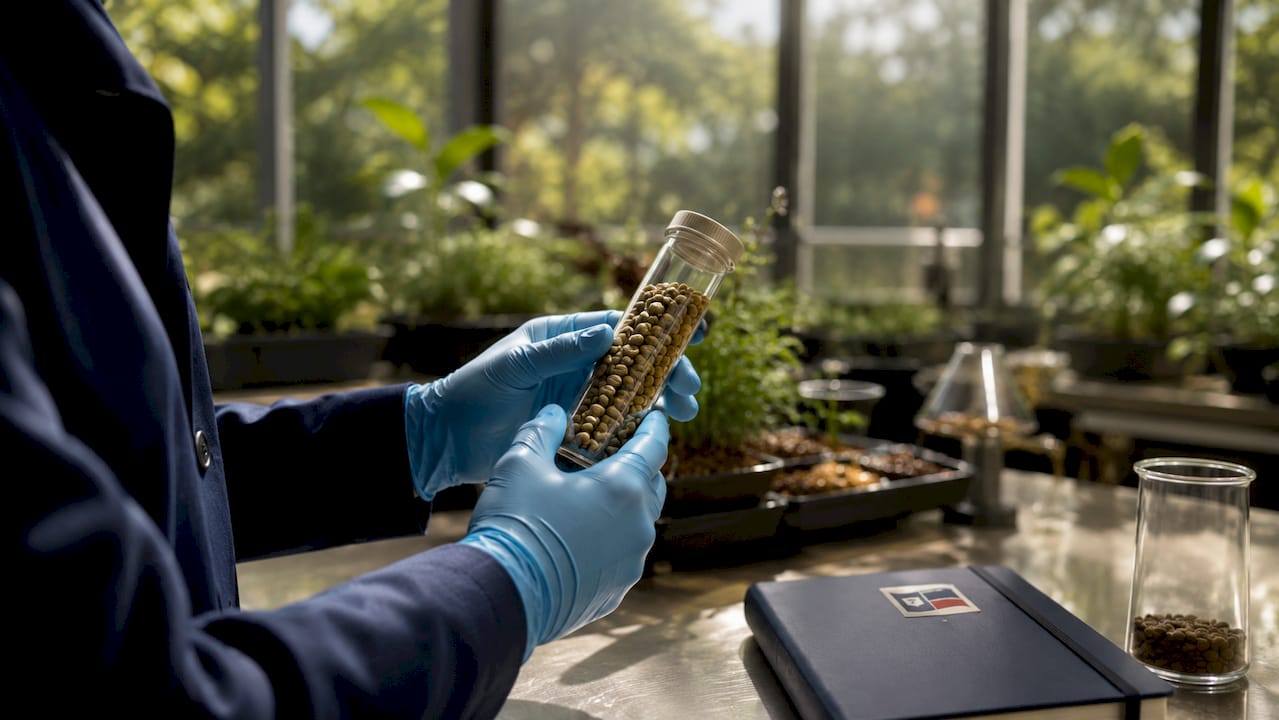
Altitude also reduces pest and disease pressure. Lower pest pressure at elevation means less chemical intervention and cleaner beans with fewer defects reaching the roaster.
Key environmental factors at work:
- Cooler average temperatures slow metabolic rate in coffee cherries
- Lower atmospheric pressure reduces oxygen availability, stressing the plant productively
- Greater day-to-night temperature swings concentrate sugars in the fruit
- Reduced humidity at altitude lowers fungal disease risk
- Longer ripening windows allow fuller chemical development
Pro Tip: Slope orientation modifies altitude’s effect more than most buyers realize. Research from Brazil’s Matas de Minas region shows that north-facing slopes at higher altitudes produce measurably better balance, acidity, and aftertaste scores than south-facing slopes at the same elevation. When a producer lists both altitude and slope data, that combination tells you more than altitude alone.
What bean appearance tells you about growing elevation
You can read altitude clues directly from the physical bean before you ever brew a cup. Strictly hard beans with closed fissures come predominantly from altitudes above 4,500 feet. Their density results from the slow, cool growth that packs more cellular material into each bean. That density also affects how the bean behaves in the roaster, absorbing heat differently than a less dense lowland bean. Understanding bean density and roasting is worth studying if you roast at home.
Physical traits by altitude:
- High altitude: small to medium size, high density, closed or zig-zag fissure, jade or blue-green color
- Mid altitude: medium size, moderate density, partially open fissure, light green color
- Low altitude: larger, less dense, semi-open fissure, more color variability across the lot
Bean density is the most reliable proxy of the three. Color varies with processing method (a honey-processed bean looks different from a washed bean at the same elevation), but density holds fairly consistent regardless of post-harvest handling.
How to use altitude when choosing your next coffee
Altitude data on a coffee bag is one of the most useful pieces of information a roaster can print. Here is how to put it to work:
- Look for the number. Many specialty roasters list meters or feet of growing elevation. Above 1,500 m generally signals brighter, more complex cups; below 900 m points toward heavier, earthier profiles.
- Match altitude to your preference. If you love citrus brightness and floral notes, reach for high-altitude Arabica. If you prefer chocolate and body, mid-altitude beans often deliver that without the sharp acidity.
- Ask your barista. Origin altitude is standard knowledge at any serious specialty café. A barista who knows the farm can tell you whether the brightness you tasted last week came from elevation, processing, or both.
- Factor in processing. A washed high-altitude bean will taste cleaner and more acidic than a natural-processed bean from the same farm. Altitude sets the potential; processing methods determine how much of that potential reaches the cup.
- Consider roast level. A dark roast on a high-altitude bean burns off much of the delicate acidity and fruit character that elevation built. Light to medium roasts preserve those altitude-driven notes best.
Font-mag’s approach to altitude-driven coffee curation
At Font-mag, altitude is a sourcing criterion, not a marketing detail. The brand’s four-generation Texas heritage in artisanal quality means every coffee in the lineup gets evaluated for the flavor complexity that high-elevation growing conditions produce. The Broken Arrow Reserve, Font-mag’s signature small-batch offering, exemplifies this: sourced for density, brightness, and the kind of layered aroma that only slower cherry development at elevation can build.
Font-mag’s educational content, including guides on coffee terroir and flavor science, treats altitude as one pillar of a broader origin story. Soil composition, microclimate, varietal genetics, and processing all interact with elevation to produce the final cup. The brand’s sourcing reflects that complexity rather than reducing quality to a single number.
Tips for appreciating altitude-influenced coffees from Font-mag’s perspective:
- Brew high-altitude beans at slightly lower water temperatures (around 195°F) to preserve delicate acidity
- Use a pour-over or Chemex to let floral and citrus notes express fully
- Compare two beans from the same origin at different elevations side by side to train your palate
- Note how the same high-altitude bean tastes at different roast levels to understand what elevation contributes versus what roasting adds or removes
What the research actually shows
The science behind altitude and coffee quality has grown considerably in recent years. A PMC-published study on Pu’er coffee measured flavor precursors and cupping scores across growing elevations from 930 m to 1,530 m. Aroma scores peaked at 1,530 m with a cupping score of 7.39, and flavor scores reached their highest value of 7.75 at that same elevation. Every sample in the study scored above 81 points, qualifying as specialty grade, but the trend toward better aroma and flavor with increasing altitude was consistent.
Research from Brazil’s Minas Gerais region confirmed that altitude is the primary factor influencing sensory quality in that growing area, with slope exposure and fruit color playing secondary roles when analyzed in combination with elevation. A Peru study on inter-Andean valley coffees found that the Typica variety showed superior sensory qualities that improved measurably with altitude, with the best results above 1,800 m.
Altitude versus soil, processing, and other flavor factors
Altitude shapes flavor potential, but it does not guarantee a great cup on its own. A high-altitude bean poorly processed will not achieve the flavor complexity that elevation makes possible. Processing, soil quality, varietal genetics, and roasting each contribute independently and interact with altitude in ways that can amplify or undercut what elevation provides.
Soil at higher altitudes tends to contain more organic matter and essential nutrients, which supports better flavor development in the cherry. Volcanic soils in regions like Guatemala and Ethiopia add mineral complexity that flat lowland soils cannot replicate. Processing method is arguably the most powerful post-harvest variable: washed processing highlights altitude-driven acidity and clarity, while natural processing adds fruit-forward sweetness that can mask or complement elevation character depending on execution. Roast level sits at the end of the chain. You can source a flawless high-altitude bean and roast away everything that made it worth buying.
Altitude is the foundation. Everything else is what you build on top of it.
Key Takeaways
High altitude slows coffee cherry maturation, concentrating sugars, acids, and fatty acids that produce brighter, more complex cups with measurably higher cupping scores.
| Point | Details |
|---|---|
| Altitude and flavor | Coffees above 1,000 m produce aromatic, acidic, complex cups; below 850 m yields earthier, more bitter profiles. |
| Species altitude bands | Arabica grows best at 1,800–6,300 ft; Robusta thrives at 600–2,400 ft with higher caffeine and simpler flavor. |
| Bean density as a signal | Strictly hard beans with closed fissures come predominantly from above 4,500 ft and signal denser, more flavorful beans. |
| Microclimate matters | Slope orientation at the same elevation can shift cupping scores; north-facing high-altitude slopes often outperform south-facing ones. |
| Altitude needs partners | Processing, soil, and roast level determine whether altitude-driven flavor potential actually reaches your cup. |
Beyond coffee, Font-mag carries premium Japanese matcha, MAG Tea loose-leaf selections, and the full Sweetbird collection. If you want to explore something outside your morning brew, the Font-mag retail collection is a good place to start, and free shipping kicks in on orders over $35.

Recommended
- Specialty Coffee Flavorings: Top 10 for Enthusiasts – Font Coffee Roasters
- Why Coffee Origins Taste Different: A Flavor Science Guide – Font Coffee Roasters
- Coffee Roast Levels Explained: A Flavor Guide for Enthusiasts – Font Coffee Roasters
- What Is Coffee Terroir? Flavor, Science, and Origin – Font Coffee Roasters